White flowers do something no other color quite manages - they hold light at dusk, brighten shaded corners, and make every neighboring color look more vivid.
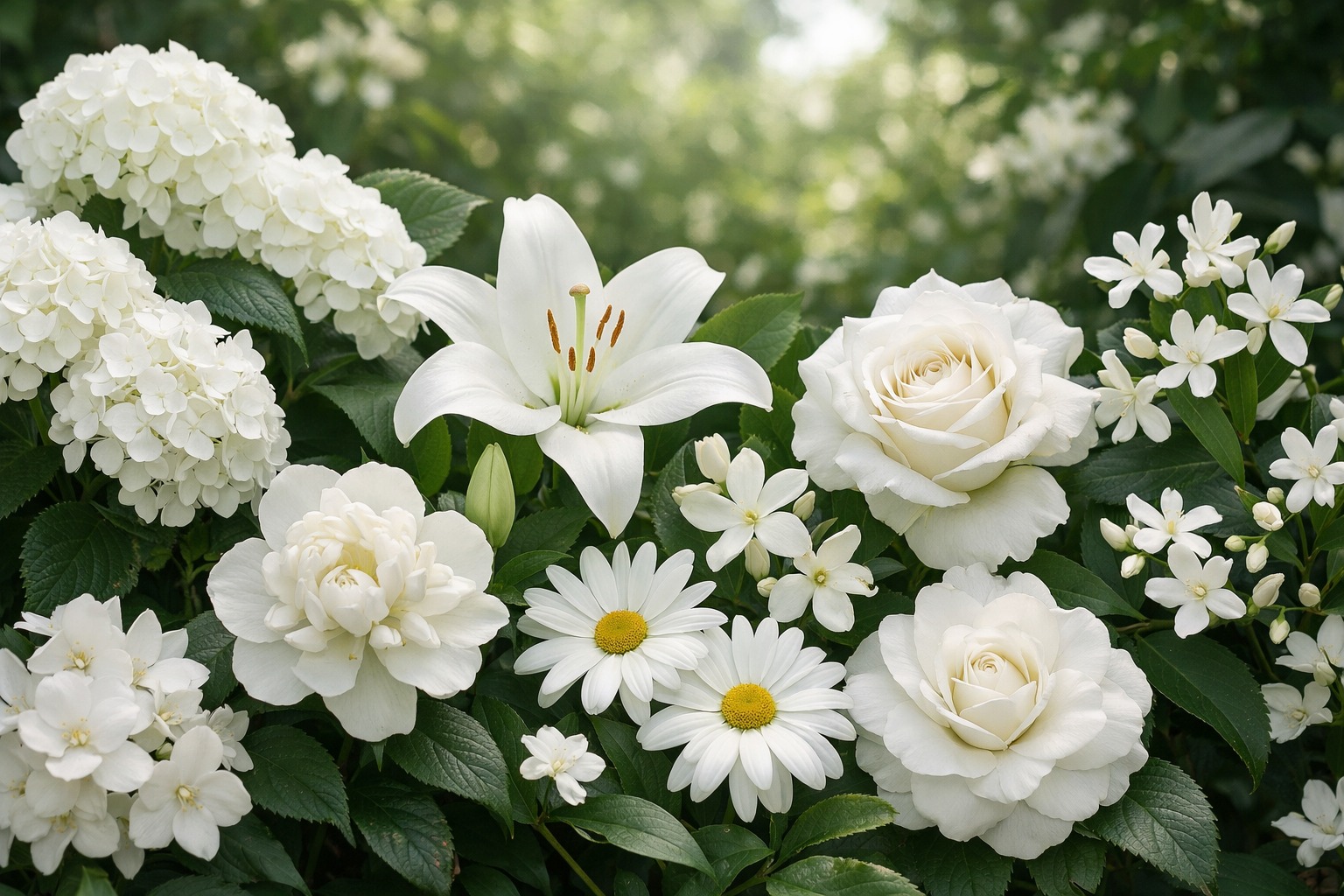
Whether you're building a moon garden for evening sitting or just need something to calm down a loud border, white blooms earn their space in nearly every planting style.
This list covers 12 reliable white-flowering plants across perennials, annuals, shrubs, and bulbs. Each entry includes zone range, sun needs, and clear use cases so you can match the right plant to your specific spot — shade bed, hot border, or container.
Why White Flowers Are Harder to Plan Than They Look?
Most gardeners assume white is neutral - safe to plant anywhere. In practice, white blooms vary from creamy ivory to stark paper-white, and those tones clash badly when planted side by side.
Remember it later
Planning to try this recipe soon? Save it for a quick find later!
You need to decide which whites you're using before mixing them.
Fragrance is also uneven across white flowers. Some, like gardenia and 'Casa Blanca' lily, are powerfully scented.
Others, like camellia, have almost no scent at all. Knowing the difference matters, especially for evening gardens where low-light foliage pairings and scent carry equal weight after sunset.
Group warm-white (creamy) bloomers together and cool-white (pure or slightly blue-toned) bloomers separately. Mixing tones under bright sun looks muddy rather than elegant.
Early-Season White Flowers
These are the plants that earn loyalty - the ones breaking dormancy while everything else is still brown. Getting early whites right means your garden has momentum before most neighbors' beds wake up.
Snowdrops (Galanthus nivalis)
Zone 3–8 Easy
Snowdrops push through frozen ground as early as late January, making them the first white bloom most northern gardeners see each year. The nodding 1-1.5" bells naturalize quickly under deciduous trees where summer perennials can't compete.
- Shade tolerance: Handles deep shade better than nearly any other bulb - plant under oaks and maples without hesitation.
- Spread: Clumps multiply on their own; divide every 3-4 years right after bloom for best density.
- Height: Only 3-6 inches tall, so plant them at path edges or near seating where they're easy to see.
Camellia (Camellia japonica) - White Forms
Zone 7–9 Medium
In zones 7-9, white camellias open large 3-5" single or semi-double blooms anywhere from December through April depending on the cultivar. The glossy evergreen foliage earns its keep the other eight months of the year.
- Soil pH: Needs acidic soil in the 5.5-6.5 range - the same conditions as azaleas and rhododendrons.
- Siting: Morning sun with afternoon shade prevents bud drop in colder parts of zone 7.
- Size: Reaches 6-12 feet at maturity, so give it room or choose a compact cultivar like 'White Empress.'
Pieris (Pieris japonica) 'Prelude'
Zone 5–8 Easy
Pieris opens cascading chains of small bell-shaped white flowers in early spring, often while camellias are still finishing. Some cultivars add coppery-red new growth that contrasts sharply with the white blooms - two seasons of interest in one shrub.
- Size: 'Prelude' stays compact at 6-10 feet, suitable for foundation planting in smaller yards.
- Maintenance: Minimal pruning needed; just remove spent flower clusters to encourage the following year's buds.
- Deer resistance: Moderately deer-resistant - a practical advantage in suburban gardens.
Snowdrops need winter cold to bloom reliably. In zones 9 and warmer, pre-chilled bulbs work for one season, but they rarely naturalize without cold winters.

Summer-Long White Bloomers
Summer is where most white flower plans fall apart - gardeners pick one big showstopper and find it finishes by July. The plants below stagger naturally, and most rebloom with basic deadheading.
Shasta Daisy (Leucanthemum × superbum)
Zone 5–9 Easy
Shasta daisies deliver classic 2-3" white petals around bright yellow centers and rebloom reliably if you remove spent blooms every 2-3 weeks through summer. They're the backbone of white-and-yellow border combinations.
- Companions: Pairs exceptionally well with lavender and salvia - the purple contrast makes the white pop in full sun.
- Reblooming window: First flush in June, second flush in August if consistently deadheaded.
- Division: Divide clumps every 2-3 years in spring to prevent center die-out.
Phlox (Phlox paniculata) 'David'
Zone 4–8 Easy
'David' is the cultivar that finally made tall garden phlox trustworthy - its mildew resistance solved the main reason white phlox fell out of favor in humid climates. Dense upright clusters of pure white flowers appear July through August and draw butterflies consistently.
- Height: Grows 24-36 inches tall; stake in exposed sites where wind can flatten stems.
- Fragrance: Lightly scented - pleasant at close range, not overpowering.
- Spacing: Plant 18-24 inches apart and avoid overhead watering to further reduce mildew risk.
Hydrangea (Hydrangea arborescens) 'Annabelle'
Zone 3–9 Easy
Few white flowers match the sheer volume of an 'Annabelle' in full bloom - the flower heads reach 8-12 inches across, and a mature plant covers itself with dozens of them by mid-July. It also tolerates wet soils that would rot most shrubs.
- Stem flopping: Those enormous heads weigh down young or thin stems; use grow-through supports installed in spring before stems elongate.
- Pruning: Cut back hard to 12 inches in late winter - it blooms on new wood every year.
- Shade tolerance: Performs in partial shade, though flower heads are slightly smaller than in full sun.
Nicotiana (Flowering Tobacco) 'Alba'
Annual
Nicotiana 'Alba' opens its spicy-scented tubular white flowers in the evening, making it the right annual for spots you'll sit near after work. It blooms continuously from early summer to frost when fed every 3 weeks with a balanced fertilizer.
- Evening interest: Flowers open more fully at dusk - plant near patios, windows, or garden paths for maximum scent impact.
- Height: Grows 24-48 inches tall; useful as a mid-border filler behind low edging plants.
- Self-seeding: Often self-seeds in mild climates, returning year after year without replanting.
Sweet Alyssum (Lobularia maritima)
Annual Easy
Sweet alyssum builds a low honeyed-scented carpet of tiny white clusters and works at the front of any border or spilling over container edges. It tolerates poor, dry soils and actively attracts hoverflies and parasitic wasps - genuine pest control at 3-6 inches tall.
- Shear back: Cut plants back by half in midsummer heat to refresh bloom - they rebound within 2 weeks.
- Containers: Ideal as a trailing edge plant in mixed pots alongside deep purple companions like heliotrope or verbena.
- Germination: Direct sow after last frost; seeds germinate in 5-7 days in warm soil.
Oleander's white flower clusters are beautiful and its drought tolerance is unmatched in zones 8–10, but every part of the plant is toxic if ingested — keep it away from areas where children or pets roam freely.
Late Summer and Fall White Flowers
September and October catch most white flower plans off guard. These two plants specifically cover that gap when early summer whites are long finished.
Japanese Anemone (Anemone × hybrida) 'Honorine Jobert'
Zone 4–8 Medium
'Honorine Jobert' is one of the most reliable fall perennials in cooler climates - pure white single blooms float on wiry 24-36" stems from late August through October. It spreads steadily by rhizome and fills in shaded spots where summer whites won't grow.
- Spread: Can colonize aggressively in good soil; install root barriers if you need to contain it.
- Cut flower use: Stems last 5-7 days in a vase - among the best fall perennials for cutting.
- Establishment: Slow to establish in year one; don't move or divide it until it's been in the ground at least two seasons.

White Flowers for Fragrance and Cutting
Some white flowers earn their spot specifically because of what they do up close - in a vase, on a windowsill, or in a garden you walk through at night. These two are purpose-built for that role.
Gardenia (Gardenia jasminoides)
Zone 7–10 Hard
Gardenia's 2-4" waxy white blooms produce one of the most recognizable floral scents in any garden. The challenge is soil: pH must stay between 5.0 and 6.0, and any drift toward neutral triggers chlorosis - yellowing leaves despite adequate water.
- Feeding: Use an acid-forming fertilizer formulated for camellias and azaleas; feed every 6 weeks from spring through midsummer.
- Indoor option: In zones 6 and colder, grow in a container and bring indoors before first frost - it will bloom on a bright windowsill.
- Bud drop: Sudden temperature swings or drafts cause buds to drop before opening; keep away from AC vents indoors.
Oriental Lily (Lilium) 'Casa Blanca'
Zone 4–8 Medium
'Casa Blanca' produces 6-8" trumpet-shaped white blooms in mid-to-late summer with a fragrance strong enough to fill a room through an open window. Each stem carries 3-6 flowers and needs staking - the blooms are heavy enough to bend unsupported stems to the ground.
- Planting depth: Set bulbs 6-8 inches deep in fall or early spring in well-drained soil.
- Cut flower value: Among the best white cut flowers available - blooms last 7-10 days in a vase and open sequentially from base to tip.
- Pollen warning: Remove stamens before bringing indoors; the orange pollen stains fabric permanently.
White Flowering Shrubs Worth the Space
Shrubs commit you to a spot for years, so the payoff should be more than one bloom season. Both plants here pull double duty - flowers plus year-round structure or foliage interest.
Oleander (Nerium oleander) - White Forms
Zone 8–10 Easy
In hot, dry climates where most white shrubs struggle, oleander simply thrives - it handles drought, reflected heat, and salt spray without complaint. The white-flowered forms push clusters of 2-3" blooms from late spring through summer.
- Size management: Can reach 6-12 feet; cut back by one-third after main bloom flush to keep it manageable and encourage another round of flowers.
- Toxicity: All parts are highly toxic - wear gloves when pruning and never burn the clippings.
- Best use: Highway medians and commercial landscapes popularized it for good reason; it's ideal for hot, neglected corners of the garden where irrigation is limited.
White Flower Quick-Reference
Here's how these 12 plants compare across the key attributes most gardeners ask about first: zone, sun, height, and primary use.
| Plant | Zone | Sun | Height | Best Use |
|---|---|---|---|---|
| Snowdrops | 3–8 | Shade | 3–6" | Naturalizing under trees |
| Shasta Daisy | 5–9 | Full sun | 18–30" | Border, cut flower |
| Hydrangea 'Annabelle' | 3–9 | Part shade | 3–5 ft | Anchor shrub, wet sites |
| Phlox 'David' | 4–8 | Full/part sun | 24–36" | Mid-border, butterfly garden |
| 'Casa Blanca' Lily | 4–8 | Full/part sun | 36–48" | Cut flower, fragrance |
| Anemone 'Honorine Jobert' | 4–8 | Part shade | 24–36" | Fall interest, shade bed |
| Gardenia | 7–10 | Part shade | 2–6 ft | Fragrance, container |
| Camellia | 7–9 | Part shade | 6–12 ft | Winter/spring anchor shrub |
| Pieris japonica | 5–8 | Part shade | 6–10 ft | Foundation planting |
| Nicotiana 'Alba' | Annual | Full/part sun | 24–48" | Evening garden, filler |
| Sweet Alyssum | Annual | Full/part sun | 3–6" | Edging, containers |
| Oleander | 8–10 | Full sun | 6–12 ft | Hot, dry climate shrub |
How to Pair White Flowers With Other Colors?
White's real power is as a contrast tool. It separates bold colors that would otherwise fight - plant white between saturated orange bloomers and deep purples to give the eye a place to rest.
Silver-leaved plants like artemisia and lamb's ear amplify the cool-white effect in moonlit or dusk gardens. Warm-white flowers like gardenia or 'Annabelle' pair better with soft yellows and blush pinks than with starkly cool-toned companions - the temperature mismatch reads as error, not intention.
- White + purple: The most reliable pairing in white garden design - try Shasta daisy with salvia nemorosa or Phlox 'David' alongside catmint.
- White + blue: Lighter combinations suit cottage and coastal styles; pairing white phlox with agapanthus or veronica gives a soft, airy result.
- White + pink: Works best with true whites, not creamy tones; Anemone 'Honorine Jobert' alongside late-season pink sedums is a proven fall combination.
- White + silver: Use artemisia, dusty miller, or stachys as a foliage bridge between whites and any other border color.
White flowers photograph better in slightly overcast light than in direct midday sun, which bleaches out petal texture. If you're planting a display garden for photography or events, slightly shaded siting gives richer results in images.

Which White Flower Fits Your Situation?
These 12 plants cover very different garden problems. Use these scenarios to narrow your shortlist fast rather than working through the full list from scratch.
- You have deep shade under mature trees: Snowdrops naturalize reliably in heavy shade; add anemone 'Honorine Jobert' for fall coverage in the same bed.
- You want fragrance near a seating area: Plant gardenia in a container you can position seasonally, or grow nicotiana 'Alba' as an annual directly in the ground nearby.
- You need a white shrub for a small foundation bed: Pieris japonica 'Prelude' stays proportional, delivers spring flowers, and holds attractive foliage year-round in zones 5-8.
- Your summer border needs a white anchor that won't quit: 'Annabelle' hydrangea covers July and August reliably across zones 3-9 - the widest range of any shrub on this list.
- You're in zone 8-10 with low rainfall: White oleander handles heat and drought where most of these plants would fail; pair it with ornamental grasses for a low-maintenance combination.
- You want white cut flowers all summer: Shasta daisy from June through August, then 'Casa Blanca' lily in mid-July, then anemone from late August - those three cover a continuous cutting season.
Knowing your USDA hardiness zone and your site's average sun hours per day will eliminate half the list before you even visit a nursery. Cold zones naturally lean toward snowdrops, Annabelle hydrangea, and phlox; warm zones open up gardenias, camellias, and oleander.
Frequently Asked Questions
Phlox paniculata 'David' blooms July through August, sweet alyssum and nicotiana 'Alba' flower continuously from early summer to frost, and Shasta daisies rebloom every 6–8 weeks when deadheaded every 2–3 weeks throughout summer.
Snowdrops (Galanthus nivalis) handle full shade in zones 3–8 and naturalize without any intervention; Japanese anemone 'Honorine Jobert' adds white blooms to partial shade beds from August through October.
Nicotiana 'Alba' releases its spicy scent most strongly after 6 p.m., making it ideal for patios; gardenia jasminoides produces a heavier, longer-lasting fragrance but needs zone 7 or warmer to grow outdoors year-round.
Pieris japonica 'Prelude' tops out at 6–10 feet and stays narrow enough for foundation beds in zones 5–8; compact camellia cultivars like 'White Empress' stay under 6 feet in zones 7–9.
Hydrangea arborescens 'Annabelle' stays white regardless of soil pH — unlike mophead hydrangeas, its color is not affected by aluminum availability or acidity, making it reliably white across zones 3–9.
Pin it for your next white flowers: 20 stunning varieties project.