You've spotted blue in a seed catalog, ordered it with confidence, and ended up with something closer to violet or lavender when it bloomed.
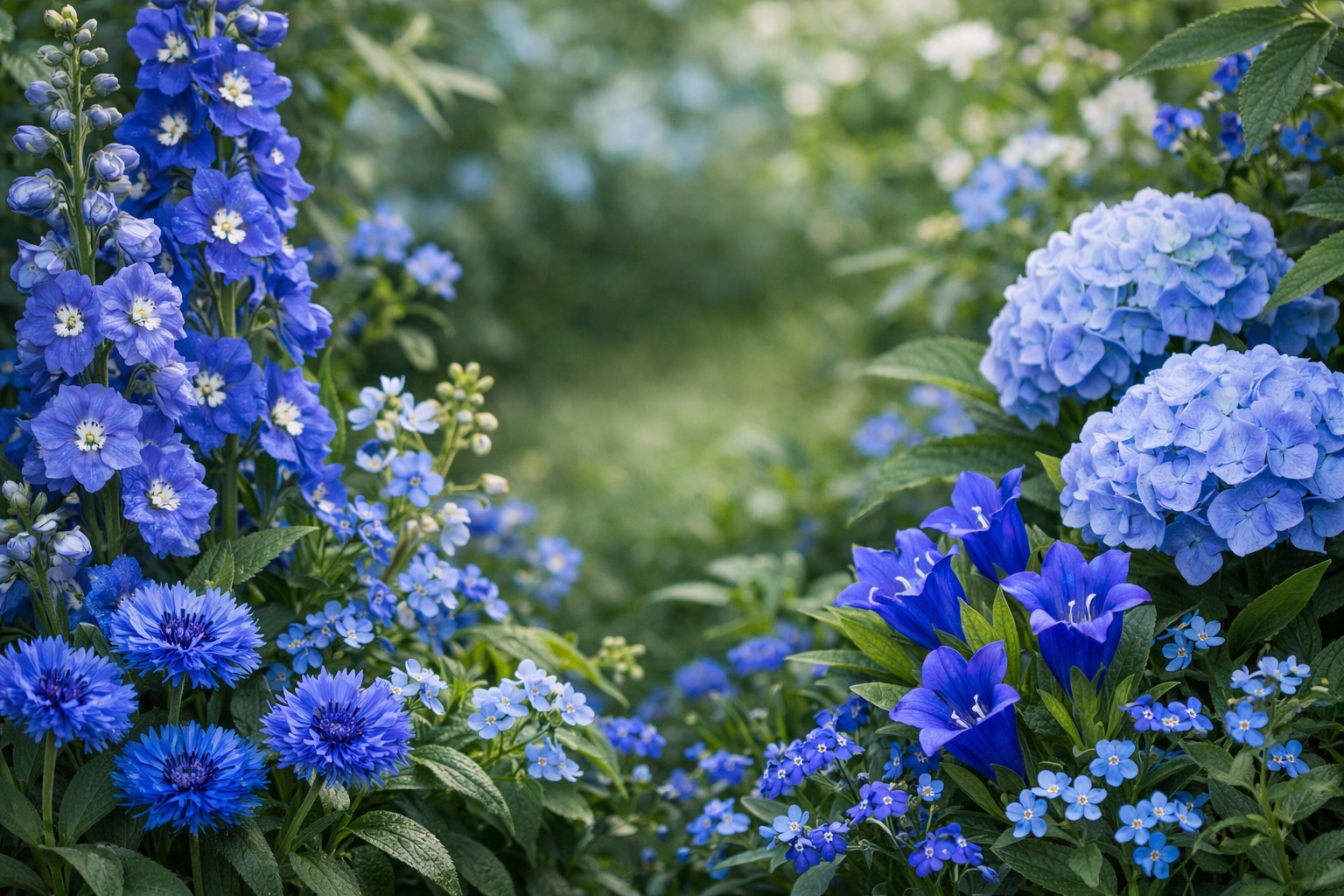
True blue flowers are rarer than most gardeners expect - blue pigment is genuinely uncommon in the plant world - but the varieties below deliver reliable, unmistakable blue across borders, containers, and shade beds from Zone 2 all the way to Zone 11.
Blue flowers are among the hardest colors to find in the garden. These 12 picks include genuine blue-bloomers across perennials, annuals, shrubs, and bulbs.
Each entry covers zone hardiness, sun needs, and the best way to use each plant so you get real blue, not blue-purple, every season.
Blue-Flowering Perennials
Perennials come back every year, which makes them the backbone of any blue-themed planting scheme. The picks below span zones 3 through 9 and cover spring, summer, and fall bloom windows.
Remember it later
Planning to try this recipe soon? Save it for a quick find later!
Delphinium Zone 3–7 Medium
Delphinium elatum produces some of the most saturated royal blue found in any garden. Spires can reach 6 feet tall, making this a back-of-border statement plant that also dominates cut flower arrangements all summer long.
- Staking: Stems need support at 18 inches - use bamboo canes or single-stem flower supports before wind hits.
- Bloom time: Early to midsummer; cut spent spikes back to the base to encourage a second flush in late summer.
- Heat tolerance: Fades fast above 85°F - best in zones 3-6 where summers stay relatively cool.
False Indigo Zone 3–9 Easy
Baptisia australis earns its place by asking almost nothing in return. Deep indigo-blue spires appear in late spring, followed by inflated seed pods that rattle in late summer - decorative well beyond the bloom period.
- Root system: Deep taproot means near-zero transplanting once established - pick a permanent spot before you plant.
- Size: Reaches 3-4 feet tall and equally wide; give it space upfront.
- Soil preference: Tolerates poor, dry soil better than most perennials - no fertilizer needed after establishment.
Plant Baptisia in fall so the taproot gets a full season to anchor before its first flowering year. First-year plants often skip blooming — expect full display in year two or three.
Gentiana acaulis (Stemless Gentian) Zone 3–7 Hard
At just 3-6 inches tall, Gentiana acaulis packs some of the most electric blue pigment in the alpine plant world into trumpet-shaped flowers barely larger than a thumbnail. It blooms in spring and early summer, then disappears quietly into the rock garden.
- Sun: Full sun works in cool-summer climates; move to partial shade if your summers push above 80°F regularly.
- Drainage: Needs fast-draining soil - raised beds work best in heavy clay areas.
- Companion planting: Pairs well with low sedums and creeping thyme in pairing purple-toned plants for high contrast alpine displays.
Himalayan Blue Poppy Zone 4–7 Hard
Meconopsis betonicifolia is the rarest and most demanding entry on this list. The large, tissue-thin blooms are an almost unreal porcelain blue - the kind that makes visitors stop mid-step.
- Climate requirement: Needs cool, humid summers - the Pacific Northwest and UK-style climates are ideal.
- Soil: Acidic, moisture-retentive, and rich in organic matter; dries out even briefly and it sulks badly.
- Realistic expectation: Treat as a biennial in most gardens - many plants bloom once, set seed, and die.
Periwinkle 'Bowles' Zone 4–9 Easy
Vinca minor 'Bowles' is a glossy-leafed groundcover that carpets shaded slopes with periwinkle-blue flowers each spring. It's evergreen, which means it earns its keep all twelve months.
- Spread: Can cover 3-4 feet per plant over time - useful under trees where grass fails, but check local invasive plant lists before planting.
- Light: Handles deep shade better than nearly any other blooming groundcover on this list.
- Maintenance: Trim back hard every 2-3 years to keep it tidy and encourage fresh growth from the base.
Vinca minor is classified as invasive in parts of the eastern United States and Pacific Northwest. Check your state's invasive species list before planting, especially near woodland edges or natural areas.
Blue Annuals and Cool-Season Bloomers
Annuals give you blue in a single season without long-term commitment - ideal for filling gaps, trying new color schemes, or planting in zones too warm for blue perennials.
Love-in-a-Mist Annual (Z 2–11) Easy
Nigella damascena grows 12-18 inches tall with papery blue star flowers floating inside a haze of feathery, thread-like foliage. Direct-sow it straight into the garden in early spring - it dislikes transplanting.
- Seed pods: Inflated, striped pods follow the flowers and dry beautifully for indoor arrangements.
- Self-seeding: Leave pods to shatter naturally and you'll get a volunteer crop the following spring.
- Succession sowing: Sow every 3 weeks from early spring through early summer for continuous blue over a longer window.
Forget-Me-Not Zone 3–8 Easy
Myosotis sylvatica covers bare spring soil with a haze of tiny true-blue blooms before most other plants wake up. It behaves as a biennial - plant it in fall for flowers the following spring.
- Self-seeding: Shakes seeds freely if left to mature - a patch planted once will usually return indefinitely.
- Companion use: Classic underplanting for tulips; the blue haze of forget-me-nots makes tall-stemmed flowers visually pop when grown nearby in adjacent beds.
- Removal timing: Pull plants after they go to seed in early summer - they die anyway and the spent foliage gets untidy fast.
Lobelia erinus 'Crystal Palace' Annual (Z 10–11 perennial) Easy
Few annuals match the saturated cobalt-blue of 'Crystal Palace' lobelia. At 4-8 inches tall with a trailing habit, it's made for hanging baskets, container edges, and window boxes.
- Deadheading: Regular removing spent blooms keeps plants flowering for months rather than weeks.
- Heat behavior: Slows down or stops blooming in high summer heat above 90°F - cut back by half and it rebounds when temperatures drop.
- Shade tolerance: One of few true-blue annuals that blooms reliably in partial shade.
Salvia farinacea 'Victoria' Zone 7–10 Easy
Mealy Cup Sage delivers tight, upright spikes of true violet-blue over a 10-12 week bloom period without deadheading. Bees and hummingbirds find these flowers before you've finished planting the flat.
- Annual use: Grown as an annual in zones 3-6; start seeds indoors 10-12 weeks before last frost for summer flowers.
- Cutting garden: Stems hold well in vases for 7-10 days and dry well for wreaths.
- Pairing: Combines especially well with warm-toned pink flowers like zinnias for a classic cottage contrast.
Salvia farinacea 'Victoria' is technically a tender perennial, not a true annual. In zones 7–10, established plants will resprout from the root each spring, giving you a head start on the bloom season.
Blue-Flowering Shrubs and Bulbs
Shrubs and bulb-type plants bring blue on a larger scale - and often at a time of year when perennials and annuals haven't caught up yet.
Hydrangea 'Nikko Blue' Zone 5–9 Medium
Hydrangea macrophylla 'Nikko Blue' is the variety most gardeners picture when they think of blue hydrangeas - large mophead clusters that shift from pink to blue depending on soil chemistry. Morning sun with afternoon shade produces the best bloom color and longevity.
- Soil pH for blue: Maintain pH below 6.0 and add aluminum sulfate at 1 tablespoon per gallon of water monthly through summer to keep blooms blue.
- Pruning timing: Blooms on old wood - prune only immediately after flowering, never in fall or spring, or you'll cut off next year's buds.
- Winter protection: In zone 5, mulch the base heavily in November and wrap the shrub in burlap if late frosts are expected.
Agapanthus 'Blue Peter' Zone 7–10 Easy
The rounded umbels of deep blue on Agapanthus africanus 'Blue Peter' rise on 2-3 foot stems above strap-like foliage in mid to late summer. Once the tuberous crown is established, it's genuinely drought-tolerant.
- Container growing: Excellent in large pots; bring indoors before frost in zones 6 and below - it overwinters well in a cool, dry space.
- Bloom trigger: Slightly pot-bound plants bloom more prolifically - resist the urge to repot every year.
- Division: Divide clumps every 4-5 years in early spring to maintain vigor and flower count.
Plumbago Zone 9–11 Easy
Plumbago auriculata produces clusters of sky-blue phlox-like flowers on arching stems that sprawl 3-6 feet wide in warm climates. In zones 9-11, it blooms nearly year-round; in cooler zones, grow it as an annual or container plant.
- Growth habit: Stems root where they touch soil - useful as a sprawling slope cover, but needs containment near pathways.
- Cold handling: Dies back to the ground at 28°F but regrows from the root in zone 9 if mulched heavily after frost.
- Container advantage: In zones 7-8, growing in a large pot lets you wheel it indoors for winter, then establishing strong root systems in containers works similarly - keep it barely moist during dormancy.
Blue Flowers by Season: A Quick Reference
Matching variety to bloom time is the easiest way to keep blue in the garden from April through October. This table covers when each variety peaks so you can sequence plantings without gaps.
| Variety | Bloom Season | Height | Best Use |
|---|---|---|---|
| Forget-Me-Not | Spring | 6–12 in | Underplanting bulbs |
| Gentiana acaulis | Spring–Early Summer | 3–6 in | Rock garden |
| Love-in-a-Mist | Late Spring–Summer | 12–18 in | Direct-sow border |
| Delphinium | Early–Midsummer | 3–6 ft | Cut flower, back border |
| False Indigo | Late Spring | 3–4 ft | Native garden |
| Salvia 'Victoria' | Summer–Fall | 18–30 in | Pollinator border |
| Lobelia 'Crystal Palace' | Summer–Fall | 4–8 in | Containers, hanging baskets |
| Hydrangea 'Nikko Blue' | Summer–Fall | 3–6 ft | Anchor shrub |
| Agapanthus 'Blue Peter' | Midsummer | 18–36 in | Container, border accent |
| Plumbago | Summer–Frost | 3–6 ft | Warm-climate hedge |
| Himalayan Blue Poppy | Early Summer | 2–4 ft | Woodland specimen |
| Periwinkle 'Bowles' | Spring | 4–6 in | Shade groundcover |
Why True Blue Is So Rare?
Most plants described as "blue" in catalogs actually produce anthocyanin pigments that lean violet or purple.
Genuine blue pigment requires a specific pH inside the petal cells combined with co-pigments that shift the color away from red - a biological balancing act that relatively few species achieve.
The varieties on this list are among the confirmed true-blue producers, but even these can shift under stress. Soil pH, temperature swings, and water stress all nudge flower color.
Hydrangeas are the most dramatic example - the same plant produces pink blooms in alkaline soil and blue in acidic soil, purely because aluminum availability changes with pH.
Cool-summer regions (zones 3–6, Pacific Northwest, high elevations) generally produce more saturated blue flower color across all these varieties. Heat above 85°F during bud development tends to push pigments toward purple or lavender, even in reliably blue cultivars.
If you want to pair true-blue with other strong colors, the contrast works best against cooling white blooms or hot oranges and reds.
Blue next to yellow reads as a classic complementary pairing - coneflowers and salvias work well together for this effect, similar to how bright yellow varieties and blue salvias create maximum contrast in a sunny border.
Which Blue Flower Fits Your Garden?
The right blue variety depends on your zone, light conditions, and how much maintenance you're willing to do. Use these scenarios to narrow it down fast.
- Cold climate, low maintenance: False Indigo (Baptisia australis) is hardy to Zone 3, needs no fertilizer, and comes back reliably for decades once the taproot anchors.
- Shade garden: Periwinkle 'Bowles' handles full shade; forget-me-nots work in partial shade and self-seed to fill gaps without any replanting effort.
- Containers and patios: Lobelia 'Crystal Palace' and Agapanthus 'Blue Peter' both perform well in pots - lobelia at the edge, agapanthus as the tall centerpiece.
- Cut flower production: Delphinium produces the longest, most dramatic blue stems. Salvia 'Victoria' is the lower-maintenance backup if delphiniums feel too fussy.
- Pollinator garden: Salvia farinacea attracts bees and hummingbirds more reliably than any other entry here - pair it with coneflowers nearby to extend the pollinator season well into fall.
- Warm climate (Zone 9-11): Plumbago blooms nearly year-round and handles heat that kills most other blue-flowering plants outright.
- Challenge project: Himalayan Blue Poppy and Stemless Gentian both reward the extra effort with blue you simply cannot find anywhere else.
If you're building a full-color border, blue anchors the cool end of the spectrum convincingly.
Red end of the spectrum options - for anyone choosing red varieties alongside blue - create a bold patriotic palette, while adding purple-toned flowers blends the blue bed into a softer, romantic scheme.
Frequently Asked Questions
Delphinium elatum, Baptisia australis, Gentiana acaulis, Salvia farinacea 'Victoria', and Meconopsis betonicifolia all produce genuinely blue flowers — not violet or lavender — when grown in appropriate zones and temperatures below 85°F during bud development.
Lower your soil pH below 6.0 by applying aluminum sulfate at 1 tablespoon per gallon of water monthly through summer; this makes aluminum available to the plant, which shifts mophead varieties like 'Nikko Blue' from pink to blue reliably within one season.
Vinca minor 'Bowles' blooms in full shade in zones 4–9, Myosotis sylvatica flowers well in partial shade in zones 3–8, and Lobelia erinus 'Crystal Palace' tolerates partial shade in zones where summers stay below 90°F regularly.
Salvia farinacea 'Victoria' is the strongest pollinator magnet among blue flowers, drawing bees and hummingbirds consistently over its 10–12 week bloom period; Baptisia australis and Agapanthus 'Blue Peter' also attract native bees reliably when in full bloom.
Lobelia erinus 'Crystal Palace', Agapanthus 'Blue Peter', and Plumbago auriculata all perform well in containers; Agapanthus actually blooms more prolifically when slightly pot-bound, so a 12–14 inch pot suits a single crown through a full summer season.
Pin it for your next blue flowers: 20 stunning varieties project.