Red stops people in their tracks. No other color hits as hard in a garden bed - a single red rose or a mass of scarlet zinnias pulls the eye from twenty feet away.
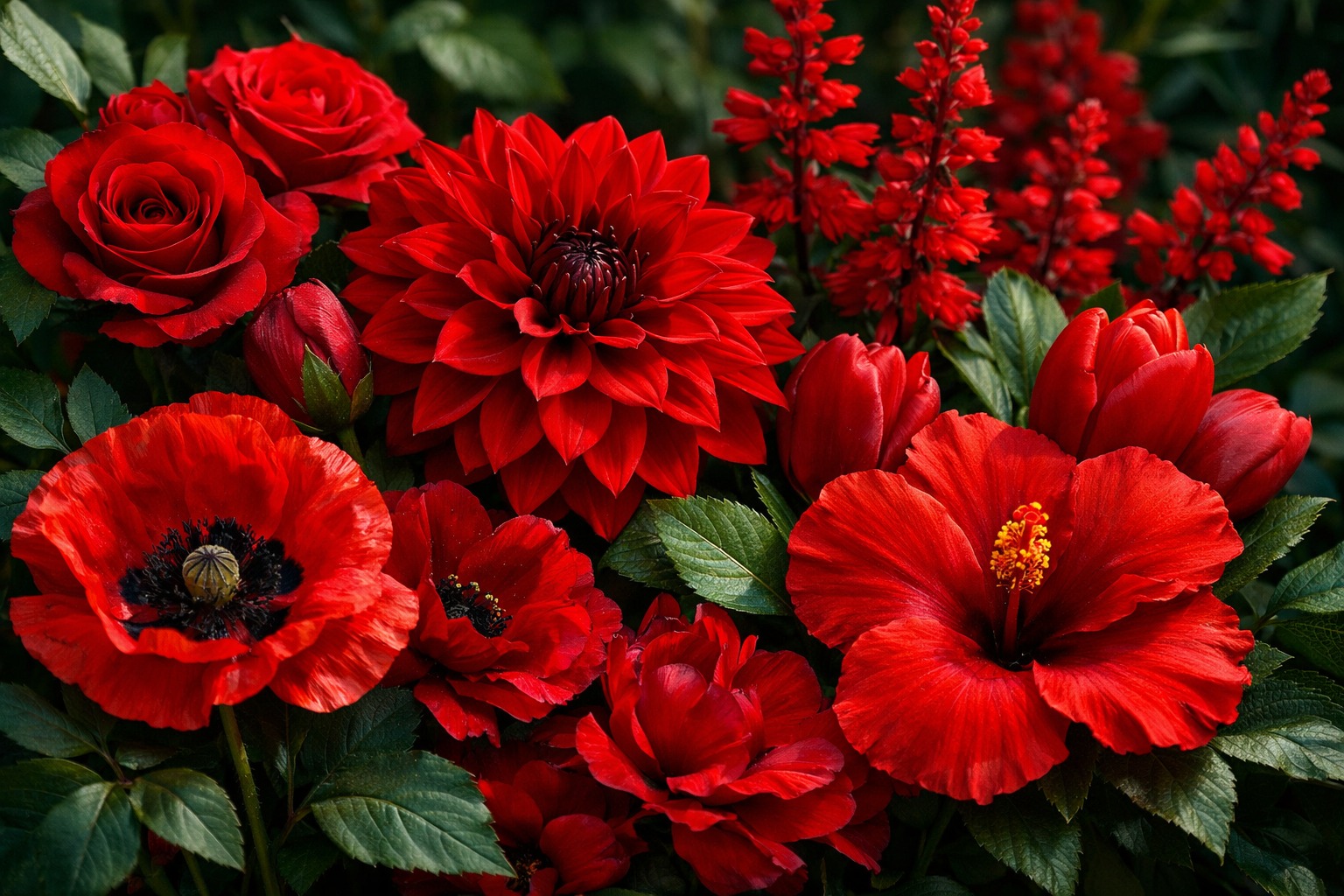
Whether you're filling a cottage border, brightening containers on a patio, or just want one reliable red bloomer through the summer, this list covers 12 proven varieties across bulbs, annuals, perennials, and shrubs.
These 12 red-flowering plants span USDA zones 3–11, covering spring bulbs, summer annuals, and evergreen shrubs. Choices range from cold-hardy tulips in zone 3 to tropical hibiscus kept in containers up north.
Most need full sun and regular deadheading to stay in heavy bloom.
Spring Red Flowers
Spring reds hit while most of the garden is still waking up, making them especially impactful. These three varieties bloom between late winter and late spring, and each one fills a different niche.
Remember it later
Planning to try this recipe soon? Save it for a quick find later!
1. Tulip 'Apeldoorn' (Darwin Hybrid)
Zone 3–7 Easy
Tulipa 'Apeldoorn' is the classic mid-spring red tulip - tall, bold, and built for cutting. Among garden plants that deliver instant color, few match a mass planting of these in April.
- Bloom time: Mid-spring, typically April into early May depending on zone.
- Bulb vigor: Strong in years 1-3; treat as annual in zones 8 and warmer where soil doesn't chill enough.
- Stem length: 18-24 inches - long enough for vase arrangements without staking.
2. Shirley Poppy
Zone 3–9 Easy
Papaver rhoeas, the Shirley Poppy, blooms late spring to early summer with tissue-paper-thin petals surrounding a dark center. Direct-sow in fall or very early spring - it needs cold contact to germinate well.
- Self-seeding: Leave a few spent heads and it returns reliably each year without replanting.
- Height: 12-24 inches; shorter in poor soil, taller with good drainage and full sun.
- Weakness: Doesn't transplant - sow where it will grow.
3. Peony 'Karl Rosenfield'
Zone 3–8 Easy
Paeonia lactiflora 'Karl Rosenfield' produces double, bowl-shaped scarlet blooms in late spring on stems reaching 24-30 inches. These are among the most long-lived perennials you can plant - established crowns last 30 or more years with minimal intervention.
For detailed growing advice, peony care basics cover soil prep and planting depth, which matter more here than with most perennials.
- Planting depth: Set eyes no deeper than 1-2 inches below soil surface in northern zones, or they won't bloom.
- Support: Use a peony ring or stake early - heavy blooms flop after rain.
- After bloom: Foliage stays attractive through summer; don't cut it back until fall.
Plant 'Karl Rosenfield' near white or purple companions to make the scarlet pop. A row of deep purple alliums blooming at the same time creates a classic contrast that works in any border style.
Summer Red Flowers
Summer is red's main season. These varieties carry color from June through frost, and most are available as transplants at any garden center by late spring.
4. Hybrid Tea Rose 'Mr. Lincoln'
Zone 5–9 Medium
Few flowers match the fragrance of Rosa 'Mr. Lincoln' - its deep velvety-red blooms on 3-5 foot canes are what most people picture when they think of a red rose.
It repeat-blooms reliably when you deadhead spent blooms every week or two through summer.
- Heat tolerance: Mulch the root zone in summer to retain moisture and reduce black spot pressure.
- Pruning: Cut back to 12-18 inches in early spring, just as buds swell.
- Disease note: More susceptible to black spot than newer shrub roses - morning sun and good airflow help.
5. Dahlia - Dark Red Decorative Types
Zone 8–11 Medium
Dark red decorative dahlias run from dinner-plate size to fist-sized ball forms, all blooming mid-summer through the first hard frost. They produce more flowers per plant than almost anything else in this list.
If you want to extend color into fall, dahlias are the most reliable way to do it.
- Tuber storage: In zones 3-7, dig tubers after the first frost kills the foliage and store in a cool, dry cellar at 40-50°F.
- Height range: 18-48 inches - choose compact types for containers, tall types for back-of-border.
- Feeding: Use a low-nitrogen fertilizer once plants hit 12 inches; high nitrogen delays bloom.
6. Scarlet Sage
Zone 10–11 Easy
Salvia splendens produces upright spikes of scarlet that last from late spring right through frost in most climates where it's grown as an annual. It's compact at 12-24 inches and works equally well in ground beds or mixed containers.
- Hummingbird draw: Tubular flowers are a consistent hummingbird target all summer long.
- Heat tolerance: One of the few annuals that doesn't skip a beat in humid summer heat.
- Buy transplants: Starting from seed takes 10-12 weeks indoors; most gardeners buy 4-packs in spring.
Red and orange flowers share the same warm end of the spectrum, so they pair naturally. If you want a bed with layered warmth, mixing red salvia with bronze zinnias or amber-toned marigolds gives a cohesive look without looking matchy.
7. Zinnia elegans - Red Varieties
Annual Easy
Red zinnias bloom in 6-8 weeks from direct-sown seed - faster than almost any other flower on this list. They're drought-tolerant once established and keep flowering as long as you don't let them go to seed all at once.
Anyone learning to grow zinnias from scratch will find red cactus-flowered types especially forgiving in summer heat.
- Height range: 6-36 inches - 'Benary's Giant Red' hits 3 feet; 'Zahara Red' stays under 12 inches.
- Butterfly magnet: Flat-headed forms attract swallowtails and painted ladies more than pompom types.
- Succession sow: Sow a second round 4 weeks after the first for continuous color through September.
8. Red Pentas
Zone 10–11 Easy
Pentas lanceolata covers itself in clusters of tiny star-shaped red flowers from early summer through fall. It handles partial shade better than most red-flowering annuals, making it useful under trees or on east-facing porches.
- Pollinator value: Attracts both hummingbirds and butterflies - often both at the same time on a large plant.
- Container use: Excellent in mixed pots; pairs well with chartreuse sweet potato vine for contrast.
- Watering: Water at the base to keep foliage dry and reduce fungal issues in humid summers.
9. Red Hot Poker
Zone 5–9 Easy
Kniphofia uvaria shoots up vertical torch-like spikes of red-orange in early summer, reaching 24-48 inches. The structural form is unlike anything else in a border - it reads as bold even from a distance.
If you've been growing cool blue perennials like agapanthus nearby, red hot poker creates a striking contrast in the same bed.
- Soil tolerance: Handles poor, dry soils well once established - avoid heavy clay that stays wet in winter.
- Clump growth: Spreads slowly by offsets; divide every 4-5 years to keep blooming strongly.
- Winter care: In zone 5-6, tie leaves over the crown loosely for insulation before hard frost.
Warm-Climate and Container Red Flowers
These plants either need zone 9 or warmer to survive outdoors year-round, or they're best managed in containers that come inside for winter. Both reward warm-climate gardeners with exceptional long-season color.
10. Tropical Hibiscus
Zone 9–11 Medium
Hibiscus rosa-sinensis produces single large red blooms - some with a contrasting dark eye - for most of the growing season in warm climates.
In zones 9-11 it grows as a 4-8 foot shrub; in cooler zones, grow it in a container and bring it indoors before temperatures drop below 50°F.
- Bloom habit: Each flower lasts only one day, but a healthy plant produces new ones daily throughout the warm season.
- Fertilizing: Feed every two weeks with a balanced fertilizer during active growth - skipping this slows blooming noticeably.
- Container size: Use a 12-15 inch pot minimum; too small a container stresses roots and reduces flower count.
11. Red Zonal Geranium
Zone 10–11 Easy
Pelargonium × hortorum in red is the standard window-box plant for good reason: it blooms all season, handles summer heat, and shrugs off irregular watering better than most flowering annuals. At 10-18 inches tall, it fits anywhere.
- Overwintering: In zones below 10, bring pots inside before frost - plants survive on a sunny windowsill and can go back out next spring.
- Deadheading: Snap off entire spent flower stems at the base, not just the petals, to keep new blooms coming.
- Combinations: Classic in red-white-blue container schemes; also works with silver dusty miller as a foliage contrast.
Gardeners in zones 3–6 can grow tropical hibiscus and zonal geraniums as annuals or container plants without issue. Start them indoors 8–10 weeks before last frost, and they'll be in full bloom by early summer.
Late Winter and Fall Red Blooms
12. Camellia japonica - Red Cultivars
Zone 7–9 Medium
Red Camellia japonica cultivars bloom late winter to spring - some as early as January in zone 8 - when almost nothing else is in color outdoors. The glossy evergreen foliage earns its place in the garden even out of bloom.
Mid-to-late season bloomers like 'Professor Charles S. Sargent' avoid frost damage to buds better than early types.
- Soil pH: Requires acidic soil between pH 5.5-6.5; amend with sulfur if your native soil runs neutral.
- Light: Prefers bright, filtered light or morning sun with afternoon shade - full afternoon sun scorches leaves.
- Size: Can reach 6-12 feet over many years; select a spot where it can reach mature size without heavy pruning.
How These Varieties Compare?
Choosing between 12 red-flowering plants is easier when you can see key traits side by side. This table covers the most commonly compared attributes.
| Plant | Zone | Height | Season | Best Use |
|---|---|---|---|---|
| Tulip 'Apeldoorn' | 3–7 | 18–24 in | Mid-spring | Cutting, mass planting |
| Shirley Poppy | 3–9 | 12–24 in | Late spring | Cottage borders |
| Peony 'Karl Rosenfield' | 3–8 | 24–30 in | Late spring | Long-lived perennial bed |
| Rose 'Mr. Lincoln' | 5–9 | 3–5 ft | Summer–fall | Cutting, specimen |
| Dahlia decorative | 8–11* | 18–48 in | Summer–frost | Cutting, back of border |
| Scarlet Sage | Annual | 12–24 in | Spring–frost | Beds, containers |
| Tropical Hibiscus | 9–11 | 2–8 ft | Summer–fall | Specimen, containers |
| Zinnia elegans | Annual | 6–36 in | Summer–frost | Borders, cutting |
| Red Pentas | Annual | 12–24 in | Summer–frost | Pollinator beds, pots |
| Red Hot Poker | 5–9 | 24–48 in | Early summer | Structural accent |
| Camellia japonica | 7–9 | 6–12 ft | Late winter–spring | Year-round evergreen |
| Zonal Geranium | Annual | 10–18 in | Summer–frost | Containers, window boxes |
*Dahlias are perennial in zones 8-11 but tubers should be lifted and stored in zones 3-7.
Which Red Flower Fits Your Situation?
Not every garden needs the same kind of red. Here's a quick scenario guide to match your conditions with the right pick.
- Cold climate, zone 3-4: Tulip 'Apeldoorn' and 'Karl Rosenfield' peony are your most reliable bets - both survive deep freezes without protection in most years.
- Low maintenance: Shirley Poppy and red zinnias need almost nothing after sowing. Poppy self-seeds; zinnias just need occasional watering in a dry spell.
- Attracting hummingbirds: Scarlet sage and red pentas both draw hummingbirds consistently - plant them together for double impact near a window you use daily.
- Cut flower garden: 'Mr. Lincoln' rose, dahlia, and tulip all have long, strong stems. Plant all three for cutting material from April through October.
- Containers only: Zonal geranium, red pentas, and tropical hibiscus all perform well in pots and can move indoors before frost.
- Southern garden, zone 8-9: Camellia japonica gives you red in winter when everything else is dormant - nothing else on this list does that.
Dahlias, hibiscus, and pentas are all frost-sensitive. A single night below 28°F kills them to the ground. Set a weather alert for the first fall frost and have your plan ready — dig dahlia tubers, bring containers in, and cover any in-ground tropicals before that date.
Getting the Most Red All Season
A single red plant is a punctuation mark. A sequence of them creates a garden that feels intentional and alive from April through October.
The strategy is simpler than it sounds.
Start with tulips for April color, transition into peonies and salvia in May and June, and let dahlias and zinnias carry summer through frost.
If you also want to grow tall annuals for structure, plant them behind lower red flowers to build depth rather than a flat wall of color.
Mixing red with clean white companions like shasta daisies or white zinnias prevents the palette from feeling heavy, especially in smaller beds. Red against white also photographs exceptionally well for anyone documenting their garden through the season.
Soil and sun matter more than variety choice for most of these plants. Nearly all 12 varieties perform better with well-drained soil and at least 6 hours of direct sun.
Fix drainage before you plant anything - waterlogged roots kill dahlias, roses, and peonies faster than any pest or disease will.
Frequently Asked Questions
Shirley Poppy (Papaver rhoeas) and red zinnias are the lowest-maintenance options — both grow from direct-sown seed, need no deadheading to rebloom, and tolerate dry spells once established in zones 3–9.
Scarlet Sage (Salvia splendens) and Red Pentas (Pentas lanceolata) are both consistent hummingbird draws, with tubular red flowers that produce nectar from late spring through the first frost in most U.S. climates.
Darwin Hybrid tulips like 'Apeldoorn' bloom mid-spring, typically late April in zones 5–6 and as early as late March in zones 7–8, provided bulbs received at least 12 weeks of cold temperatures below 45°F.
Yes — in zones 3–7, dig dahlia tubers after the first killing frost, let them dry for 24 hours, and store them at 40–50°F in a cardboard box with dry peat moss until replanting the following May.
Red Camellia japonica cultivars bloom from late January through March in zones 7–9, making them the only plant on this list to deliver true red color during winter months outdoors.
Pin it for your next red flowers: 15 stunning varieties project.