Yellow dominates a garden the way no other color does - not subtly, not timidly, but with a full-throated brightness that reads from across the yard.
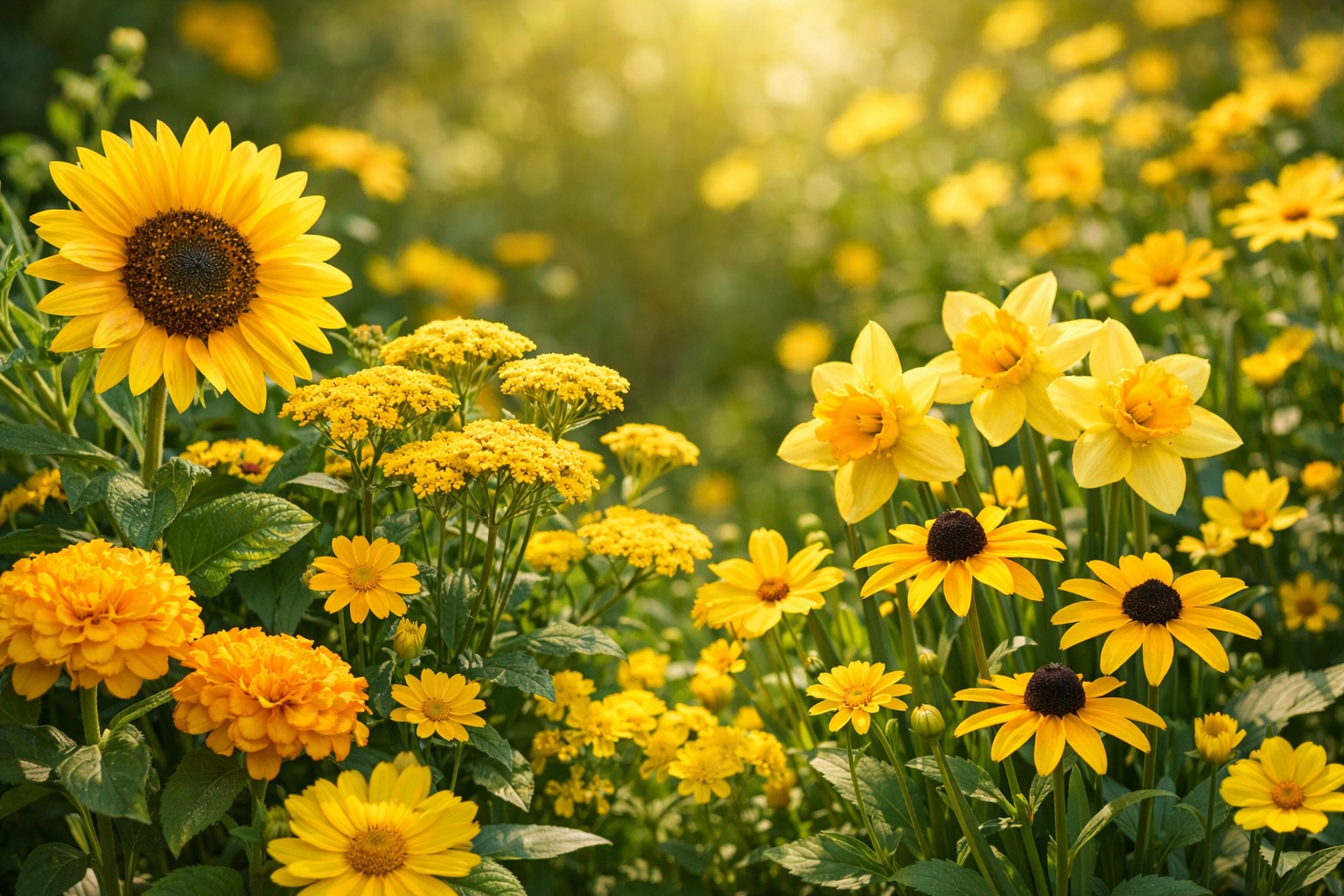
From butter-pale primroses opening at dusk to the deep gold of a Black-eyed Susan standing tall in August heat, yellow bloomers cover nearly every season, soil type, and garden size on the list below.
These 12 yellow-flowering plants span annuals, perennials, bulbs, and shrubs — covering zones 3 through 9. Each entry was chosen for a distinct bloom shape, proven garden performance, and a concrete use case beyond "looks nice."
Yellow Perennials That Come Back Every Year
Perennials do the heavy lifting in any yellow border. Plant them once, and most will expand steadily without much intervention - some even self-seed into new areas of the bed on their own.
Remember it later
Planning to try this recipe soon? Save it for a quick find later!
Coreopsis Zone 4–9 Easy
Coreopsis lanceolata blooms for 6-10 weeks straight - longer than almost any other yellow perennial in its size class. It's one of the few flowering plants that actually performs better in poor, sandy soil than in rich amended beds.
- Bloom window: Late spring through midsummer, occasionally reblooming into early fall if deadheaded.
- Soil tolerance: Sandy, low-fertility soil is ideal - rich soil produces lush foliage and fewer flowers.
- Height and spread: 12-24 inches tall; self-seeds moderately, so remove spent heads to control spread.
Black-eyed Susan Zone 3–9 Easy
The 'Goldsturm' cultivar of Rudbeckia fulgida is the gold standard for late-season color - golden petals radiating from a near-black central cone from midsummer right through October. Knowing the details of Rudbeckia deadheading timing dramatically extends its bloom season.
- Deer resistance: Reliably deer-tolerant - a real advantage in zones 3-5 where browsing pressure is high.
- Cut flower use: Stems cut cleanly and last 7-10 days in a vase.
- Pollinator value: Draws goldfinches to seed heads in fall if left standing through winter.
Daylily 'Stella de Oro' Zone 3–9 Easy
Most daylilies bloom once and spend. Hemerocallis 'Stella de Oro' reblooms reliably through summer, producing 3-4 inch golden trumpets in flushes from June to September.
Consistent fertilizing after each flush - as covered in daylily feeding schedules - keeps rebloom coming.
- Size: Compact at 12-18 inches - works in containers and front borders equally well.
- Soil adaptability: Tolerates clay, sand, and everything between as long as drainage is adequate.
- Dividing: Divide clumps every 3-4 years in early fall to maintain bloom quality.
Goldenrod 'Fireworks' Zone 4–9 Easy
Solidago rugosa 'Fireworks' erupts in arching sprays of tiny golden flowers in late August - exactly when most perennials have already finished. Unlike the roadside species, this cultivar stays at 24-36 inches and spreads slowly enough for a mixed border.
- Pollinator magnet: Among the highest-rated native plants for bee and butterfly traffic in late summer.
- Common misconception: Goldenrod does not cause hay fever - that's wind-borne ragweed blooming at the same time.
- Spacing: Plant 18-24 inches apart; clumps bulk up noticeably by year three.
Cut goldenrod stems back by half in late June to delay bloom by 2–3 weeks and reduce flopping on taller clumps.
Yellow Iris Zone 4–9 Medium
Iris pseudacorus produces large, bold yellow standards in May and June - striking near water features or in rain gardens where few other perennials survive waterlogged roots. It pairs well in the same palette as blue flowers like pickerelweed at pond edges.
- Spread caution: Aggressive in wet soils - contain it with submerged baskets in natural ponds to prevent escaping into waterways.
- Dry-soil tolerance: Adapts to average garden soil, but blooms best with consistent moisture.
- Height: 24-36 inches; foliage stays attractive well after bloom ends.
Evening Primrose Zone 4–9 Easy
Oenothera biennis opens its lemon-yellow blooms at dusk, releasing a soft fragrance that carries noticeably on warm evenings. It behaves as a biennial in zones 4-6 and as a short-lived perennial in zones 7-9, self-seeding freely either way.
- Root system: Develops a deep taproot by year two - drought-tolerant once established, but difficult to transplant.
- Night pollinators: Specifically attracts sphinx moths and night-flying beetles not reached by daytime bloomers.
- Height variability: Can range 12-36 inches depending on soil richness and available light.
Yellow Spring Bloomers: Bulbs and Shrubs
Spring yellow arrives before most perennials have leafed out, which makes bulbs and early-flowering shrubs essential for bridging that gap. These varieties offer the first reliable color of the season - sometimes weeks before anything else stirs.
Yellow Tulip 'Strong Gold' Zone 3–8 Easy
Cup-shaped and clean golden-yellow, Tulipa 'Strong Gold' is a Darwin hybrid that holds its color without fading to cream in warm weather - a common problem with paler tulip varieties. Plant bulbs 6-8 inches deep in well-drained soil each fall for reliable May flowers.
- Naturalization: Slower to naturalize than species tulips, but 'Strong Gold' persists and returns for 3-5 years in zones 3-6.
- Spacing: 4-6 inches apart for a full, massed look - closer spacing than most bulb guides suggest.
- Pairing option: Plant under 'Strong Gold' with purple muscari for a bold spring contrast.
Forsythia Zone 5–8 Easy
Forsythia x intermedia flowers before a single leaf appears - bare arching branches covered in bright yellow by late March in zone 6. It's fast-growing and responds well to hard pruning immediately after bloom, which keeps the 6-10 foot spread manageable.
- Pruning window: Cut back right after bloom ends - forsythia sets next year's flower buds on new growth through summer, so late pruning eliminates next spring's show.
- Hedge use: Shear into a loose informal hedge; tight formal shearing reduces flowering significantly.
- Cold hardiness: Flower buds can be damaged below -10°F in zone 5 - look for 'Northern Gold' in colder areas.
Kerria Zone 4–9 Easy
Kerria japonica is the yellow-blooming shrub that actually tolerates shade - a rare combination. Its arching bright green stems flower in April and May, and the stems remain green through winter, adding subtle color to a bare garden.
- Shade tolerance: Blooms acceptably in part shade where forsythia would struggle - good for north-facing borders.
- Clay soil: One of the few ornamental shrubs that performs well in heavy clay without amendment.
- Forms available: Single-petaled species form vs. double-petaled 'Pleniflora' - both reach 4-6 feet; singles have slightly better pollinator value.
In zone 8–9, forsythia and kerria may bloom as early as late February. In zone 5, expect both to flower in April — sometimes early May if the winter runs long.
Yellow Annuals for Containers and Cutting Gardens
Annuals deliver yellow from seed to full bloom within a single season, and most tolerate container life well enough to anchor a patio display. These three are workhorses - easy to source, quick to establish, and productive through heat.
Calendula Annual Easy
Calendula officinalis is one of the few annuals that actually prefers cool weather - it hits its stride in spring and fall, slows in midsummer heat, and then rebounds in September.
Blooms appear 8-12 weeks from transplant and make excellent cut flowers lasting 5-7 days in water.
- Edible use: Ray florets are edible and traditionally used in salves and skin preparations - pick fully open flowers in the morning.
- Succession sowing: Sow every 3 weeks from early spring through early summer for continuous bloom across the season.
- Deadheading: Remove spent heads every 3-4 days; calendula stops producing quickly if seed heads are allowed to mature.
Sunflower 'Sunspot' Annual Easy
At 18-36 inches, 'Sunspot' stays compact enough for large containers and small gardens without sacrificing the classic oversized 10-inch head. Direct sow after last frost - germination takes 7-10 days, and growing sunflowers from seed outdoors consistently outperforms transplants.
- Bloom time: Flowers appear 8-10 weeks from sowing - one of the fastest large-headed sunflowers available.
- Single stem: 'Sunspot' produces one main head per plant rather than branching; sow densely for a fuller display.
- Bird value: Leave heads to dry on the stalk - goldfinches and chickadees feed heavily on mature seed heads in late fall.
Marigold 'Crackerjack' Annual Easy
Tagetes erecta 'Crackerjack' produces dense pompon blooms - some reaching 3-4 inches across - on stems tall enough for cutting at 18-24 inches. Heat doesn't slow it down; this variety keeps blooming through summer temperatures that wilt most other annuals.
- Companion planting: Plant 12 inches from tomatoes and peppers - the scent deters aphids, whitefly, and some nematodes in vegetable beds.
- Container use: Needs a minimum 10-inch pot to prevent drying out too fast; water every 1-2 days in summer heat.
- Deadheading: Pinch spent blooms every 5-7 days to extend flowering into early October.
African marigold pollen stains fabric and skin. Wear gloves when cutting, and avoid planting directly beside light-colored stone or concrete walls where pollen can accumulate and discolor surfaces.
How Yellow Flowers Stack Up: At a Glance?
Choosing between 12 varieties is easier when the key facts sit side by side. The table below compares each plant on the attributes that matter most for placement decisions.
| Plant | Zone | Height | Peak Season | Best Use |
|---|---|---|---|---|
| Coreopsis | 4–9 | 12–24 in | Late spring–summer | Poor-soil borders |
| Black-eyed Susan | 3–9 | 24–36 in | Midsummer–fall | Cut flowers, wildlife |
| Daylily 'Stella de Oro' | 3–9 | 12–18 in | June–September | Containers, edging |
| Yellow Tulip 'Strong Gold' | 3–8 | 12–20 in | Spring | Massed bulb displays |
| Forsythia | 5–8 | 6–10 ft | Early spring | Informal hedge |
| Kerria | 4–9 | 4–6 ft | Spring | Shade borders, clay soil |
| Calendula | Annual | 12–18 in | Spring and fall | Cutting garden |
| Sunflower 'Sunspot' | Annual | 18–36 in | Summer | Containers, bird garden |
| Goldenrod 'Fireworks' | 4–9 | 24–36 in | Late summer–fall | Pollinator border |
| Yellow Iris | 4–9 | 24–36 in | May–June | Rain gardens, ponds |
| Marigold 'Crackerjack' | Annual | 12–24 in | Summer–fall | Vegetable companion |
| Evening Primrose | 4–9 | 12–36 in | Summer | Night garden, dry slopes |
Pairing Yellow With Other Colors
Yellow sits between warm and cool on the color wheel, which makes it unusually flexible as a pairing partner. The combinations below work because they create tension or harmony without canceling each other out.
Deep purple is the classic contrast - the strong value difference makes both colors read brighter. Softer whites cool yellow down and give the eye a place to rest.
Knowing where white-flowered plants fit in the border helps balance a yellow-heavy planting without washing it out.
- Yellow + deep purple: Black-eyed Susan with 'Purple Emperor' sedum or salvia - a high-contrast late-summer combo that peaks in August.
- Yellow + blue: Coreopsis paired with catmint or veronica creates a soft, meadow-style planting that pollinators use heavily all season.
- Yellow + near-black: 'Sunspot' sunflowers against growing dark-leaved plants like black elephant ear or dark-leafed cannas for a dramatic container display.
- Yellow + orange: Marigold 'Crackerjack' with orange zinnias - warm and saturated; best in full sun where both stay compact and upright.
- Yellow + gold: Layering true yellow with deeper amber tones - like golden-toned cultivars of rudbeckia and helenium - creates a rich, monochromatic border that reads as one cohesive sweep.
Yellow reflects more light than most flower colors, which means pale yellow reads as nearly white in bright sun. For beds that get afternoon shade, choose deep golden varieties — they hold their color better in lower light.
Which Yellow Flower Should You Plant?
The right choice comes down to your season gap, your soil, and what job you need the plant to do. This shortcut narrows the list fast.
- Need the earliest possible color: Forsythia flowers in late March in zone 6 - nothing else on this list beats that window. Pair with 'Strong Gold' tulips for a two-week overlapping spring display.
- Working with wet or boggy soil: Yellow iris is the standout - it tolerates standing water that would rot every other plant here. Just contain it in natural water features.
- Want low maintenance on poor or sandy ground: Coreopsis outperforms everything else on lean, dry soil. It self-seeds gently and rarely needs division.
- Filling a container on a hot patio: 'Sunspot' sunflower and marigold 'Crackerjack' both handle reflected heat well. Plant one per 10-12 inch pot and water daily in summer.
- Building a pollinator border: Goldenrod 'Fireworks' and black-eyed Susan planted together extend the nectar window from July through October - critical for late-season bees.
- Gardening in part shade: Kerria is the only shrub here that flowers acceptably in part shade. For perennials, daylily 'Stella de Oro' handles 4-5 hours of direct sun with minimal bloom loss.
- Cutting garden on a budget: Calendula from seed costs almost nothing and outproduces most other cut flowers per square foot from spring through early summer.
Frequently Asked Questions
Daylily 'Stella de Oro' reblooms in flushes from June through September in zones 3–9, while coreopsis holds bloom for 6–10 continuous weeks from late spring into midsummer if deadheaded every few days.
Goldenrod 'Fireworks' ranks among the highest native plants for late-season bee traffic, and black-eyed Susan 'Goldsturm' draws over 30 species of native bees during its midsummer-to-fall bloom window.
Space coreopsis and black-eyed Susan 18–24 inches apart — both spread by division and seed over 3–4 years, and tight spacing leads to poor air circulation and fungal issues by year two.
'Strong Gold' tulips persist in the ground for 3–5 years in zones 3–6 where winters are cold enough for proper dormancy; in zones 7–8, lifting and chilling bulbs at 35–45°F for 10–12 weeks before replanting improves repeat bloom.
Pin it for your next yellow flowers: 15 stunning varieties project.