Orange sits in a category of its own in the garden - warmer than red, bolder than yellow, and impossible to overlook from across a yard.
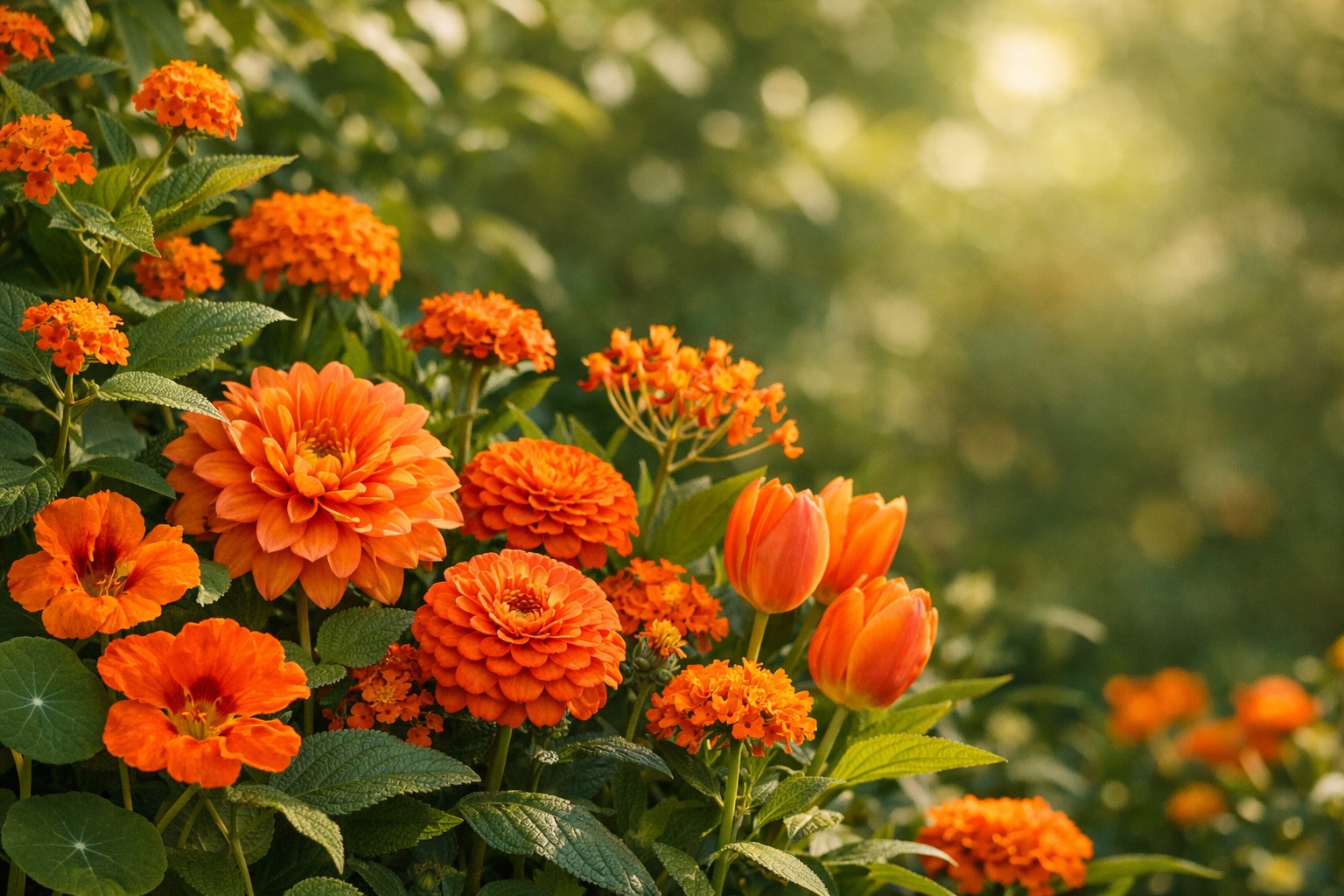
Whether you want a fast-filling container, a cutting garden that runs from June to frost, or a pollinator patch that hums all afternoon, there's an orange-blooming plant sized and zoned for the job.
These 12 orange flower varieties cover annuals, perennials, and tropicals across USDA zones 2–11. From 6-inch bedding marigolds to 6-foot cannas, each entry is selected for reliable bloom, real-world availability, and a distinct garden use — containers, mass plantings, cut flowers, or pollinator beds.
Annual Orange Flowers
Annuals give you the fastest, cheapest route to orange in the garden. Most start blooming 6-10 weeks from seed and keep going until hard frost, especially with regular deadheading.
Remember it later
Planning to try this recipe soon? Save it for a quick find later!
1. French Marigold 'Safari Orange'
Zone 2–11 Easy
Tagetes patula 'Safari Orange' is the workhorse of orange bedding plants. Compact plants push out 2-3 inch pompom blooms in repeated flushes all season long with almost zero fuss.
- Bloom time: 8-10 weeks from seed to first flower; continues until frost.
- Soil needs: Needs fast-draining soil - standing water causes root rot within days.
- Best use: Front-of-border edging, window boxes, or mass planting for solid color impact.
2. Calendula 'Resina'
Zone 2–11 Easy
Calendula officinalis 'Resina' produces open-faced 2-3 inch blooms in a warm, saturated orange, and it's one of the few flowering plants that actually prefers cool weather. It thrives in spring and fall when most annuals slow down.
- Edible petals: 'Resina' has a high resin content, making it the go-to cultivar for herbal salves and teas.
- Shade tolerance: Handles partial shade better than most orange annuals - useful under thin tree canopies.
- Rebloom trick: Deadhead every few days to keep the flush going; let a few set seed for self-sowing next spring.
3. Zinnia 'Benary's Giant Orange'
Zone 2–11 Easy
Few annuals match this zinnia for cut-flower performance. Blooms measure 3-5 inches across, stems run 24-36 inches, and a single vase arrangement lasts 3+ weeks.
Learning how to grow zinnias from seed takes only one season to master.
- Disease resistance: 'Benary's Giant' strains carry improved resistance to powdery mildew compared to older varieties.
- Direct sow: Transplants poorly - sow seeds directly in warm soil after last frost for best results.
- Pollinators: Flat, open centers draw butterflies all afternoon, especially swallowtails and painted ladies.
Pinch zinnia seedlings once at 6 inches tall to force branching. You'll get 3–5 stems where one would have grown, dramatically increasing cut flower yield per plant.
4. California Poppy
Zone 6–10 Easy
Eschscholzia californica produces cup-shaped 1-2 inch blooms in glowing orange - the kind of color that photographs like neon on a sunny afternoon. The blooms close on cloudy days and reopen when the sun returns.
- Soil preference: Lean, sandy, or rocky soils produce better flowering than rich, amended beds.
- Self-seeding: One plant can colonize a 3-foot patch within two seasons without any help.
- Annual outside its zone: Grown as a cool-season annual in zones 3-5 with a fall or very early spring sow.
Perennial Orange Flowers
These plants come back each year, building larger clumps and stronger root systems over time. Most reach peak performance in their second or third season.
Pairing them with late-season bloomers keeps the border active from spring through October.
5. Gaillardia 'Arizona Sun'
Zone 3–9 Easy
Gaillardia x grandiflora 'Arizona Sun' blooms from early summer to hard frost - one of the longest seasons of any orange perennial in its zone range. The bi-colored orange-red petals radiate from a dark center like a miniature sunburst.
- Drought tolerance: Once established, survives on rainfall alone in most of zones 5-9.
- Poor soil adapted: Actually performs better in lean soil - rich soil encourages flopping stems.
- Compact form: Stays 12-18 inches, which makes it one of the few orange perennials that fits a narrow border.
6. Crocosmia 'Lucifer'
Zone 5–9 Medium
Arching spikes of vivid orange-red tubular flowers make Crocosmia x crocosmiiflora 'Lucifer' stand out in mid-to-late summer when many perennials fade. Sword-like foliage adds vertical structure even before the blooms appear.
- Spreading habit: Spreads by corms to form dense clumps - divide every 3-4 years to maintain vigor.
- Hummingbird magnet: Tubular flowers are shaped for hummingbird feeding; one clump pulls them in reliably.
- Cut flower use: Stems hold well in a vase for 7-10 days; cut when the first 2-3 buds on each spike are open.
In zones 8–9, Crocosmia 'Lucifer' can spread aggressively. Plant it inside a buried root barrier or in a spot where naturalization is welcome, not in a mixed border where it may overwhelm smaller plants.
7. Tiger Lily 'Tigrinum'
Zone 3–8 Easy
Lilium lancifolium carries 4-6 orange, black-freckled blooms per stem and opens them over a 2-3 week period in mid-summer. At 24-48 inches, it adds bold vertical presence to the middle or back of a border.
- Deer resistance: One of the more reliable deer-tolerant lilies - a real advantage in rural zones 3-6.
- Naturalizing: Produces bulblets along the stem; these drop and root, slowly expanding the colony.
- Virus caution: Tiger lilies can carry lily mosaic virus without showing symptoms - plant away from other lily species to avoid cross-infection.
8. Rudbeckia 'Autumn Sun'
Zone 4–9 Easy
Most people picture yellow when they think of black-eyed Susans, but 'Autumn Sun' leans warm orange-gold with a shorter, flatter cone center than the species. Reading up on black-eyed Susan care will help you get the most out of this vigorous hybrid.
- Bloom window: Flowers for 6-8 consecutive weeks, typically July through September.
- Drought tolerance: Established plants handle 2-3 weeks without rain in zones 5-7 without wilting.
- Height: Reaches 18-36 inches - stake taller plants in windy sites or cut back by one-third in early June to reduce flopping.
9. Helenium 'Sahin's Early Flowerer'
Zone 3–8 Medium
Helenium autumnale hybrids are underused - and that's a mistake. 'Sahin's Early Flowerer' pushes orange daisy heads with domed centers from July all the way into October, bridging the summer-to-fall gap better than almost anything else in its zone.
- Pollinator value: Domed centers attract bees and hoverflies; a patch of 5+ plants becomes a feeding station by August.
- Soil flexibility: Handles average garden soil and even periodically wet ground better than most perennials.
- Division schedule: Divide every 3 years in spring to prevent the center from dying out - a common issue with older clumps.
Helenium is sometimes called sneezeweed — not because it causes allergies, but because dried leaves were once used as snuff. The pollen is not a significant allergen, and it's perfectly safe to plant near patios and seating areas.
Tropical and Tender Orange Flowers
These plants need warmth to perform. In zones 8-11 they're permanent fixtures; everywhere else, treat them as annuals or lift tubers before first frost.
They pay back that extra work with unusually bold color and scale. If you want contrast, mixing these with deep purple flowers in the same bed creates a striking complementary pairing.
10. Canna 'Orange King Humbert'
Zone 7–10 Medium
Canna indica hybrid 'Orange King Humbert' combines bronze-red tropical foliage with 4-6 inch orange blooms on stalks that hit 3-6 feet tall. It's a statement plant - one clump changes the scale of an entire border.
- Wet soil tolerance: Grows at pond margins and in soggy spots where most perennials rot.
- Growth speed: Rapid - rhizomes can expand a clump by 12-18 inches in a single growing season.
- Cold storage: In zones 5-6, lift rhizomes after first frost, dry for 2 weeks, and store in peat at 40-50°F over winter.
11. Gerbera 'Orange'
Zone 9–11 Medium
Gerbera jamesonii produces some of the cleanest, most symmetrical orange blooms available - 3-4 inches across on stiff stems that hold for 2+ weeks as cut flowers. Outside zones 9-11, it excels as a container plant or indoor specimen.
- Potting mix: Use a rich, fast-draining mix with 30% perlite - waterlogged roots are the top cause of failure.
- Light indoors: Needs a south-facing window or supplemental grow light to bloom consistently indoors.
- Fertilizer schedule: Feed with a balanced liquid fertilizer every 2 weeks during the active growing season for continuous bloom.
12. Lantana 'Sundance Orange'
Zone 8–11 Easy
Lantana camara 'Sundance Orange' blooms continuously from late spring until frost, making it one of the most heat-tolerant options on this list. Flower clusters shift color slightly as individual florets age, giving the plant a multi-toned orange look up close.
- Butterfly magnet: Among all plants here, lantana draws the widest variety of butterfly species - monarchs, swallowtails, and skippers visit daily in warm zones.
- Container performance: Thrives in 12+ inch pots with afternoon sun; water when the top inch of soil is dry.
- Toxicity note: Berries are toxic to dogs and cats - plant out of reach or deadhead before fruit forms.
How These 12 Orange Varieties Compare?
Choosing between these plants often comes down to zone, height, and whether you want annual or perennial commitment. This table makes that comparison fast.
| Plant | Zone | Height | Bloom Season | Best Use |
|---|---|---|---|---|
| French Marigold 'Safari Orange' | 2–11 | 6–12 in | Summer–Frost | Edging, containers |
| Calendula 'Resina' | 2–11 | 12–18 in | Spring, Fall | Cool-season color |
| Zinnia 'Benary's Giant Orange' | 2–11 | 24–36 in | Summer–Frost | Cut flowers |
| California Poppy | 6–10 | 6–12 in | Spring–Early Summer | Naturalized patches |
| Gaillardia 'Arizona Sun' | 3–9 | 12–18 in | Early Summer–Frost | Dry borders |
| Crocosmia 'Lucifer' | 5–9 | 24–40 in | Mid-Summer–Fall | Cut flowers, borders |
| Tiger Lily 'Tigrinum' | 3–8 | 24–48 in | Mid-Summer | Back of border |
| Rudbeckia 'Autumn Sun' | 4–9 | 18–36 in | July–September | Mass planting |
| Helenium 'Sahin's Early Flowerer' | 3–8 | 24–36 in | July–October | Pollinator beds |
| Canna 'Orange King Humbert' | 7–10 | 3–6 ft | Summer–Frost | Focal point, wet areas |
| Gerbera 'Orange' | 9–11 | 12–18 in | Spring–Fall | Containers, cutting |
| Lantana 'Sundance Orange' | 8–11 | 12–48 in | Late Spring–Frost | Butterfly gardens, pots |
Getting Orange Flowers to Bloom All Summer
The plants do most of the work - but a few management habits make a real difference in how long and how heavily they bloom. Deadheading frequency is the single biggest variable most gardeners underestimate.
Knowing when to deadhead versus when to leave seed heads is worth learning before the season starts - it affects both rebloom and self-seeding outcomes.
- Marigolds and zinnias: Remove spent blooms every 5-7 days to trigger new bud formation. Skip a week and flowering slows noticeably.
- Gaillardia and rudbeckia: Deadhead through August, then let late blooms go to seed - birds feed on the heads through winter.
- Lantana and calendula: Light shearing (cutting back by one-third) every 3-4 weeks outperforms individual deadheading for total bloom volume.
- Crocosmia and helenium: Remove spent spikes at the base but leave foliage intact until frost - the leaves feed the roots for next year.
Water deeply and infrequently rather than shallow and often. Most orange-blooming plants set stronger roots and bloom longer when soil dries to 2 inches depth between waterings — typically every 3–5 days in summer heat.
Which Orange Flower Fits Your Garden?
Every garden situation favors a different plant. Use these scenarios to narrow the list without second-guessing.
For broader color palette inspiration, browse other flowering garden plants grouped by color and season.
- You want the fastest color from seed: French marigold 'Safari Orange' blooms in 8-10 weeks and costs almost nothing to start. It's the default choice for empty beds mid-season.
- You want cut flowers through summer: Zinnia 'Benary's Giant Orange' produces vase-ready stems faster than any other option here and keeps producing as long as you cut.
- You have a dry, rocky, or poor-soil spot: Gaillardia 'Arizona Sun' or California poppy - both perform better in lean conditions than in amended garden beds.
- You want to attract butterflies specifically: Lantana 'Sundance Orange' draws more butterfly species than any other plant on this list, consistently, from June through October in warm zones.
- You need a bold focal point in a large bed: Canna 'Orange King Humbert' at 3-6 feet tall commands space that shorter plants simply can't fill.
- You're gardening in containers on a hot patio: Gerbera 'Orange' or lantana in a 12+ inch pot with well-draining mix; both tolerate reflected heat better than most perennials would in the same spot.
- You want something that returns every year without replanting: Gaillardia 'Arizona Sun', helenium, or crocosmia - all perennials that build stronger clumps with each passing season.
If you're planning a color-contrast planting, orange pairs naturally against cool blue flowers - the visual tension between the two is one of the most effective combinations in border design.
On the opposite end, pairing orange with stark growing dark flowers nearby creates dramatic depth that photographs exceptionally well.
For gardeners who also want contrast with very light tones, white-blooming varieties placed between orange blocks prevent the color from feeling overwhelming in a small space.
Frequently Asked Questions
French marigold 'Safari Orange', zinnia 'Benary's Giant Orange', and lantana 'Sundance Orange' all bloom continuously from late spring through first frost, provided you deadhead marigolds and zinnias every 5–7 days.
Lantana camara consistently draws the widest range of butterfly species, including monarchs, swallowtails, and skippers; zinnia 'Benary's Giant Orange' is also highly effective, particularly for painted ladies and black swallowtails.
Use pots at least 12 inches wide with drainage holes, fill with a fast-draining mix amended with 20–30% perlite, and feed with balanced liquid fertilizer every two weeks; French marigold, gerbera, and lantana are the most reliable container performers.
Yes — gaillardia 'Arizona Sun', tiger lily 'Tigrinum', and helenium 'Sahin's Early Flowerer' are all hardy to zone 3 and return reliably each spring without winter protection in most of that zone.
Canna rhizomes survive winters in zones 7–10 in the ground, but in zones 5–6 you must dig them after the first frost, dry for two weeks, and store in slightly moist peat moss at 40–50°F until spring replanting.
Pin it for your next orange flowers: 15 stunning varieties project.