No flower color stops visitors in their tracks quite like black. These near-black blooms - deep maroon, velvety purple-black, chocolate-dark - read as true black in the garden, especially against pale companions or bright foliage.
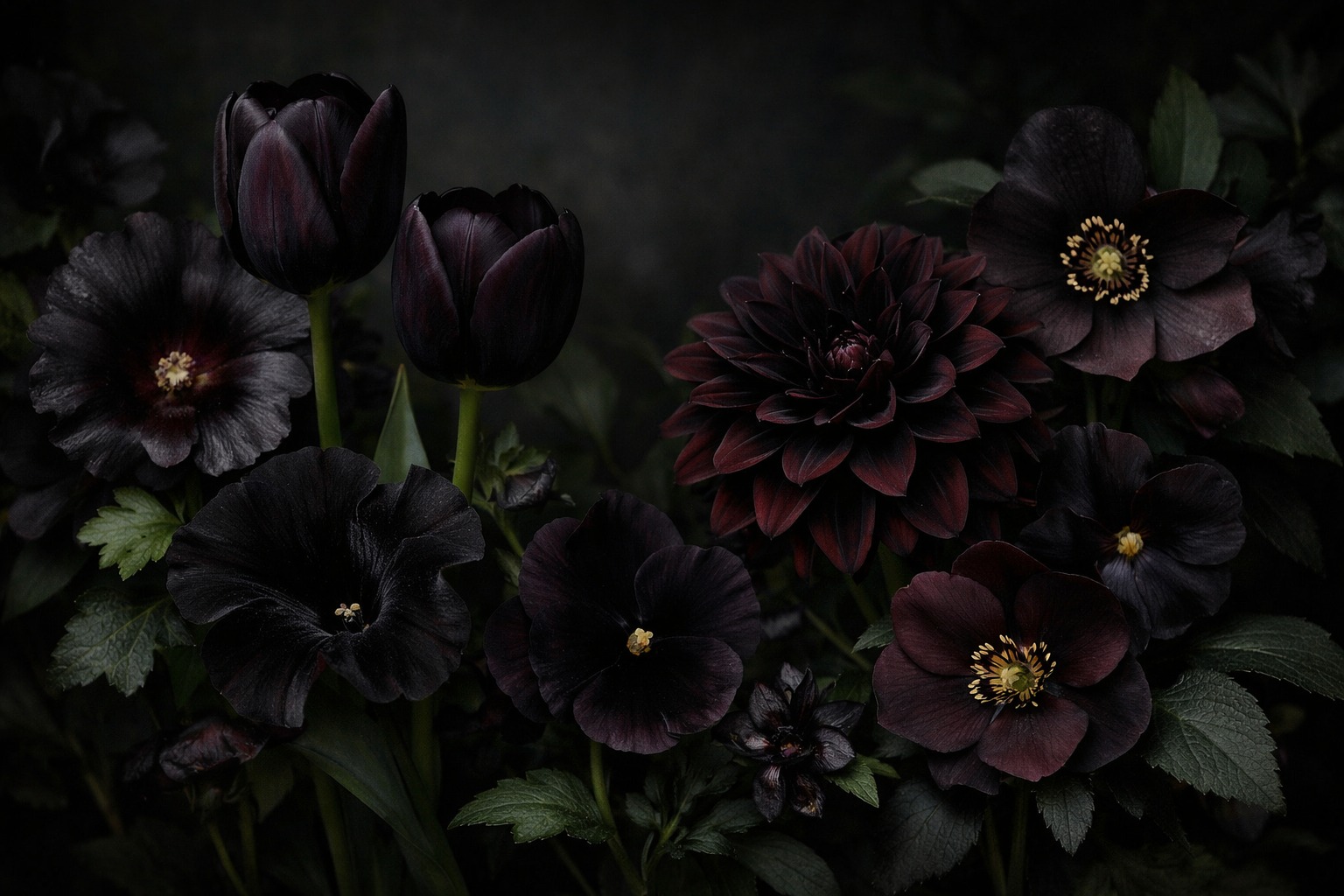
True botanical black doesn't exist — every so-called black flower is actually deep maroon, purple-black, or near-black. But that barely matters in the garden.
These 12 varieties deliver reliable darkness across annuals, perennials, bulbs, and exotics, spanning zones 3 through 11.
Are True Black Flowers Actually Real?
No plant produces pure black pigment. What we call black flowers are loaded with anthocyanin - the same pigment behind deep reds and purples - pushed to such concentration that the petals appear near-black, especially in shade or low light.
Remember it later
Planning to try this recipe soon? Save it for a quick find later!
Light conditions matter a lot with these plants. A dahlia that looks jet black at dusk may reveal deep ruby tones in full midday sun.
Planting near pale or white companions sharpens the contrast and makes dark blooms read darker still.
Photography tip: shoot black flowers in open shade or on overcast days. Direct sun blows out surface detail and makes velvety petals look flat brown rather than dramatic black.
Spring-Blooming Black Varieties
Spring is the strongest season for near-black flowers, with both bulbs and cool-season bedding plants peaking before summer heat arrives. These three varieties are easiest to combine because they overlap in timing.
Tulip 'Queen of Night'
Zone 3–8 Easy
The most widely recognized black flower in any garden center, 'Queen of Night' is a single late tulip with glossy, near-black petals that hold their color through the full 1-2 week bloom window in mid- to late spring.
- Planting depth: Set bulbs 6-8 inches deep in fall for reliable spring emergence.
- Pairing: Spectacular planted with white or pale yellow tulips - the contrast reads like a black-and-white photograph.
- Cold requirement: Needs 12-16 weeks of chilling below 50°F; pre-chilled bulbs work in zones 8-9.
Iris chrysographes (Black Iris)
Zone 5–8 Easy
Iris chrysographes produces deep, velvety-black falls with small gold signal markings that catch the light. Unlike bearded irises, it prefers consistently moist soil and tolerates light afternoon shade without losing bloom quality.
- Bloom time: Mid-spring, roughly 2 weeks after standard bearded types.
- Division: Divide clumps every 3-4 years in late summer to maintain vigor.
- Height: Compact at 12-18 inches - fits the front-to-middle border easily.
Viola x wittrockiana 'Black Pansy' (Black Pansy)
Zone 4–9 Easy
Black pansies are the workhorse of the dark garden. They tolerate light frost and deliver spring and fall color when almost nothing else is blooming.
Inexpensive in flats, they're built for massing.
- Temperature: Perform best below 65°F; fade and go leggy in summer heat.
- Use: Ideal for container edges, window boxes, or carpet planting under taller spring bulbs.
- Shade tolerance: Handle up to 4 hours of shade without losing their dark face markings.
Plant 'Queen of Night' tulip bulbs directly through a mat of black pansies in fall. Both bloom together in spring, and the pansies hide the tulip stems as they die back.

Summer-Blooming Black Varieties
Summer brings the darkest, most dramatic black flowers - dahlias, cosmos, roses, and snapdragons that push dark pigmentation to its limit in warm soil. Several of these are deeper than any red variety and read as black at a distance.
Dahlia 'Arabian Night'
Zone 8–11 Medium
A single-form dahlia with deep maroon-black blooms, 'Arabian Night' flowers continuously from midsummer until the first hard frost. The open-centered blooms are excellent for pollinators and cut flowers simultaneously.
- Tuber storage: In zones 3-7, lift tubers after the first frost and store in peat moss at 40-50°F through winter.
- Pinching: Pinch growing tips at 12 inches to increase branching and double your bloom count.
- Height: Reaches 30-48 inches - stake at planting to avoid storm damage later.
Cosmos atrosanguineus (Chocolate Cosmos)
Zone 7–10 Medium
Cosmos atrosanguineus is sterile and doesn't set seed, so every plant comes from division or rootstock - but the reward is unique. Velvety maroon flowers that age to near-black actually smell of chocolate on warm afternoons.
- Propagation: Divide tuberous roots in spring, or buy started plants - seed won't germinate.
- Watering: Drought-tolerant once established; overwatering causes root rot faster than underwatering.
- Scent: Strongest mid-afternoon when temperatures exceed 70°F.
Rosa 'Black Baccara' (Dark Rose)
Zone 6–9 Medium
'Black Baccara' is a hybrid tea rose with velvety deep maroon petals that appear near-black in low light or shade. Long cutting stems and disease resistance make it practical, not just pretty.
- Light: Full sun (minimum 6 hours) prevents powdery mildew and deepens petal color.
- Bloom color: Darkest in the first flush of June; later flushes trend slightly redder in heat.
- Cutting: Harvest stems at the half-open stage - fully open blooms lose their dark drama quickly.
Antirrhinum majus 'Black Prince' (Snapdragon)
Annual Easy
'Black Prince' snapdragon produces tall spikes of deep maroon-black tubular flowers on stems that reach 18-36 inches. It sets spikes quickly from transplant, making it useful for extending bloom season through regular deadheading.
- Timing: Start seeds indoors 8-10 weeks before last frost for earliest outdoor color.
- Heat tolerance: Slows in peak summer but rebounds strongly in late summer cool-down.
- Cutting: Excellent vase life - harvest spikes when bottom third of florets are open.
Papaver somniferum 'Black Peony' (Poppy)
Zone 3–9 Easy
Large, peony-form double blooms in deep maroon-black make this the showiest annual poppy available. Papaver somniferum 'Black Peony' self-seeds reliably, so one packet of seed keeps the colony going year after year.
- Sowing: Direct sow on bare soil in early spring or fall - seed needs light to germinate, so don't cover it.
- Soil: Performs best in lean, well-drained soil; rich soil pushes foliage at the expense of flowers.
- Seedpods: Decorative dried pods extend garden interest well into fall after petals drop.
Chocolate cosmos and dahlia tubers both rot in waterlogged soil over winter. If your beds stay wet, dig and store tubers in a frost-free garage rather than leaving them in the ground, even in zone 8.
Shade-Tolerant and Exotic Black Varieties
Not every garden has full sun, and a few near-black varieties actively prefer shade or filtered light. These three cover the spectrum from woodland perennial to tropical oddity worth growing in a pot.
Helleborus hybrid 'Black Beauty' (Dark Hellebore)
Zone 4–8 Easy
Hellebores bloom in late winter to early spring when almost nothing else is flowering, and 'Black Beauty' delivers near-black maroon nodding cups that persist for 6-8 weeks. Evergreen basal foliage provides structure through winter.
- Shade: Handles deep shade - one of the few dark-flowering plants that actually prefers it.
- Bloom angle: Flowers nod downward; plant on a slope or raise containers to see them face-on.
- Toxicity: All parts are toxic if ingested - keep away from pets and small children.
Zantedeschia 'Black Star' (Black Calla Lily)
Zone 8–10 Medium
'Black Star' calla lily grows from rhizomes and produces deep maroon-to-near-black funnel flowers that pair well with tropical foliage. It tolerates moist soil better than most dark-flowering plants, making it useful alongside moisture-tolerant perennials in damp borders.
- Containers: Outstanding in pots - use a mix of 60% potting soil and 40% perlite for drainage with moisture retention.
- Overwintering: In zones 6-7, lift rhizomes after first frost and store dry at 50°F.
- Bloom: Flowers appear 8-10 weeks after planting rhizomes in spring.
Tacca chantrieri (Black Bat Flower)
Zone 9–11 Hard
Tacca chantrieri is in a category of its own. The winged, bat-shaped black blooms with long trailing bracts reaching 12 inches look botanical-illustration strange.
Outside zones 9-11, grow it as a houseplant in a humid bathroom or greenhouse.
- Humidity: Needs above 60% relative humidity consistently - misting alone isn't enough; use a pebble tray with water.
- Light: Filtered light only; direct sun scorches the large tropical leaves.
- Bloom trigger: Slight drought stress in late winter often triggers spring flowering on established plants.
Petunia 'Black Velvet' grows as a true annual nearly everywhere, but in zones 10–11 it can overwinter outdoors. Even there, treat it as a fresh annual each spring — older plants produce smaller, less-dark flowers.
Petunia 'Black Velvet'
Annual Easy
'Black Velvet' was the first genuinely black petunia on the market and still holds the title for darkest available. Velvety trumpet flowers cover a mounding 8-12 inch plant from late spring to hard frost with regular deadheading.
- Deadheading: Remove spent flowers every 5-7 days to prevent the plant going to seed and slowing bloom production.
- Containers: Outstanding in window boxes - combine with silver-foliage plants like dusty miller for maximum contrast.
- Watering: Water at the base; wet foliage plus humidity leads to botrytis on the velvety petals.

How Dark Flowers Compare at a Glance?
Choosing between these varieties often comes down to bloom season, sun availability, and whether you want a permanent plant or a seasonal splash. This table covers the most commonly compared attributes.
| Variety | Type | Sun | Bloom Season | Best Use |
|---|---|---|---|---|
| Tulip 'Queen of Night' | Bulb | Full sun | Mid–late spring | Border, massing |
| Iris chrysographes | Perennial | Full sun / part shade | Mid-spring | Border, cut flower |
| Black Pansy | Annual/biennial | Full sun / part shade | Spring & fall | Edging, containers |
| Dahlia 'Arabian Night' | Tuber | Full sun | Midsummer–frost | Border, cutting |
| Chocolate Cosmos | Tender perennial | Full sun | Summer | Mixed border |
| Rosa 'Black Baccara' | Shrub/rose | Full sun | June–frost | Cutting, specimen |
| Snapdragon 'Black Prince' | Annual | Full sun | Summer–fall | Cutting, border |
| Poppy 'Black Peony' | Annual | Full sun | Early summer | Naturalistic planting |
| Hellebore 'Black Beauty' | Perennial | Part–full shade | Late winter–spring | Shade border |
| Calla 'Black Star' | Rhizome | Part–full sun | Summer | Containers, wet spots |
| Black Bat Flower | Tropical | Part shade | Intermittent | Houseplant, zone 9–11 |
| Petunia 'Black Velvet' | Annual | Full sun | Late spring–frost | Containers, edging |
Designing with Black Flowers: What Actually Works
Dark flowers disappear into dark backgrounds - plant them against light-colored walls, pale stone, or bright-foliage plants. This is the single most common mistake gardeners make with black varieties, and it costs the whole visual effect.
Companion planting is where near-black flowers earn their drama. Combining them with deep purple flowering plants creates moody, saturated borders, while pairing them against silver or chartreuse foliage creates sharp contrast.
Both approaches work - the choice depends on whether you want drama or tension.
- Light backgrounds: White or cream walls, pale gravel, bleached wood fences - all make black flowers pop.
- Foliage contrast: Silver artemisia, chartreuse heuchera, or golden creeping Jenny maximize darkness perception.
- Color echoing: Repeating black flowers in 3-5 spots across a border ties the planting together rather than making one dark blob.
- Cut flower staging: White or cream vases show dark blooms better than dark containers, which absorb rather than contrast.
Season-spanning is achievable with just four plants. Start with hellebore in late winter, add pansies and tulips in spring, bring in dahlias or cosmos for summer, then close with snapdragons into fall frost.
You can browse companion garden plants to fill remaining gaps with foliage or structure plants that don't compete with the dark flower drama.

Which Black Flower Fits Your Garden?
The right choice depends mostly on your light levels, your zone, and how much maintenance you want. Use this shortcut to narrow down quickly.
- Full shade garden: Hellebore 'Black Beauty' is your anchor plant - it's one of the only dark-flowering perennials that prefers no direct sun.
- Container patio: Petunia 'Black Velvet' for continuous color, or Zantedeschia 'Black Star' for an architectural statement in a single large pot.
- Cut flower garden: Dahlia 'Arabian Night' and Rosa 'Black Baccara' both produce long stems and hold well in a vase for 7-10 days.
- Cold climate (zone 3-5): 'Queen of Night' tulip and 'Black Pansy' are both reliably cold-hardy and available everywhere bulbs are sold.
- Low-maintenance annual: Poppy 'Black Peony' self-seeds and asks for nothing after the first sowing - lean soil and sun are sufficient.
- Something genuinely unusual: Black bat flower grown as a houseplant will stop anyone in their tracks, even people who don't care about gardens.
Gardeners who want to grow tall statement flowers alongside dark varieties often find that classic tall sunflowers in golden yellow make a particularly striking contrast to near-black dahlias or snapdragons planted in front.
Frequently Asked Questions
No plant produces pure black pigment — all so-called black flowers are extremely high concentrations of anthocyanin, which creates near-black maroon or purple-black tones, such as those in Tulip 'Queen of Night' or Dahlia 'Arabian Night.'
Petunia 'Black Velvet,' Zantedeschia 'Black Star,' and Black Pansy all perform well in containers; 'Black Star' calla lily is particularly striking in a single large pot and tolerates the moist conditions containers create.
Helleborus hybrid 'Black Beauty' returns reliably in zones 4–8, and Iris chrysographes persists in zones 5–8; Tulip 'Queen of Night' bulbs also re-bloom for several years before needing replacement, typically every 3–5 seasons.
Yes — most near-black varieties show more red or maroon tones in direct midday sun; Dahlia 'Arabian Night' and Rosa 'Black Baccara' look darkest in morning light or open shade, rather than under a full afternoon sun.
Dark flowers pair exceptionally well with soft pink blooms for a moody contrast, and planting near steel-blue flowers like agapanthus or veronica deepens the dark-flower effect by color temperature difference.
Pin it for your next black flowers: 15 stunning varieties project.