Gold flowers do something no other color quite manages in a garden bed: they hold their warmth from midsummer heat all the way into October's low light.
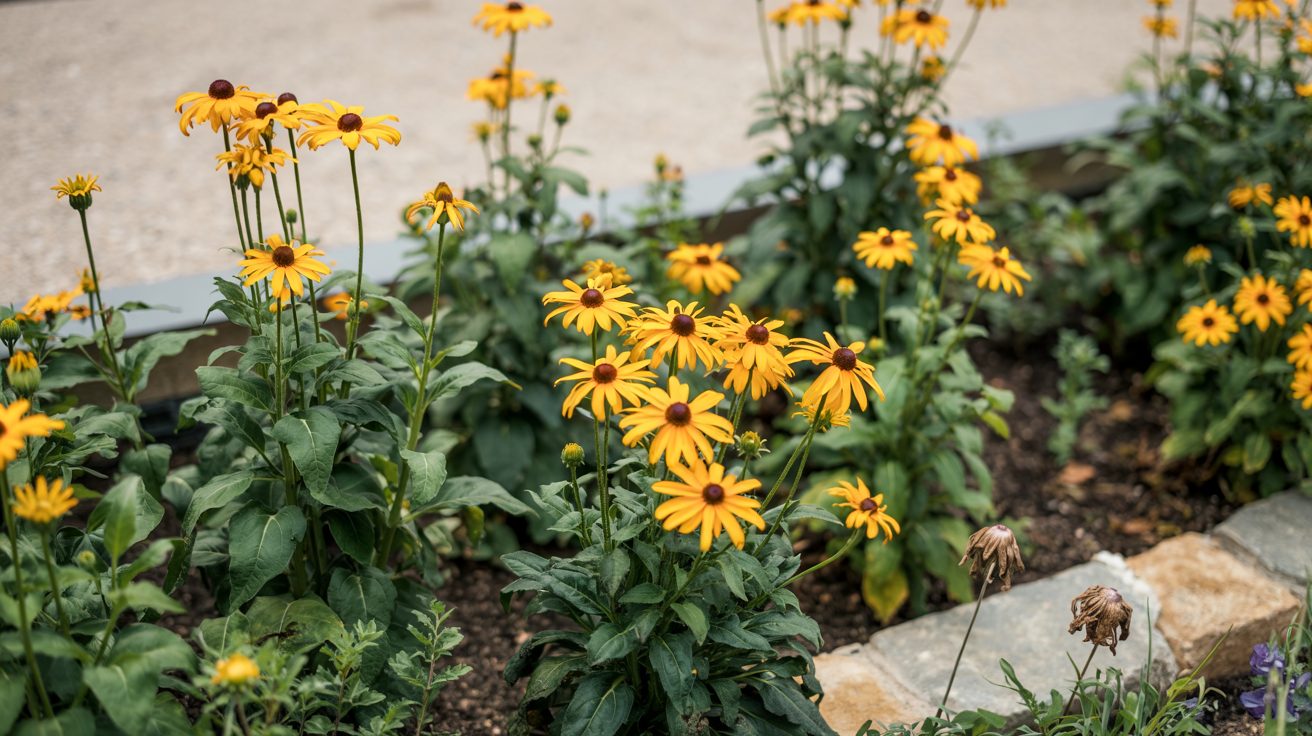
Whether you're planting a full-sun border, filling gaps in a mixed bed, or cutting stems for a vase, gold-blooming plants earn their keep across almost every hardiness zone.
From compact annual marigolds to towering perennial sunflowers, these 12 gold flower varieties cover zones 3–11, a full range of heights, and both cut-flower and pollinator uses. Most need full sun and well-drained soil to perform their best.
Annuals for Instant Gold
Annuals deliver gold faster than any perennial, and several of these are so reliable they've become default choices for summer garden beds across the country. Plant them after last frost and expect blooms within weeks.
Remember it later
Planning to try this recipe soon? Save it for a quick find later!
French Marigold 'Safari Mix' Easy Annual
Tagetes patula 'Safari Mix' forms dense 8-12 in. mounds smothered in gold blooms from late spring straight to frost. It's one of the few annuals that genuinely shrugs off slug damage and still performs in poor, dry soil.
- Spacing: Set plants 8-10 in. apart for a solid, weed-suppressing carpet effect.
- Deadheading: Minimal - this variety self-cleans well without constant intervention.
- Soil tolerance: Grows in low-fertility soil where other annuals struggle to establish.
Pot Marigold 'Resina' Easy Annual
Calendula officinalis 'Resina' opens flat, 2-3 in. golden-orange faces that last 7-10 days in a vase. Unlike most annuals, it tolerates cool springs and light shade, making it a strong choice for early-season gaps in the border.
- Edibility: Petals are edible and commonly used as a saffron substitute in cooking.
- Sowing: Direct-sow 2-3 weeks before last frost - it germinates in cool soil around 50°F.
- Heat limit: Slows blooming in peak summer heat but rebounds when temperatures drop in late August.
Sow a second round of Calendula 'Resina' in mid-August for a flush of fall blooms. It handles light frost down to about 28°F, extending your gold display well past the first autumn chill.
Zinnia 'State Fair Mix' (Gold Selections) Easy Annual
If you want bold, heat-proof color and big cutting stems, Zinnia elegans 'State Fair Mix' gold selections hit 18-24 in. with 2-4 in. blooms that laugh at humidity. Learning zinnia growing basics makes all the difference in plant spacing and disease prevention.
- Deadheading: Remove spent blooms every 5-7 days to keep new buds forming continuously.
- Spacing: Space 12 in. apart and avoid overhead watering to prevent powdery mildew.
- Cutting: Cut stems in the morning when flowers are half-open for the longest vase life.
Perennial Gold Flowers That Return Every Year
Perennials take a year or two to hit full stride, but after that they fill in reliably without replanting costs. The varieties below cover zones 3 through 9 and span bloom times from late spring all the way to hard frost.
Black-Eyed Susan 'Goldsturm' Easy Zone 4–9
Rudbeckia fulgida 'Goldsturm' is the workhorse of gold perennials, producing 3-4 in. golden petals around jet-black centers from July into October. It clumps outward rather than spreading aggressively, so spacing at 18 in. keeps beds tidy.
Knowing how to manage Rudbeckia's growth prevents it from crowding neighbors in tight borders.
- Deadheading: Not required - leave seed heads for goldfinches through winter.
- Division: Divide clumps every 3-4 years in spring to maintain vigor.
- Soil: Tolerates clay and dry conditions once established after the first season.
Coreopsis 'Early Sunrise' Easy Zone 4–9
At just 12-18 in. tall, Coreopsis grandiflora 'Early Sunrise' fits the front of any border and opens 1.5-2 in. daisy-like gold flowers starting in late May.
Pinching the growing tips in early June makes plants bushier and delays the main bloom flush by about two weeks - useful for extending the season.
- Rebloom: Cut plants back by one-third after the first flush to trigger a second round of blooms.
- Drainage: Needs fast-draining soil - wet winters are the main cause of plant loss.
Coreopsis grandiflora is technically short-lived, behaving more like a biennial in poorly drained soils. In zones 4–5, mulch crowns with 2–3 in. of straw after the ground freezes to improve winter survival rates.
Blanket Flower 'Arizona Sun' Easy Zone 3–9
Gaillardia x grandiflora 'Arizona Sun' covers a surprisingly wide zone range - from the cold prairies of zone 3 to the humid South at zone 9.
Its golden centers and flame-edged petals bloom continuously for 10-12 weeks once established, and the plant handles drought better than most perennials its size.
- Height: Stays compact at 18-24 in., which prevents the flopping common in taller Gaillardia types.
- Pollinators: A strong attractor for bumblebees and painted lady butterflies from June onward.
- Longevity: Like Coreopsis, it's short-lived in wet soils - excellent drainage extends plant life significantly.
Sneezeweed 'Mardi Gras' Medium Zone 4–9
The name is misleading - Helenium 'Mardi Gras' doesn't cause sneezing, and its gold-to-amber 2-3 in. blooms are some of the richest fall colors in a perennial border. It peaks late summer through October, bridging the gap when most perennials have already finished.
For contrast next to deep gold tones, pairing with cool purple-flowering plants creates strong complementary blocks of color.
- Support: Stake or pinch plants in June at 12 in. to prevent flopping at full height (24-36 in.).
- Cutting: Stems last 7-10 days in a vase - harvest when petals are just beginning to reflex.
Daylily 'Stella de Oro' Easy Zone 3–9
Few perennials match the reliability of Hemerocallis 'Stella de Oro' for low-maintenance gold.
The 2-3 in. golden trumpets on 10-18 in. arching foliage rebloom multiple times from May through September, and the plant divides itself naturally - clumps need splitting every 3-4 years to maintain peak bloom.
- Placement: Front-of-border ideal; arching foliage stays tidy without cutting back mid-season.
- Drought: Once established, skips well through dry weeks without noticeable bloom drop.
- Division timing: Early spring or late summer - avoid dividing during bloom peak in midsummer.
Garden Mum 'Sheffield' Medium Zone 5–9
Chrysanthemum 'Sheffield' is a hardy garden mum, not the florist type sold in fall pots - it actually overwinters reliably in zones 5-9 when planted in spring. The 2-3 in. pompon blooms peak in September and October, exactly when most other perennials have gone to seed.
Pairing gold mums with crisp white-blooming late-season plants keeps borders from looking monotone in fall.
- Pinching: Pinch tips every 3-4 weeks from May through mid-July - stop after July 15 to avoid cutting off bud set.
- Overwintering: Don't cut back until spring; old stems protect the crown through freeze-thaw cycles.
Perennial Sunflower 'Lemon Queen' Easy Zone 4–9
Helianthus 'Lemon Queen' towers at 4-6 ft., so it belongs at the back of a border or as a screening plant along a fence line. The 4-6 in. lemon-gold daisies open in August and September, when bees are actively foraging before winter - it's one of the most reliably pollinator-friendly sunflowers available as a perennial.
Clumps spread by rhizomes and need dividing every 2-3 years.
- Spread control: Divide in spring and replant divided sections 24 in. apart to prevent overcrowding.
- Cutting: Harvest stems early morning - blooms hold 5-7 days in water.
'Lemon Queen' is root-hardy to zone 4 but benefits from a 3-in. mulch layer in its first winter. In zone 4, plant in a sheltered south-facing spot to help the rhizomes establish before a hard freeze arrives.

Bulbs and Tuberous Gold Flowers
Bulbs and tubers bring a different kind of gold - larger individual blooms with formal structure that annuals and perennials can't replicate. These two options suit gardeners willing to do a bit more work at planting and storage time.
Lupine 'The Prince' Medium Zone 4–8
Lupinus Russell hybrid 'The Prince' produces tall 24-48 in. spires of warm golden-yellow pea-like flowers that look nothing like the flat daisies dominating this list. It's one of the few gold-toned flowers that actually fixes nitrogen in the soil, improving bed fertility over time.
For color contrast in mixed borders, combining golden lupines with cool blue-toned companions creates a classic pairing that photographers love.
- Climate preference: Needs cool summers - struggles above zone 8 and in regions with hot, humid July heat.
- Bloom window: Flowers in late spring (May-June); cut spent spikes immediately to encourage a second flush.
- Soil: Prefers slightly acidic, well-drained soil - avoid lime applications near lupine beds.
Dahlia Gold Sport Cultivars Hard Zone 8–11
Gold-flowered dahlia sport cultivars produce 3-4 in. formal blooms on sturdy 24-36 in. stems - the kind of cut flower that fills a vase by itself. In zones 8-11, tubers stay in the ground year-round; in colder zones, dig them after the first frost and store in barely damp peat at 40-50°F through winter.
These rich gold tones look especially dramatic alongside dark-foliage accent plants that deepen the contrast.
- Planting depth: Set tubers 4-6 in. deep, eyes facing up, after soil reaches 60°F consistently.
- Staking: Install stakes at planting time - adding them later risks spearing the tubers below ground.
- Storage: Allow cut tubers to cure for 24 hours before packing for winter storage.
How These 12 Varieties Compare?
Choosing between these plants often comes down to bloom time, height, and how much maintenance you're willing to do. The table below puts the key numbers side by side so you can build a layered border without gaps in the season.
| Plant | Zone | Height | Bloom Time | Best Use |
|---|---|---|---|---|
| French Marigold 'Safari Mix' | Annual | 8–12 in. | Spring–frost | Edging, containers |
| Calendula 'Resina' | Annual | 12–18 in. | Spring, fall | Cutting, edible |
| Zinnia 'State Fair Mix' | Annual | 18–24 in. | Summer–frost | Cutting, borders |
| Rudbeckia 'Goldsturm' | 4–9 | 24–30 in. | July–Oct | Mid-border, wildlife |
| Coreopsis 'Early Sunrise' | 4–9 | 12–18 in. | May–Aug | Front border |
| Gaillardia 'Arizona Sun' | 3–9 | 18–24 in. | June–Sept | Dry borders, slopes |
| Helenium 'Mardi Gras' | 4–9 | 24–36 in. | Aug–Oct | Cutting, fall borders |
| Daylily 'Stella de Oro' | 3–9 | 10–18 in. | May–Sept | Front border, edging |
| Chrysanthemum 'Sheffield' | 5–9 | 18–24 in. | Sept–Oct | Fall color anchor |
| Helianthus 'Lemon Queen' | 4–9 | 4–6 ft. | Aug–Sept | Back border, screens |
| Lupine 'The Prince' | 4–8 | 24–48 in. | May–June | Vertical accent |
| Dahlia gold sports | 8–11 | 24–36 in. | July–frost | Cutting garden |

Building a Gold Border That Blooms May Through October
A border using only gold flowers can feel flat if all the plants peak at once. Sequencing bloom times from front to back - and spring to fall - keeps the display moving through the season without dead patches.
Knowing when and how to deadhead is what actually extends many of these gold varieties well past their natural bloom window.
- Front row (under 18 in.): Start with Coreopsis 'Early Sunrise' and Daylily 'Stella de Oro' for May-June color, then let French Marigold 'Safari Mix' carry the edge through frost.
- Mid-border (18-30 in.): Gaillardia 'Arizona Sun' opens in June, handing off to Rudbeckia 'Goldsturm' in July and Helenium 'Mardi Gras' in August.
- Back row (30 in. and taller): Lupine 'The Prince' provides vertical spring interest, then Helianthus 'Lemon Queen' takes over from August through September.
- Fall anchor: Chrysanthemum 'Sheffield' closes the season in late September and October when everything else has wound down.
Gold flowers photograph warmest in the two hours after sunrise and the hour before sunset. If you're designing a border partly for visual documentation, orient the bed so it faces east or southeast for the best morning light on the blooms.
Which Gold Flower Fits Your Situation?
Not every garden needs the full list. These scenarios help narrow the choice to two or three plants rather than starting over from scratch.
For warm-season pairings, gold blends particularly well with burnt orange - many of the orange-toned border flowers share the same sun and drainage requirements as this list.
- You want zero replanting: Start with Rudbeckia 'Goldsturm' and Daylily 'Stella de Oro' - both return reliably for 10+ years with minimal intervention.
- You need color by next weekend: Plant French Marigold 'Safari Mix' transplants - they bloom within days of going in the ground.
- Drought is your main constraint: Gaillardia 'Arizona Sun' and Rudbeckia 'Goldsturm' both handle weeks without rain once established in their second season.
- You want cut flowers all summer: Zinnia 'State Fair Mix' and Helenium 'Mardi Gras' produce the longest, sturdiest cutting stems on this list.
- You garden in zone 3: Gaillardia 'Arizona Sun' and Daylily 'Stella de Oro' are your most reliable perennial options - both survive Minnesota winters without protection.
- You want to attract bees specifically: Helianthus 'Lemon Queen' and Rudbeckia 'Goldsturm' draw the widest variety of native bee species, particularly in late summer when forage is scarce.

Frequently Asked Questions
Rudbeckia fulgida 'Goldsturm', Gaillardia 'Arizona Sun', and Zinnia elegans 'State Fair Mix' all perform best in full sun (6+ hours), with Gaillardia tolerating the hottest, driest conditions of the three.
Helianthus 'Lemon Queen' and Rudbeckia 'Goldsturm' are the strongest pollinator plants on this list, attracting native bees, monarchs, and goldfinches from July through October in zones 4–9.
The perennial Helianthus 'Lemon Queen' reaches 4–6 ft. tall and spreads by rhizomes, needing division every 2–3 years to stay controlled in a border setting.
Calendula officinalis 'Resina' and Lupinus Russell hybrids both tolerate partial shade (3–4 hours of direct sun), though bloom counts drop by roughly 30% compared to full-sun placements.
Hemerocallis 'Stella de Oro' reblooms from May through September — roughly 16–18 weeks — making it the longest-blooming gold perennial on this list across zones 3–9.
Pin it for your next gold flowers: 15 stunning varieties project.