Most garden failures in dry summers come down to one mistake: planting thirsty species and then trying to keep up with them. Drought tolerant plants solve that problem at the root level - literally.
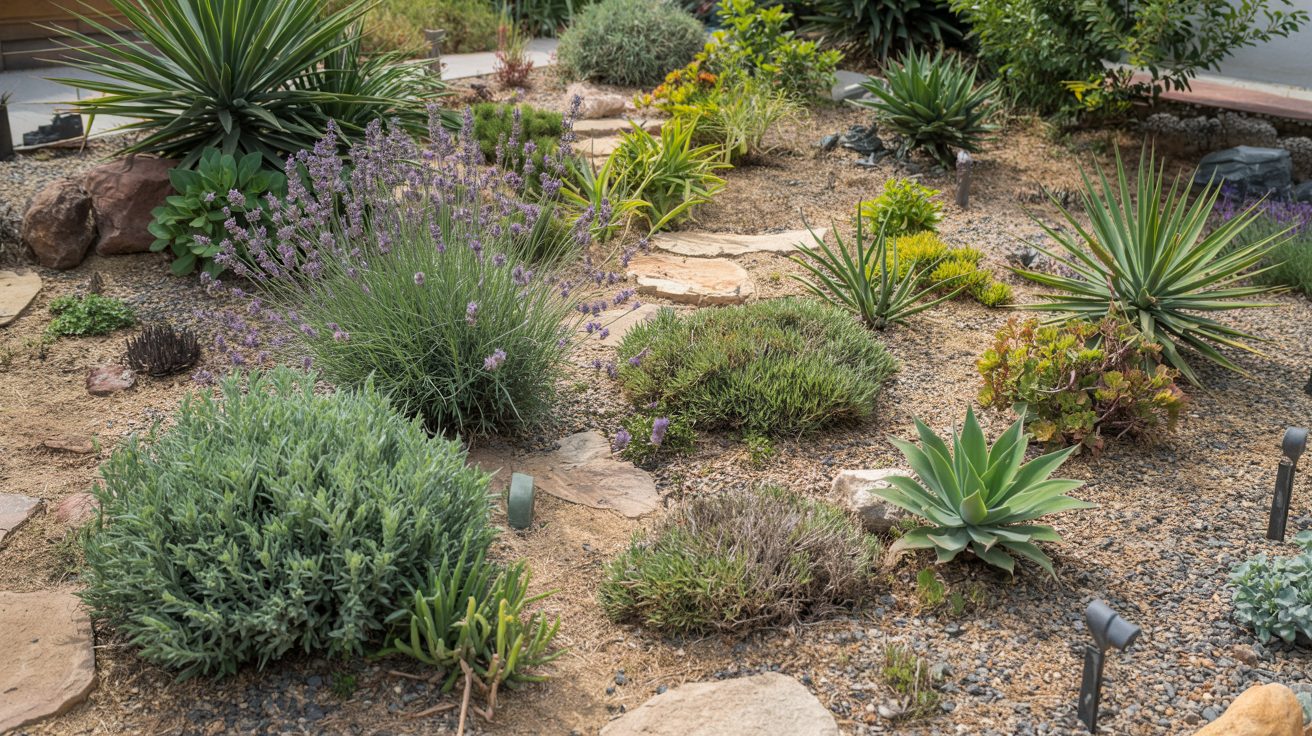
Once established, these varieties draw on deep root systems and water-storing tissues to stay healthy with far less irrigation than conventional garden plants.
These 12 water-wise plants cover perennials, shrubs, succulents, and annuals proven in home landscapes after establishment. Selections span zones 3-11, prioritize full-sun performance, and suit borders, containers, slopes, and mass plantings with minimal supplemental watering.
Before You Plant: How Drought Tolerance Actually Works
A plant labeled "drought tolerant" still needs regular water for its first season. That first year, roots are shallow and the plant is entirely dependent on you.
Remember it later
Planning to try this recipe soon? Save it for a quick find later!
After establishment - typically 12-18 months in the ground - the root system expands enough to access subsoil moisture on its own.
Soil preparation makes or breaks this process. Nearly every plant on this list demands well-drained soil; sitting in wet clay after rain is more likely to kill them than a dry spell.
Amending with grit, coarse sand, or raised beds resolves most drainage problems before planting.
- Mulch depth: Apply 2-3 inches of gravel or bark mulch to reduce surface evaporation and moderate soil temperature swings.
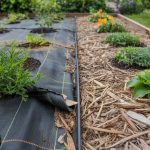
- Drip irrigation during establishment: Run drip lines every 2-3 days for the first summer, then taper off in year two.
- Lean soil is often better: Rich, amended soil encourages lush growth that wilts faster under stress - most of these plants prefer infertile ground.
- Watering window: Water in early morning so foliage dries before heat peaks, reducing fungal risk on silvery and aromatic-leafed plants.
Group plants by water need from day one. Even a low-water bed benefits from a dedicated drip zone — it prevents neighbors with different thirst levels from pulling your xeriscape plants into over-watering cycles.
Water-Wise Perennials
Perennials form the backbone of any drought-resistant border because they return year after year without replanting, building deeper root systems each season. These six perform consistently in low-irrigation gardens across a wide range of zones.
1. English Lavender 'Hidcote'
Zone 5-9 Easy
Lavandula angustifolia 'Hidcote' stays compact at 12-18 inches, making it one of the tidiest lavenders for edging and containers. Deep purple flower spikes appear in early summer and repeat if you cut stems back by one-third after the first flush.
Before planting, knowing how to get lavender established correctly saves a lot of trouble with crown rot later.
- Soil: Needs sharp drainage - raised beds or sloped sites work best in clay-heavy gardens.
- After establishment: Water every 10-14 days in summer; less in fall and winter.
- Longevity: Prune back by one-third each spring to avoid woody die-back at the center.
2. Perennial Sage 'May Night'
Zone 4-9 Easy
Salvia 'May Night' earns its place in nearly every low-water border with indigo flower spikes that start in late spring and, with light deadheading, carry well into August. It tolerates poor, dry soils better than most salvias and rarely needs supplemental fertilizer.
- Bloom extension: Deadhead spent spikes to the next lateral bud for a strong second flush.
- Pollinator value: Bumblebees and hummingbirds work these spikes heavily - plant in groups of three for visible impact.
- Heat performance: Handles sustained 90°F+ temperatures without wilting when roots are established.
3. Purple Coneflower 'Magnus'
Zone 3-9 Easy
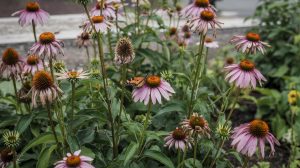
Echinacea purpurea 'Magnus' produces large, flat-petaled daisy heads on 24-36 inch stems from July through September. It holds up in poor soil and reflected heat - conditions that collapse most showy perennials.
Understanding what keeps coneflowers blooming long-term helps you avoid the one common mistake: cutting seed heads before birds finish with them in winter.
- Establishment watering: Water weekly for the first 6 weeks, then drop to every 2 weeks through the first summer.
- Self-seeding: Leave a few seed heads in fall - seedlings fill gaps naturally by year three.
4. Stonecrop 'Autumn Joy'
Zone 3-9 Easy
Few succulent perennials offer the same four-season interest as Sedum 'Autumn Joy.' Flat flower heads open pink in August, deepen to rust by October, and persist as dried structure through winter. It divides cleanly every 3-4 years - a single plant becomes a dozen for free.
For gardeners curious about when dividing perennials makes the biggest difference, sedums are an easy first project.
- Heat tolerance: Handles reflected heat from paving and south-facing walls without stress.
- Drainage: Avoid soggy winter soil - standing water during dormancy causes crown rot faster than drought ever would.
5. Artemisia 'Silver Mound'
Zone 4-9 Easy
Artemisia schmidtiana 'Silver Mound' brings something most dry-garden plants lack: strong textural contrast. The silvery, finely cut foliage mounds to 12-18 inches and reflects light, which actually reduces heat stress on surrounding plants.
It's purely a foliage plant - the small yellow flowers are worth removing to keep the dome shape.
- Crown rot risk: The only real threat is wet, poorly drained soil in summer - this plant resents humidity more than dryness.
- Companion planting: Excellent filler between lavender and coneflower; the silver reads well against both purple and rust tones.
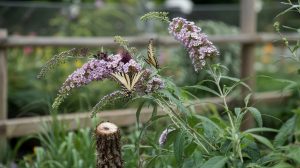
6. Agastache 'Blue Fortune'
Zone 5-9 Medium
At 30-36 inches tall, Agastache 'Blue Fortune' is the tallest perennial on this list and one of the best for late-season bee forage. The blue-violet spikes open in July and carry into September.
Lean soil prevents the floppy, over-lush growth that plagues this plant in rich, moist beds. If you're building a full-sun border that needs vertical interest, this is the slot-filler to reach for.
- Soil fertility: Skip fertilizer entirely - too much nitrogen produces tall, flopping stems that need staking.
- Winter hardiness: Marginally hardy at zone 5; mulch the crown in late November for insurance.
Artemisia and agastache both rot quickly in clay soils that hold winter moisture. If you have heavy clay, either raise the bed by 6-8 inches or plant on a slight slope to direct water away from crowns.
Succulents, Shrubby, and Aromatic Types
This group handles the harshest conditions on the list - extended dry spells, compacted slopes, reflected heat from hardscaping. Several double as structural plants that anchor a xeriscape design visually.
7. Century Plant
Zone 7-11 Medium
Agave americana is slow, dramatic, and nearly indestructible in zones 7-11. The rosette grows to 4 feet across with blue-gray, spine-tipped leaves.
After 10-30 years, it sends up a single flowering stalk reaching 20-25 feet, then dies - but not before producing offsets around the base.
- Drainage requirement: Non-negotiable - root rot from standing water kills these plants faster than any drought.
- Container use: Grows well in large pots moved to frost-free shelter in zone 7 winters.
- Safety note: Leaf tips are sharply pointed - site away from high-traffic pathways.
8. Adam's Needle
Zone 4-10 Easy
Yucca filamentosa is cold-hardier than most people expect - it survives zone 4 winters and still looks architectural while doing it. The stiff rosette of sword-shaped leaves sends up a 6-8 foot flower stalk covered in creamy white bells every summer.
Among landscape plants that are both deer-resistant and drought-resistant, yucca is in rare company.
- Soil tolerance: One of the few structural plants that manages compacted, rocky, or sandy soils equally well.
- Maintenance: Remove spent flower stalks at the base after bloom; otherwise leave it alone.
9. Trailing Rosemary 'Prostrate'
Zone 7-10 Easy
Salvia rosmarinus 'Prostrate' (formerly Rosmarinus officinalis) spreads 4-6 feet wide while staying 6-18 inches tall, making it ideal for cascading over retaining walls or covering slopes that are hard to irrigate. The aromatic needle leaves have a waxy coating that minimizes moisture loss.
As a low-growing ground cover option, trailing rosemary outperforms most alternatives in hot, dry spots.
- Slope use: Root system stabilizes loose soil effectively after one full growing season.
- Harvest timing: Light culinary harvests don't stress the plant - take no more than one-third of any stem at once.
10. Lavandin 'Grosso'
Zone 6-9 Easy
Lavandula x intermedia 'Grosso' is a hybrid between English and spike lavender, resulting in a plant that grows larger (24-36 inches) and tolerates coastal humidity better than most lavenders. The long stems are the best of any lavender for drying.
If you want to compare how it differs from other varieties, exploring different lavender types side by side clarifies which suits your climate.
- Summer drought: Once established, needs water only every 2-3 weeks in dry summers.
- Hard pruning: Cut back by half each spring - do not cut into old wood or the plant won't regenerate.
Drought Tolerant Annuals and Zone-Specific Picks
Not every dry-garden plant is a permanent fixture. These two fill seasonal gaps, handle conditions that even tough perennials struggle with, and suit gardeners in the warmest zones who need reliable summer color.
11. California Poppy
Zone 5-10 Easy
Eschscholzia californica germinates in cool soil and blooms from late spring into summer, then self-seeds so reliably that many gardeners never buy it twice. The tissue-paper orange cups open in full sun and close at night or on cloudy days.
Sandy, infertile soil produces the best flowering - rich soil gives you leaves and few blooms.
- Sowing: Direct sow in fall or early spring; transplanting disrupts the taproot and rarely succeeds.
- Self-seeding management: Deadhead half the plants if you want to reduce the colony's spread each year.
- In warm zones: Acts as a short-lived perennial in zones 9-10, returning from the same taproot for 2-3 years.
12. Lantana 'New Gold'
Zone 8-11 Easy
In zones 8-11, Lantana camara 'New Gold' runs practically on neglect - producing continuous clusters of yellow-orange flowers from spring until frost in near-zero irrigation conditions once established. It's semi-evergreen in mild winters and bounces back from light frost with a hard cut to 6 inches.
Unlike many shade-dependent summer plants, lantana doubles down in heat and full sun.
- Container performance: Excellent in large pots; roots stay contained, which actually improves drought tolerance.
- Caution: Berries are toxic to dogs and children - site thoughtfully in family gardens.
- Trimming: Cut back by one-third after the main summer flush to encourage branching and repeat bloom.
Lantana and trailing rosemary are both borderline in zone 7. In protected microclimates — south-facing walls, urban heat islands — they often survive. In exposed zone 7 sites, treat them as annuals or move containers under cover in November.
Side-by-Side Comparison
Picking between similar plants gets easier when the key specs sit next to each other. This table covers five of the most commonly confused choices on this list.
| Plant | Zone | Height | Best Use | Water After Establishment |
|---|---|---|---|---|
| Lavender 'Hidcote' | 5-9 | 12-18 in | Edging, containers | Every 10-14 days |
| Salvia 'May Night' | 4-9 | 18-24 in | Border mid-height | Every 7-10 days |
| Sedum 'Autumn Joy' | 3-9 | 18-24 in | Mass planting, paving edge | Every 14 days |
| Yucca filamentosa | 4-10 | 2-4 ft rosette | Structural anchor | Monthly |
| Lantana 'New Gold' | 8-11 | 18-36 in | Containers, hot borders | Every 7-10 days |
Getting Plants Through That Critical First Year
The establishment phase is where most drought tolerant plants are lost - not from drought, but from inconsistent early watering or poor drainage setup. A simple seasonal rhythm prevents the majority of failures.
Deep and infrequent always beats shallow and frequent for drought tolerant plants. Each deep watering pushes roots further down — which is exactly what gives these plants their dry-spell resilience.
Which Plant Fits Your Situation?
Narrowing twelve options to one or two is simpler when you match the plant to your specific constraint. Zone and sun exposure are the first filters; use case is the tiebreaker.
- Cold climate (zones 3-5), full sun: Start with Sedum 'Autumn Joy' and Echinacea 'Magnus' - both hit zone 3 and fill a border with minimal fuss.
- Slope or erosion problem: Trailing rosemary in zones 7-10, or Yucca filamentosa in zones 4-10 for colder sites - both root deeply and stabilize disturbed ground.
- Container on a hot patio: Lantana 'New Gold' in zones 8-11 or lavender 'Hidcote' in zones 5-9 both handle pot confinement without wilting.
- Deer pressure is a real problem: Yucca, lavender, rosemary, and artemisia are all rarely browsed - the aromatic oils and stiff texture deter most deer effectively.
- Annual color with zero fuss: Scatter Eschscholzia californica seed in fall and let it handle itself - it asks for nothing after germination.
- Structural focal point: Agave americana in zones 7-11 or yucca anywhere in zones 4-10 deliver year-round architectural mass that no herbaceous plant can match.
Frequently Asked Questions
During the first 8 weeks, water every 2-3 days, then taper to weekly by month three and monthly by fall of year one. After the second growing season, most established plants only need watering during dry spells exceeding 3 weeks.
Lavender, rosemary, artemisia, and yucca are all reliably deer-resistant — the aromatic oils in the first three repel browsing, while yucca's stiff, spine-tipped leaves discourage deer physically. Agave americana is equally ignored by deer in zones 7-11.
Lavandin 'Grosso' (zones 6-9) and trailing rosemary (zones 7-10) are the strongest shrubby options for full sun, both tolerating summer drought with watering just every 2-3 weeks once established. Agastache 'Blue Fortune' fills a similar role at 30-36 inches in zones 5-9.
Most on this list struggle in clay that holds water after rain — the bigger risk is root rot, not drought. Raising beds by 4-6 inches or amending with coarse grit resolves drainage well enough for lavender, sedum, and coneflower to perform reliably.
Pin it for your next drought tolerant plants: best varieties and growing tips project.