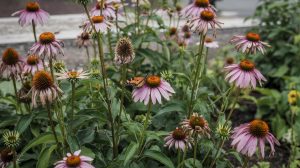
Most gardeners inherit at least one shady corner - under a mature maple, along a north-facing fence, or tucked beneath a deck overhang - and filling it well changes everything about how that space feels. Shade plants aren't a compromise.
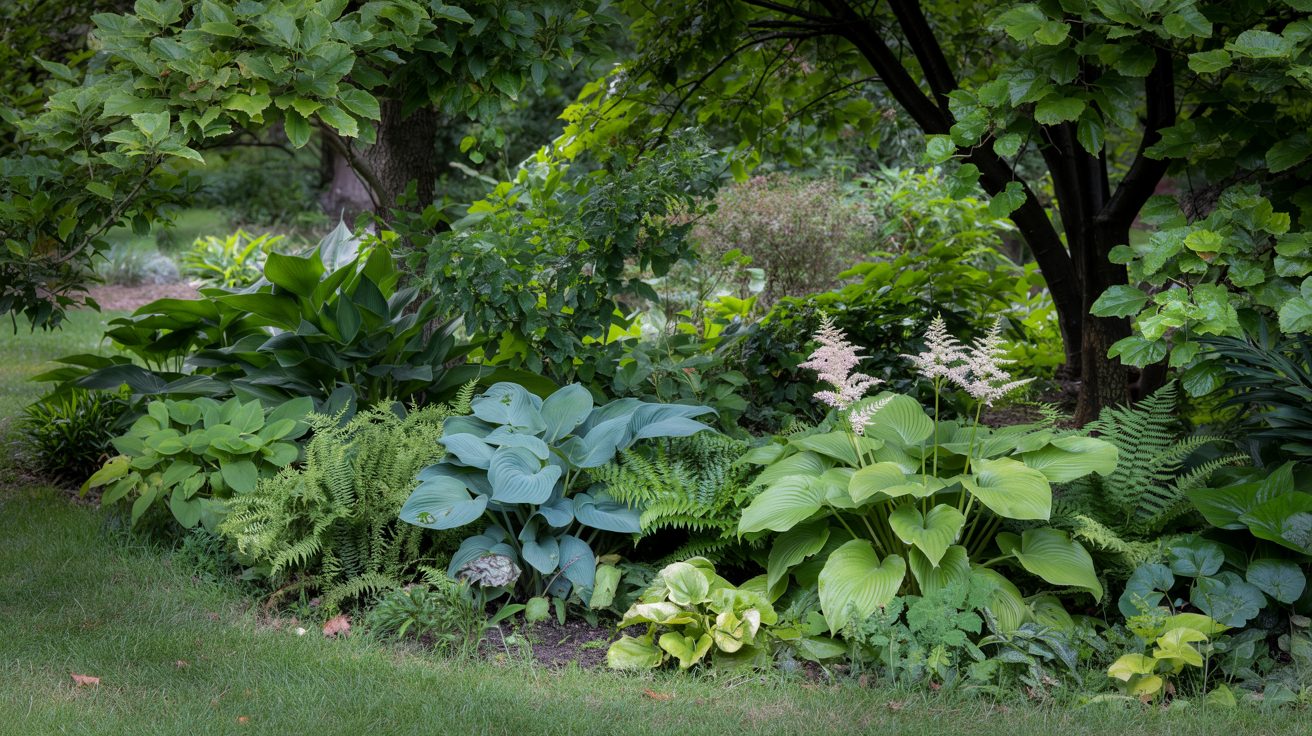
The right varieties bring color, texture, and seasonal interest that full-sun beds often can't match.
Twelve shade-tolerant perennials and shrubs that reliably perform in US home landscapes, covering zones 3–10. From bold hosta foliage to early-blooming hellebores and deer-resistant rhododendrons, these plants handle everything from dappled canopy shade to deep full shade with minimal intervention.
Understanding Your Shade Before You Plant
Not all shade is equal, and misreading your shade type is the most common reason these plants underperform. Dappled shade under high tree canopy is very different from the dense, dry shadow cast by a brick wall.
Remember it later
Planning to try this recipe soon? Save it for a quick find later!
- Dappled shade: Broken light filtering through a tree canopy. Most of the plants on this list do best here, including hostas and rhododendrons.
- Part shade: Direct sun for 2-4 hours daily, typically morning. Heucheras and Japanese forest grass prefer this condition.
- Full shade: Fewer than 2 hours of direct sun. Autumn ferns, foamflower, and lungwort handle this well once established.
- Dry shade: The hardest condition - under shallow-rooted trees like Norway maples. Liriope, hellebores, and 'PJM' rhododendron are your strongest options here.
Soil matters just as much as light. Most shade perennials want moisture-retentive, amended soil with good organic content.
A 2-3 inch layer of shredded bark mulch cuts moisture loss dramatically and keeps roots cool through summer.
Before buying anything, observe your shady area at 9 AM, noon, and 3 PM on a sunny day. Count actual hours of direct sun — most gardeners overestimate how much light a spot receives.
Shade Perennials: Bold Foliage Plants
Foliage is the backbone of any shade planting. Flowers are brief; leaves carry the display from spring through frost.
These four plants lead with leaf texture and color that holds all season.
Hosta 'Sum and Substance' Zone 3–9 Easy
Few shade perennials match this hosta for sheer presence. Individual leaves can reach 20 inches across, with a warm chartreuse-gold color that reflects light back into dark corners.
When you grow hostas correctly, clumps reach 36 inches tall and nearly 6 feet wide within five years.
- Slug resistance: Thick leaf texture deters slug damage better than thin-leaved varieties.
- Division schedule: Divide every 3-4 years in early spring when eyes first emerge from soil.
- Spacing: Plant 36-48 inches apart - it fills space faster than most gardeners expect.
Heuchera 'Palace Purple' (Coral Bells) Zone 4–9 Easy
Heuchera 'Palace Purple' holds deep burgundy-purple foliage through the season when sited in morning sun with afternoon shade. The color intensifies in cooler temperatures, making fall displays particularly strong.
- Flower scapes: Tiny white-pink flowers rise on 18-24 inch stems in late spring and attract small native bees.
- Soil tolerance: Handles slightly dry soils after the first full season - useful under tree drip lines.
- Crowning: Heucheras heave out of soil over time; re-plant slightly deeper every 2-3 years to prevent crown rot.
Japanese Forest Grass (Hakonechloa macra 'Aureola') Zone 5–9 Medium
Hakonechloa macra 'Aureola' is the only ornamental grass that genuinely prefers shade. Its arching, yellow-striped blades cascade like a slow waterfall and bring movement to static shade beds.
It stays under 18 inches and rarely needs dividing for 4-5 years.
- Light requirement: Morning sun sharpens the yellow variegation; deep shade turns blades more green.
- Soil: Needs consistent moisture and good drainage - doesn't tolerate waterlogged clay.
- Fall color: Blades turn pink-orange in October before dying back, extending interest late into the season.
Liriope muscari 'Big Blue' Zone 5–10 Easy
Where other shade perennials surrender to compacted urban soil, Liriope muscari 'Big Blue' holds its ground. Violet flower spikes appear in late summer - unusual timing for a shade plant - followed by black berries that persist into winter.
Properly maintaining liriope involves cutting foliage to 3 inches in late winter before new growth emerges.
- Edging use: Effective as a weed-suppressing border along paths in dry shade under trees.
- Spread: Clump-forming, not invasive - spreads slowly and stays where you put it.
Liriope spicata (creeping liriope) spreads aggressively by rhizomes and can take over a bed. Always confirm you're buying muscari 'Big Blue,' not spicata.
Shade Perennials: Flowering Plants
These plants deliver seasonal bloom color in conditions where most flowering perennials refuse to perform. Pairing early, mid, and late bloomers extends visual interest from February through September.
Helleborus × hybridus (Lenten Rose) Zone 4–9 Easy
Helleborus × hybridus blooms in February-March in zones 6-7, often pushing through snow. Nodding flowers in cream, pink, burgundy, and near-black sit above leathery evergreen foliage that deer consistently ignore.
Among garden plants for difficult sites, hellebores are almost uniquely equipped for dry summer shade once roots establish in year two.
- Planting depth: Set crowns just at soil level - burying them too deep delays flowering by a full year.
- Self-seeding: Drops seeds freely; seedlings take 2-3 years to bloom but are worth keeping.
Bleeding Heart (Dicentra spectabilis) Zone 3–9 Easy
Dicentra spectabilis produces its arching pink-and-white heart pendants in April-May, then goes fully dormant by midsummer. Plan interplanting with hostas or ferns to cover the gap it leaves.
Zones 3-5 can grow this in partial shade; zones 7-9 need consistent moisture and deeper shade to extend the bloom window.
- Dormancy gap: Mark plant location with a stake in fall - it's easy to accidentally dig crowns once foliage disappears.
- Spacing: Allow 24 inches between plants; clumps widen considerably in cool, moist years.
Astilbe chinensis 'Pumila' Zone 4–8 Easy
Most astilbes bloom in June; 'Pumila' holds back until August, making it the best choice for extending the shade flower season. Compact pink plumes stand 12-18 inches without staking, and the ferny foliage stays presentable all season.
It handles heavier, moist soils better than most shade perennials - useful along stream edges or in low spots.
- Water needs: Water deeply once a week in summer; wilting leaves signal drought stress before permanent damage occurs.
- Division: Divide every 3 years in spring to maintain vigor - older centers die out if left too long.
Pulmonaria 'Raspberry Splash' (Lungwort) Zone 3–8 Easy
Lungwort earns its place twice over: pink-to-blue flowers appear in March alongside early bees, and the silver-speckled leaves stay attractive through fall. The spotting also happens to mask chlorosis in high-pH soils where pale, washed-out foliage is common.
At 8-12 inches, 'Raspberry Splash' fits neatly at the front of borders.
- Powdery mildew: Cut foliage to the ground in July after it looks tatty - fresh leaves emerge quickly.
- Spacing: Plant 12-15 inches apart; it spreads into a dense weed-suppressing mat within two seasons.
Jacob's Ladder (Polemonium caeruleum) Zone 3–8 Easy
The pinnate foliage of Polemonium caeruleum has a delicate, feathery look that contrasts well against bold hosta leaves nearby. Sky-blue flower clusters appear in May-June on 18-24 inch stems and attract native bumblebees.
It handles heavier soils and cooler microclimates that challenge more finicky shade perennials.
- Deadheading: Remove spent flower stalks promptly to prevent excessive self-seeding.
- Heat tolerance: Performs best in zones 3-6; in zones 7-8, site in the coolest, most sheltered shade available.
Shade Groundcovers and Low-Growers
The lowest layer of a shade planting does the most practical work - suppressing weeds, retaining moisture, and softening hard edges. These three plants earn ground-level space reliably.
Tiarella cordifolia (Foamflower) Zone 4–8 Easy
Tiarella cordifolia spreads by stolons to form a dense, weed-smothering mat in cooler climates. White flower spikes rise just 8 inches above the foliage in April, giving it an airy spring look without height.
The lobed leaves take on reddish tones in fall and hold color until hard frost.
- Spread rate: Covers roughly 12-18 inches per season in moist, amended soil - faster in cool summers.
- Traffic tolerance: Survives occasional light foot traffic, unlike most groundcovers.
- Spacing: Plant 12 inches apart for full coverage within one growing season.
Fern - Dryopteris erythrosora (Autumn Fern) Zone 5–9 Easy
New fronds emerge copper-red in spring before maturing to glossy dark green - a color sequence unlike any other fern. Dryopteris erythrosora is semi-evergreen in zones 7-9 and tolerates clay soils that defeat many shade plants.
If you want to explore the range of shade-tolerant options, reading about fern species comparisons helps narrow choices by soil type.
- Clay tolerance: One of the few ferns that establishes reliably in heavy clay without raised beds or extensive amendment.
- Frond maintenance: Remove winter-damaged fronds in early March before new coppery growth emerges.
- Spacing: Plant 18-24 inches apart; clumps widen slowly and don't require division for 5+ years.
Autumn fern recovers from winter dieback faster than most semi-evergreen ferns. Even if fronds flatten completely in a zone 5 winter, new growth typically appears by late April without any intervention.
Shade Shrubs: Structural Plants
Every shade bed benefits from at least one shrub to provide height, winter structure, and a visual anchor. 'PJM' rhododendron fills that role for most US climates without the maintenance demands of larger-growing species.
Rhododendron 'PJM' Zone 4–8 Medium
'PJM' blooms lavender-pink in April - often the first woody shrub to flower in the yard - on a compact form that reaches 4-6 feet over 10 years. It holds small, leathery dark-green leaves through winter, which purple in cold temperatures.
Acid soil is non-negotiable: pH 4.5-5.5 with good organic matter. In alkaline soil, leaves yellow and the plant slowly declines regardless of other care.
- Soil prep: Amend planting holes with sulfur and pine bark fines 6-12 months before planting in high-pH areas.
- Mulch: Maintain a 3-inch layer of acidic mulch (pine needles or shredded oak leaves) over the root zone year-round.
- Deer resistance: Leathery, aromatic leaves are rarely browsed - an advantage in suburban landscapes with heavy deer pressure.
In zone 4, site 'PJM' on the north or east side of a building to reduce late-winter sun scald. Exposed southwest exposures cause bud damage even on this cold-hardy cultivar.
Side-by-Side: How the Top Picks Compare
Choosing between plants often comes down to a few practical attributes. This table covers the most common decision points - zone range, mature height, light needs, and best use - across the strongest performers on this list.
| Plant | Zone | Height | Light | Best Use |
|---|---|---|---|---|
| Hosta 'Sum and Substance' | 3–9 | 24–36 in | Dappled shade | Bold focal point |
| Heuchera 'Palace Purple' | 4–9 | 12–18 in | Part shade | Front border color |
| Autumn Fern | 5–9 | 18–24 in | Full shade | Clay soil solution |
| Helleborus × hybridus | 4–9 | 12–20 in | Part to full shade | Winter-spring bloom |
| Tiarella cordifolia | 4–8 | 6–12 in | Part to full shade | Dense groundcover |
| Rhododendron 'PJM' | 4–8 | 4–6 ft | Dappled shade | Structural anchor |
| Liriope 'Big Blue' | 5–10 | 12–18 in | Shade to part shade | Dry, urban sites |
| Bleeding Heart | 3–9 | 24–36 in | Part to full shade | Spring showpiece |
When you're selecting among hosta varieties, size variation matters as much as zone hardiness - dwarf cultivars suit tight spaces where 'Sum and Substance' would overwhelm.

How to Build a Shade Bed That Lasts?
A well-planted shade bed requires front-loaded effort - soil prep and spacing decisions made at planting time determine whether the bed looks intentional or accidental three years later. These steps apply to any combination of plants from this list.
Knowing when and how to divide perennials becomes important by year three - astilbes, hostas, and pulmonaria all benefit from division to maintain flowering density.
Layering for Year-Round Interest
The best shade gardens work because they layer bloom times and foliage textures across three height tiers. This isn't about aesthetics alone - layered planting also suppresses weeds far better than scattered individuals.
Think of it in three bands: tall (24 inches and up), mid (12-24 inches), and low (under 12 inches). A practical combination that covers zones 4-8 from February through October:
- February-March: Hellebores at mid-height, lungwort at the front edge. Both bloom before the tree canopy leafs out and shuts light down.
- April-May: Bleeding heart at the back, foamflower carpeting the ground, Jacob's ladder adding mid-layer blue.
- June-July: Hosta foliage at peak; astilbe foliage fills in; Japanese forest grass in full form.
- August-September: Astilbe 'Pumila' blooms; liriope spikes appear; autumn fern shows fresh copper fronds after summer haircut.
- October-frost: Heuchera deepens in color; Japanese forest grass turns pink-orange; hellebore foliage holds structure through leaf drop.
If you're also creating shade overhead with new plantings, choosing which trees establish quickly determines how soon the understory bed can go in below.
Which Shade Plant Fits Your Situation?
Different problem sites call for specific plant attributes. Use this shortcut rather than re-reading the full list every time.
- Dry shade under shallow-rooted trees: Liriope 'Big Blue,' hellebores, and 'PJM' rhododendron are your most reliable options. Avoid astilbes and bleeding heart here - they need consistent moisture.
- Heavy clay soil: Autumn fern and astilbe 'Pumila' tolerate wet, compacted conditions better than most. Add liriope as a border edge.
- Deep, moist shade (north wall or dense canopy): Tiarella, pulmonaria, and autumn fern handle the least light. Hostas perform here too, though color is muted without any ambient brightness.
- Deer pressure is high: Hellebores, liriope, and 'PJM' rhododendron are consistently avoided. Hostas are browsed readily - protect them or skip them in heavy deer zones.
- Zone 3 gardeners: Hostas, bleeding heart, pulmonaria, and Jacob's ladder are your strongest options. Most of the list drops out below zone 4.
- Year-round evergreen structure: Combine liriope, autumn fern, and hellebores for a bed that looks presentable even in January.
For gardeners moving shade plants indoors or selecting for very low indoor light, the decision factors shift significantly - tolerating low indoor light requires different adaptations than outdoor shade tolerance.
Match moisture requirement first, zone second, aesthetics third. A beautiful plant in the wrong moisture condition fails regardless of zone hardiness or design intent.
Frequently Asked Questions
Tiarella cordifolia, autumn fern (Dryopteris erythrosora), and pulmonaria handle fewer than 2 hours of direct sun reliably in zones 4–8, with pulmonaria surviving down to zone 3.
Large hostas need 36–48 inches between plants, mid-sized perennials like heuchera and astilbe need 12–18 inches, and groundcovers like foamflower fill in at 12 inches apart within a single season.
Helleborus × hybridus, Liriope muscari 'Big Blue,' and Rhododendron 'PJM' are the most consistently deer-resistant on this list, due to leathery or aromatic foliage deer find unpalatable.
Most shade perennials need only one application of balanced granular fertilizer (10-10-10) in early spring; over-fertilizing hostas and heucheras produces lush foliage that's more attractive to slugs and aphids.
Liriope muscari and some heucheras show tolerance for juglone, the toxic compound black walnuts release into soil — hostas and astilbes are sensitive and typically decline within one or two seasons under walnut canopy.
Pin it for your next shade plants: best varieties and growing tips project.