Most trees demand patience measured in decades, but the species on this list operate on a different timeline entirely.
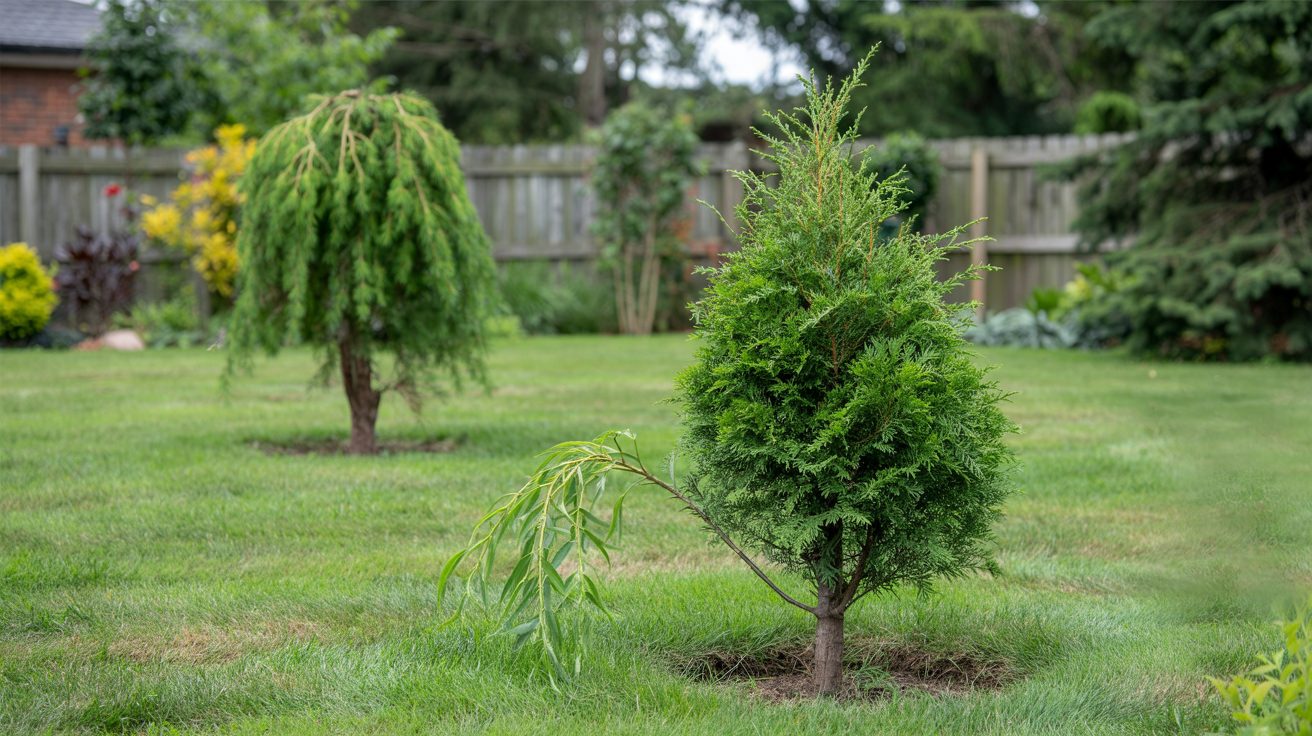
Whether you need fast shade over a patio, a quick privacy screen along a property line, or a windbreak before next winter, choosing the right fast-growing tree comes down to matching growth rate, soil conditions, and lifespan to what you actually need from the planting.
These 12 trees each add at least 1.5–10 feet per year in favorable conditions, covering deciduous shade trees, evergreen screens, and a few high-speed specialists.
Growth rate, root behavior, and expected lifespan vary widely — so matching the tree to your goal matters as much as raw speed.
Deciduous Shade Trees
These trees drop their leaves in winter but deliver the fastest canopy expansion of any category. Most of them work across a wide swath of USDA zones, and several are native species you can feel good about planting long-term.
Remember it later
Planning to try this recipe soon? Save it for a quick find later!
Hybrid Poplar (Populus × canadensis)
Zone 3-9 Easy
Hybrid Poplar is the benchmark fast grower - adding 2-8 feet per year in deep, moist soils and hitting 40-70 feet at maturity. It suits temporary windbreaks or fast early shade where you plan to replace it with a longer-lived species later.
- Lifespan: Only 15-30 years, so plan for a long-term replacement tree planted alongside it.
- Soil: Performs best in deep loam; growth slows significantly in dry or compacted ground.
- Best use: Windbreaks, fast temporary screens, or erosion buffer on acreage sites.
Red Maple (Acer rubrum)
Zone 3-9 Easy
A consistent 2-3 feet per year when young, Red Maple gives you reliable fall color and a long lifespan in the same package. Cultivars like 'October Glory' and 'Red Sunset' were bred for narrower forms and stronger branching, which matters when planting near structures.
- Fall color: Among the best in the maple family - scarlet to orange-red depending on cultivar.
- Adaptability: Tolerates occasional wet feet, making it versatile across poorly drained sites.
- Street use: Several rootstocks handle compaction and road salt better than the straight species.
Tulip Poplar (Liriodendron tulipifera)
Zone 4-9 Medium
At 3-6 feet per year, Tulip Poplar is one of the fastest native hardwoods in North America. It reaches 70-100+ feet and develops a notably straight, clean trunk that makes it a standout specimen tree in large landscapes.
- Soil requirement: Needs deep, well-drained soil - shallow or wet subsoil stunts growth and weakens anchoring.
- Flowers: Tulip-shaped orange-green blooms appear at 10-15 years old, usually high in the canopy.
- Size caution: Not suitable for small lots - mature trees need 30+ feet of clearance from buildings.
Sweetgum (Liquidambar styraciflua)
Zone 5-9 Medium
Sweetgum grows 2-4 feet per year and puts on one of the most reliable fall color displays of any fast-growing tree. The star-shaped leaves turn burgundy, orange, and yellow simultaneously.
Pruning for strong branch structure in the first five years pays off significantly at maturity.
- Gumballs: The spiky seed pods are a real nuisance on lawns - the sterile cultivar 'Rotundiloba' eliminates them.
- Root behavior: Surface roots can lift sidewalks; give it a wide grass buffer from paving.
Silver Maple and Hybrid Poplar both have aggressive, shallow root systems that invade water and sewer lines. Keep them at least 20 feet from any underground infrastructure.
Silver Maple (Acer saccharinum)
Zone 3-9 Medium
The fastest native maple on this list hits 3-7 feet per year and tolerates poor, compacted soil where Red Maple struggles. The trade-off is significant: weak limb structure and invasive surface roots make it a poor choice near driveways or foundations.
- Storm risk: Branches break readily in ice or wind - avoid planting within drop-zone distance of the house.
- Best placement: Open acreage, stream banks, or large parks where root spread isn't a problem.
Shagbark Hickory (Carya ovata)
Zone 4-8 Medium
Shagbark Hickory grows 1.5-3 feet per year in youth - slower than poplars, but fast for a long-lived hardwood. Its shaggy, peeling bark and deep tap root make it one of the most wind-firm trees on this list once established.
- Lifespan: Routinely lives 200+ years, producing dense, durable wood that has real timber value.
- Wildlife value: Nuts attract squirrels, turkeys, and wood ducks - a genuine ecological asset in rural landscapes.
- Transplant note: Deep tap root means bare-root planting works best; avoid moving trees over 3 feet tall.
Ginkgo (Ginkgo biloba, male cultivars)
Zone 3-9 Easy
Ginkgo grows 1.5-3 feet per year early on and essentially never stops - individual trees have survived 1,000+ years in Asia. Few ornamental trees match its urban durability, shrugging off pollution, drought, and compaction that kills most species.
- Buy male only: Female trees produce foul-smelling fruit; named male cultivars like 'Autumn Gold' and 'Princeton Sentry' are guaranteed seedless.
- Fall color: Clean, bright yellow that drops all at once - raking is a single-day job.
- Growth shape: Irregular and open when young, developing a broad, symmetrical crown by 40-50 years.
Paulownia (Paulownia tomentosa)
Zone 5-9 Invasive Risk
Paulownia is the speed record-holder at 6-15 feet per year in fertile, well-drained soil. It produces dramatic purple flower clusters before leafing out in spring.
The large leaves create dense shade fast - but this speed comes with a significant caveat.
- Invasive status: Listed as invasive in many mid-Atlantic and southeastern states; check your state's noxious weed registry before planting.
- Wood use: Commercially harvested for lightweight, fast-growing timber in Asia; some growers manage it as a coppice crop.
- Soil need: Deep, loose, well-drained soil is non-negotiable - heavy clay stops growth cold.
Paulownia spreads aggressively by seed in disturbed soils near waterways. In states where it's listed as invasive, planting it on rural or riparian properties is genuinely risky for native ecosystems.
Evergreen Screening Trees
When year-round privacy or wind protection is the goal, these evergreens earn their place. They grow quickly and block sightlines all winter, which deciduous trees simply can't do.
Eastern White Pine (Pinus strobus)
Zone 3-8 Easy
Eastern White Pine adds 2-3 feet per year with a graceful, pyramidal habit that fills in beautifully for windbreaks. Soft blue-green needles and a 50-80 foot mature height make it the most elegant fast evergreen for northern gardens.
- Spacing for screens: Plant 12-15 feet apart for solid coverage within 5-7 years.
- Soil drainage: Needs reasonably well-drained soil - roots rot in standing water within a season or two.
- Salt sensitivity: Avoid planting near roads that receive heavy winter salting; needles brown quickly with salt spray.
Leyland Cypress (× Cuprocyparis leylandii)
Zone 6-10 Easy
Leyland Cypress is the most popular fast privacy hedge in zones 6-10, adding 3-4 feet per year in a tight columnar form.
It reaches 40-70 feet but stays narrow - typically 8-12 feet wide - making it practical close to property lines where tight-space planting is necessary.
- Disease risk: Seiridium canker and Botryosphaeria dieback are serious problems in crowded plantings; space at 8-10 feet minimum.
- Drainage: Root rot kills plants in clay soil with poor drainage - raised planting or amended beds help in problem sites.
- Trimming: Shear lightly each spring to maintain density; hard cuts into old wood won't regenerate.
For a more disease-resistant alternative to Leyland Cypress in zones 5–8, try Green Giant Arborvitae (Thuja standishii × plicata). It grows 3–5 feet per year and has a far better track record in humid southeastern climates.
Fast-Grower Comparison at a Glance
Comparing these trees side by side shows how dramatically growth rate, lifespan, and practical use diverge. The right choice depends on whether you want speed now or value over decades.
| Tree | Growth Rate | Mature Height | Zones | Best Use |
|---|---|---|---|---|
| Hybrid Poplar | 2–8 ft/yr | 40–70 ft | 3–9 | Temporary windbreak |
| Paulownia | 6–15 ft/yr | 30–50 ft | 5–9 | Fast shade (check invasive status) |
| Willow Hybrid | 6–10 ft/yr | 30–60 ft | 4–9 | Wet site erosion control |
| Tulip Poplar | 3–6 ft/yr | 70–100+ ft | 4–9 | Large specimen/timber |
| Leyland Cypress | 3–4 ft/yr | 40–70 ft | 6–10 | Privacy hedge |
| Red Maple | 2–3 ft/yr | 40–60 ft | 3–9 | Shade + fall color |
| Ginkgo | 1.5–3 ft/yr | 50–80 ft | 3–9 | Long-term urban tree |
The Wet-Site Specialists
Two trees on this list genuinely thrive in waterlogged or flood-prone ground where other fast growers drown. If drainage is your limiting factor, these are your primary options.
Plants that tolerate wet shade are rare, but River Birch comes close - it handles periodic flooding and still adds 2-3 feet per year in average conditions.
Willow Hybrid goes further, actively needing wet fertile soil to hit its top growth rate of 6-10 feet annually.
River Birch (Betula nigra)
Zone 4-9 Easy
River Birch stands out as the most ornamental of the fast-growing wet-site trees. Its cinnamon-colored, peeling bark shows best in winter when the branches are bare, and the multi-stem form resists the storm breakage that plagues single-trunk fast growers.
- Growth rate: 2-3 ft/year consistently; faster in its first decade on moist, fertile sites.
- Soil: Naturally found along riverbanks; handles clay, periodic flooding, and acidic soils without complaint.
- Birch borer: More resistant than paper or white birch, but stress from drought still invites bronze birch borer - keep roots mulched in summer.
Willow Hybrid (Salix alba hybrids)
Zone 4-9 Easy
Willow Hybrid is essentially a disposable utility tree - it grows 6-10 feet per year, solves erosion fast, and then declines within 20-30 years.
Think of it the same way you'd think about annual vegetable beds - high output, short cycle, plan for what comes next.
- Wood quality: Brittle - ice storms and high winds break major limbs; never plant under power lines.
- Roots: Highly invasive near septic systems, drainage tiles, and underground pipes - wet soil attracts roots aggressively.
- Best use: Temporary stabilization on bare, wet banks while longer-lived species establish nearby.
In zones 3–4, Eastern White Pine and Hybrid Poplar are the most reliable fast growers. Leyland Cypress and Paulownia both die in hard zone 5 winters and below — don't push their range north.
What to Plant Based on Your Actual Goal?
Raw growth rate doesn't tell you which tree to plant - your site conditions and end goal do. Use this shortcut to match the right species to your situation.
- Need shade in under 5 years: Hybrid Poplar or Paulownia (where non-invasive) gives canopy fastest; pair with a slower long-term tree planted at the same time.
- Screening a property line: Leyland Cypress in zones 6-10; Eastern White Pine in zones 3-8 - space both at least 8 feet apart to prevent disease.
- Wet or flood-prone site: River Birch for ornamental value, Willow Hybrid for pure erosion control on bare banks.
- Want fast growth AND a long-lived tree: Red Maple and Tulip Poplar both grow quickly and live for 80-150 years with room to spread.
- Urban street or small yard: Ginkgo male cultivars handle compaction and pollution better than any other fast grower on this list; columnar forms like 'Princeton Sentry' fit 8-foot parkways.
- Wildlife and timber value: Shagbark Hickory starts slower but delivers a durable canopy with real ecological and commercial value by year 30.
Getting the Most Growth in Year One
Fast-growing trees won't hit their advertised growth rate if they spend the first two seasons fighting establishment stress. A few targeted steps at planting make a measurable difference in how quickly any of these species take off.
One more consideration worth noting: container-grown trees from nurseries sometimes have circling roots that need to be scored or teased apart at planting. Left untouched, those circling roots eventually girdle the trunk and kill the tree within 15-20 years - long after you've forgotten what you did at planting day.
For perennial plantings of any kind, root prep at installation is the highest-return step you can take.
A 2-inch caliper tree planted correctly and watered well will outgrow a 4-inch caliper tree planted poorly within 3 years. Size at purchase matters far less than establishment care.
For shade plants that thrive beneath the canopy of fast-growing trees once they mature, low-light tolerant species transition naturally to the shaded ground below.
And if you're still narrowing down what fits your property's scale, a review of productive smaller plants for surrounding beds can help you design the full site while the trees establish.
Frequently Asked Questions
Paulownia tops the list at 6–15 feet per year in full sun with well-drained soil, followed by Willow Hybrid at 6–10 feet and Hybrid Poplar at 2–8 feet annually in zones 3–9.
Ginkgo male cultivars and Eastern White Pine both grow quickly without the aggressive, infrastructure-damaging root systems associated with Silver Maple or Willow Hybrid — making them safer within 15 feet of driveways or foundations.
Hybrid Poplar adds 2–8 feet per year in deep, moist loam soil in zones 3–9, but growth slows significantly in dry or compacted conditions, and the tree typically lives only 15–30 years total.
Yes — Red Maple grows 2–3 feet per year and lives 80–150 years, while Ginkgo grows 1.5–3 feet per year and routinely survives over 1,000 years in favorable conditions.
Trees reaching 50+ feet at maturity — including Tulip Poplar, Silver Maple, and Eastern White Pine — should be planted at least 30–40 feet from foundations; smaller fast growers like Leyland Cypress can go as close as 10–12 feet.
Pin it for your next fast growing trees: best varieties and growing tips project.