Native plants have earned a permanent spot in modern home landscapes - not because of trend pressure, but because they work harder with less than almost anything else you can put in the ground.
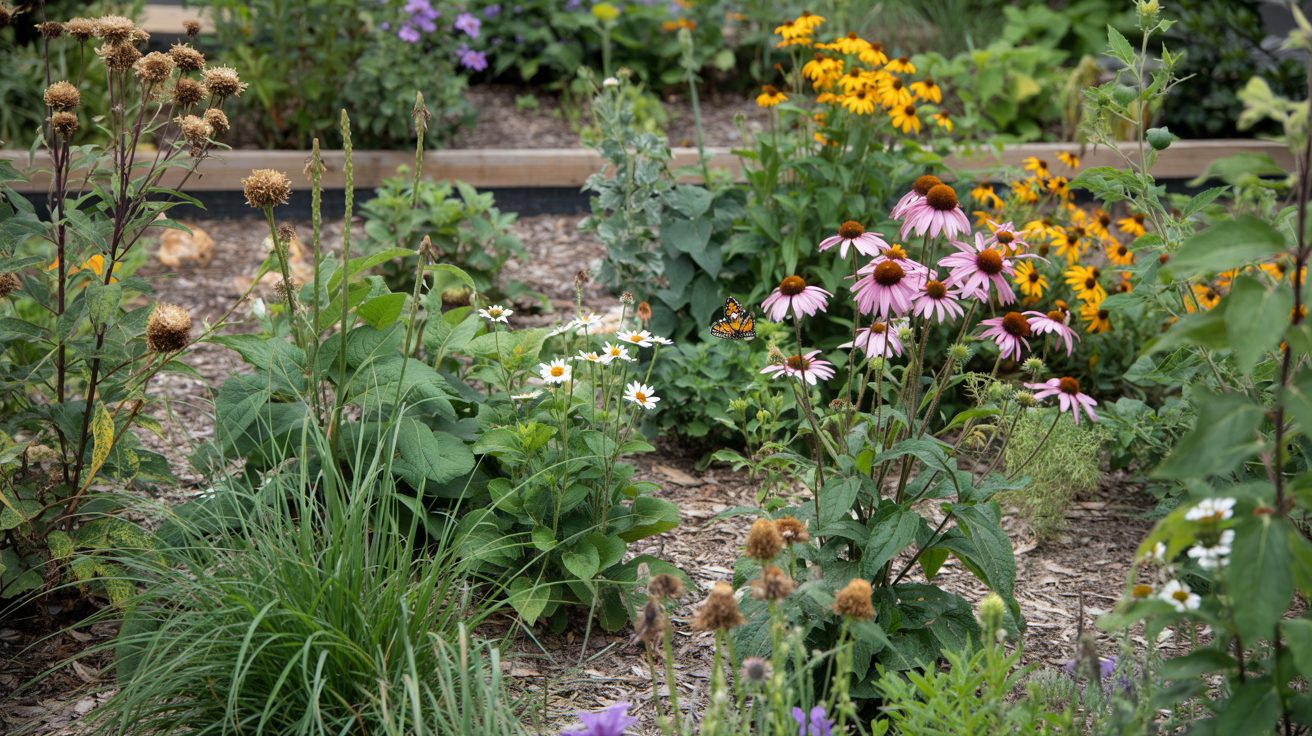
Once established, they handle drought, poor soil, and cold without the babying that exotic ornamentals demand.
This list covers 12 proven native plants — perennials, grasses, shrubs, trees, and a vine — selected for pollinator value, low maintenance after establishment, and regional adaptability. Most tolerate average or poor soils and perform across a wide range of USDA zones.
Native Perennial Wildflowers
Perennials form the backbone of any native planting. They return reliably each year, spread slowly to fill gaps, and carry the longest collective bloom window of any plant category on this list.
Remember it later
Planning to try this recipe soon? Save it for a quick find later!
Purple Coneflower Zone 3-9 Easy
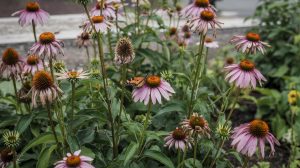
Echinacea purpurea blooms from June through September - one of the longest runs of any native perennial. Following proper deadhead timing matters here: leave seedheads standing through winter so goldfinches can strip them.
- Soil tolerance: Grows in clay, loam, or sandy soil - one of the most adaptable natives available.
- Pollinator draw: Supports native bees, monarchs, swallowtails, and skippers throughout summer.
- Spacing: Plant 18-24 inches apart; clumps self-seed freely and fill in over 2-3 seasons.
Black-Eyed Susan Zone 3-9 Easy
Rudbeckia hirta is the fastest native perennial to flower from seed, often blooming the first summer. Its ability to establish in compacted soils makes it ideal for new construction sites or disturbed areas.
- Establishment speed: Seed mixes sown in fall germinate by spring and bloom by July.
- Soil flexibility: Handles poor, rocky, or compacted ground where other perennials struggle.
- Colony habit: Self-seeds into dense patches - thin every 2 years to prevent overcrowding.
Butterfly Weed Zone 3-9 Medium
Asclepias tuberosa is the one milkweed that insists on dry, well-drained soil - it rots in soggy beds, unlike its relatives. Orange flower spikes from June to August make it a monarch habitat anchor worth working around its soil demands.
- Host plant: The only milkweed monarch caterpillars will eat - no milkweed, no monarchs.
- Root depth: Taproot reaches 12+ inches; mark it in fall because stems emerge late in spring.
- Sandy site specialist: Outperforms all other milkweeds in sandy or rocky, low-fertility soils.
Butterfly weed emerges very late — sometimes not until late May. Don't dig it up assuming it's dead. Mark the spot in fall with a stake so you don't accidentally disturb the taproot.
Blue Wild Indigo Zone 3-9 Medium
Three feet wide at maturity and built around a deep taproot, Baptisia australis becomes a permanent fixture. It fixes atmospheric nitrogen into poor soils, which benefits neighboring plants over time.
- Taproot warning: Pick your spot carefully - it resents transplanting after year two.
- Stiff stems: Unlike many tall perennials, it doesn't flop even in exposed locations.
- Seed pods: Inflated black pods rattle in fall wind and add late-season interest.
New England Aster Zone 4-8 Easy
Symphyotrichum novae-angliae fills a gap that almost no other native perennial covers: September and October nectar. When most garden flowers are finished, the violet-purple blooms feed migrating monarchs and late bumblebees.
- Height management: Cut stems back by half in late June to keep plants under 4 feet and prevent flopping.
- Cultivar pick: 'Purple Dome' stays compact at 18-24 inches; 'Alma Potschke' reaches 4 feet with rose-pink flowers.
- Moisture preference: Prefers consistent moisture but tolerates average garden soil once roots are established.
Wild Bergamot Zone 4-9 Easy
The fragrant lavender blooms of Monarda fistulosa attract more native bee species than almost any other summer perennial. It spreads by rhizome, so divide clumps every 3 years to keep it in bounds.
- After-bloom care: Cut back to 6 inches after flowering to reduce powdery mildew and encourage a tidy second flush of foliage.
- Hummingbird draw: Tubular florets fit hummingbird beaks perfectly - pair with coral honeysuckle for continuous visits.
- Clay tolerance: One of the few fragrant natives that performs well in heavier clay soils.
Space native perennials 18–24 inches apart at planting. They'll look sparse the first year, fill in the second, and form dense weed-suppressing colonies by year three — no mulch maintenance needed.
Native Grasses
A single native grass can carry a planting through winter when everything else has gone dormant. Little bluestem does that job better than any other grass in its size range.
Little Bluestem Zone 3-9 Easy
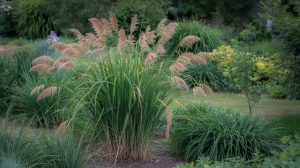
Schizachyrium scoparium runs blue-green from May through September, then shifts to copper orange and holds that color through February. As a low-spreading ground layer alternative, it works planted in drifts of 5-7 for maximum fall impact.
- Soil preference: Performs best in low-fertility, well-drained soil - rich soil causes floppy, rank growth.
- Bird value: Seeds feed juncos, sparrows, and finches from October through March.
- Cut-back timing: Wait until late February or early March, then cut to 4-6 inches before new growth emerges.
Native Trees and Shrubs
Trees and shrubs anchor the vertical structure of a native planting and deliver wildlife benefits that no perennial can match - nesting sites, bark for overwintering insects, and multi-season food.
Eastern Redbud Zone 4-9 Easy
The first native tree to bloom each spring, Cercis canadensis flowers directly from its bark in March or April - weeks before any leaf appears. At 20-30 feet wide at maturity, it qualifies among compact shade alternatives for smaller yards.
- Bloom timing: Magenta flowers open before leaf-out, making them visible from a distance against bare branches.
- Soil range: Handles clay, loam, and rocky soils - one of the most site-flexible native trees available.
- Wildlife note: Early blooms are a critical nectar source for queen bumblebees emerging from winter dormancy.
Serviceberry Zone 4-9 Easy
Few plants pack more seasonal interest per square foot than Amelanchier laevis. White flowers in April, edible purple berries in June, and orange-red fall color make it genuinely useful in three separate seasons.
- Berry timing: Berries ripen in mid-June, roughly the same window as high-bush blueberries, and taste similar.
- Form flexibility: Train as a multi-stem large shrub (12 feet) or a single-trunk small tree (25 feet).
- Bird competition: Robins and cedar waxwings strip ripe berries within days - pick fast if you want any for yourself.
Spicebush Zone 4-9 Easy
Most native shrubs demand full sun. Lindera benzoin is the rare exception that earns its place in the shade garden - performing under mature tree canopies where few flowering shrubs survive.
Check whether shade-tolerant evergreens already occupy your shady spots before adding spicebush.
- Host plant value: Spicebush swallowtail caterpillars feed exclusively on its leaves - a single plant can support multiple caterpillars per season.
- Red berries: Female plants (this is a dioecious species - plant one male per three females) produce red berries that attract hermit thrushes in fall.
- Fragrance: Crushed stems and leaves smell strongly of allspice - noticeable even in winter when brushing against branches.
Red Osier Dogwood Zone 2-7 Easy
Hardy to zone 2, Cornus sericea is the native shrub for cold, wet sites where almost nothing else establishes well. Its brightest red stems appear on new growth - cut one-third of stems to the ground each spring to keep color vivid.
- Wet tolerance: Survives periodic flooding and streambank conditions that would kill most shrubs.
- Winter display: Red stems against snow are visible from 50 feet - pair with yellow-stemmed 'Flaviramea' for contrast. Gardeners looking to extend winter garden color should consider it a structural anchor.
- Wildlife calendar: White May flowers for pollinators, white berries in August-September for migrating birds.
Coral Honeysuckle Zone 6-9 Easy
Where Japanese honeysuckle (Lonicera japonica) has become a serious invasive, Lonicera sempervirens offers the same vine form with none of the ecological damage. It stays exactly where you plant it.
- Bloom window: Red tubular flowers from April through August with peak hummingbird visits in May-June.
- Support needed: Provide a trellis, fence, or arbor - stems twine but don't self-attach to walls.
- Drought performance: Once roots reach depth (year two), survives without supplemental water in average summers.
Coral honeysuckle is rated zone 6–9, but in zone 5 it sometimes survives as a die-back perennial vine, re-sprouting from roots each spring. It won't reach full height but still blooms reliably.
How These 12 Compare at a Glance?
Choosing between these plants often comes down to your specific constraints - zone, moisture level, and available light. This table organizes the key decision factors side by side.
| Plant | Zones | Light | Moisture | Top Benefit |
|---|---|---|---|---|
| Purple Coneflower | 3–9 | Full sun | Low–medium | Longest bloom period |
| Black-Eyed Susan | 3–9 | Full sun | Low | Fastest from seed |
| Butterfly Weed | 3–9 | Full sun | Very low | Monarch host plant |
| Blue Wild Indigo | 3–9 | Full–part sun | Low | Nitrogen-fixing |
| New England Aster | 4–8 | Full–part sun | Medium | Fall-only nectar source |
| Wild Bergamot | 4–9 | Full–part sun | Medium | Highest bee diversity draw |
| Little Bluestem | 3–9 | Full sun | Very low | Year-round structure |
| Eastern Redbud | 4–9 | Full–part sun | Low–medium | Earliest spring bloom |
| Serviceberry | 4–9 | Full–part sun | Medium | Three seasons of interest |
| Spicebush | 4–9 | Part–full shade | Medium | Best shade shrub |
| Red Osier Dogwood | 2–7 | Full–part sun | High; wet OK | Cold + wet tolerance |
| Coral Honeysuckle | 6–9 | Full–part sun | Low | Non-invasive vine |

Building a Year-Round Native Planting
A native planting that feeds wildlife only in summer is a missed opportunity. The goal is continuous bloom coverage from March through October, plus structure and seeds through winter.
Think of it as three overlapping layers working simultaneously: early-season trees and shrubs, mid-season perennials, and late-season asters and grasses. Each layer supports a different set of species at the right time.
Native plantings look sparse for 12–18 months while roots establish. Resist the urge to fill gaps with annuals — they compete for root space. By year three, the natives close the canopy themselves.
Which Native Plant Fits Your Situation?
Most garden sites present one dominant constraint. Match the plant to that constraint rather than fighting it.
Beyond their adaptability, many of these plants are well-documented across native garden plant profiles with deeper cultivation notes.
- Dry, sandy soil with full sun: Butterfly weed, little bluestem, and black-eyed Susan are the starting three - all low-fertility tolerant and drought-resistant once roots are established.
- Heavy clay that drains slowly: Purple coneflower, wild bergamot, and red osier dogwood handle clay best; avoid butterfly weed entirely in this situation.
- Shade under mature trees: Spicebush is your primary option for flowering interest; pair it with a coral honeysuckle on a nearby sunny fence for hummingbird draw.
- Wet low spots or near water: Red osier dogwood is purpose-built for this - it handles periodic flooding and helps stabilize eroding banks.
- Small yard needing vertical interest: Eastern redbud tops out at 20-30 feet with a wide canopy; coral honeysuckle on a trellis gives vertical interest without any canopy shade.
- Building a monarch waystation: Butterfly weed plus New England aster covers both the caterpillar host requirement and the fall migration nectar need in two plants.
Frequently Asked Questions
Wild bergamot (Monarda fistulosa) draws the widest diversity of native bee species, while butterfly weed and New England aster are critical for monarchs — as host plant and fall migration nectar source respectively.
Red osier dogwood (Cornus sericea) produces the most vivid winter display — stems glow bright red against snow and hold color through February if you cut one-third of old stems each spring.
Space most native perennials 18–24 inches apart at planting — they'll look thin for the first season but close the gap by year two and form weed-suppressing colonies by year three without any intervention.
Most native plants perform better without added fertilizer — excess nitrogen causes butterfly weed and little bluestem to produce floppy, rank growth and reduces flowering, particularly in low-fertility specialists.
Purple coneflower, wild bergamot, New England aster, eastern redbud, and red osier dogwood all tolerate heavy clay — the one species to avoid in clay is butterfly weed, which rots in poorly drained sites.
Pin it for your next native plants: best varieties and growing tips project.