A garden can look perfect and still feel empty without scent. Fragrant flowers add a dimension that photos can't capture - the kind that stops you mid-path or drifts through an open window on a warm evening.
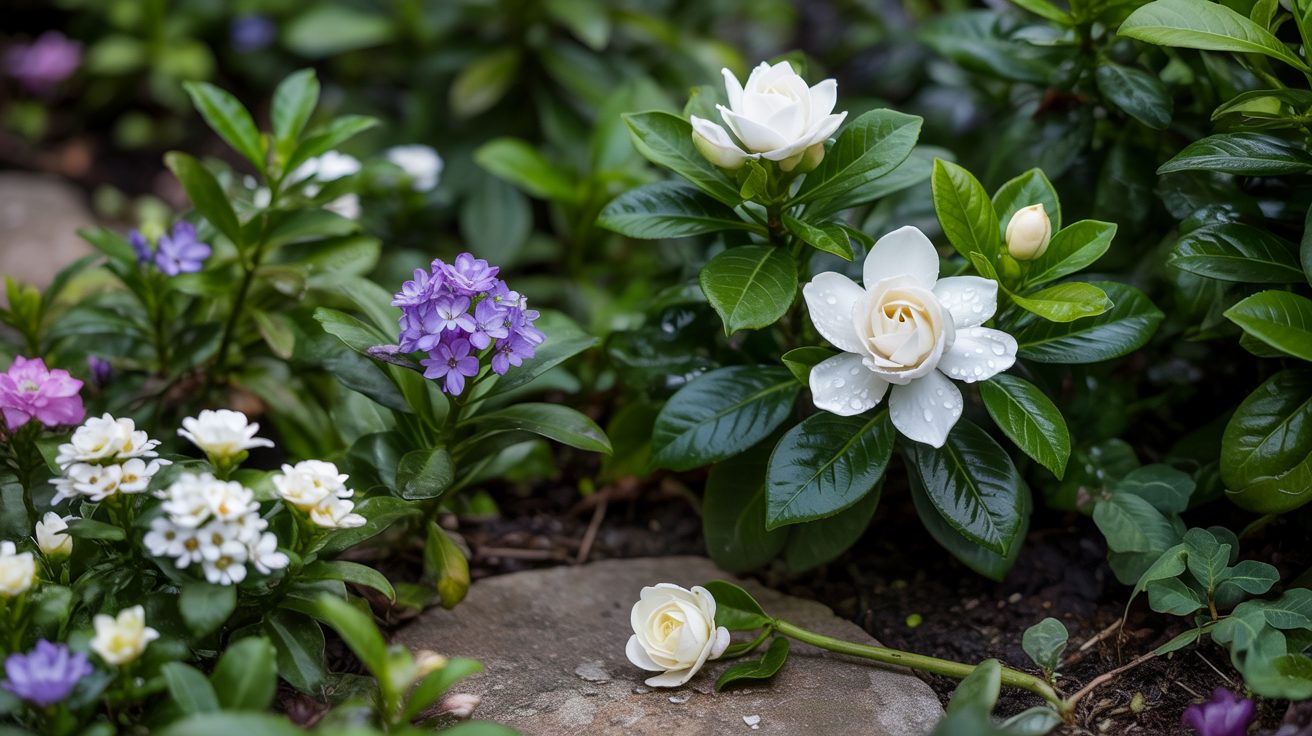
Choosing the right varieties, and placing them thoughtfully, turns a good-looking yard into one that genuinely stays with you.
From compact lavender borders to evening-scented oriental lilies, the best fragrant flowers each have a specific scent window, zone requirement, and placement need. Match plant to season and location for maximum impact.
How Scent Timing Works in a Fragrant Garden?
Most gardeners plant for color first and fragrance as an afterthought. The result is one glorious week of scent in late spring, then nothing.
Remember it later
Planning to try this recipe soon? Save it for a quick find later!
Scent layering - choosing plants that peak at different times - solves this completely.
Some flowers are also time-of-day specific. Gardenias and oriental lilies release their strongest fragrance after sunset, while lavender and roses peak on warm afternoons.
Knowing this shapes where you put things - a night-blooming plant earns its spot near a patio or bedroom window, not at the back fence.
- Cool-season scents (early spring and fall): Stock and freesia perform best below 65°F - plant them where summer annuals haven't gone in yet.
- Late-spring peak: Peonies, mock orange, and roses overlap briefly for the most intense garden fragrance of the year.
- Summer through autumn: Honeysuckle, Nerine, and lavender bridge the gap when spring bloomers have finished.
- Evening fragrance: Gardenia and 'Casa Blanca' lily are strongest after 6 p.m. - site them within 10 feet of where you actually sit.
Plant at least one evening-fragrant species near any outdoor seating area. The scent window is short — you'll only catch it if you're close enough.
Spring-Blooming Fragrant Flowers
Spring delivers the widest range of scented flowers, and many of the strongest performers overlap in a 4-6 week window. Garden plants in this category benefit from being grouped so their scents compound rather than compete.
Lavandula angustifolia 'Munstead' - English Lavender
Zone 5-9 Easy
'Munstead' is the most garden-reliable English lavender in cold climates - shorter than most cultivars at 12-18 inches, with tight purple spikes that dry without shattering. If you're comparing different lavender species, angustifolia types are consistently hardier and more fragrant than lavandins in humid zones.
- Soil: Needs fast-draining, lean soil - rich amended beds cause rot at the crown.
- Pruning: Cut back by one-third after first bloom to encourage a second flush in late summer.
- Harvest: Cut stems just before buds open fully for the longest-lasting dried sachets.
Rosa 'Gertrude Jekyll' - English Rose
Zone 5-9 Medium
Few roses match 'Gertrude Jekyll' for fragrance intensity - its old-rose scent carries up to 15 feet on still mornings. It repeat-blooms reliably when deadheaded, reaching 3-4 feet with good air circulation.
Among fragrant rose varieties, this David Austin cultivar consistently outperforms hybrid teas in disease resistance without sacrificing scent.
- Air circulation: Space at least 3 feet from other shrubs to reduce black spot pressure.
- Deadheading: Remove spent blooms to the first set of 5 leaflets for fastest rebloom.
- Feeding: Apply balanced rose fertilizer at bud break and again after the first flush.
Philadelphus 'Belle Étoile' - Mock Orange
Zone 4-8 Easy
Mock orange produces white clusters with a scent that reads as orange blossom crossed with vanilla - overwhelming in the best way for about three weeks in late spring. 'Belle Étoile' is a compact cultivar at 6-8 feet, producing far fewer suckers than the straight species.
It tolerates average soil and light partial shade without losing fragrance output.
- Bloom time: Late May to mid-June depending on zone - one of the last spring shrubs to flower.
- Pruning: Cut one-third of old stems to the ground each year immediately after bloom.
- Siting: Place within 20 feet of a path - the scent carries but you want to walk through it.
Paeonia lactiflora 'Sarah Bernhardt' - Herbaceous Peony
Zone 3-8 Easy
Cold winters are not optional for Paeonia lactiflora - it needs at least 6 weeks below 40°F to bloom reliably, which makes it a natural fit for zones 3-7. 'Sarah Bernhardt' produces large, double pink flowers with a rose-and-honey scent, and clumps expand slowly without becoming invasive.
Plant the eyes no deeper than 1-2 inches below soil surface, or you'll get foliage with no blooms.
- Planting depth: Eyes (buds) must sit 1-2 inches below soil - too deep is the most common failure point.
- Support: Use peony rings installed in early spring before stems exceed 6 inches.
- Longevity: Established clumps can bloom for 50+ years without division.
Don't plant peonies in zones 9-10. Without sufficient winter chill, they produce foliage but skip flowering entirely — often for years before the gardener realizes the climate is the problem.
Late Spring and Summer Fragrant Climbers
Vertical space is underused in most fragrant gardens. Climbers let you cover walls and fences with scent at nose height rather than ground level, which dramatically increases how often you actually smell them.
Jasminum polyanthum - Pink Jasmine
Zone 7-10 Medium
Pink jasmine blooms late winter into spring - earlier than almost anything else with this level of sweetness. In zones 7-10 it grows as a perennial vine reaching 10-20 feet, but in cooler regions it works as a container plant overwintered indoors.
The scent is strongest in the evening and can be almost too intense in an enclosed space.
- Training: Tie young shoots to a trellis - it twines but needs guidance to cover evenly.
- Post-bloom pruning: Cut back hard immediately after flowering to keep growth manageable.
- Container use: Grows well in a 12-inch pot; move indoors before first frost in zones 6 and colder.
Lonicera japonica 'Halliana' - Honeysuckle Vine
Zone 4-9 Easy
Lonicera japonica 'Halliana' blooms from June through September - a longer scent window than almost any other climber. The honey-sweet fragrance is strongest at dusk, and the vine grows 10-30 feet with no fussing over soil quality.
Check your region before planting: it's listed as invasive in parts of the southeastern US, Mid-Atlantic states, and some Midwest areas.
- Invasive risk: Avoid planting near woodland edges or natural areas in states where it's flagged.
- Control: Hard pruning in late winter keeps growth within a 10-foot space on a fence or post.
- Non-invasive substitute: Lonicera periclymenum 'Scentsation' offers similar fragrance with less aggressive spread.
In zones 4-6, 'Halliana' dies back to the ground in hard winters but regrows from roots. It won't reach 30 feet in cold zones — expect 8-12 feet of annual growth instead.
Cool-Season and Autumn Fragrant Flowers
The shoulder seasons - early spring and fall - are often neglected in fragrant planting schemes. These four varieties fill exactly that gap, and two of them work as reliable re-bloomers with minimal effort.
Matthiola incana 'Giant' - Stock
Cool Season Annual Easy
Stock smells like cloves stirred into honey, and it blooms best when temperatures stay between 45°F and 65°F. Sow seeds 6-8 weeks before your last frost for spring blooms, or in late summer for a fall display.
The 'Giant' series reaches 18-24 inches with dense, colorful spikes that work both as cut flowers and border plants.
- Frost tolerance: Handles light frosts to about 28°F - extend the season with a light row cover.
- Bolting: Heat above 75°F causes rapid bolting and scent loss - time planting accordingly.
- Cut flower use: Cut when half the spike is open; stems last 7-10 days in a vase.
Freesia x hybrida - Freesia
Zone 9-11 Medium
Freesias produce one of the cleanest, most recognizable scents in any garden - a sharp citrus-floral that's impossible to confuse with anything else. Plant corms 2 inches deep in fall for winter-spring bloom in zones 9-11, or start them in pots indoors 10-12 weeks before you want flowers.
Expect blooms 6-8 weeks after planting regardless of method.
- Corm spacing: Plant 3 inches apart for a dense, fragrant cluster rather than scattered single stems.
- Container growing: 6-inch pots work well - use one corm per inch of pot diameter.
- After bloom: Let foliage die back naturally before lifting corms in colder climates.
Dianthus 'Bath's Pink' - Pinks
Zone 3-9 Easy
The clove-like scent of 'Bath's Pink' is distinct from every other flower on this list - unmistakably spicy and warm. Plants form a tight 8-12 inch mound of blue-gray foliage with fringed pink blooms that rebloom heavily when deadheaded.
It's one of the most drought-tolerant options here, performing well in rocky, thin soil and coastal gardens with salt spray.
- Deadheading: Shear back by half after the first flush for repeat bloom through early summer.
- Soil pH: Prefers slightly alkaline soil (pH 6.5-7.5) - add lime if your beds run acidic.
- Longevity: Divide clumps every 3-4 years to keep them blooming vigorously.
Nerine bowdenii - Guernsey Lily
Zone 7-10 Medium
Nerine bowdenii blooms in September and October, when almost nothing else is fragrant in the garden. Its spicy-sweet scent isn't loud but it's refined - best appreciated up close along a path or near a door.
Plant bulbs shallowly with the necks at or just below soil level; burying them too deep delays or prevents flowering.
- Planting depth: Neck of the bulb should sit at the soil surface, not 4-6 inches down like tulips.
- Summer rest: Nerine needs a dry summer dormancy - avoid watering from June through August.
- In cooler zones: Grow in containers and move to a frost-free space after foliage dies back in late autumn.
Evening and Night-Fragrant Flowers
Evening scent deserves its own category because the planting strategy is different. These plants need to be close to where people actually gather after dark - within 10-15 feet of a patio, deck, or open window - to deliver their payoff.
Gardenia jasminoides 'Kleim's Hardy' - Hardy Gardenia
Zone 7-10 Demanding
'Kleim's Hardy' pushes gardenias one zone colder than most cultivars, surviving zone 7 winters with some protection. The nocturnal fragrance is intensely sweet - a single shrub at 3-5 feet can scent an entire small yard after sunset.
Soil pH matters more here than almost any other plant on this list: keep it between 5.5 and 6.5 or foliage yellows and flower count drops sharply.
- Soil pH: Test annually and acidify with sulfur or use an acid-forming fertilizer like those sold for azaleas and camellias.
- Sun placement: Morning sun with afternoon shade prevents leaf scorch while maintaining heavy bloom.
- Winter protection: In zone 7, mulch 4-6 inches deep around the base and wrap young plants in burlap during hard freezes.
Lilium 'Casa Blanca' - Oriental Lily
Zone 4-8 Medium
'Casa Blanca' is the strongest-scented white lily widely available - its evening fragrance reaches 20 feet on a still night. Bulbs go 6-8 inches deep with mulch over the top for winter insulation in zones 4-5.
Unlike many sun-loving tall garden plants, oriental lilies actually prefer cool, shaded roots while their stems reach into full sun - a condition easily created by planting low groundcovers at their base.
- Planting depth: 6-8 inches deep - shallower bulbs produce shorter stems and fewer flowers.
- Staking: Stems reach 3-4 feet and need support; install stakes when shoots emerge to avoid root damage later.
- After bloom: Leave foliage until it yellows completely - the bulb is storing energy for next year's flowers.
Oriental lily pollen stains fabric permanently. Remove anthers with a dry tissue as soon as flowers open — this also extends vase life and doesn't reduce fragrance at all.
Fragrant Flower Comparison
Picking between these varieties often comes down to zone, bloom season, and whether you need something for a border, container, or trellis. This table puts the key numbers in one place.
| Variety | Zone | Height | Peak Season | Best Use |
|---|---|---|---|---|
| Lavender 'Munstead' | 5-9 | 12-18 in | June-July | Border, containers, drying |
| Rosa 'Gertrude Jekyll' | 5-9 | 3-4 ft | June-Sept | Border, cutting garden |
| Gardenia 'Kleim's Hardy' | 7-10 | 3-5 ft | June-Aug (evening) | Foundation, patio |
| Philadelphus 'Belle Étoile' | 4-8 | 6-8 ft | May-June | Shrub border, screening |
| Peony 'Sarah Bernhardt' | 3-8 | 24-36 in | May-June | Border, cutting garden |
| Lilium 'Casa Blanca' | 4-8 | 3-4 ft | July-Aug (evening) | Border, containers |
| Nerine bowdenii | 7-10 | 12-24 in | Sept-Oct | Path edge, containers |
| Stock 'Giant' | Annual | 12-24 in | Spring/Fall | Cutting, cool-season beds |
Making Fragrant Flowers Work in Containers
Container gardening restricts roots and dries out quickly, which rules out several plants on this list but suits others surprisingly well. The key variables are pot size, drainage, and whether the plant has a dormancy period that benefits from being moved indoors.
Freesias and stock are natural container candidates because they're temporary by nature. Lavender 'Munstead' thrives in a 10-12 inch terracotta pot as long as drainage is fast - avoid plastic pots that hold moisture.
Gardenia and jasmine both work in large containers (14 inches and up) with acidic potting mix, though they need more frequent feeding than in-ground plants.
- Best in containers: Lavender 'Munstead,' freesia, stock, jasmine, Nerine bowdenii
- Possible with large pots (14 in+): Gardenia 'Kleim's Hardy,' Lilium 'Casa Blanca,' Dianthus 'Bath's Pink'
- Not suited to containers: Mock orange, honeysuckle vine, peony (too large root mass or too invasive for containment)
- Feeding frequency: Container plants need fertilizer every 2-3 weeks during active growth - in-ground plants typically need feeding 2-3 times per season.
Any fragrant plant in a container should sit no more than 6 feet from seating. Scent dissipates faster outdoors than you'd expect — closer is always better.
Which Fragrant Flower Should You Choose?
The right answer depends on your zone, your space, and which season currently has the biggest scent gap in your yard. Most gardeners are well-served by picking one spring bloomer, one summer plant, and one cool-season or autumn variety.
If you're also growing drought-adapted plants in the same beds, lavender and dianthus will coexist well in lean, dry soil without competing.
- Coldest climates (zones 3-5): Peony 'Sarah Bernhardt,' lavender 'Munstead,' and Dianthus 'Bath's Pink' all survive zone 3-4 winters and need no special protection.
- Mild coastal gardens (zones 7-9): Gardenia, jasmine, and Nerine bowdenii all hit their stride here - you can grow all three for a year-round scent sequence.
- Containers on a patio or balcony: Freesia in spring, lavender through summer, and stock in fall gives you three distinct fragrance windows in a small footprint.
- Evening-focused spaces: Pair 'Casa Blanca' lily with gardenia for a July-August scent window that starts at dusk - two plants, two months, minimal maintenance.
- Wildlife-friendly yards: Lavender, mock orange, and honeysuckle are all heavy pollinator plants - bees and butterflies will work them heavily from May through September. Check local invasive species lists before planting honeysuckle, though some varieties of ornamental woody plants have similar regional restrictions worth researching.
Frequently Asked Questions
Lavender 'Munstead' (12-18 inches), Dianthus 'Bath's Pink' (8-12 inches), and freesia all deliver strong fragrance in compact footprints under 2 feet wide, making them ideal for small borders or containers in zones 3-9.
Plant Gardenia jasminoides 'Kleim's Hardy' and Lilium 'Casa Blanca' within 10-15 feet of your seating area — both release their strongest scent after 6 p.m. and together cover July through August evenings in zones 4-10.
Freesia, lavender 'Munstead,' and Matthiola incana stock all perform well in 10-12 inch pots with fast-draining mix; jasmine works in 14-inch containers and can overwinter indoors in zones 6 and colder.
Most do — lavender, roses, and dianthus all need 6+ hours of direct sun for maximum scent production, because volatile aromatic compounds develop most in warm, sun-exposed conditions. Gardenia is the main exception, needing afternoon shade.
Plant freesia corms 2 inches deep and 3 inches apart — this spacing produces dense clusters of the citrus-scented trumpet flowers rather than isolated single stems, and bloom follows 6-8 weeks after planting.
Pin it for your next fragrant flowers: best varieties and growing tips project.