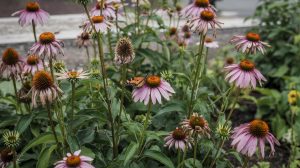
A south-facing border in July is where ordinary plants give up and the right ones put on a show.
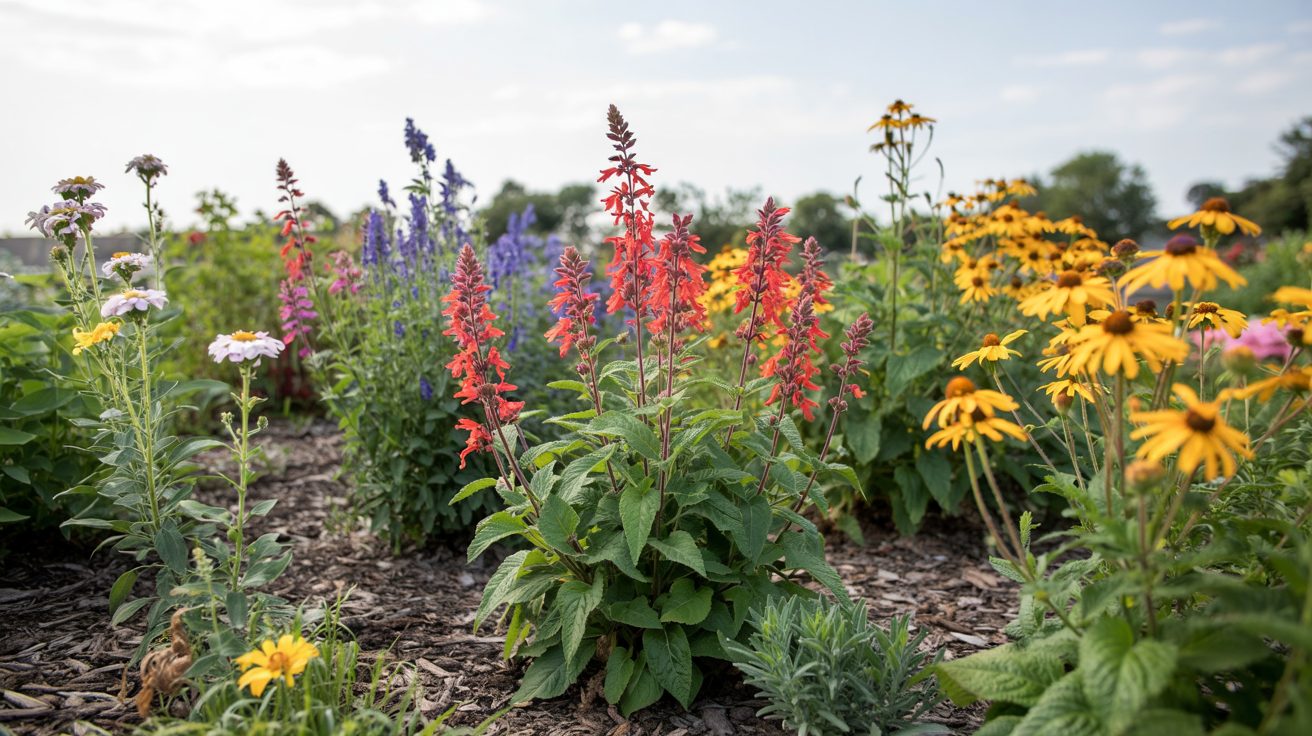
Full sun conditions - six or more hours of direct light daily - suit a surprisingly wide range of perennials, shrubs, annuals, and succulents, many of which also shrug off drought, poor soil, and reflected heat from walls or pavement.
These 12 plants handle full sun and heat with minimal fuss. We prioritized varieties proven in USDA zones 6–9, available at most garden centers, and capable of looking good through summer's worst stretches — with low-to-moderate water needs once established.
Sun-Loving Perennials
Perennials planted in full sun deliver consistent seasonal value without replanting every year. The picks below all tolerate daytime temps above 85°F and cut back on watering once their root systems settle in - usually after the first full season.
Remember it later
Planning to try this recipe soon? Save it for a quick find later!
1. Lavandula angustifolia 'Munstead' (English Lavender)
Zone 5–9 Easy
'Munstead' is the compact English lavender that fits a raised bed or border edge without sprawling. It blooms in early summer and asks almost nothing from you - long-lived perennials rarely perform as reliably on poor, rocky soils as this one does.
- Soil: Needs sharp drainage - amend clay with grit before planting.
- Fragrance and deer resistance: Strong aromatic oils repel deer and most browsing animals.
- Cut back: Shear by one-third after flowering to prevent woodiness at the base.
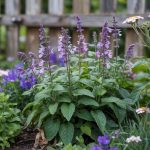
2. Salvia nemorosa 'Caradonna'
Zone 4–8 Easy
Salvia nemorosa 'Caradonna' sends up near-black stems topped with deep violet spikes - a color combination that looks expensive for very little effort. Deadhead spent spikes and a second flush appears within a few weeks, often extending bloom into late summer.
- Pollinators: Bees and butterflies work these spikes all day in warm weather.
- Heat tolerance: Handles afternoon heat and reflected wall heat without wilting.
- Pairing: Combine with yellow rudbeckia for high-contrast contrast in mid-border plantings.
Cut 'Caradonna' back hard to about 4 inches after the first flush. New basal growth appears fast, and the second bloom often lasts longer than the first.
3. Echinacea purpurea (Purple Coneflower)
Zone 3–9 Easy
Few perennials cover as many zones and conditions as Echinacea purpurea. It blooms reliably for 8-10 weeks in summer heat, and the bristly seed heads that follow attract goldfinches through fall.
- Drought tolerance: Once established (typically after 12 months), needs water only in prolonged dry spells.
- Leave the seed heads: Skip fall cleanup - birds strip them clean by January.
- Self-seeding: Spreads slowly on its own; easy to pull unwanted seedlings.
4. Rudbeckia fulgida 'Goldsturm' (Black-Eyed Susan)
Zone 3–9 Easy
'Goldsturm' blankets itself in golden-yellow flowers from midsummer right through fall - one of the longest bloom windows of any sun perennial. Learning to grow black-eyed susans well pays off fast because they tolerate clay soil and need almost no watering after the first season.
- Clay soil: One of few ornamentals that genuinely tolerates heavy, wet clay without crown rot.
- Spread: Forms clumps that expand each year - divide every 3-4 years to keep vigorous.
- Fall value: Seed heads persist for winter bird interest alongside late-season bloomers in mixed borders.
5. Sedum 'Autumn Joy' (Hylotelephium)
Zone 3–9 Easy
Flat-topped flower heads start pale pink in late summer, deepen to dusty rose, and finish a warm rust-brown by October. The succulent gray-green foliage earns its place even before the flowers appear, making this a genuinely four-season plant in most climates.
- Water needs: Watering once a week in peak summer heat is usually enough - overwatering causes floppy stems.
- Winter structure: Leave stems standing through winter; they hold snow and look good until late February.
- Companion planting: Works well at border edges where its low profile won't block taller plants behind.
Sedum 'Autumn Joy' is now correctly classified as Hylotelephium 'Herbstfreude' in most botanical references, but you'll still find it sold under the Sedum name at most nurseries.
Full Sun Shrubs
Shrubs anchor a sunny bed and carry structure when perennials die back. Both options here handle extended drought once established and require only occasional maintenance cuts to stay in shape.
6. Oleander (Nerium oleander)
Zone 8–11 Easy
In zones 8-11, Nerium oleander is nearly indestructible. It blooms in long trusses of pink, white, or red all summer despite reflected wall heat, compacted roadsides, and months without rain.
- Toxicity: All parts are toxic - wear gloves when cutting and never burn clippings.
- Size management: Left unpruned it reaches 12 feet; cut to 18 inches in late winter to keep it dense and compact.
- Coastal tolerance: Handles salt spray and sandy soil, making it standard in coastal Southern landscapes.
Oleander sap is seriously toxic to people, pets, and livestock. Always wear gloves and eye protection when pruning, and keep cuttings away from children and animals.
7. Cistus × hybridus (Rockrose)
Zone 7–9 Medium
Cistus × hybridus earns its place in dry gardens by doing what few shrubs manage: looking good on nearly zero water through a Mediterranean-style summer. White papery flowers cover it in spring, and the evergreen foliage holds the bed through winter.
- Soil preference: Performs best in poor, fast-draining, rocky or sandy soils - rich soil causes leggy, weak growth.
- Establishment: Needs regular water in year one only; after that, monthly deep watering suffices in most zones.
- Lifespan: Typically lives 8-10 years; regenerates poorly from old wood, so replace rather than hard-prune aging plants.
Annuals for Hot, Sunny Beds
Annuals fill gaps, extend color past midsummer, and let you experiment without long-term commitment. These two are warm-season workhorses that perform where sun-loving tall annuals might overpower a smaller bed.
8. Zinnia elegans 'State Fair Mix'
Annual Easy
'State Fair Mix' produces some of the largest zinnia blooms available - up to 5 inches across - in colors from cream to deep scarlet.
Sow direct after the last frost and you'll have flowers in 6-8 weeks, with zinnia blooms continuing until hard frost if you deadhead consistently.
- Heat performance: Zinnias actually accelerate in hot weather - expect peak bloom during July and August.
- Watering: Water at the base, not overhead; wet foliage invites powdery mildew fast.
- Cut for vases: Cutting stems to a leaf node triggers branching and more flowers within 10 days.
9. Verbena bonariensis
Zone 7–10 Easy
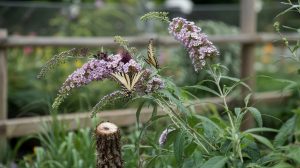
At 36-60 inches, Verbena bonariensis floats clusters of small purple flowers on near-transparent stems - you can plant it in front of shorter plants without blocking anything. It self-seeds freely in zones 7 and warmer, so one planting often becomes a permanent presence.
- Heat tolerance: Handles reflected heat from walls and paving without flagging.
- Annual use: In zones 5-6, treat it as an annual and start fresh from transplants each spring.
- Butterfly magnet: Monarchs and swallowtails visit these flower clusters consistently through late summer.
Heat-Tolerant Groundcovers and Low Growers
Low-growing sun plants solve the edge problem - bare soil between larger plants that bakes, crusts, and grows weeds. These three fill that space while handling the toughest dry conditions a summer border throws at them.
10. Lantana camara 'New Gold'
Zone 9–11 Easy
'New Gold' spreads into a dense, trailing mat covered in bright yellow flower clusters from late spring through frost. Hummingbirds and butterflies treat it as a reliable food source, and it only needs water every 7-10 days once established in hot climates.
- Invasive risk: In zones 9-11, Lantana camara can escape cultivation - check local guidelines before planting in the ground.
- Container use: Excellent in large pots in cooler zones; bring indoors if you want to overwinter it.
- Toxicity: Unripe berries are toxic to pets and children - deadhead regularly if that's a concern.
11. Gazania rigens (Treasure Flower)
Zone 9–11 Easy
A 6-12 inch groundcover with daisy-like flowers in orange, yellow, and red, Gazania rigens has a unique quirk: the petals have a reflective sheen that makes them look lit from within. It's native to South Africa and built for nutrient-poor sandy soils with minimal water.
- Flower habit: Blooms only open in full sun - they close on cloudy days and at night.
- Annual use: In zones 6-8, plant as a warm-season annual after soil reaches 60°F.
- Soil requirement: Avoid rich amended soil - too much fertility produces foliage at the expense of flowers.
12. Agave americana (Century Plant)
Zone 8–11 Easy
Agave americana makes other drought-tolerant plants look high-maintenance. A single rosette anchors a full-sun corner with bold architectural form for 10-30 years before sending up a flowering stalk that can reach 12 feet - and then the parent plant dies, leaving offsets behind.
- Sharp tips: Leaf tips are needle-sharp - plant at least 4 feet away from paths and play areas.
- Water: Once established, rainfall alone sustains it in most zone 8-11 climates.
- Offsets: Detach "pups" from the base in spring and pot separately for new plants at no cost.
Side-by-Side Comparison
Picking between these plants often comes down to zone, height, and how much water you can realistically provide in summer. This table compares the most useful specs at a glance.
| Plant | Zone | Height | Water Needs | Best Use |
|---|---|---|---|---|
| Lavender 'Munstead' | 5–9 | 12–24 in | Low | Border edge, herb garden |
| Salvia 'Caradonna' | 4–8 | 18–30 in | Low | Mid-border, pollinator bed |
| Echinacea purpurea | 3–9 | 24–36 in | Low | Meadow, mixed border |
| Rudbeckia 'Goldsturm' | 3–9 | 18–30 in | Low | Clay soil, mass planting |
| Sedum 'Autumn Joy' | 3–9 | 12–24 in | Very low | Border edge, container |
| Oleander | 8–11 | 6–12 ft | Very low | Screen, hedge |
| Cistus × hybridus | 7–9 | 2–5 ft | Very low | Dry slope, rockery |
| Zinnia 'State Fair Mix' | Annual | 12–36 in | Moderate | Cutting garden, filler |
| Verbena bonariensis | 7–10 | 36–60 in | Low | Back of border, wildlife |
| Lantana 'New Gold' | 9–11 | 12–36 in | Low | Groundcover, container |
| Gazania rigens | 9–11 | 6–12 in | Very low | Edging, sandy soil |
| Agave americana | 8–11 | 2–4 ft rosette | Minimal |
Making Full Sun Work: Soil and Watering Basics
Most sun-baked planting failures trace back to soil, not sunlight. Compacted or waterlogged ground kills roots even when the foliage looks fine.
Fast drainage is the single most consistent requirement across every plant on this list.
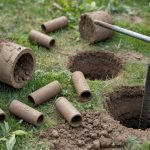
Before planting into any full sun bed, do a simple drainage test: dig a 12-inch hole, fill it with water, and check in an hour.
If water still sits in the hole, your soil needs coarse grit, raised beds, or drought-adapted plants like cistus and agave that tolerate near-dry conditions.
- Clay soil: Rudbeckia 'Goldsturm' and echinacea genuinely tolerate it. Most others need amendment or raised beds.
- Sandy soil: Gazania, agave, and lavender prefer it. Add nothing - these plants resent fertility.
- Reflected heat: Concrete walls and paving add 10-15°F of radiant heat. Oleander, lantana, and verbena handle this best.
- Mulch depth: A 2-3 inch layer of bark or gravel cuts soil moisture loss by roughly half during peak summer heat.
Gardeners in zones 8–11 face the most extreme heat-and-drought combinations. Stick to the Mediterranean-origin plants — cistus, lavender, and agave — plus native prairie species like echinacea for beds that need no supplemental irrigation after establishment.
Watering frequency matters more than volume. Deep, infrequent watering (every 7-10 days in summer) encourages roots to grow down rather than sit near the surface.
Shallow daily watering produces plants that wilt the moment you skip a day. For purple-flowering sun plants like salvia and verbena, water stress actually sharpens flower color.
Which Plant Fits Your Situation?
Zone and soil type narrow the field fast. These scenarios match the right plant to the right problem.
- Cold-climate gardener in zone 3-5: Start with echinacea, rudbeckia, and salvia 'Caradonna' - all survive winters well below zero without any protection.
- Hot, dry climate in zone 8-11: Agave, oleander, lantana, and cistus are designed for your conditions. Pair them with golden-toned bloomers for a warm-palette xeriscape bed.
- Deer pressure: Lavender 'Munstead', salvia, and agave are all reliably avoided. Deer tend to leave aromatic and spiny plants alone.
- Pollinators and wildlife priority: Echinacea for birds, salvia and verbena for bees and butterflies, lantana for hummingbirds - combine all three for maximum wildlife value.
- Annual color, fast results: Zinnias go from seed to bloom in under 8 weeks and produce more flowers the more you cut them.
- Zero-water maintenance bed: Agave, cistus, and sedum 'Autumn Joy' together create a low-maintenance, four-season planting requiring almost no supplemental irrigation after year one. Browse more on full sun garden plants to extend your palette further.
Frequently Asked Questions
Agave americana, oleander, and lantana 'New Gold' handle the most extreme heat, surviving zone 9–11 summers with minimal water once established. For colder zones, echinacea and rudbeckia 'Goldsturm' are reliable in zones 3–9 with daytime temps well above 85°F.
Most established full sun perennials need deep watering every 7–10 days in summer, not daily. Succulents like sedum and agave can go 2–3 weeks between waterings, while zinnias and verbena prefer consistent moisture about once every 5–7 days during peak heat.
Lavandula angustifolia, salvia nemorosa, and agave americana are all reliably deer resistant. Deer avoid aromatic foliage (lavender and salvia) and sharp-tipped leaves (agave), making these three solid choices for gardens in zones 5–9 with heavy deer pressure.
Yes — gazania, cistus, and lavender 'Munstead' actually perform better in poor, fast-draining soil than in rich amended beds. Adding compost or fertilizer to these plants encourages floppy growth and reduces flowering in most cases.
Pin it for your next full sun plants: best varieties and growing tips project.