A compact yard doesn't mean settling for bare corners and flat borders. Small trees under 25 feet can anchor a space, attract pollinators, and deliver four-season interest without overwhelming foundations or blocking light from neighbors.
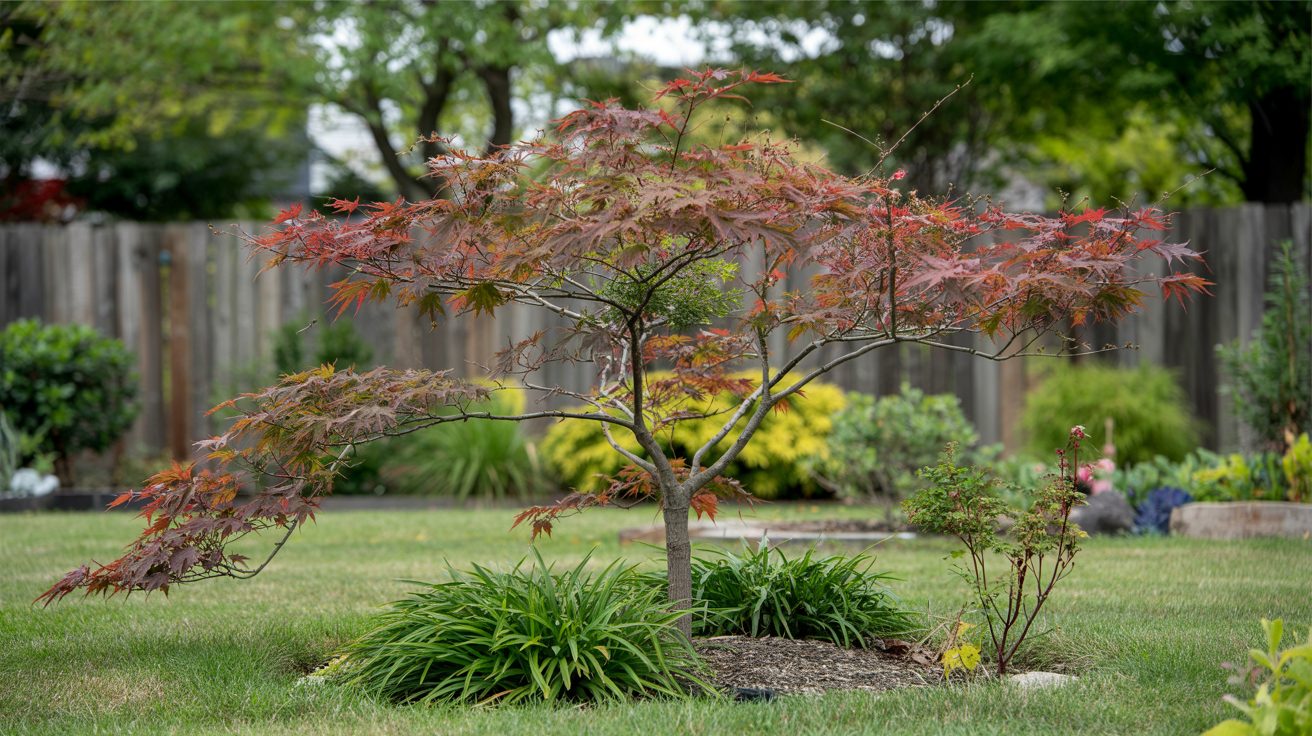
These 12 compact and dwarf trees top out between 6 and 25 feet, making them viable for tight suburban lots, patios, and narrow borders. We evaluated them on mature size, disease resistance, multi-season appeal, and availability at US nurseries.
How to Size a Tree to Your Yard?
Before picking a species, measure your available planting area and note sun exposure at different times of day. A tree that looks small in a nursery pot can still hit 20 feet wide at maturity.
Remember it later
Planning to try this recipe soon? Save it for a quick find later!
Most small trees need at least 8-10 feet of clearance from structures, fences, and utilities. You can compare columnar options with spreading ones to decide what suits your layout - narrowing your tree choices by mature canopy spread matters more than height alone.
- Foundation plantings: Keep any tree at least 10 feet from the house to avoid root contact with footings over time.
- Overhead lines: Trees under 15 feet at maturity are generally safe under standard 20-foot utility lines - confirm with your utility company.
- Root spread: Roots typically extend 1.5-2x the canopy width, so account for that when planting near hardscape.
- Patio containers: True dwarf forms (under 12 feet) can live in large 25-30 gallon containers for several years before needing ground planting.
Avoid planting any tree — even a compact one — within 5 feet of a buried sewer or drain line. Root intrusion is a long-term problem that shows up years after planting.
Flowering Trees for Spring and Summer Color
Spring-blooming trees pull the most visual weight for the space they occupy. These four species bloom reliably without demanding full-sun, perfect-soil conditions.
Japanese Maple 'Bloodgood'
Zone 5-8 Medium
Acer palmatum 'Bloodgood' is the standard against which other ornamental trees get measured. Deep burgundy leaves hold their color from spring through fall, which is unusual - many red maples fade to muddy green by August.
- Size: 10-15 feet tall and wide at maturity, with very slow growth of 6-12 inches per year.
- Sun: Morning sun with afternoon shade protects leaf color and prevents scorch in zones 7-8.
- Container use: Works well in large patio containers for 5-8 years before transplanting - keeping color saturation strong depends on consistent moisture.
Cercis canadensis 'Forest Pansy'
Zone 5-9 Easy
Redbud blooms directly on bare wood in early spring - magenta pea-flowers covering gray branches before a single leaf appears. 'Forest Pansy' adds heart-shaped purple-red foliage that persists through summer in cooler zones.
- Dwarf options: Grafted columnar forms stay 8-12 feet tall, perfect for narrow side yards.
- Soil tolerance: Handles clay better than most ornamentals, though it prefers well-drained loam.
- Fall interest: Foliage turns yellow-orange before drop, adding a third season of color.
Prunus mume 'Beni-chidori'
Zone 6-9 Easy
Japanese apricot opens deep pink, fragrant flowers in late January through March - weeks before any other flowering tree in the yard. Prunus mume 'Beni-chidori' stays naturally compact at 8-12 feet and needs no aggressive pruning to hold its size.
- Fragrance: Flowers carry a strong sweet scent, making it ideal near entries or windows.
- Container life: Young plants grow well in 20-gallon containers; repot every 2-3 years.
- Disease notes: Less susceptible to common stone-fruit issues than peach or flowering plum.
Prunus 'Kanzan'
Zone 5-8 Medium
Kwanzan cherry is a statement tree. Double-pink blossoms appear in mid-spring and last 2-3 weeks, covering branches so densely that foliage is barely visible underneath.
- Managed size: Grafted stock on dwarf rootstock caps height at 8-12 feet; standard grafts reach 15-25 feet.
- Form: Strong upright vase shape makes it useful in narrow strips between driveways and fences.
- Espalier option: Trains well against a south-facing wall to occupy horizontal space instead of depth.
When buying grafted flowering trees, check the graft union before purchase. A clean, well-healed union below the main branches means the tree established well on its rootstock and will size more predictably.

Multi-Season Trees with Year-Round Appeal
Single-season trees use space for 11 months without payoff. These picks earn their place by delivering flowers, fruit, fall color, and interesting bark across all four seasons.
Amelanchier 'Autumn Brilliance'
Zone 4-9 Easy
Serviceberry delivers white spring flowers, edible blue-black berries in June, and reliable orange-red fall color - all on one upright, 15-20 foot tree. Birds eat the berries fast, so harvest early if you want them for yourself.
- Wildlife value: Among the best small trees for pollinators and berry-eating birds combined.
- Adaptability: Tolerates part shade, making it useful along north-facing fence lines where most flowering trees fail.
Amelanchier laevis 'Prince William'
Zone 4-9 Easy
Where 'Autumn Brilliance' is too tall, 'Prince William' fits. This compact cultivar tops out at 8-12 feet with a tidy multi-stem habit and the same three-season performance at roughly half the scale.
- Use case: Works as a corner anchor in small beds or beside a deck where a taller tree would block light.
- Maintenance: Remove one or two oldest stems every 3 years to keep the multi-stem form open and healthy.
Stewartia pseudocamellia
Zone 5-8 Medium
Stewartia pseudocamellia, Japanese stewartia, earns a spot for its exfoliating bark alone - mosaic patches of gray, orange, and cinnamon that look best in winter when nothing else is happening. Camellia-like white flowers appear in July, a rare bloom window for a woody plant.
- Size selection: Ask nurseries specifically for 10-12 foot forms; some stewartia lines reach 20+ feet.
- Siting: Partial shade suits it well; avoid hot, dry western exposures.
- Patience required: Slow establishment in year one - water every 3 days in summer for the first full season.
Magnolia 'Little Gem'
Zone 7-9 Easy
In warmer zones, evergreen foliage is its own reward, and 'Little Gem' provides that plus large white magnolia flowers from May through September. Its columnar habit - rarely more than 8 feet wide - suits narrow spaces where broadleaf evergreen structure is needed year-round.
- Zone fit: Best in zones 7-9; suffers leaf damage below 10°F, so zone 6 is marginal at best.
- Height control: Grows 12-20 feet without pruning; annual tip pruning in late spring keeps it at 12-14 feet.
Magnolia 'Little Gem' is sometimes sold under the name 'Southern Charm' — they're the same cultivar. Check the tag for Magnolia grandiflora 'Little Gem' to confirm you're getting the true compact form, not a full-size southern magnolia.
Hardy Trees for Tough Spots and Cold Climates
Some yards have poor soil, heavy traffic from kids and pets, or cold winters that knock out most ornamentals. These three species handle those conditions without drama.
Acer ginnala
Zone 3-8 Easy
Amur maple grows as far north as zone 3 - a range that eliminates nearly every other ornamental tree on this list. Acer ginnala delivers brilliant scarlet fall color, tolerates compacted urban soil, and handles road salt exposure better than most maples.
- Form options: Grown as a multi-stem large shrub or trained to a single leader at 10-15 feet.
- Invasive note: Self-seeds aggressively in some northern states; deadhead seed clusters in late summer to limit spread.
- Drought tolerance: Once established (2-3 seasons), needs no supplemental watering in zones 3-6.
Ostrya virginiana 'Colonial'
Zone 4-8 Medium
Ironwood is one of the most underplanted small trees in North America. 'Colonial' is a tight upright selection of Ostrya virginiana with textured muscle-like bark and small hop-like seed clusters that rattle in fall wind.
- Growth rate: Very slow - 6-8 inches per year - so buy the largest nursery stock you can afford.
- Street use: Tolerates reflected heat, compacted soil, and dry conditions once established, rare traits that make it useful along mowing strips near driveways.
- Disease resistance: Essentially pest- and disease-free in most US climates.
Malus 'Spring Snow'
Zone 4-8 Easy
Old crabapple cultivars earned a bad reputation for apple scab and fire blight. 'Spring Snow' was specifically selected for resistance to both diseases, making it far lower maintenance than older varieties planted in suburban yards 30 years ago.
- Bloom: Near-fruitless selection with heavy white spring flowers - good if you don't want fallen fruit on a patio.
- Size: 12-18 feet tall; responds well to light annual pruning to stay at the lower end of that range.
- Disease management: Resistant doesn't mean immune - monitor for common fungal issues during wet springs in zones 5-6.
Drought-Tolerant Trees for Warm Climates
Zone 8 and warmer bring different constraints - summer drought, reflected heat from hardscape, and alkaline soils in many western regions. One entry on this list is specifically built for those conditions.
Olea europaea 'Little Ollie'
Zone 8-11 Easy
'Little Ollie' is a true dwarf olive that tops out at 6-10 feet, making it viable in large containers and tight Mediterranean-style courtyard plantings. Unlike tropical palms often used in similar zones, it handles brief temperature dips to 15°F without major damage.
- Water needs: Drought-tolerant once established - water every 10-14 days in summer after year two.
- Fruit: Produces small olives, but 'Little Ollie' is selected more for compact canopy than fruit yield; production is light.
- Container growing: Works in 25-gallon pots; a lemon tree in a container managed year-round uses similar care routines, so both can share a patio space with consistent watering schedules.
'Little Ollie' is marginally cold-hardy in zone 8 — in the colder half of that zone (Piedmont NC, northern Arkansas), protect young trees with frost cloth when temperatures drop below 20°F in the first two winters.
Side-by-Side: Top 5 Small Trees Compared
Comparing across multiple attributes makes the right choice clearer. The five trees below appear most often in suburban planting plans and represent the widest range of use cases.
| Tree | Mature Height | Zone | Sun | Best Use |
|---|---|---|---|---|
| Japanese Maple 'Bloodgood' | 10–15 ft | 5–8 | Part shade | Patio specimen |
| Serviceberry 'Autumn Brilliance' | 15–20 ft | 4–9 | Full to part | Wildlife border |
| Redbud 'Forest Pansy' | 8–20 ft | 5–9 | Full to part | Front yard specimen |
| Magnolia 'Little Gem' | 12–20 ft | 7–9 | Full to part | Narrow screen |
| Malus 'Spring Snow' | 12–18 ft | 4–8 | Full sun | Lawn anchor |
Japanese maple and redbud overlap in zones 5-8, but their canopy shapes differ sharply - maple spreads wide while columnar redbud forms grow narrow. Choose based on your horizontal space, not just height.
Planting and First-Year Care
Most small tree failures happen in the first 18 months. Heat stress, planting too deep, and inconsistent water kill more trees than disease or pests combined.
Which Tree Fits Your Situation?
After reviewing all 12 options, the right call usually comes down to three factors: your zone, your sun exposure, and what you most want the tree to do. Use these scenarios to narrow it down fast.
If you want a narrow screening plant for a side yard, columnar redbud and 'Little Gem' magnolia are the strongest options. For cold northern yards, Amur maple handles zone 3 conditions that would kill everything else on this list.
- Best for patios and containers: Japanese maple 'Bloodgood' or Prunus mume 'Beni-chidori' - both stay under 12 feet and work in large containers for years.
- Best for wildlife and birds: Either serviceberry cultivar - 'Autumn Brilliance' for larger yards, 'Prince William' for tighter spaces.
- Best for zone 3-4 cold climates: Amur maple tolerates conditions that rule out most ornamentals on this list.
- Best for dry western yards: 'Little Ollie' dwarf olive in zones 8-11 needs minimal summer water after establishment.
- Best four-season interest: Japanese stewartia - flowers in summer, bark interest in winter, and consistent fall color in between.
- Best disease-resistant choice: Malus 'Spring Snow' for those who want spring bloom without annual fungicide applications.
If you're still deciding between a compact ornamental and a faster-growing option, reviewing growth rates across species helps clarify the tradeoff between speed and size control.
Frequently Asked Questions
Semi-dwarf apple and pear trees on M.9 or M.26 rootstock top out at 8–12 feet and produce full-size fruit in zones 4–8. Prunus mume 'Beni-chidori' adds ornamental value alongside edible apricots in zones 6–9.
Plant any tree at least 10 feet from foundations — even dwarf varieties under 15 feet tall. Root spread typically equals 1.5–2 times the canopy width, so a 10-foot-wide tree needs 15–20 feet of root clearance from buried footings.
Yes — 'Bloodgood' and other compact Japanese maples survive in 25–30 gallon containers for 5–8 years in zones 5–8. Move containers to an unheated garage when temperatures drop below -10°F to protect roots from freeze-thaw damage through the pot walls.
Stewartia pseudocamellia has the most distinctive winter bark of any tree on this list — exfoliating patches of gray, orange, and cinnamon that show best in zones 5–7 where leaf drop exposes the full trunk from November through March.
Pin it for your next small trees for small yards: best varieties and growing tips project.