Hydrangeas are among the most recognizable shrubs in North American gardens, yet picking the wrong type for your yard is surprisingly easy.
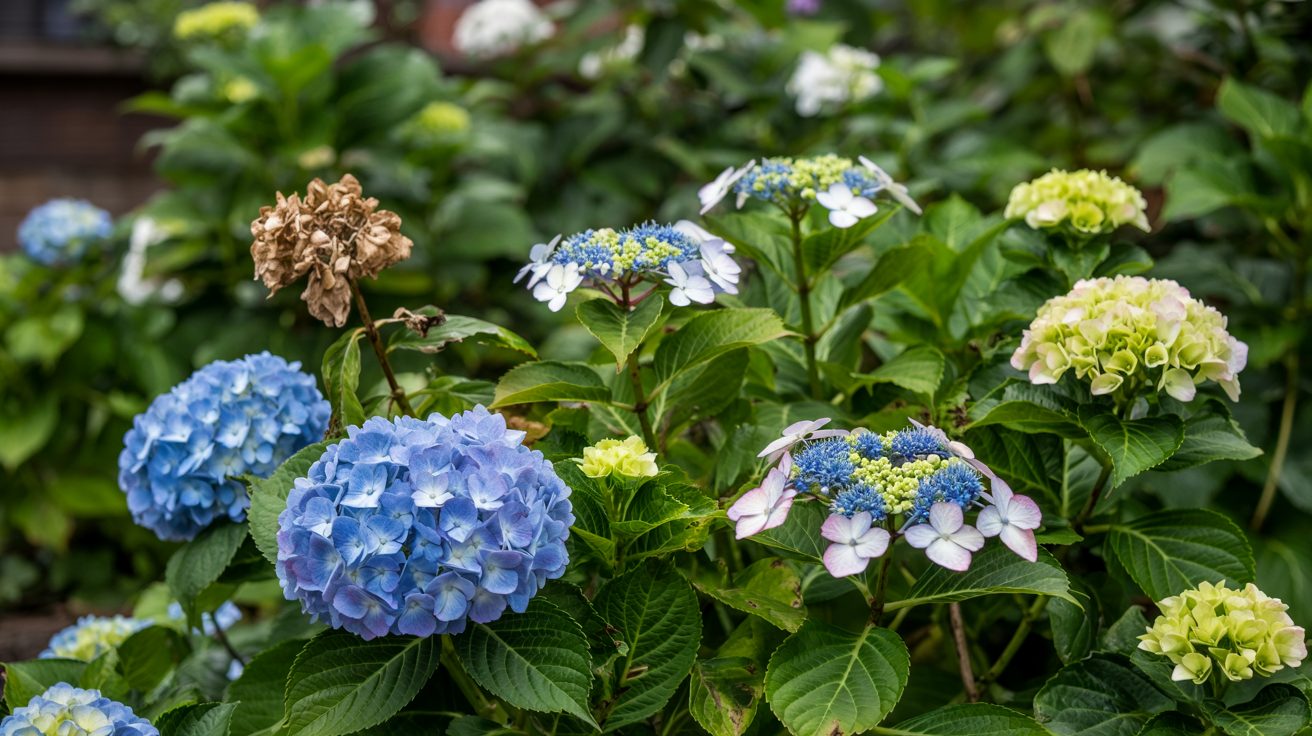
Bloom timing, pruning rules, and color behavior vary so dramatically across species that a plant thriving in one yard can fail completely three houses down.
Twelve varieties across five hydrangea species — macrophylla, paniculata, arborescens, quercifolia, and serrata — covering zones 3 through 9. Whether you need a container-sized rebloomer, a full-sun panicle, or drought-tolerant oakleaf, the right match depends on your zone, pruning habits, and sun exposure.
Old Wood vs. New Wood: The Most Important Distinction
Before choosing a variety, you need to understand one concept that determines your entire pruning approach. Old-wood bloomers set flower buds in late summer on the previous season's growth, so any hard pruning in fall or spring removes those buds entirely.
Remember it later
Planning to try this recipe soon? Save it for a quick find later!
New-wood bloomers flower on growth produced in the current season, which means you can cut them back hard in late winter without losing a single bloom. Most Hydrangea paniculata and Hydrangea arborescens varieties fall in this group.
- Old wood only: Most Hydrangea macrophylla and Hydrangea quercifolia - deadhead lightly, skip hard pruning.
- New wood only: H. paniculata and H. arborescens - cut to 12-18 inches each late winter for bigger blooms.
- Both (reblooming): 'Endless Summer' and similar series - flowers on both, so pruning timing is more forgiving.
When in doubt, wait until you see new buds swell in spring before cutting. This single habit saves more hydrangeas from non-blooming than any other tip.
Soil pH and Color: Why Your Blue Might Turn Pink
Among Hydrangea macrophylla varieties, flower color isn't fixed at the nursery. Soil pH controls aluminum uptake, which shifts blooms between blue and pink - a fact that catches many first-time growers off guard.
This color-shift behavior applies only to macrophylla and serrata types. Panicle, oakleaf, and smooth hydrangeas produce white or cream blooms that age to pink or red regardless of soil chemistry.
- Blue blooms: Require pH 5.5 or below and available aluminum in the soil - add sulfur to acidify.
- Pink blooms: pH 6.5 and above limits aluminum absorption - add garden lime to push pink.
- Purple blooms: Happen naturally at middle pH values, roughly 6.0-6.5, as a transition state.
- White varieties: Color is fixed - 'Annabelle' and panicle types don't respond to pH adjustment.
Testing soil before you plant saves months of frustration. A basic pH meter costs under $15 and tells you what amendments you actually need versus what the label suggests.
This matters just as much when growing acid-loving blueberries beside your hydrangea bed.
Aluminum sulfate works faster than elemental sulfur to lower pH — mix 1 tablespoon per gallon of water and drench the root zone monthly from spring through midsummer for blue color by late season.
Mophead Hydrangeas
Mopheads produce dense, ball-shaped flower clusters made almost entirely of showy sterile florets. They're the most widely sold type at garden centers, but their old-wood blooming habit makes them vulnerable to pruning mistakes and late frosts in zones 5-6.
Nikko Blue
Zone 5–9 Medium
The nursery staple since the 1950s, Hydrangea macrophylla 'Nikko Blue' produces large, reliable blue globes when soil pH stays at or below 6.0. It blooms on old wood only, so late-spring frosts in zone 5 can wipe out an entire season's flowers.
- Color control: Holds blue well at pH 5.5 - one of the more responsive cultivars to aluminum sulfate treatment.
- Pruning: Remove only dead wood and spent blooms; never cut to the ground.
- Spacing: Plant 4-5 feet apart; mature spread reaches 5-6 feet in warm zones.
Endless Summer (Double Delight Series)
Zone 4–9 Easy
A genuine breakthrough for cold-climate gardeners, 'Endless Summer' flowers on both old and new wood - meaning even after a hard pruning or a killing frost, you still get blooms. It tolerates cutting back to 18 inches and fits containers or small-yard beds.
- Reblooming: Produces a second flush in late summer on current-season wood - deadhead after first bloom to encourage it.
- Container use: Compact habit (2-4 feet) works in 15-gallon pots with regular fertilizing.
- Color: Blue in acidic soil, pink in neutral - same pH rules as 'Nikko Blue' apply.
Together (Compact Mophead Series)
Zone 5–9 Easy
Bred specifically for small spaces, the 'Together' series tops out at 18-24 inches wide and 1.5-3 feet tall. These are among the most compact H. macrophylla options available for balcony containers or front-border planting.
- Spread: 18-24 inches - plant 2 feet apart for a tight border or use singly in 10-gallon containers.
- Blooming: Old wood, but flowers earlier in the season than standard macrophyllas.
- Best use: Container gardening, low hedges, or front-of-border color where larger shrubs overwhelm.
Lacecap Hydrangeas
Lacecaps produce flat flower heads with a ring of sterile florets surrounding a center cluster of tiny fertile flowers. They look airier and less formal than mopheads, and many gardeners find them more attractive in naturalistic settings.
A detailed look at shade-loving hostas alongside lacecaps makes a strong woodland border combination.
Bluebird
Zone 6–9 Easy
Hydrangea serrata 'Bluebird' is more compact and refined than most macrophylla lacecaps, with smaller foliage and earlier blooms. It reaches just 2-3 feet and opens in early to midsummer, weeks ahead of larger varieties.
- Color: True blue in acidic soil, light pink in alkaline - color shifts are sharp and reliable with pH adjustment.
- Hardiness caveat: Zone 6 minimum makes it vulnerable in colder climates without winter mulching.
- Pairing: Works well alongside shade-tolerant ferns in dappled light situations.
Blushing Bride
Zone 5–9 Medium
Part of the Endless Summer collection, 'Blushing Bride' is a semi-double lacecap with double-centered sterile florets that hold their shape better in rain than typical flat lacecaps. Blooms open white and shift to light pink as they age.
- Rain tolerance: Doubled florets resist rain damage better than single-layer lacecap types.
- Reblooming: Flowers on old and new wood - same forgiving pruning window as 'Endless Summer.'
- Height: 3-4 feet; plant 3 feet apart for a soft informal hedge.
Tardiva
Zone 6–9 Medium
A taller lacecap known for late-season bloom - 'Tardiva' flowers in August through September when most other macrophyllas have already finished. Large sterile outer florets frame the fertile center dramatically.
- Sun tolerance: Handles slightly sunnier positions than most lacecaps, including morning sun with a few afternoon hours.
- Bloom window: August-September flush extends garden color when neighboring shrubs go quiet.
- Height: Reaches 4-6 feet - position mid-border or against a fence, not at the front of a bed.

Panicle Hydrangeas
Hydrangea paniculata varieties are the easiest to grow well. They bloom reliably on new wood, handle full sun, and suit cold climates down to zone 3.
Among all the ornamental garden shrubs available to northern gardeners, panicle hydrangeas are the most consistently low-maintenance.
Limelight
Zone 3–8 Easy
Possibly the most planted panicle hydrangea in the US, 'Limelight' opens with distinctive lime-green blooms in midsummer that shift through cream to pink-blush by early fall. It reaches 6-8 feet and works as a hedge, specimen, or backdrop shrub.
- Color sequence: Lime → cream → pink-blush from July through October - one plant produces three distinct seasonal looks.
- Pruning: Cut back by one-third each late winter to maintain shape and encourage large bloom clusters.
- Full sun tolerance: One of the few hydrangeas that performs well in 8+ hours of direct sun, provided moisture is consistent.
Pinky Winky
Zone 3–8 Easy
What makes 'Pinky Winky' stand out is its bi-color panicle - white sterile florets at the tip, strong pink developing from the base upward as the season progresses. The contrast within a single bloom head is more dramatic than most panicle types.
- Bloom structure: Pink develops at the base first, creating a two-tone effect for 4-6 weeks mid-season.
- Upright habit: Stiff, upright branching at 6-8 feet resists wind flop better than 'Limelight' at similar heights.
- Cold hardiness: Zone 3 reliable - among the hardiest hydrangeas available to northern gardeners.
Quick Fire
Zone 3–8 Easy
Three to four weeks earlier than standard paniculatas, 'Quick Fire' starts blooming in late June and transitions to pink while neighbors are still in bud. Reaching 5-7 feet, it fits mixed specimen planting schemes where staggered bloom times matter.
- Bloom start: Late June in most zones - earliest flowering panicle type widely available.
- Pink transition: Starts shifting to pink in July, earlier than 'Limelight' or 'Pinky Winky.'
- Size: 5-7 feet tall and wide; allow 6 feet of space for full mature spread.
Vanilla Strawberry
Zone 3–8 Easy
The most dramatically colored panicle hydrangea on this list, 'Vanilla Strawberry' opens white and ages through strawberry-pink to deep red in cool fall weather. Strong branching at 5-7 feet means heavy bloom heads rarely need staking, which separates it from some competitors.
- Fall color depth: Deep red tones appear only in cool climates - zone 7-8 growers see less red, more pink.
- Branch strength: Thicker stems than 'Limelight' at comparable height; less flopping under wet bloom weight.
- Companion planting: The late-season red tones pair well with ornamental grasses and late-blooming shrub roses for fall interest.
Smooth and Oakleaf Hydrangeas
These two species earn their place in landscapes where tougher conditions rule - dry spells, deep shade, or very cold winters. They're both North American natives, which gives them a resilience most macrophyllas can't match.
Annabelle
Zone 3–9 Easy
Hydrangea arborescens 'Annabelle' produces white globe-shaped blooms up to 12 inches across - larger than most mopheads. It blooms on new wood, so a hard cut to 12 inches each late winter produces reliably enormous flowers.
In zone 3, where few shrubs survive, Annabelle performs without complaint.
- Staking: Bloom heads are heavy enough to flop after rain - stake young plants or install a peony ring in spring.
- Pruning: Hard cut to 12-18 inches each late winter; this is one hydrangea that actually rewards aggressive pruning.
- Shade tolerance: Handles more shade than paniculata types - usable in part-shade positions with 3-4 hours of sun.
First-year 'Annabelle' plants often flop badly under their own blooms. Install support in year one, then decide whether to stake annually or accept the sprawl — some gardeners prefer the relaxed, drooping look in informal beds.
Snow Queen (Oakleaf)
Zone 5–9 Medium
Hydrangea quercifolia 'Snow Queen' earns its place through three-season interest: conical white blooms in summer, striking red-purple fall foliage, and exfoliating cinnamon-brown bark through winter. It's the most drought-tolerant hydrangea on this list once established.
- Fall foliage: Deep red-purple leaf color from September onward - rivals maples in autumn impact.
- Drought tolerance: Once established (2+ years), survives without supplemental water in most zone 5-7 climates.
- Bloom aging: White flowers age to pink then papery tan - dried heads persist through winter for seasonal structure.
Oakleaf hydrangeas are native to the southeastern US and reliably cold-hardy to zone 5, but the flower buds can suffer in zone 5 winters with no snow cover. A 3-inch bark mulch layer around the base helps protect root zones in exposed sites.
Side-by-Side Comparison
With twelve varieties across five species, the differences can blur together quickly. This table puts the most important decisions - zone, sun, height, and wood type - next to each other so you can filter by what matters most in your yard.
| Variety | Zone | Height | Sun | Wood Type |
|---|---|---|---|---|
| Nikko Blue | 5–9 | 3–5 ft | Morning sun | Old wood |
| Endless Summer | 4–9 | 2–4 ft | Partial shade | Both |
| Together | 5–9 | 1.5–3 ft | Partial shade | Old wood |
| Bluebird | 6–9 | 2–3 ft | Morning sun | Old wood |
| Blushing Bride | 5–9 | 3–4 ft | Partial shade | Both |
| Tardiva | 6–9 | 4–6 ft | Morning sun | Old wood |
| Limelight | 3–8 | 6–8 ft | Full sun | New wood |
| Pinky Winky | 3–8 | 6–8 ft | Full sun | New wood |
| Quick Fire | 3–8 | 5–7 ft | Full sun | New wood |
| Vanilla Strawberry | 3–8 | 5–7 ft | Full sun | New wood |
| Annabelle | 3–9 | 3–5 ft | Part shade | New wood |
| Snow Queen | 5–9 | 4–6 ft | Part shade | Old wood |
How Soil pH Adjustment Works in Practice?
Knowing that pH affects color is one thing - actually shifting it before your next bloom season is another. Results take 60-90 days, so spring amendments won't affect that summer's flowers.
Fall is the better window for color changes you want the following year.
The same principle applies when growing tomatoes in amended beds - soil chemistry changes slowly, and patience between application and visible result is non-negotiable.
Choosing the Right Variety for Your Situation
The variety list above covers most yard scenarios, but matching plant to situation is faster when you lead with your constraints rather than your preferences. Similar logic applies when picking drought-tolerant succulents - the growing conditions narrow the field before aesthetics even enter the conversation.
- Zone 3-4 and you want reliable blooms every year: 'Annabelle,' 'Limelight,' 'Quick Fire,' or 'Pinky Winky' - all new-wood bloomers that shrug off harsh winters.
- Small space or container planting: 'Together' series (18-24 inch spread) or 'Endless Summer' in a 15-gallon pot - both tolerate occasional hard pruning to stay compact.
- Full sun location with no afternoon shade available: Any H. paniculata variety - these are the only hydrangeas that actually prefer full sun.
- Shade garden or woodland edge: 'Snow Queen' oakleaf or 'Bluebird' serrata - both handle dappled light where macrophyllas get leggy.
- You want blue flowers and live in zone 5-6: 'Endless Summer' is safer than 'Nikko Blue' - the reblooming habit compensates for frost-killed old wood buds.
- Three-season interest is the priority: 'Snow Queen' delivers summer blooms, fall leaf color, and winter bark - no other variety on this list matches that range.
- Late-season color extension: 'Tardiva' blooms into September while 'Vanilla Strawberry' adds deep red tones in October - combine both for a 5-month hydrangea display.
For deeper cultivation details on spacing, fertilizing, and winter protection, the full hydrangea growing guide covers all five species with step-by-step seasonal care.
Frequently Asked Questions
The five main species are Hydrangea macrophylla (mophead and lacecap), H. paniculata (panicle), H. arborescens (smooth), H. quercifolia (oakleaf), and H. serrata — each differs in bloom shape, zone range, and pruning requirements.
Mopheads produce dense, ball-shaped clusters made entirely of sterile florets, while lacecaps have a flat flower head with a ring of sterile outer florets surrounding a center of tiny fertile flowers — the difference is visible from several feet away.
All Hydrangea paniculata varieties (including 'Limelight,' 'Quick Fire,' and 'Vanilla Strawberry') and H. arborescens 'Annabelle' bloom on new wood — cut them back to 12–18 inches each late winter without losing any blooms.
No hydrangea performs well in true full shade, but 'Snow Queen' oakleaf and 'Annabelle' tolerate 3–4 hours of direct sun with dappled light the rest of the day — more than most macrophylla types can handle in low-light conditions.
Soil pH likely rose above 6.5, limiting aluminum uptake and shifting the bloom color pink — apply aluminum sulfate at 1 tablespoon per gallon monthly from spring through midsummer to restore blue tones the following season.
Pin it for your next types of hydrangeas: best varieties and growing tips project.