Hostas are among the most reliable shade garden perennials you can plant, yet the category spans everything from palm-sized miniatures to clumps wider than a dining table. Picking the wrong size or leaf color for your space means years of frustration.
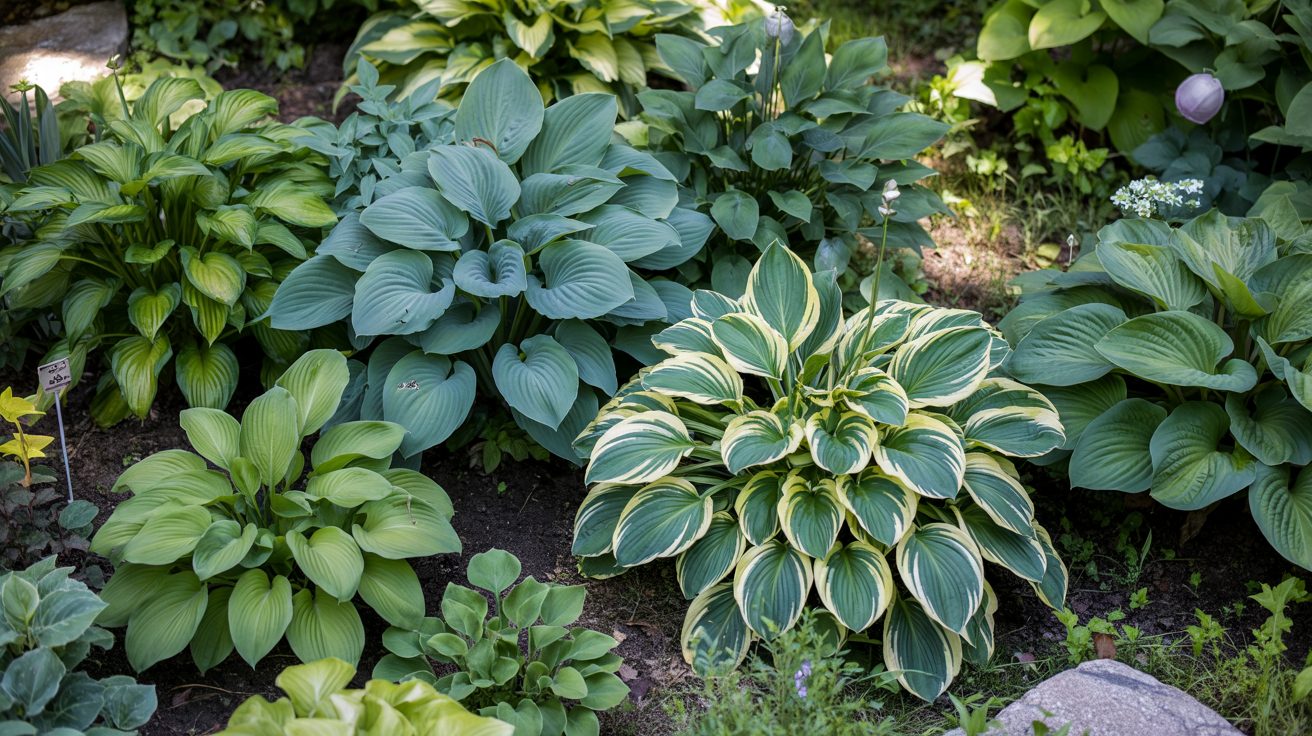
This guide covers 12 named varieties - each chosen for a specific reason, from slug resistance to cold tolerance - so you can match the right hosta to your exact conditions.
Hostas (Hosta spp.) are shade-tolerant perennials hardy in USDA zones 3–9, grown mainly for bold foliage in blue, gold, green, and variegated forms. Sizes range from 8-inch containers to 4-foot specimens.
Slug damage and leaf scorch are the two biggest problems, and variety choice directly affects both.
What Sets Hosta Varieties Apart?
All hostas share the same basic care needs, but variety selection changes outcomes dramatically. Leaf thickness, mature spread, and color stability vary enough between cultivars that two hostas planted side by side can look completely different by August.
Remember it later
Planning to try this recipe soon? Save it for a quick find later!
When you grow hostas from bare root, it takes two to three seasons to judge true mature color, so understanding what each variety is supposed to do saves early replanting decisions.
- Leaf substance: Thicker leaves resist slugs and hold shape through heat; thin-leaved types show damage faster.
- Color stability: Blue-toned leaves need cooler shade to hold their waxy coating; golds and chartreuses intensify with a few hours of morning sun.
- Mature spread: Giant varieties can reach 6 feet wide after 5-7 years; small types stay under 18 inches indefinitely.
- Fragrance: A handful of varieties produce scented flowers - worth noting if you want more than foliage interest.
Hosta color on the label reflects peak color, not year-round color. Blues fade to green in summer heat, and chartreuse leaves may bleach to near-white in deep shade. Factor in your seasonal light changes before buying.
Blue and Gray Hostas
Blue-toned hostas get their color from a waxy glaucous coating on the leaf surface. That coating also slows slug feeding, making blues some of the toughest hostas in a wet spring garden.
Hosta 'Blue Angel'
Zone 3–9 Easy
'Blue Angel' produces large, thick blue-gray leaves that hold their color better than most blues when given a few hours of morning light. It builds into a dense, rounded mound over several seasons.
- Height: 24-36 inches, spreading 4-5 feet at full maturity.
- Slug resistance: High - the heavy leaf substance discourages feeding damage.
- Best use: Anchor plant or back-of-border specimen where you need mass and weight.
Hosta 'Halcyon'
Zone 3–8 Easy
Only 10-14 inches tall, 'Halcyon' is the compact blue for small gardens and borders. Its satin-sheened leaves hold blue well into late summer even in heavier shade - a trait most blue giants can't match.
- Shade tolerance: Handles full shade without losing leaf quality.
- Spread rate: Slow to medium - expect a tidy 18-inch clump by year three.
- Pairing tip: Works beside ferns; which ferns pair well depends on moisture levels in your bed.
Blue hostas fade to green fastest in zones 7–9 summers. In those zones, plant blues on the north side of structures where they get no direct afternoon exposure after May.
Gold and Chartreuse Hostas
Gold-toned hostas need more light than most gardeners expect. Without at least two hours of morning sun, they stay chartreuse or muddy yellow all season.
Place them at the shadier edge of a bright spot, not in deep canopy shade.
Hosta 'Sum and Substance'
Zone 3–9 Medium
Few hostas command a space the way 'Sum and Substance' does. Leaves start chartreuse in spring and shift to gold by midsummer, reaching 18 inches long on a mature clump that can spread 5-6 feet wide.
- Slug resistance: Excellent - among the toughest in the gold category due to leathery leaf texture.
- Light requirement: Morning sun to partial shade; needs some direct light to reach full gold color.
- Garden role: Focal specimen or large-scale ground cover on slopes.
Hosta 'August Moon'
Zone 3–9 Easy
'August Moon' spreads faster than most gold types and tolerates wetter soils than its size suggests. The large round leaves lighten toward yellow in deep shade, so site it where light is moderate rather than minimal.
- Height: 18-24 inches with a generous spread of 30-36 inches by year four.
- Soil flexibility: One of the few large hostas that handles consistently moist ground without crown rot.
- Texture: Less leathery than 'Sum and Substance' - expect more slug attention in wet seasons.
Hosta 'Guacamole'
Zone 4–9 Easy
Unlike most hostas grown purely for foliage, 'Guacamole' produces fragrant pale lavender flowers in mid-summer - a genuine bonus on top of its lime-to-chartreuse leaves. It may develop faint cream margins as it matures.
- Height: 16-24 inches; moderate spread rate.
- Fragrance: Noticeable on warm evenings, stronger than 'Royal Standard' in many trials.
- Leaf note: Thinner-leaved than giant gold types; mulch well to reduce slug pressure.
Variegated Hostas
Variegated types - green with white or gold margins, or the reverse - give the most visual punch per square foot. The tradeoff is that margin contrast can fade in heavy shade or bleach out in too much sun.
Getting that balance right is the main management task with these varieties.
Hosta 'Frances Williams'
Zone 3–8 Medium
One of the most recognized hostas in commerce, 'Frances Williams' pairs blue-green centers with wide gold margins that deepen when given dappled sun. Deep corrugation gives leaves a sculptural, almost quilted look.
- Height: 20-28 inches with a 3-4 foot spread at maturity.
- Summer behavior: Growth slows noticeably in hot, humid summers, but the plant rebounds cleanly in fall.
- Best light: Partial shade - avoid afternoon sun above zone 6 or margins will scorch.
Hosta 'Patriot'
Zone 3–8 Easy
Where many white-margined hostas lose contrast by July, 'Patriot' holds its bold green-and-white pattern all season. It also forms a clump faster than most variegated types - useful if you need coverage within two seasons.
- Height: 12-18 inches; upright habit keeps it tidy without staking.
- Slug resistance: Above average when planted in well-drained soil - wet heavy clay increases feeding damage.
- Spread rate: Reaches a mature 24-30-inch clump in three years under good conditions.
Hosta 'Francee'
Zone 3–8 Easy
'Francee' is widely considered the parent standard for white-margined hostas and still outperforms many of its sports in margin stability. Unlike some hostas that look washed out by late summer, this variety holds reliable contrast from emergence to frost.
- Leaf shape: Narrower than 'Patriot' with pronounced corrugation and a slightly glossy center.
- Height: 12-18 inches; forms a dense, even mound.
- Planting note: Performs well under deciduous trees where it gets early spring sun before leaf-out.
Hosta 'Fire and Ice'
Zone 3–8 Medium
A sport of 'Patriot' with an inverted color pattern - white center, green margins - 'Fire and Ice' stays under 12 inches tall and spreads slowly enough for container culture. At just 8-12 inches, it's the smallest plant on this list.
- Container use: One of the few hostas that does genuinely well in pots long-term without overcrowding.
- Growth rate: Slow; expect three to four years before it fills a 12-inch container.
- Shade need: Full shade to partial shade - direct sun bleaches the white center within days.
White-centered or white-margined hostas scorch fastest in afternoon sun. If you're in zone 6 or warmer and your bed gets any direct western light after 2 p.m., stick to green or blue-toned varieties on that side.

Green and Giant Hostas
Solid green hostas lack the drama of variegated types but compensate with vigor, shade tolerance, and long-term reliability. Giant varieties in this category also solve a problem no ornamental grass or shrub can: bold, weed-suppressing ground cover in deep dry shade under mature trees.
Hosta 'Royal Standard'
Zone 3–9 Easy
'Royal Standard' produces more flowering scapes than most hostas on this list, with pale lavender blooms that reblooms in long cool springs. The broad green leaves have a slight ripple and cleaner margins than many green types.
- Height: 16-20 inches with a 30-inch spread in three years.
- Flower production: Strong - scapes rise 6-8 inches above leaves and hold upright without staking.
- Best use: Mixed shade border where you want foliage AND flower interest from one plant.
Hosta 'Chief'
Zone 3–9 Easy
Broad, heart-shaped leaves with heavy substance and pronounced ripples make 'Chief' a strong textural anchor. It grows slowly but lives for decades - established clumps benefit from division every five to six years to maintain vigor.
- Height: 18-24 inches at maturity, with a dense, rounded habit.
- Cold tolerance: Excellent in zone 3 with consistent snow cover; reliably returns even after late spring frosts.
- Slug resistance: High due to leaf thickness - comparable to blue-toned types.
Hosta 'Titanium'
Zone 4–8 Hard
True giant hostas like 'Titanium' require specific conditions to hit their potential. Leaves can reach over 2 feet long on a 7-year clump, but only with deep, rich soil and consistent moisture from spring through August.
- Height: 36-48 inches including scapes - the tallest variety on this list.
- Soil requirement: Deep amended beds; leaf scorch appears quickly if roots dry out in summer.
- Garden scale: Suited to large properties - a mature clump can reach 6-8 feet wide and dominates smaller beds.
- Zone note: Hardy in zones 4-8; unlike some giant types, it doesn't handle zone 9 summer heat well.
Side-by-Side Comparison
Choosing between varieties often comes down to three factors: how much space you have, how much sun your bed receives, and whether slug pressure is a real problem in your garden. This table puts the key specs in one place.
| Variety | Height | Zone | Light | Slug Resistance |
|---|---|---|---|---|
| 'Sum and Substance' | 24–36 in | 3–9 | Morning sun/part shade | High |
| 'Blue Angel' | 24–36 in | 3–9 | Part shade | High |
| 'Frances Williams' | 20–28 in | 3–8 | Part shade/dappled | Medium |
| 'Patriot' | 12–18 in | 3–8 | Part shade | Medium-High |
| 'Halcyon' | 10–14 in | 3–8 | Full shade/part shade | Medium-High |
| 'Fire and Ice' | 8–12 in | 3–8 | Full shade | Low |
| 'Titanium' | 36–48 in | 4–8 | Morning sun/part shade | High |

Managing Slug Damage in Hosta Beds
Slugs are the single most common reason hosta leaves look tattered by July. Variety choice is the first line of defense, but site management matters equally.
Slugs thrive in cool, wet conditions - the same conditions hostas prefer - so the two problems compound each other in shaded beds.
Unlike drought-adapted succulents that naturally repel most pests through their chemistry, hostas require active intervention in slug-prone areas.
- Mulch type: Avoid thick straw or bark layers directly against crowns - slugs shelter there all day and feed at night.
- Watering time: Water in the morning so foliage and soil surface dry before evening when slugs emerge.
- Iron phosphate bait: Apply around crown margins in early spring when slugs are most active; reapply after rain.
- Variety strategy: Prioritize thick-leaved cultivars ('Blue Angel,' 'Sum and Substance,' 'Chief') in beds with known slug pressure.
- Spacing: Dense planting traps moisture between leaves overnight; spacing clumps 18-24 inches apart improves air circulation.
Copper tape around container hostas creates a mild electrical barrier that slugs won't cross. It works only for pots and raised planters — not open ground beds — but it's effective for 'Fire and Ice' and 'Halcyon' grown in containers.
Which Hosta Fits Your Garden?
The right variety depends on your specific combination of space, light, and goals. This shortcut covers the most common scenarios without requiring you to reread the full list.
- Deep dry shade under mature trees: 'Halcyon' and 'Francee' both tolerate low light and handle root competition better than large-leaved types.
- Large focal specimen: 'Sum and Substance' or 'Titanium' - choose 'Sum and Substance' in zones 7-9 where 'Titanium' struggles in summer heat.
- Container or small-space gardening: 'Fire and Ice' stays compact indefinitely and won't outgrow a 14-inch pot for several years.
- High-slug-pressure beds: Lead with 'Blue Angel,' 'Chief,' or 'Sum and Substance' - all three have above-average leaf thickness that discourages feeding.
- Want fragrant flowers: 'Guacamole' and 'Royal Standard' both produce scented blooms; 'Guacamole' flowers are notably stronger on warm evenings.
- Cold gardens in zones 3-4: 'Halcyon,' 'Patriot,' 'Blue Angel,' and 'August Moon' all show consistent zone 3 hardiness with reliable spring emergence.
Hostas share shade-garden space well with other perennials. Shade-tolerant hydrangeas make strong companions behind large hosta clumps, providing vertical interest above the foliage layer without competing for root space at soil level.
Sun-loving plants like annuals belong in a different part of the yard entirely. If you're also managing a full-sun bed, growing sunflowers from seed fills that space without competing with your shade perennials for resources.
For gardeners expanding beyond hostas into other shade-tolerant options, comparing hostas against tropical palm alternatives illustrates just how cold-hardy the hosta genus really is - most palms fail well above zone 8 while hostas soldier on through zone 3 winters.
If you're building out a complete shade garden and want variety beyond foliage perennials, seasonal vegetable crops can fill sunnier edges of the same property without interfering with established hosta beds.

Frequently Asked Questions
Hostas are grouped by leaf color (blue, gold, green, variegated), size (miniature under 6 inches to giant over 36 inches), and leaf texture. Named cultivars like 'Halcyon' (blue), 'Sum and Substance' (gold), and 'Patriot' (variegated) represent distinct categories within the broader Hosta genus.
'Halcyon' and 'Fire and Ice' both perform well in full shade, holding color and leaf quality without direct sun. 'Francee' also tolerates deep shade under deciduous trees, particularly where it receives some filtered light during spring leaf-out.
True giant hostas like 'Titanium' reach 36–48 inches tall including flower scapes, with clump spreads of 6–8 feet after 7 years in deep, amended soil. 'Sum and Substance' is slightly smaller at 24–36 inches tall but equally wide at full maturity.
Start by choosing thick-leaved varieties like 'Blue Angel' or 'Chief,' which slugs feed on less readily. Apply iron phosphate bait around crown margins in early spring, water in the morning rather than evening, and avoid thick mulch layers directly against the crown.
No — blue hostas get their color from a waxy glaucous coating that breaks down in heat and sun, causing most blue cultivars to shift toward green by August. 'Halcyon' holds its blue tone later into the season than most blue types, especially in full shade in zones 3–6.
Pin it for your next types of hostas: best varieties and growing tips project.