Picking the wrong grass type costs real money - reseeding, irrigation, and fertilizer all add up fast when your lawn is fighting its own climate. Grass falls into two camps: cool-season types that green up in spring and fall, and warm-season types that peak in summer heat.
The 12 varieties below cover both groups, with specific zone ranges, maintenance expectations, and honest notes on what each one demands.
This list covers 12 home lawn grasses split between cool-season and warm-season types, from low-input buffalograss to high-maintenance creeping bentgrass. Variety choice should follow your USDA zone first, then shade and traffic conditions.
Cool-Season Lawn Grasses
Cool-season grasses grow actively when soil temperatures sit between 50-65°F - typically spring and fall in zones 2-8. They slow down or go semi-dormant in peak summer heat.
Remember it later
Planning to try this recipe soon? Save it for a quick find later!
For lawn care in northern states, these are the default choice.
Kentucky Bluegrass
Zone 3–7 Medium
Poa pratensis spreads by underground rhizomes, which lets it knit into a dense, uniform carpet that self-repairs after wear. That recovery ability makes it popular in high-traffic yards, though it comes with real irrigation needs.
- Water: Needs about 1 inch per week during the growing season - drought stress shows quickly as blue-gray leaf rolling.
- Fertilizer: Apply nitrogen every 6-8 weeks while actively growing; skip heavy summer feeding in zone 7.
- Shade: Tolerates light shade but thins noticeably below 4 hours of sun - fine fescue blends better in shadier spots.
Tall Fescue
Zone 4–9 Medium
Turf-type tall fescue (Festuca arundinacea) has deeper roots than any other cool-season grass, which is why it handles summer heat and clay soils better than its relatives. Improved cultivars have narrower blades and much better density than older coarse types.
If you're trying to choose between fescue and bluegrass, root depth and summer tolerance usually tip the decision.
- Drought resistance: Deep roots access subsoil moisture - tall fescue can go 2-3 weeks without rain in zones 5-7 before browning.
- Establishment: Germinates in 10-14 days from seed; overseed bare patches in fall for best results.
- Wear: Bunch-type growth means it doesn't self-repair like bluegrass - overseeding thin spots annually is standard practice.
Fine Fescue Mix
Zone 2–7 Easy
A mix of creeping red, chewings, and hard fescue gives you the lowest-input lawn option in cool climates. These grasses tolerate acidic, low-fertility soils and significant shade - down to 2 hours of direct sun in some cases.
- Mowing frequency: Slow growth rate means mowing every 10-14 days rather than weekly in most seasons.
- Fertilizer needs: Fine fescue requires far less nitrogen than bluegrass - one light application in fall is often enough.
- Limitation: Poor wear tolerance makes this a poor fit for kids' play areas or dog runs.
Fine fescue mixes are often blended with Kentucky bluegrass in seed bags marketed for "sun and shade" lawns. Check the label — if fine fescue is under 40% of the mix, shade performance drops substantially.
Perennial Ryegrass
Zone 4–8 Medium
Lolium perenne establishes faster than any other cool-season grass - germination takes just 7-14 days. That speed makes it a go-to for overseeding bare patches or filling in a new lawn quickly.
When comparing ryegrass vs fescue for repair seeding, ryegrass wins on establishment speed but loses on drought tolerance.
- Wear recovery: Good tolerance for foot traffic, but it lacks rhizomes so damaged areas need reseeding rather than natural fill-in.
- Drought: Moderate susceptibility - plan on irrigation during dry stretches in summer or accept summer dormancy.
- Fertilizer: Needs frequent feeding to maintain density; nutrient deficiency shows as yellowing within weeks.
Creeping Bentgrass
Zone 4–8 Hard
Agrostis stolonifera produces the finest, most manicured turf of any grass on this list - it's what golf course putting greens are made of. That quality comes with intensive daily management most homeowners aren't equipped for.
- Mowing: Requires cutting to 0.25-0.5 inches, sometimes daily or three times per week in peak growth.
- Disease pressure: Dense, low-cut turf is highly prone to dollar spot and brown patch - fungicide programs are common.
- Best use: Suitable only for dedicated high-maintenance lawns or specialty putting greens, not general family yards.
Creeping bentgrass spreads aggressively into adjacent turf via stolons. Once established, it's very difficult to remove selectively — it will invade bluegrass or fescue lawns and create uneven patches.
Warm-Season Lawn Grasses
Warm-season grasses peak between 80-95°F soil temperatures and go dormant - turning tan or brown - once temperatures consistently drop below 50°F. They dominate drought-tolerant grass plantings in zones 6-11 across the South and Southwest.
Zoysia
Zone 6–10 Medium
Zoysia forms one of the densest, most weed-resistant lawns among warm-season grasses - its tight canopy physically crowds out most broadleaf invaders. Zoysia japonica is coarser and more cold-hardy; Z. matrella produces finer blades and stays in zones 8-10 reliably.
The full breakdown of Bermuda vs Zoysia trade-offs is worth reading if you're deciding between the two.
- Establishment: Seed germinates slowly - 14-21 days - and takes 2+ seasons to fill in; plugs or sod speed things up considerably.
- Dormancy: Goes brown in zones 6-7 from October through March; zones 9-10 see shorter dormancy periods.
- Shade tolerance: Better than bermudagrass, handling 3-4 hours of direct sun, but still prefers full sun for best density.
Bermudagrass
Zone 7–10 Medium
Cynodon dactylon spreads by both stolons and rhizomes, making it one of the fastest-colonizing warm-season grasses available. That vigor means it handles heavy traffic and recovers quickly - it's the dominant grass on athletic fields across the South.
- Shade: Very low tolerance - thins rapidly with less than 6 hours of direct sun and won't survive deep shade.
- Thatch: Aggressive cultivars accumulate thatch quickly; annual dethatching keeps dense types like Tifway 419 healthy.
- Mowing height: Cut to 0.5-1.5 inches depending on cultivar; letting it grow tall produces a stemmy, uneven look.
St. Augustine Grass
Zone 8–10 Medium
Stenotaphrum secundatum stands out among warm-season grasses for genuine shade tolerance - it's the default choice for lawns under live oaks and palms across the Gulf Coast and Florida. Its coarse blades green up faster in spring than bermuda or zoysia in zone 8.
Homeowners managing yards near tropical palm trees often rely on St. Augustine precisely because it handles the canopy shade.
- Availability: Rarely available as seed - almost always planted as sod or plugs, which raises establishment costs.
- Chinch bugs: The primary pest threat; inspect the lawn edge near pavement in July and August for early signs.
- Cold sensitivity: Leaf tissue dies below 28°F; zone 8 lawns may need overseeding with ryegrass after hard winters.
Buffalograss
Zone 4–8 Easy
Native to the Great Plains, Bouteloua dactyloides is the most drought-tolerant warm-season grass on this list - established plants survive on 15-20 inches of annual rainfall with no supplemental irrigation. Its blue-green blades stay under 4 inches without mowing, making it genuinely low-maintenance once established.
- Establishment challenge: Plain seed germinates poorly - use pretreated certified seed or plugs, and expect 2 full seasons to fill in.
- Traffic: Moderate wear tolerance; high-traffic areas thin out and recover slowly compared to bermuda.
- Best fit: Large low-maintenance yards in the central US where irrigation costs outweigh lawn aesthetics.
Centipedegrass
Zone 7–9 Easy
Eremochloa ophiuroides earned its "lazy man's grass" reputation - it needs minimal fertilizer, infrequent mowing, and no dethatching under normal conditions. It prefers acidic, well-drained soils, which makes it common across the Southeast's sandy coastal plains.
- Fertility needs: Over-fertilizing centipedegrass causes "centipede decline" - a fatal iron deficiency. One light nitrogen application per year is usually the maximum.
- Cold snaps: Brown patches appear after temperatures dip below 32°F; extended cold below 20°F can kill it outright.
- Texture: Coarser than zoysia but finer than St. Augustine; acceptable visual quality for a low-effort lawn.
Bahia Grass
Zone 7–10 Easy
Paspalum notatum works on sites where other grasses fail - sandy, infertile soils with minimal rainfall, and roadsides with no irrigation. Deep root systems reaching 8-10 feet anchor slopes and resist erosion where thin soils would defeat bermuda or zoysia.
- Appearance trade-off: Coarse, open blades and lower density mean Bahia looks sparse compared to premium warm-season grasses.
- Seed heads: Produces tall, Y-shaped seed stalks frequently - mowing every 7-10 days in summer is needed to keep it tidy.
- Best role: Low-maintenance utility lawn or erosion control, not a showpiece front yard.
Kikuyu Grass
Zone 9–11 Hard
Pennisetum clandestinum is the dominant turf grass in southern California coastal areas, parts of Hawaii, and similar mild, frost-free climates. Its lateral growth rate is extraordinary - it can spread several feet per season via both stolons and rhizomes.
- Invasiveness: Classified as a noxious weed in several states - it will smother garden beds and climb into ornamentals without physical edging barriers.
- Wear tolerance: Exceptional recovery from heavy traffic; used on athletic fields throughout southern California.
- Outside zone 9-11: Even a single hard frost kills it back to the crown - it's not worth attempting north of zone 9.
The transition zone (roughly zones 6–7, covering Missouri through North Carolina) is the hardest region to grass. Cool-season grasses struggle in summer heat; warm-season grasses turn brown for 4–5 months in winter. Tall fescue and zoysia are the two most reliable options for this in-between climate.
Side-by-Side Comparison
Use this table to compare the most commonly chosen grasses across the key traits that affect real lawn decisions - not just zone range but shade, drought, and how they're typically installed.
| Grass | Zone | Drought | Shade | Install Method |
|---|---|---|---|---|
| Kentucky Bluegrass | 3–7 | Low | Light | Seed/Sod |
| Tall Fescue | 4–9 | High | Moderate | Seed/Sod |
| Fine Fescue | 2–7 | Moderate | High | Seed |
| Perennial Ryegrass | 4–8 | Low | Light | Seed |
| Zoysia | 6–10 | Moderate | Light | Plugs/Sod |
| Bermudagrass | 7–10 | High | None | Seed/Sod |
| St. Augustine | 8–10 | Moderate | High | Sod only |
| Buffalograss | 4–8 | Very High | None | Seed/Plugs |
| Centipedegrass | 7–9 | Moderate | Light | Seed/Sod |
| Bahia Grass | 7–10 | High | None | Seed/Sod |
| Kikuyu | 9–11 | Moderate | None | Sod/Plugs |
Seeding vs Sod: What the Timeline Actually Looks Like
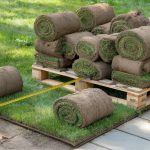
Installation method shapes how long you wait before the lawn can handle normal use. Several grasses on this list - St.
Augustine, zoysia, and kikuyu - are rarely or never available as affordable seed, which forces the sod route regardless of budget preference.
Knowing the right mowing schedule during the establishment phase matters as much as watering - cutting too short before roots anchor can set new turf back by weeks.

Which Grass Fits Your Situation?
After reviewing all 12 varieties, most homeowners can narrow the list to 2-3 candidates based on a handful of specific conditions. Use the scenarios below to shortcut the decision.
- High shade (under 4 hours of direct sun): Fine fescue mix in zones 2-7; St. Augustine in zones 8-10. Both tolerate partial shade better than any other option in their respective climate groups.
- Minimal irrigation budget: Buffalograss in zones 4-8; Bahia grass in zones 7-10. Both survive on natural rainfall in most years once established.
- Heavy foot traffic from kids or pets: Kentucky bluegrass (zones 3-7) or bermudagrass (zones 7-10) - both recover quickly from wear damage through rhizome or stolon regrowth.
- Transition zone dilemma (zones 6-7): Tall fescue handles the heat-cold swing better than any other single-species option; pair it with zoysia if dormant brown winters are acceptable.
- Lowest possible maintenance: Fine fescue (cool climates) or centipedegrass (zones 7-9) - both need minimal fertilizer and slow-grow enough to cut mowing frequency nearly in half.
- New lawn on a tight budget: Tall fescue seed is inexpensive and widely available; perennial ryegrass mixed in speeds germination in the first season.
If you're debating whether to skip live grass entirely, run the numbers first — artificial turf installation runs $8–$20 per square foot, which makes it cost-effective only for small, heavily shaded areas where grass genuinely won't survive. For most lawns over 500 square feet, a matched grass variety is cheaper long-term.
Feeding your lawn with the right nitrogen-to-phosphorus ratio matters differently by grass type - cool-season grasses want most of their fertilizer in fall, while warm-season grasses need it front-loaded in late spring and early summer.
Homeowners who mix ornamental beds with their lawn sometimes notice that grasses sharing similar drought-tolerance profiles pair well with succulent plantings along borders - buffalograss and centipedegrass in particular work alongside low-water ornamentals without competition for moisture.
Frequently Asked Questions
Fine fescue mixes (creeping red, chewings, and hard fescue) tolerate as little as 2 hours of direct sun in zones 2–7, making them the top cool-season choice. In zones 8–10, St. Augustine handles 3–4 hours of filtered shade better than bermuda or zoysia.
Neither is universally better — zone determines the answer. Cool-season grasses like tall fescue and Kentucky bluegrass outperform in zones 2–7, while warm-season grasses like bermuda and zoysia dominate in zones 7–11 where summer temperatures regularly exceed 90°F.
Perennial ryegrass establishes fastest at 7–14 days from seed to first mow. Zoysia and buffalograss from seed take the longest — up to two full growing seasons to achieve dense coverage, especially without sod or plugs.
Overseeding warm-season lawns with perennial ryegrass in fall is common in zones 7–9, keeping turf green through winter dormancy. However, permanent mixed stands rarely work — the two types actively compete and one eventually crowds out the other.
Centipedegrass requires the least fertilizer of any warm-season grass — typically one application of no more than 1 lb. of nitrogen per 1,000 sq. ft. annually. Over-fertilizing centipedegrass triggers iron-deficiency decline that can permanently damage the stand.
Pin it for your next types of grasses: best varieties and growing tips project.