Indoor succulents are genuinely low-maintenance - but only when you set them up correctly from the start. Most beginners lose their first plants within 90 days, not because succulents are fragile, but because three fixable mistakes keep repeating.
Get the watering cadence, soil drainage, and light placement right, and you're looking at 20-30 minutes of care per month and a collection that stays healthy for years.
Indoor succulents need 4–8 hours of bright light, watering every 2–4 weeks by season, and a 50/50 soil mix of coarse sand or pumice and indoor potting mix. Monthly care takes under 30 minutes, and repotting is needed only every 18–30 months.
Why Succulents Fail (and How to Avoid the Top 3 Mistakes)?
Overwatering kills more indoor succulents than any other cause - 60-80% of beginner failures are water-related. Soggy soil deprives roots of oxygen, and black, mushy roots can develop within just 7-21 days of persistent wet conditions.
Remember it later
Planning to try this recipe soon? Save it for a quick find later!
If you catch it early, the fix is straightforward. Remove the plant from its pot, let the roots air-dry for 24-72 hours, then repot into dry soil blended with at least 30% pumice.
Never let a succulent sit in a saucer of standing water.
Insufficient light is the second silent killer. Etiolation — where the rosette stretches and elongates toward a light source — becomes visible within 2–6 weeks in a dim apartment. Once a stem etiolates, it won't compact back; you'll need to behead and reroot the healthy top growth.
Poor drainage is the third problem, and it compounds both issues above. A pot without a drainage hole turns any watering mistake into a root rot event.
Even cactus mix stays too wet in a sealed container. Combine a drainage hole, gritty soil, and a light spot on a south- or east-facing windowsill, and you've eliminated most of the risk.
Rotate each pot 90° every 2 weeks. This evens out light exposure on all sides of the plant and prevents the lopsided leaning that signals one-sided stress. It takes about 10 seconds per pot and makes a visible difference within a month.
Choosing 6 Easy Beginner Succulents
Not every succulent suits every apartment. A north-facing window calls for something different than a sunny south sill.
The table below compares six reliable species on the metrics that matter most for beginners - light, water, and space. For plants that suit dim rooms, Haworthia is the clear standout.
Easy
| Species | Light (hrs/day) | Water Frequency | Mature Size | Best For |
|---|---|---|---|---|
| Echeveria (rosette) | 4–6 hrs direct/indirect | Every 2 weeks (summer) | 6–12 inches | Sunny windowsill |
| Haworthia (striped) | 2–4 hrs bright indirect | Every 3–4 weeks | 3–5 inches | Low-light apartment |
| Sedum morganianum (burro's tail) | 3–6 hrs bright light | Every 2–3 weeks | 12–36 inches trailing | Hanging display |
| Crassula ovata (jade) | 4–8 hrs bright light | Every 2–4 weeks | 12–36 inches | Long-term statement plant |
| Senecio rowleyanus (string of pearls) | 4–6 hrs bright indirect | Every 3 weeks | 24–60 inches trailing | Terrarium or hanging pot |
| Aloe vera | 4–6 hrs direct/indirect | Every 2–3 weeks | 12–24 inch rosette | Kitchen or bathroom sill |
Haworthia is the only species here that genuinely tolerates a north-facing window. Everything else needs a south or east exposure to hit its minimum light threshold and avoid etiolation.
You can find fuller backyard design guides if you're eventually moving plants outside seasonally.

Monthly Care Routine: 6 Steps in 30 Minutes
A consistent monthly check catches problems before they escalate. Run through these six steps in order - the whole routine takes under half an hour for a collection of five to eight plants.
Keeping a log sounds like extra work, but two months of notes will tell you exactly how your specific apartment's conditions affect each species. That knowledge beats any generic advice.
Quick Fixes for Pests, Etiolation, and Root Rot
Most succulent problems have a clear remedy if you catch them at the right stage. The six issues below cover nearly everything a beginner will encounter in the first two growing seasons.
Matching the summer garden maintenance rhythm to your care schedule helps flag pest pressure early.
- Mealybugs - Wipe each visible bug with a cotton swab dipped in 70% isopropyl alcohol, then repeat the treatment every 7 days for 3 consecutive weeks. Isolate the infected plant immediately.
- Spider mites - Mist lightly to raise humidity around the plant, then spray with insecticidal soap every 5 days for three applications. Check undersides of leaves each time.
- Etiolation - When a rosette has elongated more than 20% of its normal diameter, it needs 2-4 extra hours of bright light daily. Transition gradually over 1-2 weeks to avoid sun scorch.
- Soft stems from overwatering - Cut away all affected tissue within 24-48 hours of noticing softness, let the cut surface callous for a day, then repot into a dry, gritty mix.
- Brown leaf tips from salt buildup - Flush the soil once with 2-3 times the pot's volume in plain water, then allow it to dry fully before watering again.
- Widespread root rot - If rot has reached more than 30% of the root mass, discard the plant entirely and sanitize the pot in a 5% bleach solution for 10 minutes before reusing.
Never spray isopropyl alcohol directly onto a succulent's leaves in bright sunlight — it can burn the tissue. Work in shade or indoors and let the plant dry before returning it to its light spot.
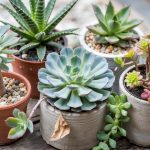
Styling and Placement Ideas for Small Spaces
You don't need a greenhouse or a sprawling shelf wall to display succulents well. Three practical arrangements work in most apartments without requiring dedicated furniture or expensive landscaping budgets.
- Windowsill strip - A 36-inch sill fits 3-5 small pots comfortably. Pair Haworthia, Echeveria, and a small Jade for varied texture, and rotate them on your monthly schedule.
- Hanging trio - Three hanging pots with 4-6 inch diameters look best with trailing species. String of pearls and burro's tail both cascade naturally and stay tidy indoors.
- Tabletop tray - A 12×12 inch tray holds 4-6 pots in 2-3 inch sizes for a mixed-species display. This format also catches soil scatter when you water.
Ceramic pots ($12–$30) lose moisture faster than plastic through their walls — a genuine advantage in humid climates or north-facing rooms where soil stays wet longer. In dry climates, plastic pots are more forgiving between waterings. Designer pots ($40–$90) look great but offer no functional benefit over basic ceramic for the plants themselves.
Starting with three budget plants in ceramic pots from a local nursery keeps your initial spend under $50 and lets you learn which spots in your home actually deliver on light comparisons you read about. Once you know your apartment's real light zones, scaling up is straightforward.
A finished paver walkway or outdoor terrace can extend your display to the patio when temperatures allow. For added evening ambiance, consider pairing outdoor planters with low-voltage landscape lighting once you move plants outside for summer.
And if you're budgeting for the broader outdoor space, comparing concrete installation costs and gravel surface options early saves headaches later. For a full outdoor picture, reviewing your pergola options alongside planting plans keeps the whole project cohesive.
Frequently Asked Questions
Water every 2 weeks in summer and every 3–4 weeks in winter. Always check soil moisture at 1 inch depth first — water only when completely dry at that point.
Use 50% coarse sand or pumice mixed with 50% indoor potting mix. A labeled cactus mix works well too if you add 10–20% perlite for extra drainage.
Haworthia and some Sansevieria hybrids tolerate 2–4 hours of bright indirect light. Most other species need 4+ hours daily or they etiolate within 2–6 weeks.
Repot every 18–30 months or when roots visibly circle the pot bottom. Choose a new pot only 1–2 inches wider than the current one to avoid excess wet soil.
Dab each bug with a cotton swab soaked in 70% isopropyl alcohol, repeating every 7 days for 3 weeks. Isolate the infected plant immediately to prevent spread to others.
Pin it for your next beginner's guide to indoor succulents project.