A windowsill herb garden gives you fresh basil in January, chives for scrambled eggs in March, and cilantro for tacos any night of the week. You don't need a greenhouse, a yard, or even a particularly green thumb to pull it off.
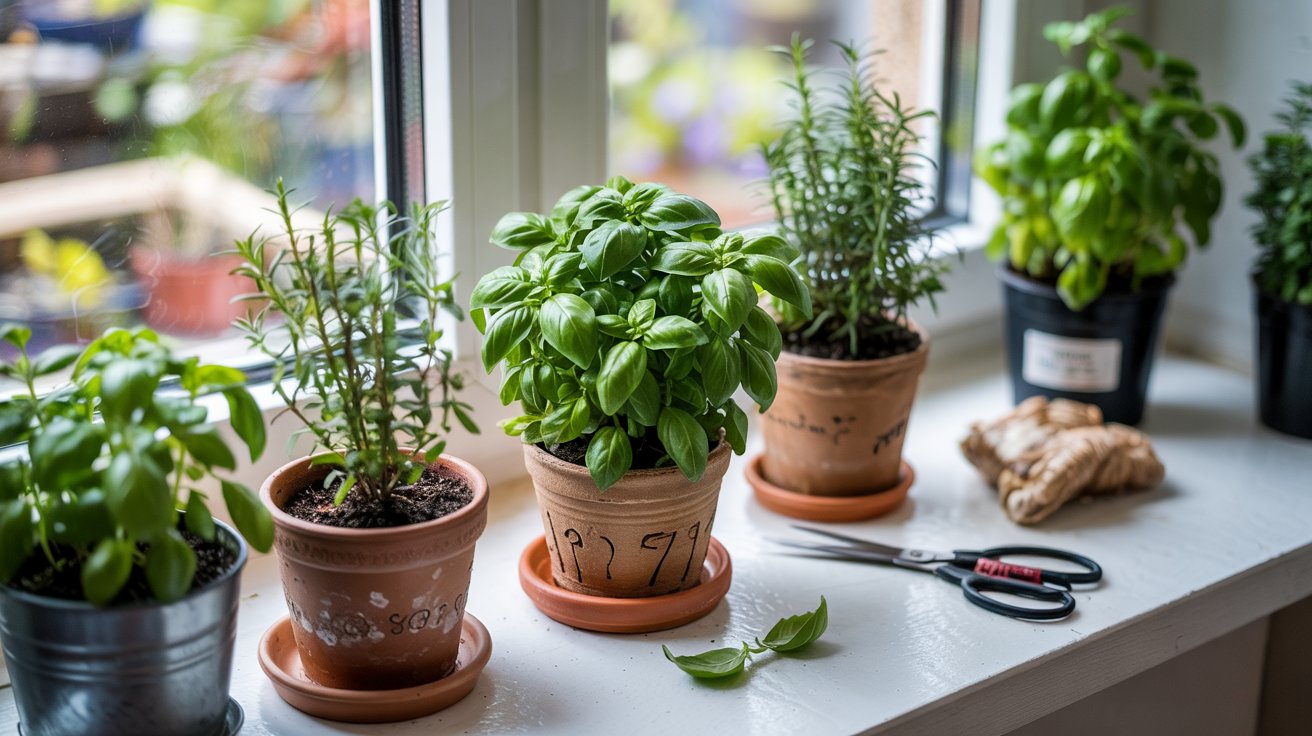
Growing herbs indoors year-round is straightforward when you match each plant to the right light source, use a fast-draining potting mix, and harvest consistently to prevent flowering. Setup takes 30–90 minutes; weekly maintenance runs 10–20 minutes.
What You Need Before You Start?
Gathering the right supplies before planting saves you from common early failures like soggy roots and etiolated seedlings. The right grow light is the single most impactful purchase if your windows get less than four hours of direct sun.
Remember it later
Planning to try this recipe soon? Save it for a quick find later!
- Containers: 6-12 inch pots or an 8-cell tray in plastic or terra cotta - terra cotta breathes better and reduces overwatering risk.
- Potting mix: A peat- or coir-based mix labeled for herbs or vegetables, never plain garden soil, which compacts and drowns roots indoors.
- Full-spectrum LED grow light: An 18-24 inch adjustable arm model works for most setups; look for 2,000-3,000 lumens output at the canopy level.
- Pebble tray or saucers: A 2-3 inch tray filled with pebbles and water raises ambient humidity around leaves without keeping roots wet.
- Watering can: A narrow spout lets you water at soil level without soaking foliage, which reduces fungal issues.
- Moisture meter or hand trowel: Stick either an inch into the soil before watering - guessing leads to overwatering faster than any other mistake.
Add about 20% perlite by volume to any bagged potting mix. Most herb mixes still retain more moisture than basil and thyme prefer indoors, and the extra perlite solves that cheaply.
How to Set Up Your Indoor Herb Garden?
The steps below take you from empty pot to planted herb in one session. Do them in order - especially drainage before planting - because correcting a poorly set-up pot after the fact means uprooting everything.
Cilantro and parsley grow best from seed sown directly into their final pot. Both develop a taproot early and resent transplanting — starting from a nursery pack often results in stunted plants that bolt within weeks.
Feeding Your Herbs Without Overdoing It
Indoor herbs in pots exhaust the nutrients in their potting mix within about six weeks. After that, a light, consistent feeding schedule keeps growth steady without triggering the leggy, soft growth that comes from too much nitrogen.
- Fertilizer type: A balanced liquid fertilizer at half the label rate works for most herbs - 5-5-5 or 10-10-10 diluted to half strength every two weeks during the active growing season.
- Herbs that need less: Thyme, oregano, and rosemary are Mediterranean natives that prefer lean soil. Feed these only once a month or they produce weak, watery leaves with less flavor.
- Basil and parsley: These are hungrier; bi-weekly feeding at half strength keeps leaves large and productive. If basil leaves pale between feedings, bump to weekly.
- Winter slowdown: Cut feeding to once a month from November through February when growth slows naturally, even under grow lights.
Troubleshooting the 3 Most Common Problems
Most indoor herb failures trace back to light, water, or flowering - and all three are fixable once you know what to look for. Catching issues early, before an entire plant declines, is the real skill here.
- Leggy, weak growth: This almost always means insufficient light or an inconsistent photoperiod. Increase daily light to 10-14 hours, raise the pot closer to the grow light, or move to a brighter window. Stems that have already stretched won't firm up, but new growth will come in compact.
- Yellowing leaves and root rot: Caused by overwatering or poor drainage - let the top inch dry completely before the next watering, repot into a fast-draining mix if needed, and trim any black or mushy roots before replanting. Once drainage improves, most herbs recover within two weeks.
- Bitter or weak-flavored leaves: Caused by over-fertilizing or letting the plant flower and set seed. Cut fertilizer back to half-strength and pinch off any flower buds immediately - once a basil or cilantro plant fully bolts, leaf production drops sharply and flavor turns bitter for good.
Mint can look healthy while quietly spreading underground into neighboring pots via stolons. Always grow mint in a separate container, and check the drainage hole monthly — stolons escape through the bottom and root in adjacent saucers.
Zone and Season Adjustments for Indoor Growing
Indoor herb gardens sidestep most climate restrictions, but your outdoor zone still affects conditions inside your home - especially light angles, heating dry spells, and how much supplemental lighting you'll need each month.
- Zones 3-5: Winter days are short and sun angles are low, meaning south-facing windows often deliver less than 3 hours of usable light by December. A full-spectrum LED running 12-14 hours daily is essentially non-negotiable for basil and parsley from October through March.
- Zones 6-8: Windowsill growing is more viable through fall, but forced-air heating drops indoor humidity to 20-30%, which stresses basil and cilantro. Run a pebble tray and consider a small humidifier nearby from November onward.
- Zones 9-11: Strong winter sun and mild indoor temperatures make year-round windowsill growing genuinely easy. Watch for heat stress near south windows in summer - glass amplifies afternoon heat, and basil above 95°F wilts fast and drops leaves.
In zones 3–5, starting your indoor herb setup in late February gives plants 6–8 weeks of grow-light growth before spring sun angles improve. By mid-April, you can often transition to window-only light for the warmer months.
Harvesting to Keep Plants Producing
How you harvest matters as much as how you water. Cutting correctly is what separates a plant that gives you herbs for six months from one that bolts and dies in six weeks.
For basil, always cut just above a leaf node - the plant branches at that point and doubles its stem count. Never remove more than one-third of the plant in a single harvest.
With seed-started chives and parsley, cut outer stems down to an inch above the soil and let the center regrow.
- Basil: Harvest every 1-2 weeks once plants reach 6 inches tall; pinch flower buds the moment they appear to extend productive life by months.
- Chives: Snip leaves to about 2 inches from the base; they regrow in 10-14 days and tolerate frequent cutting better than most herbs.
- Cilantro: Harvest outer leaves continuously but expect bolting within 6-8 weeks regardless - succession sow a new pot every 3 weeks for continuous supply.
- Thyme and oregano: Cut stem tips by about one-third; these grow slowly indoors so harvest lightly and let them bulk up between cuttings.
Succession Planting: The System That Actually Makes It Year-Round
A single pot of any herb has a productive lifespan, especially fast-bolting herbs like cilantro and basil. Succession planting - starting a new pot every 3-4 weeks - is what turns a hobby into an actual continuous supply.
Keep two or three pots of basil at staggered ages: one young plant coming up, one at peak harvest size, and one you're winding down. When the oldest bolts, compost it and start a fresh seed pot.
You can grow lettuce the same way on a second tray alongside your herbs for a complete indoor salad setup.
- What to succession plant: Basil, cilantro, and parsley (all bolt or slow down); start a new pot every 3-4 weeks.
- What to leave as perennials: Chives, thyme, oregano, and mint regrow indefinitely from the same pot - just divide and repot every 12-18 months when they get crowded.
- Seed vs. transplant: For succession planting, seed is cheaper and works well for all three fast-bolters. Buying transplants every few weeks adds up quickly.
For anyone building out a larger indoor growing setup, understanding your full range of plant options helps you plan space and lighting across multiple trays more efficiently.
And if you want to branch beyond herbs, low-effort starter herbs pair well with compact greens under the same grow light footprint.
| Herb | Sow New Pot Every | Productive Life Per Pot |
|---|---|---|
| Basil | 3–4 weeks | 6–10 weeks |
| Cilantro | 3 weeks | 5–7 weeks |
| Parsley | 6–8 weeks | 3–4 months |
| Chives | Divide every 12–18 months | Perennial indoors |
| Thyme | Divide every 12–18 months | Perennial indoors |
Succession planting also gives you a chance to experiment with variety. Swap standard sweet basil for Thai basil in one pot, or try flat-leaf parsley alongside curly - you'll quickly learn which flavors you actually use most, and that shapes what you grow next.
If you enjoy expanding your indoor plant collection in general, it's worth knowing which succulent types can share a bright south-facing window without competing for grow-light space. Similarly, shade-tolerant ferns work well on a nearby shelf that receives the light overflow without needing the prime grow-light real estate your herbs require.
If you ever want to scale up to larger statement plants in another corner, indoor palm varieties are worth exploring once your herb system runs on autopilot.
Frequently Asked Questions
Basil, chives, parsley, thyme, oregano, and mint all perform reliably indoors year-round; chives and thyme are the most forgiving of lower light levels, making them ideal for windowsills in zones 3–5 during winter.
Most culinary herbs need 6–8 hours of direct sun or 10–14 hours under a full-spectrum LED rated at 2,000–3,000 lumens at canopy level; basil and cilantro sit at the high end of that range.
Yes, but only in zones 7 and warmer where south-facing windows still deliver 4+ hours of direct winter sun; in zones 3–6, basil on a windowsill alone turns pale and leggy by November without a supplemental grow light.
Feed basil and parsley every two weeks at half-strength with a balanced 10-10-10 liquid fertilizer; Mediterranean herbs like thyme and oregano need feeding only once a month to avoid soft, flavorless growth.
Cilantro is a cool-season annual that bolts within 5–8 weeks regardless of growing conditions; the only reliable fix is succession sowing a fresh pot every 3 weeks so you always have one plant at peak harvest stage.
Pin it for your next how to grow herbs indoors year-round project.