Blueberries are one of the few fruit-producing plants that actually look good doing it - white spring flowers, dark summer berries, and fiery red fall foliage all on the same bush. Most yards can support them, but blueberries are less forgiving than average garden plants when their soil conditions aren't right.
Get the pH and drainage sorted first, and the rest falls into place.
Growing blueberries successfully means starting with acidic soil in the pH 4.5–5.5 range, choosing the right species for your zone, and planting at least two varieties for cross-pollination. Expect your first real harvest in year three or four.
Choosing the Right Blueberry Type for Your Yard
Not every blueberry is built for every climate. The three main types sold for home gardens are Vaccinium corymbosum (northern highbush), southern highbush hybrids, and Vaccinium ashei (rabbiteye) - and each suits a different part of the country.
Remember it later
Planning to try this recipe soon? Save it for a quick find later!
- Northern highbush: The most widely grown type, hardy in zones 4-7. Varieties like 'Bluecrop' and 'Patriot' need 800-1,000 chill hours below 45°F each winter to fruit well.
- Southern highbush: Bred for zones 7-10, requiring only 150-500 chill hours. 'O'Neal' and 'Sunshine Blue' are popular choices for mild-winter regions.
- Rabbiteye: A tough, drought-tolerant option for zones 7-9 in the Southeast. Grows larger than highbush types - up to 15 feet if unpruned - and ripens later in summer.
Two varieties of the same type must be planted together for good yields. Berry and fruit crops consistently produce more when cross-pollination occurs, and blueberries are no exception - solo plants may set some fruit but harvests stay thin.
If you're in zone 5 or colder, stick with northern highbush varieties rated specifically for your zone. 'Northland' and 'Chippewa' both handle zone 4 winters without significant dieback.
Getting the Soil Right Before You Plant
Blueberries need a soil pH between 4.5 and 5.5. Most garden soils sit at 6.0-7.0, which locks out the iron and manganese blueberries depend on.
Testing before you amend anything saves months of frustration.
A simple mail-in soil test from your cooperative extension office will tell you your current pH and how much amendment you need.
Lowering pH by a full point in clay soil takes more elemental sulfur than most gardeners expect - plan at least six months ahead if you're amending a new bed.
- Sphagnum peat moss: Mix it into the top 18 inches of soil at a 50/50 ratio with your native soil. It lowers pH slightly and dramatically improves drainage and aeration around roots.
- Elemental sulfur: The reliable way to drop pH in mineral soils. Apply at the rate listed on your soil test results, then retest after 60-90 days before planting.
- Pine bark mulch: Spread 3-4 inches over the root zone after planting. It decomposes slowly, keeps surface moisture stable, and nudges pH down over time.
- Avoid lime and wood ash: Both raise pH sharply and are common mistakes in blueberry beds - even small amounts can set the bed back significantly.
Never plant blueberries in soggy ground. They need good drainage as much as they need acidity. Raised beds are often the best solution in heavy clay — build them 12–18 inches high and fill with a peat-pine bark mix.
Similarly, growing acid-loving shrubs like azaleas in the same bed as blueberries is a practical approach - both share identical pH and soil requirements, so amendments benefit both plants at once.
How to Plant Blueberry Bushes?
Spring planting works best in zones 5 and colder, where fall planting risks heaving from freeze-thaw cycles. In zones 7 and warmer, fall is the preferred window - plants can establish roots through the cool months before summer heat arrives.
For comparison, root vegetable timing follows similar logic: soil temperature at planting determines root success more than air temperature.
Year-by-Year Care After Planting
Blueberry bushes reward patience. The first two years are all about root development, not fruit production.
Strip off any flower buds that form in years one and two - it feels wrong, but diverting that energy into roots means bigger crops for decades.
- Watering: Blueberries need 1-2 inches of water per week during the growing season. They have fine, shallow roots with no root hairs, so they can't pull moisture from dry soil the way deeper-rooted plants can.
- Fertilizing: Use an acid-formulated fertilizer (look for ammonium sulfate or sulfur-coated urea on the label). Apply in early spring and again in early summer - never after July, or you push tender growth into fall frost.
- Pruning: Skip major pruning for the first three years. Starting in year four, remove low-hanging canes and any wood older than six years, as old canes produce far fewer berries than younger ones.
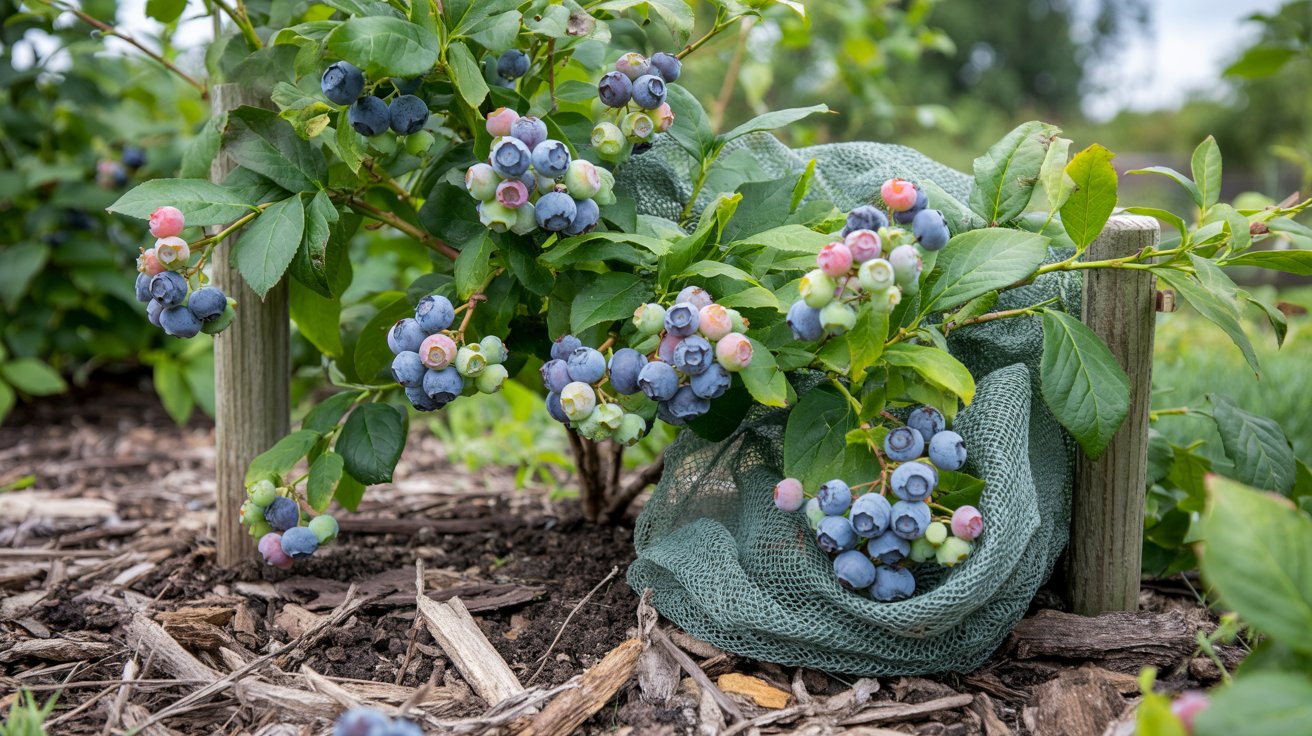
- Bird netting: Install netting as soon as berries start to color. Birds will strip a bush in a single morning. A simple PVC hoop frame with bird netting draped over it is the most practical protection.
Scratch a tablespoon of elemental sulfur into the root zone each spring if your pH tends to creep up. Established blueberries in high-pH soil yellow quickly — regular small doses are easier to manage than large corrective applications.
Once established, blueberries handle dry spells better than most people expect, but they're not truly drought-tolerant. Unlike the drought-hardy perennials that survive on rainfall alone, blueberries in sandy soil may need irrigation even in mild summers.
Pairing Blueberries with the Right Landscape Plants
Blueberry bushes work harder than most people use them. They function as ornamental shrubs, screening plants, or edible hedges - and their fall color rivals dedicated ornamental shrubs like crepe myrtle for late-season interest.
The challenge is that their soil requirements eliminate most neutral-pH neighbors. Plan your planting partners around acid tolerance.
- Rhododendrons and azaleas: Identical pH needs, similar root structure, and they bloom in spring just as blueberries flower - a natural pairing in any acid bed.
- Holly: Most holly species prefer pH 5.0-6.0, making them compatible companions with similar ornamental value throughout winter.
- Strawberries: Work well as a low groundcover under blueberry bushes. They tolerate the same pH range and produce fruit on an overlapping but earlier schedule.
- Avoid: Roses, most ornamental grasses, and vegetable crops that prefer neutral to alkaline soil - those conflicts create a maintenance headache trying to satisfy both plants.
If space is tight, compact ornamental trees planted on the north side of a blueberry bed can provide wind protection without shading the bushes significantly.
Mistakes That Stall Blueberry Growth
Most failed blueberry plantings come down to a handful of predictable errors. Recognizing them early keeps a struggling planting from becoming a dead one.
- Planting only one variety: Blueberries need cross-pollination from a second variety of the same type. Without it, even a healthy bush produces frustratingly light crops - same species but different cultivar is what's required.
- Skipping the soil test: Amending blindly with peat moss alone rarely gets soil into the 4.5-5.5 range fast enough. Without a baseline reading, you're guessing at sulfur rates and often undershoot by a full pH point.
- Letting fruit set in year one: Removing flowers in the first two seasons redirects energy from fruit to root development. Plants that fruit early stay small and produce less over their lifespan.
- Using the wrong fertilizer: Standard balanced fertilizers with nitrate nitrogen can damage blueberry roots. Stick to ammonium-based formulas designed for acid-loving plants - the same products used for acid-soil woodland plants work well here.
- Forgetting to recheck pH yearly: Soil pH drifts upward over time as irrigation water and decomposing mulch shift conditions. Annual testing prevents slow decline that's easy to miss until plants are visibly stressed.
Yellowing leaves with green veins (interveinal chlorosis) almost always signal pH that's crept too high. It's not a nutrient deficiency you solve by adding more fertilizer — acidify the soil first, then reassess in four to six weeks.
Blueberry roots are also extremely sensitive to weed competition in the first two years. Unlike fast-establishing crops that shade out weeds quickly, young blueberry bushes grow slowly and can be overtaken.
Hand-pull weeds rather than hoeing - shallow cultivation cuts the feeder roots that sit just below the surface.
What to Expect from Harvest?
Year three is when most northern highbush plants produce their first meaningful crop - maybe a cup or two per bush. By year six, a well-maintained bush yields 5-10 pounds annually, and established rabbiteye plants in good conditions can push past 20 pounds.
Berries don't ripen all at once, which is actually useful. A single bush extends picking season over three to four weeks.
Harvest when berries are fully blue with no red tinge at the stem - they should pull off with almost no resistance. Berries left a few extra days after full color develops increase in sweetness noticeably.
For gardeners who also grow climbing ornamentals, the vine-based vertical structure approach on a nearby trellis can double as a bird deterrent by creating visual distraction from the berry bushes. Pairing that with netting still provides the most reliable protection, though.
Deer pressure is lower than with many fruit crops - blueberry foliage isn't a top browse target - but deer-resistant plant strategies around the perimeter of the planting can further reduce damage from foraging animals in rural areas.
Frequently Asked Questions
Blueberries require a soil pH between 4.5 and 5.5 — more acidic than most garden plants. Outside that range, iron and manganese become unavailable, causing yellowing leaves and poor growth even in fertile soil.
Northern and southern highbush varieties need 4–6 feet between plants, while rabbiteye types require 6–8 feet due to their larger mature size, which can exceed 10 feet in height without regular pruning.
Most blueberry bushes produce a small but harvestable crop in year three if flowers are removed in years one and two. Full production of 5–10 pounds per bush typically begins around year six.
Yes — half whiskey barrels or 15-gallon containers work well, filled with a mix of 50% sphagnum peat moss and 50% pine bark. Southern highbush varieties like 'Sunshine Blue' stay compact enough for patio containers in zones 7–10.
Blueberries need a minimum of 6 hours of direct sun daily for reliable fruiting. Fewer than 4 hours results in sparse berries and weak growth, even if soil conditions are otherwise perfect.
Pin it for your next how to grow blueberries in your yard project.