A fresh lawn can transform a bare yard fast, but sod quotes often land with zero context - just a number and a per-pallet line you're expected to trust.
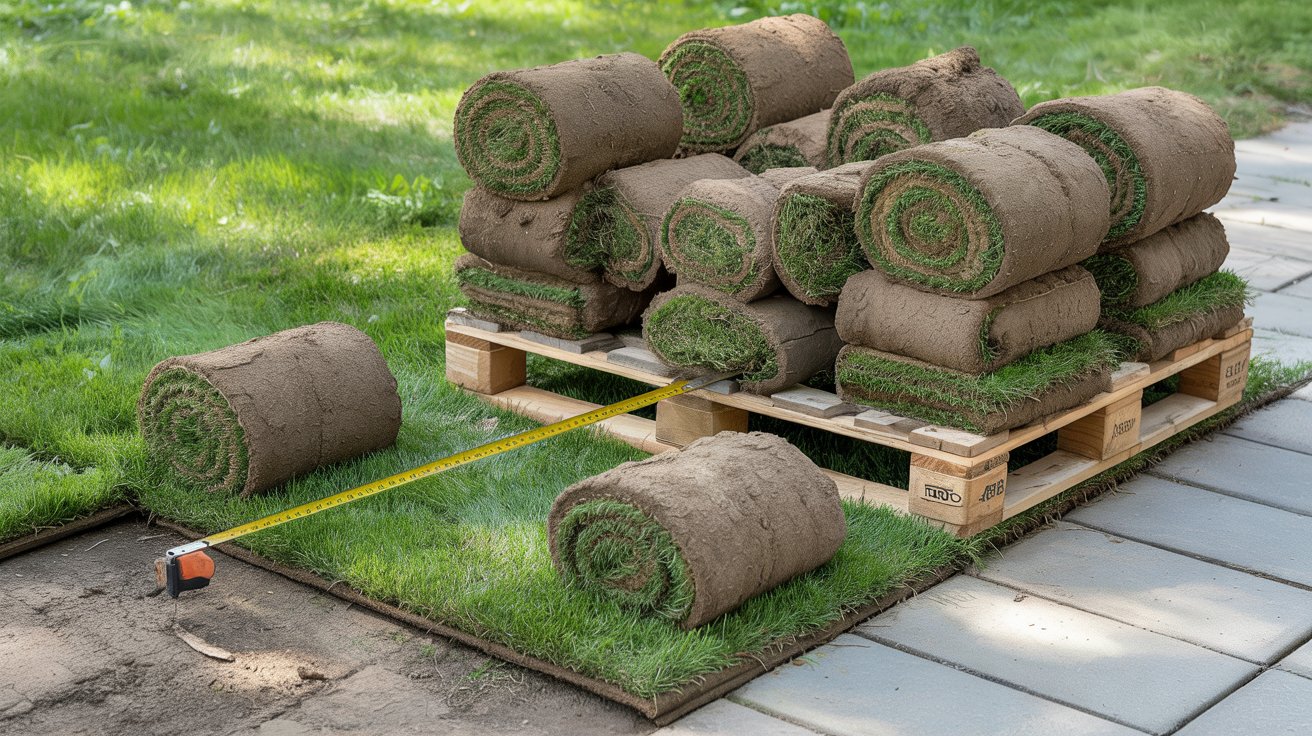
This guide gives you the actual 2026 price ranges for sod material and installation, the math to estimate your own project, and the questions that separate a fair quote from an inflated one.
Sod material runs $0.20–$1.00 per sq ft nationally in 2026. A standard pallet covers 400–500 sq ft and costs $90–$600 depending on species and region.
Full installed cost (materials, labor, basic prep) typically lands at $0.80–$4.50 per sq ft.
How Prices Break Down - Per Square Foot vs Per Pallet?
Sod suppliers sell in two units: by the square foot for small orders and by the pallet for anything substantial. Understanding which unit a quote uses - and what pallet coverage is assumed - prevents math errors that cost real money.
Remember it later
Planning to try this recipe soon? Save it for a quick find later!
A standard pallet covers 385-500 sq ft, commonly marketed as roughly 425 sq ft. Suppliers who quote a lower coverage number per pallet are effectively raising your per-sq-ft price, so always confirm the coverage before comparing quotes.
If you're deciding between sod and seeding, our sod vs seed comparison breaks down total cost differences by method.
| Unit | Typical Range | Notes |
|---|---|---|
| Per sq ft (small order) | $0.35–$1.00 | Upcharge applies vs bulk; common for rolls or specialty cuts |
| Per pallet (~425 sq ft) | $90–$600 | Best per-sq-ft value; Bermuda/Centipede at low end |
| Per pallet — premium species | $250–$600 | Zoysia, St. Augustine, Kentucky bluegrass at high end |
Species is the biggest single driver of pallet price. Bermuda and Centipede sit at the lower end, while Tall fescue and Kentucky bluegrass land mid-range.
Zoysia and St. Augustine command the highest prices - often 2-3× the cost of budget Bermuda.
For a deeper look at cool-season variety differences, see our guide on Kentucky bluegrass vs fescue performance and cost.
Smaller orders — under two pallets — often carry a per-roll or per-sq-ft surcharge of 10–20% above bulk pallet pricing. Always ask whether the quoted rate changes with order size.
According to the University of Minnesota Extension, delivered sod prices reflect both species licensing fees and regional growing-season length, which is why northern cool-season varieties often cost more per pallet despite lower raw demand.
Installed Cost: Site Prep, Labor, Delivery, and Hidden Fees
Material price is only part of what you pay. The gap between $0.20/sq ft sod and a $2.50/sq ft installed quote is filled by delivery, crew labor, soil prep, and disposal - each of which has its own range.
Labor alone runs $0.40-$1.50 per sq ft, varying by site access, slope, and region. Tight backyard access or steep grades push that number toward the top.
Site prep and grading add another $0.25-$1.50 per sq ft depending on how much leveling the soil needs before installation. If the yard also needs an irrigation upgrade, factor in sprinkler system installation costs as a separate line item.
- Ask for an itemized quote separating material, delivery, labor, and disposal charges.
- Confirm whether site prep includes topsoil delivery or just raking and grading.
- Request the delivery window in writing - same-day delivery keeps sod viable.
- Verify whether the quoted labor rate includes rolling and watering-in after lay.
- Don't accept a single lump-sum quote with no line-item breakdown.
- Don't assume disposal of old turf is included - it's often an add-on of $0.10-$0.30/sq ft.
- Don't let sod sit on the pallet for more than 24-48 hours; degradation costs you a re-order.
- Don't skip soil amendment costs - skimping here raises long-term lawn maintenance costs.
Delivery fees for pallets commonly run $30-$150 per delivery, depending on distance and how many pallets are on the truck. A single-pallet residential drop typically sits near the top of that range per pallet.
Old turf removal is frequently quoted separately and can add $0.10–$0.50 per sq ft to your total. Confirm this line item before signing — it's one of the most common surprise charges on final invoices.
For a 1,000 sq ft mid-grade install: material runs $600-$1,000, installation and prep adds $700-$1,500, putting the realistic total at $1,300-$2,500. The step-by-step sod installation guide shows exactly what prep work you can handle yourself to cut that labor line.
According to NC State Extension, proper soil preparation before laying sod is the single biggest factor in establishment success and long-term stand quality.

Budget Tiers and Buyer Scenarios
Three clear spending bands cover most residential sod projects. Matching your situation to the right tier helps you evaluate whether a contractor quote is in range or overpriced.
The DIY material-only tier costs $200-$700 per 1,000 sq ft, using sod at $0.20-$0.70/sq ft. You handle delivery coordination, all site prep, laying, rolling, and establishment watering yourself.
This tier works well for small flat yards with decent existing soil. If you're weighing long-term cost against maintenance, also compare artificial turf installation costs before committing to natural sod.
The premium full-prepare tier applies when soil needs significant regrading, imported topsoil, drainage correction, or irrigation installation. Projects in this bracket often involve slopes, compacted clay, or complete landscape redesigns - similar in complexity to work involved when you build out a major backyard structure.
Quick Estimator: One-Line Formulas
Three formulas cover every sod estimate. Run them in order and you'll have a realistic project range in under two minutes.
Material cost = area (sq ft) × material $/sq ft. Pallets needed = ceil(area ÷ 425 sq ft), using 425 as the national average pallet coverage.
Installed cost range = area × installed $/sq ft range (e.g., $0.80-$4.50). Always round pallets up - you can't buy a fraction of a pallet from most suppliers.
For a 1,500 sq ft yard at a mid-range $0.55/sq ft material price: material cost = $825; pallets needed = ceil(1500 ÷ 425) = 4 pallets; installed range = $1,200–$6,750. Use the low end for flat yards with good soil and the high end for full-prep installs.
Order 5-10% extra sq ft to account for cuts, irregular edges, and waste. On a 1,500 sq ft yard, that means budgeting for roughly 1,575-1,650 sq ft of material.
If you want to compare grass types before choosing a species, our ryegrass vs fescue breakdown covers performance and establishment costs side by side.
How Grass Species and Region Change Price?
Farm-gate and delivered prices shift significantly by species, and university extension data gives us reliable benchmarks. The NC State Extension Sod Producers' Report is one of the few publicly available sources with actual on-farm averages rather than retail markups.
According to that report, Bermuda sod averaged $0.42/sq ft on-farm and $0.46/sq ft delivered in 2024-2025. Zoysia averaged $0.58/sq ft on-farm and $0.64/sq ft delivered.
Delivered prices run 5-25% higher than on-farm prices depending on distance and order size - a gap that widens on single-pallet residential orders.
| Species | On-Farm Avg ($/sq ft) | Delivered Avg ($/sq ft) |
|---|---|---|
| Bermuda | $0.42 | $0.46 |
| Centipede | $0.38–$0.48 | $0.42–$0.54 |
| Zoysia | $0.58 | $0.64 |
| St. Augustine | $0.50–$0.70 | $0.55–$0.80 |
| Tall Fescue / KBG | $0.45–$0.65 | $0.50–$0.75 |
Southern warm-season species like Bermuda and Centipede benefit from longer growing seasons and higher farm yields, keeping prices lower. Northern cool-season varieties like Kentucky bluegrass have shorter harvest windows and higher seed/licensing costs.
You can also compare the natural options against choosing between natural and artificial grass if budget or climate constraints are tight.
Per the NC State Extension Turfgrass Program, regional sod producer data consistently shows volume discounts of 8-15% for orders above 10 pallets, which is an important lever for large residential or commercial projects.
Negotiating Tips, Buying by the Pallet, and What to Ask Contractors
Most sod prices have more flexibility than suppliers advertise. Knowing which questions to ask - and when - shifts the conversation in your favor before a dollar is spent.
Always confirm: "Is the price per pallet based on a specific sq ft coverage?" and "Is delivery included or a separate charge?" These two questions alone catch the most common quote discrepancies. When ordering more than 10 pallets, ask for a free soil amendment or topdressing - suppliers frequently agree rather than lose volume business.
Also ask for mid-season pricing windows in late summer, when sod farms often discount to clear inventory before fall.
Scheduling delivery on a weekday — not a weekend — often reduces delivery fees by $20–$50 and gets you faster crew availability. Ask suppliers directly if weekday orders carry a discount.
- Ask the contractor for their warranty period and what voids it.
- Confirm the establishment watering plan is included in the quote.
- Request supplier name so you can verify farm-gate vs retail markup.
- Don't accept quotes with no pallet coverage figure stated - it's a red flag.
- Don't pay full price for spring peak-season delivery without asking for an off-peak discount.
- Don't sign a contract that lists "sod installation" as one bundled line without sub-items.
Cost Checklist Before You Sign
Run through every item below before agreeing to any sod project. Missing even one line item is how $1,800 quotes become $2,600 invoices.
Sources and How We Calculated These Ranges
The price ranges in this guide reflect multiple data layers cross-referenced for accuracy. No single source covers every region and species, so ranges were built from overlapping data sets.
Primary sources include the NC State Extension Sod Producers' Report (2025 edition), HomeGuide and HomeAdvisor 2026 market summaries, and direct supplier price sheets collected 2025-2026. The NC State data provides farm-verified on-farm and delivered averages for major warm-season species.
HomeGuide/HomeAdvisor summaries supplied labor and installed cost ranges for national markets.
Lower bounds reflect bulk, direct-from-farm purchases of budget species in favorable growing regions. Upper bounds reflect premium species, small orders, full-prep installs, and high-labor-cost metro areas.
All ranges carry a 2024-2026 date context - regional inflation, fuel costs, and species supply can shift any line item by 10-20% within a single season. Per the NC State Extension Turfgrass Program, on-farm price data is collected directly from licensed sod producers and represents the most reliable benchmark for Southeast and mid-Atlantic markets.
Frequently Asked Questions
Installed sod runs $0.80–$4.50 per sq ft, including materials, basic labor, and site prep. Premium installs with regrading or topsoil push toward the upper end.
Most pallets cover 385–500 sq ft; the national average used for estimating is 425 sq ft. Always confirm coverage with your specific supplier before calculating pallet count.
Late summer (August–September) often brings discounts of 10–20% as farms clear inventory before fall. Avoid peak spring demand (April–May) for the best pricing.
A basic professional install on 1,000 sq ft typically runs $1,300–$2,500 total, covering mid-grade sod material, crew labor, delivery, and minor site prep.
Yes. NC State Extension data shows Zoysia averages $0.64/sq ft delivered vs $0.46/sq ft for Bermuda — roughly 40% more per square foot at farm-verified prices.
Pin it for your next how much does sod cost? project.