A new deck can run anywhere from $15 to $65 per square foot installed, and that wide range is exactly why so many homeowners get sticker shock when the first quote arrives. The material you choose, how high the deck sits off the ground, and whether your lot has easy access all shift the final number significantly.
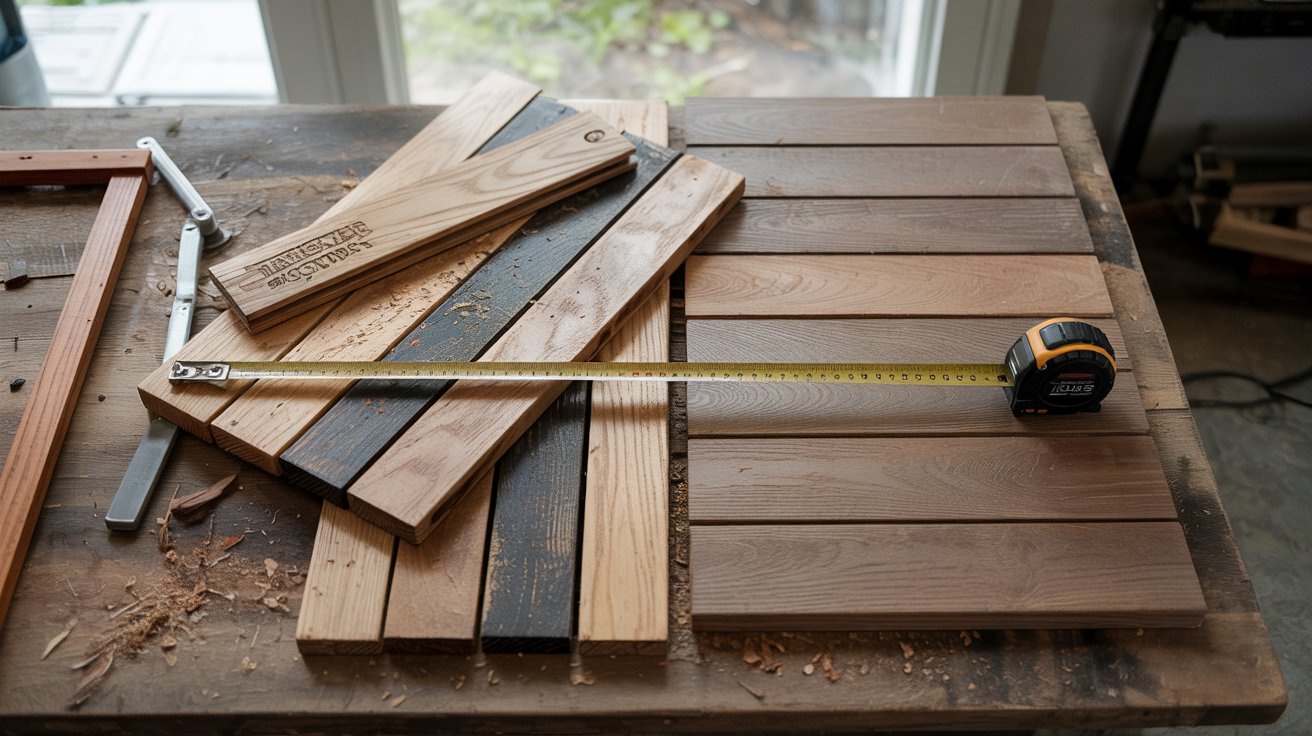
Before you call a single contractor, these cost ranges and real-world examples will help you set a budget that actually holds.
Deck costs range from $15–$30 per sq ft for pressure-treated wood up to $35–$65 per sq ft for capped composite. A typical 12×16 deck runs $3,200–$12,400 depending on material, railings, and site conditions.
Labor accounts for 35%–55% of total project cost.
Quick Answer: Cost Ranges You Can Use Today
These per-square-foot ranges cover materials and basic labor for a standard single-level deck on accessible, flat ground. They assume standard footings, basic railings, and conventional fasteners - not upgrades.
Remember it later
Planning to try this recipe soon? Save it for a quick find later!
For a 12×16 deck (192 sq ft), expect to pay roughly $2,900 on the low end with basic pressure-treated wood and minimal extras, up to $12,500 with composite decking and upgraded railings.
A 16×20 deck (320 sq ft) typically runs $4,800-$20,800 across the same material spectrum.
These ranges exclude permit fees, electrical or lighting work, built-in benches, engineered footings in difficult soil, and stair systems beyond a basic single run. Each of those line items adds real dollars - covered in the next section.
According to University of Maryland Extension, material and labor costs for outdoor structures vary significantly by region, so treat national averages as a starting point, not a final quote.
If you're weighing a deck against other hardscape options for your backyard, the installed cost comparison shifts once you factor in long-term maintenance - which varies dramatically by material.
What Those Numbers Include (and What They Don't)?
The per-square-foot ranges above assume a straightforward build: decking boards, dimensional framing lumber, standard joist hangers and hardware, basic concrete footings, and a simple code-compliant railing on one or two sides.
Labor accounts for 35%-55% of total project cost in most markets - so on a $7,000 deck, expect $2,450-$3,850 to go to installation alone.
| Add-On | Typical Cost Range | Notes |
|---|---|---|
| Permit fees | $50–$800 | Varies by jurisdiction and deck size |
| Upgraded railing systems | $40–$150/linear ft extra | Cable, glass, or aluminum vs basic wood |
| Deck lighting / electrical | $200–$2,000 | Post caps to full low-voltage systems |
| Built-in bench or planter | $300–$1,200 | Per unit, materials + labor |
| Gas line hookup | $500–$2,000 | Requires licensed plumber in most areas |
| Engineered footings | $300–$1,500 extra | Required for raised or complex sites |
| Stair system (per flight) | $400–$1,800 | Depends on height, material, and landing |
Permit fees are non-negotiable in most jurisdictions and are almost never included in a contractor's base quote. Always ask up front who pulls the permit — and who pays for it.
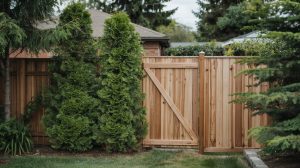
Comparing what you'd spend on a new fence alongside a deck project can help you prioritize which backyard upgrade delivers more value for your budget this season.
Material-by-Material: Wood vs Composite Cost Breakdown
Upfront material cost is only part of the story. Pressure-treated wood (Southern Yellow Pine is the most common species) costs the least to buy but requires annual or biannual maintenance to stay looking good and structurally sound.
Cedar and redwood sit in the middle - naturally rot-resistant but still need periodic sealing. Capped composite costs the most upfront but has the lowest maintenance demand over a decade.
| Material | Material Only (per sq ft) | Expected Lifespan | Maintenance Cost (per 100 sq ft / 10 yrs) |
|---|---|---|---|
| Pressure-Treated Wood | $6–$12 | 15–25 years | $200–$600 |
| Cedar / Redwood | $8–$18 | 15–30 years | $300–$800 |
| Capped Composite | $20–$35 | 25–35+ years | $100–$300 |
The lifespan gap between pressure-treated wood and capped composite is roughly a decade when both are maintained. However, composite boards carry a higher material cost that can add $5,000-$8,000 to a mid-size deck versus basic wood.
For a detailed look at how these two materials perform beyond cost, the long-term durability difference between composite and wood breaks down the tradeoffs clearly.
Cedar and redwood offer a middle path - warm appearance, reasonable rot resistance, and material costs closer to pressure-treated than composite. The catch is that cedar still needs cleaning and sealing every 2-3 years to maintain its color and resist checking.
Skipping that maintenance cycle shortens the lifespan toward the lower end of the 15-30 year range.
- Calculate the 10-year total cost (materials + installation + maintenance) before deciding between wood and composite - composite often closes the gap.
- Ask for the exact composite product line in the quote - "capped composite" varies widely from $20 to $35/sq ft in materials alone.
- Use pressure-treated framing even under a composite deck - it's code-required in most areas and far cheaper than composite joists.
- Don't compare material-only prices between wood and composite without including the installation difference - composite often requires hidden fasteners that add labor time.
- Don't assume cedar or redwood is maintenance-free because it's naturally rot-resistant - it still needs sealing every few years.
- Don't choose pressure-treated wood purely on upfront cost if you live in a high-humidity region where annual staining is burdensome.
If you've used cedar in other garden projects before, the performance difference between cedar and pressure-treated lumber in outdoor conditions follows similar patterns to what you'd see on a deck surface.
How Project Size, Site Conditions and Design Choices Change the Math?
National per-square-foot averages assume a flat lot, easy equipment access, and a simple single-level rectangle. Real projects rarely match that baseline.
Three factors - deck height, lot access, and total square footage - each move the final number independently.
Raised decks (those more than 2-3 feet off the ground) typically increase total project cost by 10%-35%. The reason is structural: taller decks need deeper footings, heavier framing, and more diagonal bracing to meet code.
A deck sitting 8 feet off the ground on a sloped lot is a fundamentally different engineering project than a ground-level platform.
Difficult access - a steep or narrow lot, no direct vehicle access, or rocky soil - can add $500-$4,000 in extra labor and equipment costs alone. Contractors need to hand-carry materials or bring in specialized machinery, and that time shows up on your invoice.
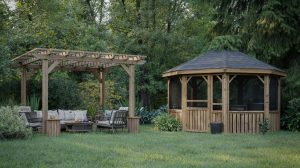
Planning a pergola structure attached to the deck adds another $3,000-$9,000 depending on size and materials.
Larger projects (over 400 sq ft) sometimes reduce material cost per square foot by 5%-12% due to bulk ordering and fewer cuts-per-board. However, labor staging, scaffolding, and coordination time often increase the total bill even as the unit cost drops.

Real Example Budgets: Budget, Mid-Range, and Premium Builds
All three examples below are for a 12×16 deck (192 sq ft) - a common size for a single-family home's back yard. Each assumes flat accessible ground, standard footings, one stair run, and railing on three sides.
These are realistic national averages, not best-case scenarios.
| Line Item | Budget Build | Mid-Range | Premium |
|---|---|---|---|
| Materials (decking + framing) | $1,150 | $2,800 | $5,200 |
| Labor | $1,400 | $2,800 | $4,200 |
| Permit | $150 | $200 | $300 |
| Rails, stairs, extras | $500 | $1,400 | $2,700 |
| Total | $3,200 | $7,200 | $12,400 |
The budget build uses pressure-treated wood throughout, basic wood railings, and simple post footings. The mid-range steps up to cedar or a mid-tier composite with upgraded aluminum railings.
The premium build uses capped composite boards, cable or glass railing systems, recessed deck lighting, and a built-in bench - all of which push labor costs sharply higher even before the material premium.
The gap between mid-range and premium grows fastest in the railings and extras line — not materials. Specifying a cable railing system on a premium build can add $1,200–$2,400 on its own for a 12×16 deck perimeter.
If you want to model these totals against other backyard projects before committing, a full backyard budget estimate tool can help you stack deck cost against landscaping, fencing, and other improvements together.
How to Get an Accurate Local Quote?
Getting three quotes for the same spec - not three quotes for three different ideas - is the single most effective way to avoid overpaying.
Before you contact anyone, measure and sketch your footprint with dimensions, note the deck height off grade, mark any obstacles (HVAC units, downspouts, slopes), and decide on your material preference in advance.
When you contact contractors, send the same written spec to each one so quotes are directly comparable. Every quote should break out materials and labor as separate line items - a single "deck installed" lump sum tells you almost nothing.
Ask each contractor to quote per-square-foot AND provide the full line-item breakdown.
- Ask for a structural drawing or footing plan on raised decks - if an engineer is required, budget $200-$1,000 for that separately.
- Confirm who pulls the permit - some contractors include it, others bill it as a pass-through; clarify before signing.
- Request the exact product brand and grade for decking boards so you can verify material costs independently.
- Don't accept a quote that bundles railing into the per-sq-ft rate without specifying the railing style - that number can swing by $3,000+.
- Don't choose a contractor based on the lowest number without confirming what's excluded - low quotes often omit permits, footings, or stairs.
You can use similar quote-gathering discipline when pricing other yard improvements - the same approach applies when you compare bids for a retaining wall project on a sloped property.

Common Budget-Busting Mistakes and How to Avoid Them
Most deck budget overruns come down to a handful of repeat mistakes. Changing deck size or material after work has started is the most expensive - it can increase total project cost by 15%-30% due to restocking fees, wasted labor, and revised permit applications.
- Skipping the permit: Not pulling a required permit can mean fines, mandatory demolition, and costly retrofit work. Permits also protect resale - buyers' inspectors flag unpermitted structures every time.
- Underestimating footing costs: Rocky soil, high water tables, or frost-line requirements can push footing costs well above the base quote. Always ask your contractor what happens if they hit rock or poor soil.
- Assuming railings are included: Many base quotes include only a basic wood rail. Upgrading to cable, aluminum, or glass after signing adds significant cost and can delay the project.
- Ignoring landscaping disruption: Deck construction damages surrounding turf and plantings. Budget for landscaping restoration costs after the build is complete.
- Specify railing type in writing before signing any contract - include material, style, and post spacing.
- Lock in your deck dimensions before work begins; even adding 2 feet to one side mid-build triggers remeasuring, re-permitting, and extra materials.
- Don't assume the railing style shown in a contractor's portfolio matches what's included in your quote - always ask explicitly.
- Don't skip the permit to save $150-$300 upfront; the downstream costs of an unpermitted deck far exceed the fee.
When a Permit or Engineer Is Required (and Typical Costs)?
Permit requirements vary by municipality, but most jurisdictions share a few common trigger points. Decks over 30 inches (0.76 m) above grade almost universally require a permit.
Square footage thresholds also apply in many areas - some cities require permits for any deck over 200 sq ft regardless of height.
Multi-level decks, decks attached to the house (which affect the structure), and any deck within a certain distance of a property line or easement typically require both a permit and, in many cases, a structural engineer's sign-off on the footing design. According to the U.S.
Department of Housing and Urban Development, local building codes govern these thresholds and they vary significantly even between neighboring counties.
| Item | Typical Cost Range | When Required |
|---|---|---|
| Basic deck permit | $75–$800 | Most decks over 30" or 200 sq ft |
| Structural / footing engineering | $300–$1,200 | Raised decks, complex sites, some jurisdictions |
| Zoning / setback variance | $200–$1,500 | Decks near property lines or easements |
| Plan review fee | $50–$400 | Required alongside permit in many cities |
Engineering fees often surprise homeowners because they're not part of the contractor's quote. If your deck sits more than 4-5 feet off the ground, ask your contractor directly whether an engineered footing plan is required in your municipality before finalizing your budget.
For cost context across other structural backyard projects, see how permit costs factor into wall builds in your region - the permit structures are often parallel. You can also review how permit requirements apply to fencing nearby to understand your local building department's overall approach.
If you're planning a raised bed alongside your deck, the cost breakdown for raised garden beds offers a useful reference for adjacent landscape budgeting.

Frequently Asked Questions
Capped composite runs $35–$65 per square foot installed. Material-only cost is $20–$35 per sq ft, with the rest going to labor and hardware.
A 12×16 deck (192 sq ft) typically costs $3,200 for a basic pressure-treated build and up to $12,400 for a premium composite deck with upgraded railings and lighting.
Most jurisdictions require a permit for decks over 30 inches above grade or larger than 200 sq ft. Permit fees typically range from $75 to $800.
Standard wood railing runs $20–$40 per linear foot installed. Upgraded systems — cable, aluminum, or glass — cost $40–$150 per linear foot on top of the base quote.
Over 10 years, composite saves $100–$500 per 100 sq ft in maintenance versus pressure-treated wood, and lasts 25–35+ years compared to 15–25 for wood with upkeep.
Pin it for your next how much does a deck cost? project.