
A rose bush that never gets cut back eventually turns into a tangle of old wood, weak stems, and sparse flowers. Pruning solves all three problems at once, directing the plant's energy toward strong new canes that carry the best blooms.
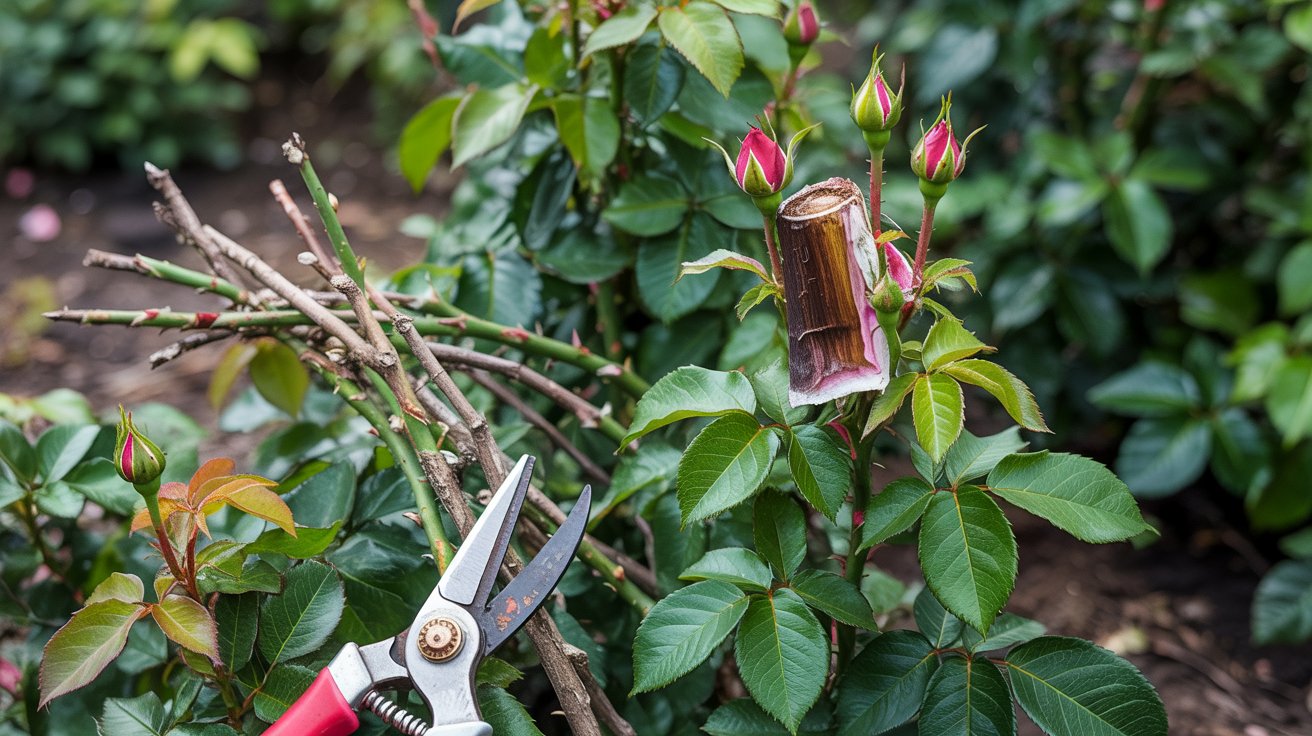
The difference between a productive rose and a disappointing one often comes down to three things: when you cut, where you cut, and how many canes you leave.
This guide covers hybrid teas, floribundas, shrubs, and climbing roses - each type handled separately because they genuinely need different approaches. If you're still learning how to establish roses, the pruning steps here will slot right into that broader care routine.
We'll also show you how to adapt timing to your local frost dates, so you're not guessing every spring.
Pruning roses correctly means cutting to outward-facing buds, keeping 3–6 healthy canes, and timing cuts after the last hard frost. Different rose types — hybrid teas, shrubs, and climbing roses — need separate approaches to maximize bloom and air circulation.
Why Pruning Roses Actually Matters?
Unpruned roses accumulate dead wood, crossing canes, and crowded centers that trap moisture and invite fungal disease. Spring pruning removes winter damage and redirects growth into the canes most likely to flower.
Remember it later
Planning to try this recipe soon? Save it for a quick find later!
The goal is a vase-like open center - typically 3-6 well-spaced canes arranged so light and air reach every part of the plant. Cuts made to outward-facing buds push new stems away from the center rather than back into it.
Different rose types follow different rules. Climbing roses, for instance, need structural training along supports rather than the hard reduction cuts you'd use on a hybrid tea.
Knowing your rose type before you pick up the pruners saves you from undoing a full season of growth.
Understanding your rose variety differences also helps you set realistic expectations for bloom timing and regrowth after pruning.
Pruning is not just cosmetic. Removing interior crossing canes reduces the humid, stagnant air conditions that trigger black spot and powdery mildew — two of the most common rose problems.
When to Prune and How to Make the First Cuts?
Timing is the single variable most gardeners get wrong. Prune too early and a late frost kills the new growth you just triggered; prune too late and you lose weeks of potential bloom.
In temperate US regions, the window opens in late winter to early spring once dormancy breaks but before growth pushes hard. A classic field check: when forsythia blooms in your neighborhood, roses are ready.
The spring pruning window shifts by several weeks depending on whether you're in Zone 5 or Zone 9, so always anchor timing to your local last frost date.
Look at the bud's color and direction before every cut. A red swelling bud pointing outward is your target. If the bud faces inward, move down the cane until you find one that faces out.

Pruning Cuts by Rose Type
Once the dead wood is gone, the approach splits by plant type. Hybrid teas and floribundas take the hardest reduction; shrub roses need lighter shaping; climbers get their own section below.
For hybrid teas and floribundas, the standard spring prune reduces plants to 3-6 strong canes, cutting each back to roughly 12-18 inches depending on your climate - harder in cold zones, lighter in mild ones.
Colorado State Extension notes that hybrid tea pruning should always prioritize cane quality over cane count.
- Shrub roses: Remove about one-third of the oldest canes at the base each spring. Shrubs tolerate less aggressive reduction and often rebloom without heavy pruning.
- Miniature roses: Treat like scaled-down hybrid teas - reduce by half and keep 5-7 canes. Their thin canes require sharp pruners to avoid crushing.
- Once-blooming roses: Prune immediately after their single summer flush, not in spring, or you remove the old wood that carries next year's buds.
Shrub roses like Rosa rugosa recover well even from hard cuts, but you'll get the most flowers by leaving more canes than you would on a hybrid tea. Aim for a natural, slightly arching shape rather than a tight vase form.
Pruning Climbing Roses and Adapting for Your Climate
Climbers follow their own calendar. Most modern repeat-blooming climbers flower on current-year lateral shoots, so the goal is to encourage as many of those side shoots as possible from the main structural canes.
Oregon State Extension emphasizes that climbing rose pruning centers on structure and training - not hard reduction. Your regional frost timing and the climber's bloom habit determine exactly when to act.
In Zone 5 and colder, climbers often die back significantly each winter. Wait until you're certain which portions of each cane have survived before cutting — what looks dead at the tip may have live wood 12–18 inches lower. In Zone 8 and warmer, climbers rarely lose more than the thinnest tips.
Once-blooming climbers like 'New Dawn' are the exception: prune them right after their single June flush, not in spring, to preserve the old wood that carries next season's buds.
Climate-aware care also applies to wisteria on the same support structures, which follows a similarly structure-focused pruning approach.

Troubleshooting Common Pruning Mistakes
Most rose problems trace back to a handful of repeated errors. Underpruning is the most common - gardeners remove too little, leaving crowded canes that produce weak stems and poor air circulation season after season.
Pruning at the wrong time is the second-biggest mistake. Cutting in late fall encourages tender new growth that winter cold kills outright, weakening the plant heading into dormancy.
If you're growing cold-hardy species alongside roses, note that roses need different seasonal handling than most tough perennials.
- Make cuts at a 45-degree angle, slanting away from the bud so water drains off cleanly.
- Remove crossing or rubbing canes entirely at the base - shortening them doesn't solve the airflow problem.
- Sanitize pruners between plants, especially if you see any signs of canker or disease on a cane.
- Wait until your local last frost date has passed before making any major spring cuts.
- Don't prune in fall - new growth triggered by fall cuts is highly vulnerable to frost damage.
- Don't leave stubs above buds; stubs die back, become entry points for disease, and look untidy.
- Don't use dull blades - crushed cane tissue heals slowly and invites fungal infection at the cut.
- Don't skip deadheading during summer; leaving spent blooms on repeat-bloomers slows the next flowering cycle.
If you see orange or red pustules on a cane, that's rose rust — a fungal disease that spreads on pruning tools. Remove affected canes, bag them (don't compost), and sanitize your tools immediately before touching another plant.
A Simple Seasonal Maintenance Schedule
Pruning isn't a once-a-year event. A short burst of work each season keeps roses productive from spring through fall and sets them up to survive winter without major losses.
Iowa State Extension recommends timing the main spring prune to late March through mid-April in the upper Midwest - adjust earlier for Zone 7+ and later for Zone 4. After pruning, applying a dormant oil spray controls overwintering insects and fungal spores before new growth hardens off.
That single step reduces pest pressure for the entire season.
- Winter (Zones 5 and colder): Mound 8-12 inches of soil or mulch over the graft union after hard frost. Don't prune - wait for spring assessment.
- Early spring: Make the main structural prune once buds swell. Remove dead wood, thin to 3-6 canes, and apply dormant oil spray.
- Summer: Deadhead spent blooms every 1-2 weeks on repeat-bloomers. Remove any crossing canes that appeared during the growing season. This is also a good time to review your broader summer garden upkeep tasks alongside rose care.
- Fall: Stop deadheading 4-6 weeks before expected first frost to let hips form and signal the plant to slow down. Avoid cutting back canes - wait for spring.
Bare-root roses planted in spring should be pruned to about 6 inches at planting, even if they look healthy. This concentrates energy on root establishment and leads to stronger growth by midsummer than if you left the canes long. Check your regional planting calendar to align bare-root planting with the right frost-free window.
Repeat-bloomers pruned and deadheaded consistently through summer can produce 4-5 flowering cycles in a single season. For a look at how roses fit into a full fall garden plan, see what fall-blooming plants pair well with late-season roses.

Frequently Asked Questions
Prune after your last hard frost date — late March to mid-April in the Midwest, as early as January in Zone 9. Check your local extension service for exact regional windows.
Reduce canes by one-third to one-half of the previous year's growth and keep 3–6 strong, outward-facing canes. Remove everything else at the base.
Yes. Climbers keep 3–5 long structural canes trained horizontally, with lateral shoots trimmed to 2–4 buds. Shrubs get a lighter overall reduction without the structural training framework.
Sharp bypass pruners handle canes under ¾ inch; loppers cover thicker wood. Sanitize both with isopropyl alcohol between plants to prevent spreading fungal disease.
Generally avoid it. Fall pruning stimulates new growth that winter cold kills, weakening the plant. Stop deadheading 4–6 weeks before first frost instead and wait for spring pruning.
Pin it for your next how to prune roses correctly project.