Clover doesn't show up in a healthy, well-fed lawn by accident. It moves in when soil nitrogen is low, pH is off, or grass is too thin to compete - and once it takes hold, it spreads fast by both seed and creeping stems.
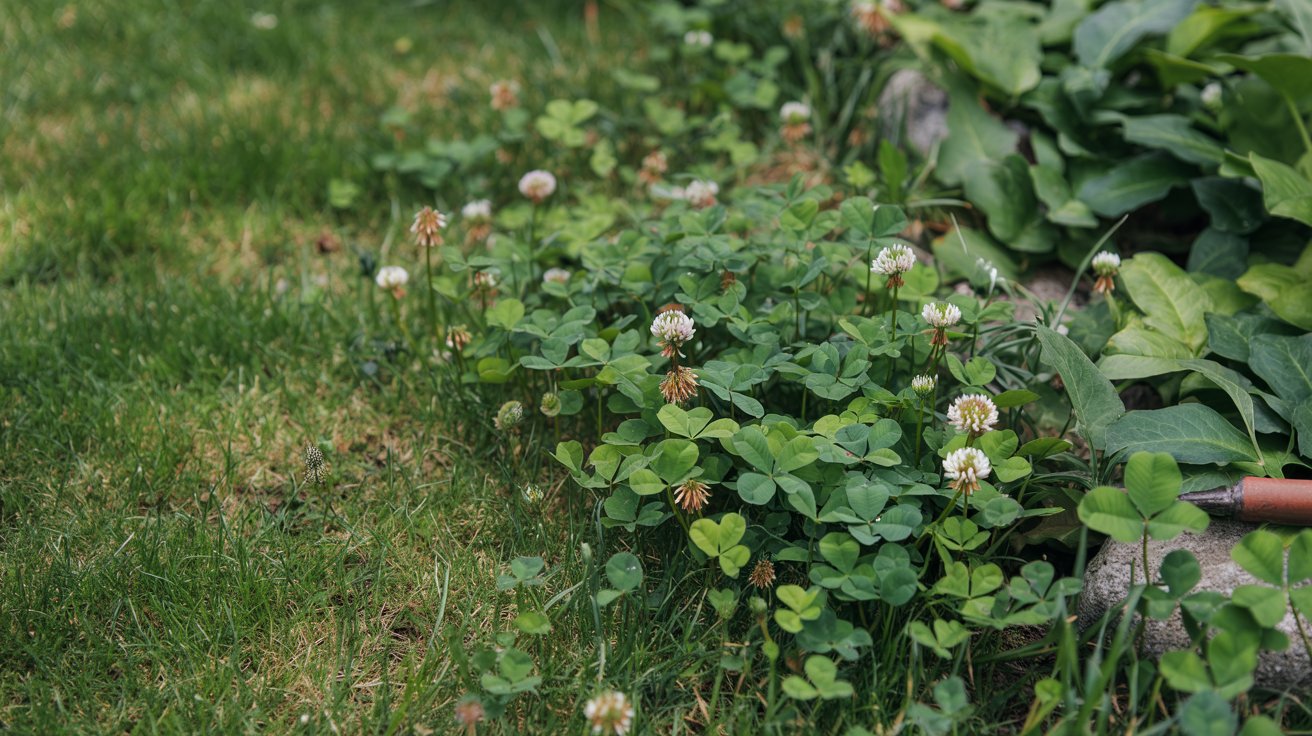
White clover (Trifolium repens) fixes its own nitrogen from the air, giving it a real advantage over struggling turf grass.
That edge means pulling a few plants won't solve anything long-term. You need to fix the conditions that invited clover in the first place, then use the right removal method for your situation.
This guide walks you through a five-step plan - starting with soil and turf health, moving to organic removal, and escalating to targeted herbicides only when needed.
Whether you're dealing with a few patches or a lawn that's gone mostly white-flowered, choosing the right weed control starts with understanding what's driving the problem.
Clover in your lawn signals low nitrogen, poor pH, or thin turf. Fix soil conditions first, then use organic methods like overseeding and corn gluten meal.
Escalate to targeted broadleaf herbicides (2,4-D, MCPP, dicamba) only if needed. Prevention beats repeated removal.
Why Clover Thrives in Lawns?
Most lawn weeds are opportunists. Clover is especially good at exploiting the specific gaps that stressed turf leaves open.
Remember it later
Planning to try this recipe soon? Save it for a quick find later!
Understanding those gaps is the first step toward closing them for good.
Soil fertility is the biggest driver. Grass needs consistent nitrogen to stay thick and competitive, but clover doesn't.
Trifolium repens forms root nodules with Rhizobium bacteria that pull nitrogen directly from the atmosphere, so it grows just fine in soil that starves your lawn grass. When you skip fertilization or mow too short and weaken grass roots, clover fills in fast.
Soil pH is the second major factor. Turf grasses grow best between pH 6.0 and 7.0.
Clover tolerates more acidic soils - sometimes thriving at pH 5.5 - where grass struggles to absorb nutrients even if they're present. A soil test often reveals that clover-heavy lawns are running acidic and need lime.
Compacted soil gives clover another leg up. Heavy foot traffic and clay soils compress the root zone, limiting grass growth while clover's creeping stems and deeper roots push through.
Crabgrass problems and clover infestations often share the same compacted, thin-turf conditions - a sign the whole lawn system needs attention.
Clover also handles drought better than most cool-season grasses. During summer dry spells, grass goes dormant and thins out, opening bare patches that clover seeds are quick to colonize.
There is one nuance worth noting. Because clover fixes nitrogen, it can actually return organic matter and some nutrients to the soil as its leaves decompose.
Virginia Cooperative Extension research on white clover management acknowledges this benefit, which is why some homeowners choose to tolerate low levels of clover rather than eradicate it completely. That's a personal call - but if you want a uniform turf, removal is achievable with the right approach.
The practical takeaway: clover isn't a sign of a hopeless lawn. It's a signal.
Fix the fertility, pH, and density problems underneath it, and removal efforts will actually hold.
Clover flowers attract bees, including native pollinators. If you have children playing in the yard or family members with bee sting allergies, that's a practical safety reason to prioritize removal beyond pure aesthetics.
Step-by-Step Plan to Remove Clover (Organic First)
This sequence works from the ground up - improving soil and turf conditions before reaching for any spray bottle. Skipping straight to herbicide without fixing underlying problems means clover comes back within a season.
Timing matters for herbicide applications. Late spring and early fall are the most effective windows - clover is actively growing and translocates the herbicide down to the roots more efficiently than during summer heat or winter dormancy.
For a broader look at how soil and pest issues interact across the lawn, the lawn care fundamentals section covers fertilization cycles and seasonal maintenance schedules in more depth.
Organic vs. Conventional - Choose Your Path
Not every lawn situation calls for the same response. A few clover patches in an otherwise healthy lawn warrant a different approach than a lawn that's 40% clover with compacted, acidic soil underneath.
- Go organic if: Clover covers less than 30% of your lawn, you have children or pets using the space regularly, pollinators matter to you, or you're willing to accept a slower 2-3 season timeline for full suppression.
- Consider conventional control if: Clover is widespread and established, organic methods haven't produced results after two months, or you need visible improvement before a specific date.
- Avoid herbicide if: You're overseeding at the same time - most broadleaf herbicides damage new grass seedlings. Wait at least 6 weeks after overseeding before spraying.
- Factor in your climate: In cooler northern zones, Rutgers broadleaf weed research indicates fall is the highest-efficacy treatment window for cool-season lawns, including clover control.
Mix a small amount of dish soap (1 teaspoon per quart) into any organic foliar spray to help it stick to clover's waxy leaves. Plain water or diluted vinegar rolls off without this surfactant and accomplishes almost nothing.
Organic control works best as a system, not a single action. Corn gluten meal, raised mowing height, proper nitrogen, and overseeding together create turf density that outcompetes clover over two to three seasons.
If you've fixed pH and fertility but clover persists, spot-treating with a selective broadleaf herbicide is a reasonable next step - not a failure of the organic approach.
Dicamba-containing herbicides can volatilize in hot weather and drift onto nearby garden beds or trees. Apply only when temperatures are below 85°F and wind is under 10 mph. Keep the comparing organic sprays option in mind for areas near sensitive plants.
For pest problems that clover-heavy, compacted lawns often bring along - like eliminating fire ant colonies near bare soil patches or clearing aphid pressure on adjacent garden plants - addressing lawn health is often the first line of defense there too.
Frequently Asked Questions
Clover fixes atmospheric nitrogen and feeds the soil, but it signals low fertility and thin turf. Whether it's "bad" depends on whether you want uniform grass or tolerate mixed cover.
Yes — white clover can fix 100–200 lbs of nitrogen per acre per year via root nodules. But that benefit only offsets fertilizer needs if you're deliberately maintaining a clover-grass mix.
Yes, but they take longer — expect 2–3 seasons of consistent effort with corn gluten meal, nitrogen fertilization, and overseeding before clover is substantially suppressed without herbicides.
Early fall is the most effective window for herbicide treatment, especially in cool-season lawns. Clover actively translocates herbicide to roots in fall, improving kill rates significantly.
Clover tolerates pH as low as 5.5, while most turf grasses need 6.0–7.0. Acidic soil weakens grass and creates an opening clover exploits — liming to correct pH is a direct suppression strategy.
Pin it for your next how to get rid of clover in your lawn project.