Tomato blight can double its damage in 48 hours when temperatures hover between 60-80°F and leaves stay wet. Catching it early and acting in the right order is what separates a salvaged crop from a total loss.
This guide walks through a step-by-step diagnosis and treatment plan for both early blight and late blight, so you know exactly what you're dealing with before reaching for any product.
We cover copper fungicide timing, sanitation steps, and cultural controls that work alongside chemistry. If you're also managing other fungal and pest problems in the garden, the principles here apply broadly.
Tomato blight comes in two forms: early blight (Alternaria solani) and late blight (Phytophthora infestans). Both require immediate removal of infected tissue, adjusted watering practices, and timely fungicide application.
Acting within the first signs of infection gives you the best chance of protecting the rest of your crop.
Step 1: Diagnose, Isolate, and Start a Practical Treatment Plan
Before you touch a single leaf, confirm what you're dealing with. Misidentifying blight type leads to mistimed treatments and wasted product.
Remember it later
Planning to try this recipe soon? Save it for a quick find later!
A careful look at where lesions appear and what they look like takes under two minutes and changes everything that follows.
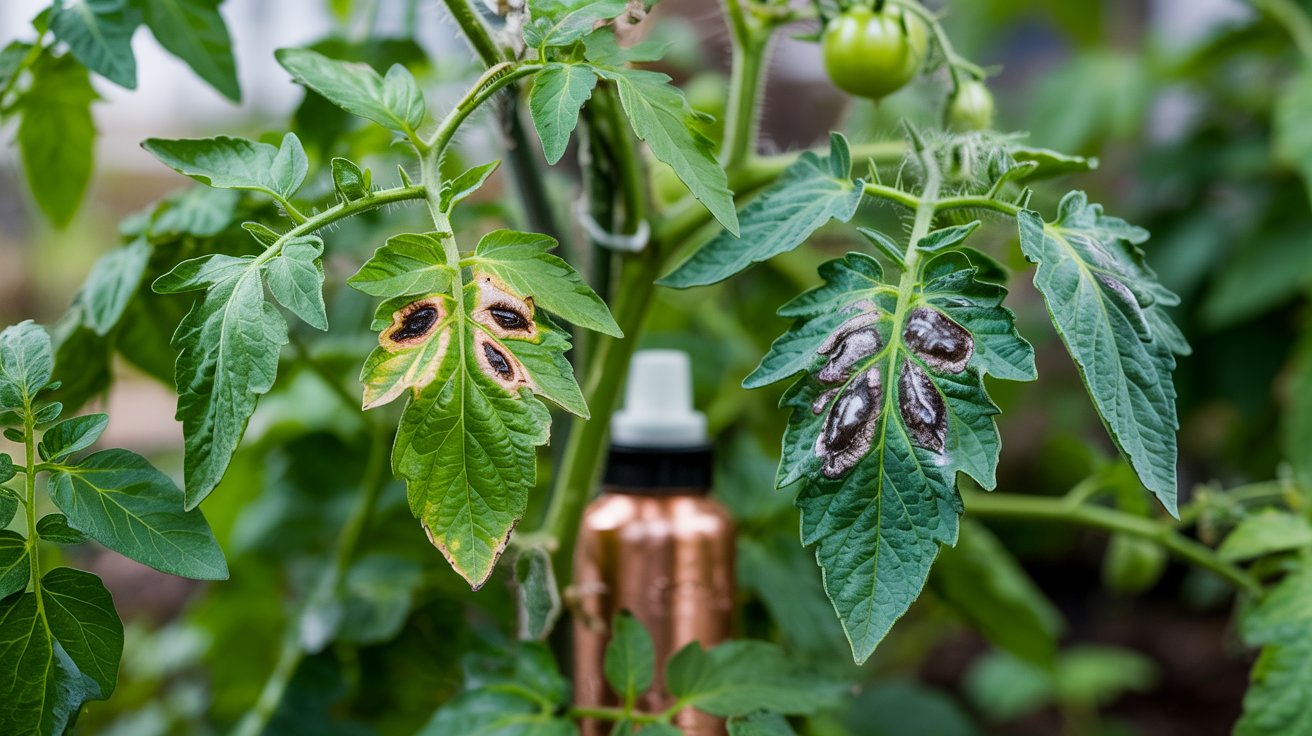
Early blight starts on older, lower leaves as small brown spots with concentric rings - like a target or bullseye.
Late blight spreads fast from anywhere on the plant, producing water-soaked, irregularly shaped lesions that turn dark brown or purple, often with white fuzzy growth on the underside in humid conditions.
Late blight spreads faster than early blight — under cool, wet conditions it can destroy a plant in 3–5 days. If you see water-soaked lesions expanding daily, treat the entire garden row immediately, not just the affected plant.
Knowing your tomato type also matters when planning pruning and spacing. Indeterminate varieties keep growing all season and may need repeated pruning to maintain airflow, while determinate types reach a set size and are easier to manage.
Early Blight vs Late Blight: Symptoms, Timing, and Management
Both diseases attack tomatoes but behave differently enough that treating one like the other wastes time and resources. Alternaria solani causes early blight; Phytophthora infestans - the same organism responsible for the Irish potato famine - causes late blight.
Early blight is a slow-burn disease. Symptoms begin on the oldest, lowest leaves and work their way up gradually through the growing season.
Late blight is an emergency: lesions can appear on any part of the plant, spread within 48 hours, and become a regional problem since airborne spores travel far. According to Cornell Vegetable Program, late blight inoculum can arrive from neighboring gardens or farms, making regional monitoring important.
| Feature | Early Blight | Late Blight |
|---|---|---|
| Pathogen | Alternaria solani | Phytophthora infestans |
| Symptom location | Older, lower leaves first | Any leaf, stem, or fruit |
| Lesion appearance | Brown target-ring spots, yellow halo | Water-soaked, dark brown, irregular |
| Fuzzy growth? | Rarely | White fuzz on leaf underside (humid) |
| Spread speed | Gradual over weeks | Rapid — days under cool, wet conditions |
| Ideal conditions | Warm, humid (75–85°F) | Cool, wet (60–70°F), fog or rain |
| Primary fungicide | Copper or chlorothalonil | Copper + FRAC Group 40 or 45 |
| Rotation needed? | Yes, 2–3 years | Yes, plus regional vigilance |
For early blight, a preventive copper spray program starting at first fruit set - combined with mulching and lower-leaf removal - keeps most infections manageable. Resistant varieties like 'Juliet' or 'Mountain Magic' offer additional protection in high-pressure seasons.
Late blight requires more aggressive action. Remove infected plants or heavily infected sections immediately.
If late blight is confirmed in your county, apply copper fungicide on a 5-7 day spray interval, adjusting after each rain. Powdery mildew on other crops follows different rules - our guide on rose powdery mildew shows how fungal timing differs between species.
Neither blight type is curable once established on a leaf. All fungicide applications protect healthy, uninfected tissue - so timing before infection events (rain, heavy dew) is what makes the difference.
Treatment Options and Prevention: Copper Fungicide, Cultural Controls, and Rotation
Copper fungicide is the most accessible organic-approved option for home gardeners facing either blight type. It works by releasing copper ions that disrupt fungal and oomycete cell function on contact.
It does not move inside the plant, so thorough coverage of all leaf surfaces - including undersides - is essential at every application.
Follow label rates carefully. Overuse leads to copper accumulation in soil, which can become toxic to earthworms and reduce soil health over time.
UC ANR's tomato late blight IPM guide recommends applying copper on a weather-based schedule, especially before expected rain or extended wet periods, rather than on a fixed calendar.
| Method | When to Use | Key Caution |
|---|---|---|
| Copper fungicide | Preventively, before rain events | Limit applications; rotate with other modes of action |
| Chlorothalonil | Early blight in non-organic systems | Not OMRI-listed; check label pre-harvest interval |
| Bacillus subtilis (e.g., Serenade) | Organic alternative when copper restricted | Shorter residual; reapply every 5–7 days |
| Drip irrigation | All season, preventively | Keeps foliage dry; reduces splash dispersal |
| Straw mulch | At transplant time | Refresh if it breaks down mid-season |
| Crop rotation | Each new season | Avoid tomato family (Solanaceae) in same bed for 2–3 years |
| Resistant varieties | At planting, high-risk sites | Check variety resistance rating — no variety is fully immune |
Rotate your fungicide mode of action each season — don't use copper every year if alternatives are available. Resistance builds in pathogen populations when a single product is used repeatedly. Alternating Bacillus subtilis with copper reduces selection pressure.
Crop rotation is the single most effective long-term prevention step. Avoid planting tomatoes, potatoes, peppers, or eggplant in the same bed for 2-3 years after a blight outbreak.
All belong to the Solanaceae family and share susceptibility to the same pathogens. When you plan next year's layout, consider also moving away from growing tomatoes in low-lying spots where moisture and cold air pool overnight.
At season end, pull all tomato plants - roots and all - and discard or burn them. Do not till infected debris into the soil.
Clear beds allow you to reclaim the growing space fully before the next planting cycle.
Non-chemical controls work best as a package: drip irrigation + mulch + proper spacing + rotation together reduce blight pressure more than any single tactic alone. Gardens that combine all four rarely need heavy fungicide programs even in wet seasons.
Frequently Asked Questions
Early blight (Alternaria solani) starts on older lower leaves with target-ring spots and spreads slowly. Late blight (Phytophthora infestans) spreads rapidly from any plant part, producing water-soaked dark lesions and white fuzz in humid conditions.
Copper fungicide protects healthy tissue but cannot cure infected leaves. Apply it before rain events on a 5–7 day interval, and rotate with other modes of action to avoid soil copper buildup.
Remove heavily infected plants immediately, especially with late blight. Bag and trash all infected material — never compost it. Partial pruning works for early blight when fewer than 30% of leaves are affected.
Rotate tomatoes to a new bed for 2–3 years, remove all plant debris at season end, switch to drip irrigation, and apply straw mulch at transplant time to stop soil-splash spore dispersal.
Yes — 'Juliet', 'Mountain Magic', and 'Defiant PhR' carry partial resistance to late blight. No variety is fully immune, but resistant types significantly reduce infection rates in high-pressure, wet seasons.
Pin it for your next how to treat tomato blight project.