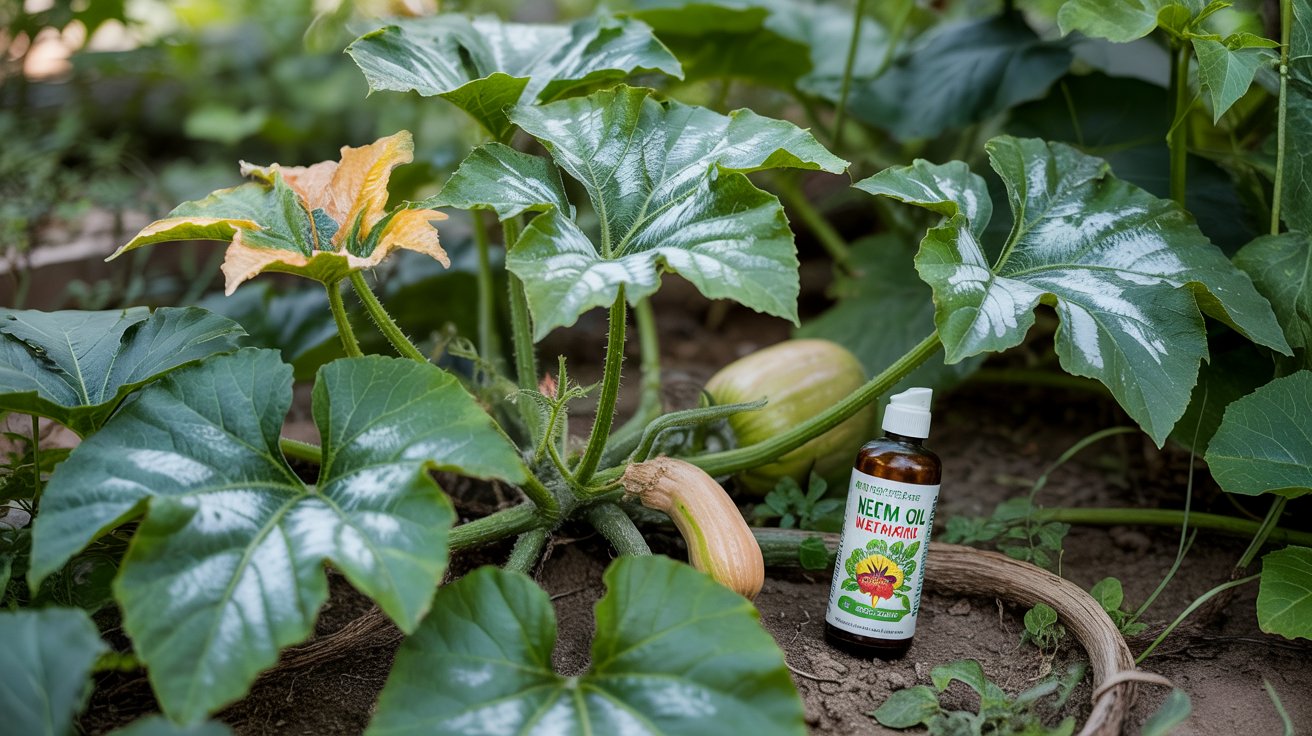
Powdery mildew shows up fast. One morning your squash leaves look fine; a week later they're dusted white and curling at the edges.
If you're growing cucurbits - squash, cucumber, zucchini, pumpkin - you will almost certainly deal with this at some point.
The good news about catching it early is real: treatments applied at the first sign of infection work dramatically better than playing catch-up on a plant already blanketed in white.
Oil-based sprays and baking soda mixes can knock back mild infections without reaching for harsh chemicals.
This guide covers everything from quick identification to a repeatable spray routine, plus the cultural habits that keep mildew pressure low season after season. Squash gets the most attention here because cucurbits as a group are the most commonly affected vegetables in home gardens.
We'll also show you when conventional fungicides make sense and how to rotate products so mildew doesn't build resistance. Understanding the fungal disease cycle is the first step toward controlling it.
Powdery mildew is a fungal disease that coats cucurbit leaves in white powder, reducing photosynthesis and yield. Treat early with neem oil or baking soda sprays, improve airflow, and rotate fungicide modes of action to prevent resistance.
Powdery mildew on squash reduces yield and photosynthesis but does not usually infect the fruit itself. You can still harvest edible squash from an infected plant if you treat promptly.
Symptoms, Life Cycle, and Risk Factors
Powdery mildew on cucurbits appears first as small, circular white patches on older, lower leaves. As infection progresses, patches merge into a dense white coating, leaves start to cup or curl upward, and severely affected foliage turns yellow and dies off early.
Remember it later
Planning to try this recipe soon? Save it for a quick find later!
The fungus spreads by airborne spores - it doesn't need wet leaves to germinate, which separates it from most other foliar diseases. Humidity between 50-90% strongly fosters development, so warm, dry days combined with cool, humid nights create ideal conditions.
Dense canopies trap this humid air right around the leaves.
Crowded plantings are the single biggest cultural risk factor in home gardens. Poor airflow lets spore concentrations build up between plants, and a single infected leaf can shed thousands of spores in one day.
| Risk Factor | What Happens | What to Do |
|---|---|---|
| Humidity 50–90% | Spores germinate rapidly | Improve airflow; water at soil level |
| Dense canopy | Air trapped, spores accumulate | Remove crowded inner leaves |
| Warm days / cool nights | Peak infection window | Begin preventive sprays in mid-season |
| Older lower leaves | First infection site | Inspect weekly from the bottom up |
| Susceptible varieties | Faster spread, harder to control | Choose resistant cultivars |
On squash, the disease targets leaves first and is far less likely to colonize fruit directly. That means a well-timed treatment plan can protect your harvest even after infection has already started.
Remedies: Step-by-Step Treatment Plan
Effective powdery mildew treatment follows a clear sequence: confirm the infection, remove the worst foliage, apply your first spray, then monitor and rotate products. Skipping any step - especially rotation - is how mildew comes back stronger.
Start by pulling off any leaves that are more than 50% covered. Bag them in plastic; don't compost.
This immediately reduces the spore load and makes your spray more effective on the tissue that remains.
Oil sprays — including neem — should not go on when air temperature is above 80°F or when plants haven't been watered recently. Both conditions cause phytotoxicity. Early morning application on a well-watered plant gives the best results.
For severe infections that don't respond to low-tox options, potassium bicarbonate or sulfur-based fungicides are the next step. Both are approved for use on edible crops when applied per label instructions.
Sulfur should not be applied within 2 weeks of an oil spray to avoid plant damage.
If you're also dealing with insect damage on your cucurbits, check our guide to protecting against squash vine borers - a weakened plant is more vulnerable to both problems at once.

Prevention and Cultural Controls
Prevention costs far less effort than treatment. Most of what works is about reducing the conditions mildew needs: stagnant air, high humidity around leaves, and susceptible plant tissue left unchecked through the season.
Good airflow, proper spacing, and watering at soil level each reduce mildew pressure meaningfully. Space squash plants at least 24-36 inches apart in rows, and train vines so leaves don't overlap heavily.
| Practice | Why It Works | How Often |
|---|---|---|
| Water at soil level | Keeps foliage dry, reduces humidity pocket | Every watering |
| Remove lower leaves | Improves airflow, eliminates early infection sites | Weekly mid-season |
| Choose resistant varieties | Genetic resistance slows infection dramatically | At planting |
| Preventive spray (baking soda) | Raises leaf surface pH, inhibits spore germination | Every 14 days in peak season |
| Rotate fungicide modes | Prevents resistance buildup | Every 2nd application |
Resistant cucurbit varieties are worth selecting at planting time. Extension programs regularly update variety trial data - the Minnesota Extension cucurbit guide lists resistant cultivars by crop type.
Bush varieties of summer squash tend to have better airflow naturally than sprawling vine types.
End-of-season cleanup matters too. Infected plant debris left in beds over winter harbors fungal spores for the following year.
Remove and bag all cucurbit material after the last harvest - don't till it in.
Quick Action Plan by Garden Type
Not every garden has the same challenge. An outdoor raised bed, a patio container, and a greenhouse each create different humidity and airflow conditions - and each calls for slightly different first steps.
- Outdoor gardens: Start preventive sprays in mid-season before symptoms appear, especially if you've had mildew in previous years. Improve plant spacing and remove any leaves touching the soil.
- Container gardens: Avoid crowding multiple cucurbit plants into one large pot. Air movement around containers is often better than in dense beds, but pots dry out faster - don't let drought stress build before applying any oil treatment.
- Greenhouses: Manage humidity actively by venting during the warmest part of the day. Keep leaf wetness low and consider a biological fungicide like Bacillus subtilis as a regular preventive spray, since temperatures inside often exceed the safe window for oil application.
For a 7-day starter routine across all settings: Day 1, remove infected leaves and apply your first baking soda/oil spray. Days 2-6, monitor daily and water only at the base.
Day 7, assess coverage and apply a second spray if new patches appear. Repeat the cycle every 7-10 days through peak season.
In hot climates (zones 8–11), afternoon temperatures often exceed 80°F for weeks at a stretch, making oil sprays risky midday. Shift all spray applications to early morning or dusk, and consider sulfur-based options as your primary treatment during summer heat. For broader fungal disease context, our rose mildew treatment guide covers how the same rotation principles apply across different crops.
Container gardeners growing cucurbits alongside ornamentals should also watch for cross-infection. Squash mildew spores can sometimes spread to susceptible neighbors - keeping affected plants physically separated slows this down.
Managing other concurrent pest threats, like controlling aphid populations, also reduces overall plant stress that makes mildew worse.
Healthy root systems resist disease better. Whether you're growing carrots alongside your cucurbits or ornamentals like azaleas with good soil drainage, consistent soil moisture without waterlogging keeps the whole garden less disease-prone.
And if you're dealing with multiple garden threats simultaneously, our overview of protecting garden plants from browsers and managing fire ants in garden beds rounds out a full season pest plan.

Frequently Asked Questions
Remove heavily infected leaves first, then apply a baking soda and horticultural oil spray every 7–10 days. Rotate to sulfur-based fungicide if mildew persists after two applications.
Yes, when paired with horticultural oil. Baking soda alone has limited effect, but the combination raises leaf surface pH enough to inhibit spore germination on edible crops.
Neem oil is approved for use on edible crops. Apply only below 80°F and allow at least 24 hours before harvest; residues break down quickly in sunlight.
Never apply neem or other horticultural oils above 80°F (27°C). High temperatures cause oil to burn leaf tissue, worsening plant stress rather than relieving it.
Yes. Airborne spores can recolonize treated plants within days. Maintaining a 7–10 day spray schedule through peak season and removing all infected debris at season's end significantly reduces recurrence the following year.
Pin it for your next how to get rid of powdery mildew project.