Fire ants move fast, sting hard, and rebuild colonies faster than most people expect. Solenopsis invicta, the red imported fire ant, now covers over 320 million acres across the southern US, and a single queen can lay up to 1,500 eggs per day.
That's why a one-and-done spray rarely works.
A realistic plan combines two tactics: broad bait applications to knock down worker populations, and targeted mound treatments to finish off active colonies. You'll see initial results within one week and meaningful suppression over four to six weeks.
This guide ranks every major method by time-to-results, effort, and environmental impact. Whether you're protecting a lawn, a vegetable bed, or a play area, you'll find a clear sequence that fits your situation - along with honest notes on what fire ants do after treatment and how to slow their return.
For broader fire ant identification tips, our pest library has you covered.
Fire ant control works best as a two-step approach: broadcast bait first, then treat individual mounds. Expect visible reduction within 1 week and strong suppression in 4–6 weeks.
No single method permanently eliminates fire ants — integrated pest management and repeat applications are the standard.
Step-by-Step Plan to Start Killing Fire Ants
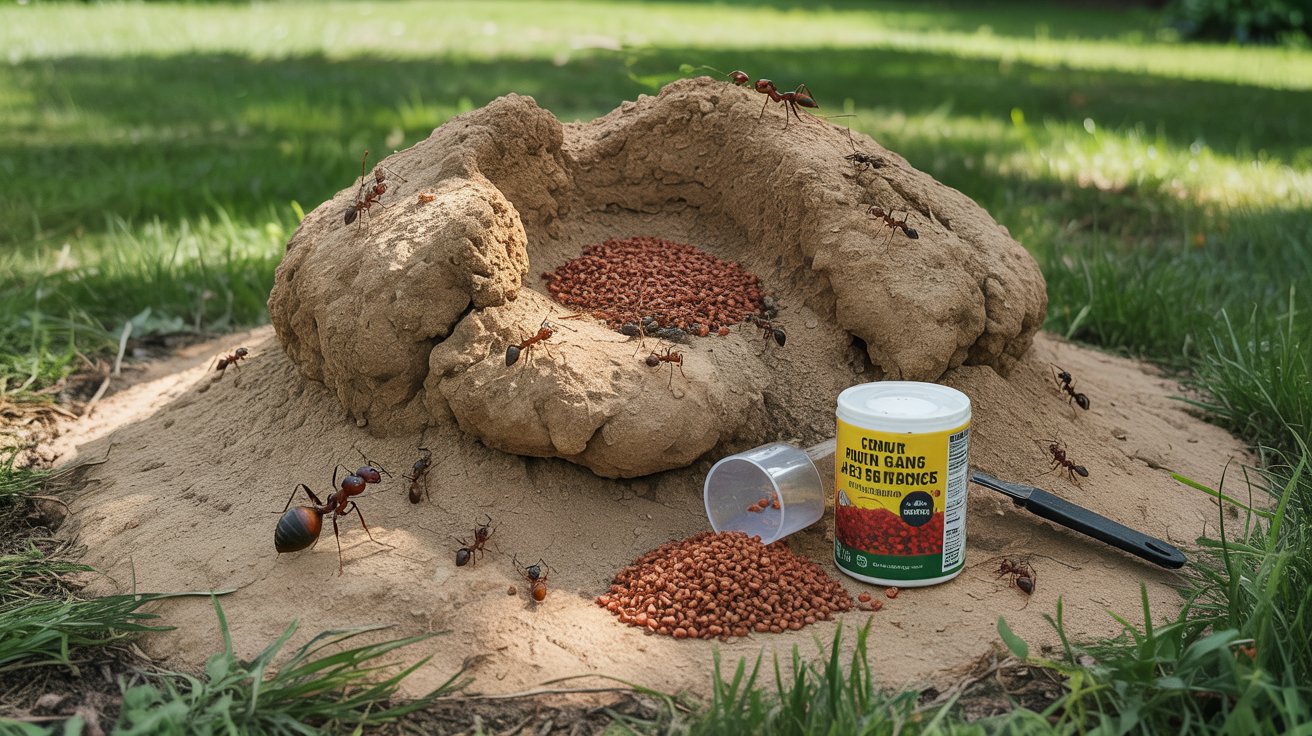
Before you buy anything, walk your yard and count active mounds. A mound is active when it shows loose, fluffy soil and ants appear within 10-15 seconds of a gentle tap with a stick.
Remember it later
Planning to try this recipe soon? Save it for a quick find later!
This two-minute audit tells you whether you need broad bait coverage, spot treatments, or both.
Keep kids and pets off treated areas until the product dries or as directed on the label - fire ant baits are oil-based granules that can attract dogs if left unattended.
Apply bait in late afternoon when worker ants are most active and foraging — they pick up granules within hours. Morning applications on hot summer days often sit untouched as ants shelter during midday heat. This small timing shift can double your bait uptake rate.
Wear closed-toe shoes and long socks any time you work near mounds. Fire ants climb before they sting, and you often won't feel them until dozens are already on your skin.
Keep a second person nearby to help brush them off quickly if a mound is accidentally disturbed.
Fire Ant Mound Treatments: Options at a Glance
Not every mound needs the same treatment. Location, proximity to edibles, and how fast you need results all affect which approach fits best.
The table below lays out the main options side by side so you can match the method to the situation.
Mound drenches act faster than bait on individual colonies but require more product and direct contact with the nest. Surface treatments split the difference - easier to apply than drenches but slower to reach the queen deep in the mound.
| Method | Time to Effect | Best Use Case | Key Cautions |
|---|---|---|---|
| Granular bait (hydramethylnon, spinosad) | ~1 week | Whole-yard suppression | Keep dry 24–48 hrs; pets may eat granules |
| Mound drench (bifenthrin, permethrin) | 1–2 days | Single active mound, fast kill | Keep away from water bodies; toxic to fish |
| Surface granules (broadcast + mound) | 1–2 weeks | Moderate infestation across lawn | Water in lightly after applying |
| Boiling water | 1–3 days | Isolated mound, organic preference | Only ~60% effective; burns surrounding grass |
| Spinosad bait (organic-approved) | ~1 week | Gardens, near edibles | Reapply after rain; slower on large colonies |
For mounds within 10 feet of a vegetable bed, stick to spinosad-based or abamectin baits - both are far safer near edibles than synthetic pyrethroids.
When timing bait around your planting schedule, our vegetable planting calendar can help you plan treatment windows that won't disrupt transplant days.
Mound drenches deliver fast results but come with a real water-safety concern. According to UC IPM fire ant notes, mound drenches or surface treatments may require 1-2 weeks for noticeable effects at the colony level, even when surface workers die within hours.
The queen must be reached to collapse the colony permanently.
Never pour liquid insecticide into a mound near a storm drain, pond, or creek. Permethrin and bifenthrin are highly toxic to aquatic invertebrates at very low concentrations. Check the label's buffer distance requirements before you apply near any water feature.
University of Florida research confirms that baits with indoxacarb achieve visible colony control within roughly one week - comparable to faster-acting drenches but with far lower environmental risk. For most residential yards, bait remains the default first tool.

Organic vs Chemical Controls: What Works Best in Real Homes
The organic-versus-chemical debate matters most for households with children, pets, or edible gardens nearby. Organic controls are slower and require more repeat applications, but they carry lower off-target risk.
Chemical controls work faster, especially on individual mounds, but strict label compliance is non-negotiable.
No method permanently eliminates fire ants. As the UF/IFAS gardening solutions resource notes, there is no single tactic that permanently eliminates fire ants - integrated pest management combining multiple approaches is the standard recommendation.
That means even a perfect treatment this spring needs a follow-up in fall.
- Spinosad and abamectin baits are safe near edibles and carry low risk to birds and mammals.
- Boiling water kills workers immediately with zero chemical residue — useful near container plants.
- Diatomaceous earth around mound perimeters creates a physical barrier with no toxicity concerns.
- Lower environmental persistence means less impact on beneficial insects like ground beetles.
- Bifenthrin drenches collapse an active mound within 24–48 hours — far faster than any bait.
- Broadcast synthetic granules (e.g., fipronil) suppress large infestations across entire lawns in 1–2 weeks.
- Chemical baits with hydramethylnon cost less per square foot for heavy infestations than organic alternatives.
- Longer residual activity means fewer reapplications needed over a single season.
Hot water poured directly into a mound eliminates roughly 60% of colonies when applied correctly - effective for small, isolated mounds but impractical for yards with a dozen or more. It also scorches the surrounding grass.
Integrated approaches combine the speed of chemical mound drenches with the broad coverage of organic bait - and that combination is exactly what university extension services recommend for typical US yards.
Our guide to neem oil vs insecticidal soap covers more organic options useful in gardens adjacent to ant activity.
For homeowners managing multiple pest problems at once, the principles are similar across species. If you're also keeping aphid damage minimal in the same beds, the integrated approach works for both - reduce chemical load where possible and rotate organic methods when conditions allow.
Safety, Pro Help, and Prevention
Fire ant management isn't uniform across the US. The USDA APHIS tracks imported fire ant quarantine zones across 15 southern states, and APHIS fire ant programs confirm that management approaches vary by state, infestation status, and whether you're in a regulated quarantine area.
If you're moving soil, sod, or nursery stock across state lines, check your state's quarantine rules first.
In the Deep South - Texas, Louisiana, Florida, Mississippi - fire ant pressure is year-round, so two full broadcast bait cycles per year are standard. In transitional states like Tennessee, Virginia, or California's Central Valley, a single spring application often covers the active season.
Knowing your regional pressure level helps you decide how much to invest and how often to reapply.
Keep children and pets off treated lawn areas for at least 24 hours after applying granular bait, or until the product is fully watered in. For mound drenches, follow the specific label re-entry interval — it varies by active ingredient and typically ranges from 4 to 24 hours.
Call a licensed pest control professional when mounds are inside or beneath a structure, when colonies appear in electrical equipment (fire ants nest in junction boxes), or when a household member has a known allergy to fire ant venom.
Anaphylactic reactions can occur with as few as one sting in sensitized individuals - that's not a situation for DIY management alone.
Prevention focuses on making your yard less attractive than a neighbor's. Remove food debris from outdoor dining areas promptly and keep summer lawn maintenance consistent - short grass, cleared mulch edges, and reduced moisture around foundations all lower the odds of new colony establishment.
- Mow regularly: Dense, short turf is harder for new queens to establish in after their mating flights in spring and fall.
- Reduce moisture: Fix leaky hose bibs and irrigation heads - wet soil near the foundation is a prime nesting site.
- Clear debris: Remove woodpiles, unused pots, and stacked lumber from ground contact, where satellite colonies form unseen.
- Monitor edges: Check property lines and fence rows monthly - new mounds appear first at yard perimeters as colonies migrate from adjacent land.
- Coordinate with neighbors: Fire ants recolonize from adjacent untreated yards; a block-wide bait application on the same weekend is significantly more effective than solo treatment.
Broader pest pressure in lawns often clusters seasonally. If you're managing several issues at once, our roundup of slug and snail control runs alongside fire ant season in humid regions, and the same IPM framework applies to both.
For lawn-specific challenges, dealing with clover overgrowth and eliminating Japanese beetle damage follow the same pattern: identify, treat, monitor, prevent. The same logic applies to perennial weed pests - our guide to managing Japanese knotweed and tips on keeping deer from the garden round out a full-season pest management approach.

Frequently Asked Questions
A bifenthrin or permethrin mound drench collapses an individual colony within 24–48 hours — the fastest reliable method for single active mounds.
Most granular baits are low-toxicity, but keep pets off treated areas for 24 hours. Spinosad-based baits carry the lowest risk to dogs and cats among registered products.
Baits containing hydramethylnon, abamectin, indoxacarb, or spinosad typically show visible colony reduction within about 1 week, with full suppression in 2–4 weeks.
Boiling water eliminates roughly 60% of colonies when poured directly into the mound. It kills on contact but rarely reaches the queen deep in the tunnel system.
Yes. New queens fly and recolonize treated yards, especially from neighboring untreated land. Twice-yearly broadcast bait applications — spring and fall — are needed to maintain suppression long-term.
Pin it for your next how to get rid of fire ants project.