If your yard gets full sun all day and takes a beating from kids, dogs, and weekend foot traffic, Bermuda grass is likely your best match. If you have a mix of sun and shade, want a denser carpet underfoot, and prefer to mow less often, Zoysia earns a serious look.
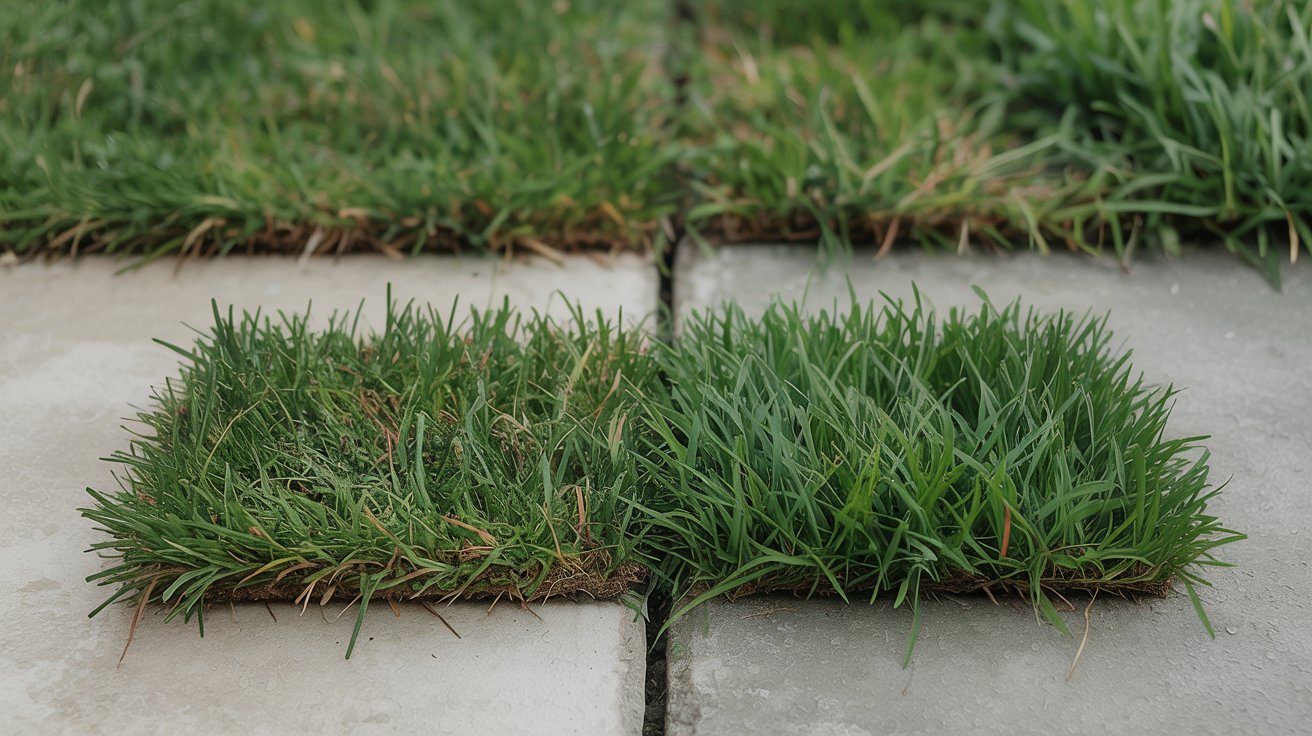
These two warm-season grasses cover more American lawns than almost any others, yet they suit different yards in different ways.
Both grasses go dormant in winter and green up in late spring. That shared trait is where the similarities mostly end.
Bermuda is faster, tougher, and cheaper to establish from seed, but it needs full sun and more frequent mowing to stay presentable.
According to the UGA Extension guide, Bermuda lawns demand at least six hours of direct sunlight daily and a consistent mowing and watering schedule to perform well.
Zoysia is slower to fill in but handles moderate shade better, spreads by both rhizomes and stolons, and stays dense enough to crowd out most weeds once established.
Missouri Extension research confirms that Zoysiagrass tolerates partial shade and spreads through underground rhizomes, giving it a clear edge in mixed-light yards where Bermuda would thin out.
This article walks through every criterion that actually changes a real buying or planting decision - sun exposure, climate, wear, maintenance intensity, and total cost. When you're ready to compare warm-season and cool-season turf types, the breakdown below gives you the data to choose confidently.
Both Bermuda and Zoysia are warm-season grasses suited to hot summers, but they differ sharply on shade tolerance, establishment speed, maintenance load, and upfront cost. Bermuda wins on traffic and budget; Zoysia wins on shade, texture, and low mow frequency.
Side-by-Side Comparison
Choosing between these two grasses comes down to six concrete factors. Each one tips the scale in a different direction depending on your yard's actual conditions.
Remember it later
Planning to try this recipe soon? Save it for a quick find later!
Bermuda (Cynodon dactylon) spreads aggressively by stolons above ground and rhizomes below, recovering quickly from damage. Zoysia (Zoysia japonica and related species) spreads the same way but at a fraction of the speed, producing a thicker, stiffer blade that many homeowners prefer for barefoot comfort.
Bermuda's wear tolerance is its headline trait. Oklahoma State University's turfgrass extension covers Bermuda field management in detail, noting that it demands precise mowing schedules and fertilization programs - requirements that translate directly to home lawns, not just athletic fields.
Zoysia's slow establishment is its biggest drawback. UGA's turfgrass publication confirms that Zoysia establishment is predominantly vegetative - meaning sod, sprigs, or plugs rather than affordable seed - which extends timelines and inflates startup costs significantly.
Cold hardiness separates them most in transitional-zone states. Bermuda goes fully dormant and may suffer dieback below Zone 7.
Zoysia holds green longer into autumn and survives further north, making it a better fit for year-round lawn planning in Zones 5 and 6.
- Wear and traffic: rebounds faster from heavy foot traffic than almost any other warm-season grass.
- Seed option available: you can establish from hulled seed for far less than sod costs.
- Speed: can produce a full lawn in one growing season under ideal sun and heat.
- Drought recovery: goes brown under drought stress but greens back up quickly once rain returns; drought-tolerant turf options often list Bermuda as a benchmark.
- Shade tolerance: holds density in areas receiving 4–5 hours of sun, where Bermuda thins badly.
- Lower mow frequency: grows slowly enough that every-other-week mowing is often sufficient.
- Texture and feel: dense, fine-bladed varieties create a carpet-like surface prized for curb appeal.
- Cold hardiness: stays viable in Zone 5, extending the usable range well north of Bermuda's limit.
If your lawn sits partly under mature trees or a covered patio throws afternoon shade, Zoysia is the safer bet. Bermuda planted in those spots will thin, yellow, and invite weeds within a season or two.
Establishment, Maintenance, and Costs
Getting either grass into the ground is only part of the budget. Ongoing mowing, fertilizer, and irrigation costs often exceed the startup price over a five-year horizon.
Bermuda seed (hulled) runs roughly $1-$3 per 1,000 sq ft when bought in bulk, making it one of the cheapest warm-season options to start from scratch. Zoysia seed exists but germinates poorly; most homeowners use plugs at $0.30-$0.60 each or sod at $0.35-$0.85 per square foot installed.
A typical 5,000 sq ft Zoysia sod job costs $1,750-$4,250 before labor. Understanding the sod versus seed trade-off helps set realistic budget expectations from the start.
| Task | Bermuda | Zoysia |
|---|---|---|
| Mowing frequency | Weekly (May–Sept) | Every 10–14 days |
| Mow height | 0.5–1.5 in | 1–2 in |
| Nitrogen (lbs/1,000 sq ft/yr) | 3–5 lbs | 2–3 lbs |
| Irrigation (summer) | 1–1.25 in/week | 0.75–1 in/week |
| Estimated fertilizer cost/yr | $80–$150 | $50–$100 |
| Estimated water cost/yr | $120–$200 | $80–$140 |
Oklahoma State's Bermuda management guidelines show that nitrogen applications of 3-5 lbs per 1,000 sq ft per year are standard, split across multiple summer feedings.
Choosing the right fertilizer for your turf makes a real difference in how well either grass holds color through late summer stress.
Florida extension data comparing warm-season lawn grasses reinforces that climate zone drives cost more than grass type alone - in Zone 9 and 10, Bermuda's faster establishment means lower irrigation bills in year one.
If you're planting Zoysia plugs to save money, space them 6 inches apart for a full lawn in 18–24 months, or 12 inches apart if you can wait 3 years. Closer spacing costs more upfront but dramatically cuts weed pressure during fill-in.
Mowing height matters more with Bermuda. Cut it above 1.5 inches and it gets stemmy and thatch-prone fast.
Zoysia is more forgiving if you miss a session, though scalping either grass in late spring removes the green blade layer and sets recovery back by weeks. Pairing your mowing routine with a summer maintenance schedule keeps both grasses from falling behind during peak growing months.
Best-Use Scenarios and Quick Decision Guide
Most homeowners don't need every data point above - they need to answer one question: which grass fits my specific yard situation? The scenarios below cut straight to that answer.
University of Florida extension work comparing Florida lawn grass options consistently shows that sun availability and traffic volume are the two variables that predict grass success better than any other factor in warm climates.
- Full sun, high traffic (kids, dogs, sports): Bermuda is the clear call. Its recovery speed from wear is unmatched among warm-season grasses, and it costs less to establish.
- Partial shade (4-6 hrs sun): Zoysia holds density where Bermuda won't. If more than 30% of your lawn sits in afternoon shade, Bermuda will struggle within two seasons.
- Budget is tight: Bermuda seed establishment costs $50-$200 for 5,000 sq ft. Zoysia plugs or sod for the same area runs $400-$4,250. If comparing alternatives is on your mind, the real cost of natural vs artificial grass is worth a look before committing.
- Low mowing priority: Zoysia at 1-2 inch height needs cutting every 10-14 days versus Bermuda's weekly-or-more requirement in summer.
- Cold transitional zones (5-6): Only Zoysia is reliably hardy. Bermuda risks winterkill north of Zone 7.
- Fine texture and curb appeal: Zoysia varieties like 'Emerald' produce a dense, manicured surface that Bermuda's coarser blade can't quite match.
Still torn between the two? Sketch your yard and shade the areas that get fewer than 6 hours of direct sun daily. If more than 25% of your lawn is shaded, lean Zoysia. If nearly all of it sits in open sun, Bermuda saves you money and fills in faster.
If you're also weighing cool-season alternatives, comparing Kentucky bluegrass and fescue performance side by side shows how different climate bands create completely different grass priorities.
In Zones 8–10 (Gulf Coast, Florida, lower Southwest), both grasses perform well in full sun, but Bermuda's faster recovery from summer heat stress often gives it an edge for high-use lawns. In Zones 5–7, Zoysia is the only warm-season option that survives reliably without significant winterkill risk.
For a fuller picture of how these grasses stack up against all warm and cool-season options, the grass selection resources in our lawn care hub walk through every major turf type by climate zone.
If cost is still the deciding factor, knowing what artificial turf actually costs over a ten-year period can reframe the whole decision.
Frequently Asked Questions
In full-sun Florida yards (Zones 9–10), Bermuda establishes faster and handles heat stress better. Zoysia is the better choice for yards with afternoon shade from palm trees or structures.
Bermuda seed produces a full lawn in 60–90 days under warm conditions. Bermuda sod knits in within 2–3 weeks. Both timelines assume soil temps above 65°F.
Zoysia handles 4–5 hours of daily sun and holds density in moderate shade. It will thin in deep shade under dense tree canopy, but outperforms Bermuda in any mixed-light setting.
On a 5,000 sq ft lawn, Bermuda typically costs $200–$350 per year in fertilizer and water; Zoysia runs $130–$240. Bermuda's higher nitrogen need (3–5 lbs vs 2–3 lbs per 1,000 sq ft) drives the gap.
Bermuda is susceptible to bermudagrass mites and fall armyworms. Zoysia is prone to zoysia patch fungus (a cool-weather disease) and billbugs. Neither pest is unmanageable, but each requires a grass-specific treatment approach.
Pin it for your next bermuda grass vs zoysia: which is better? project.