Choosing between composite and wood decking is one of the most consequential decisions in any backyard project - and it locks you into a maintenance routine, a cost curve, and a look for the next decade or more. Most homeowners focus on the sticker price and miss the long-term ownership picture entirely.
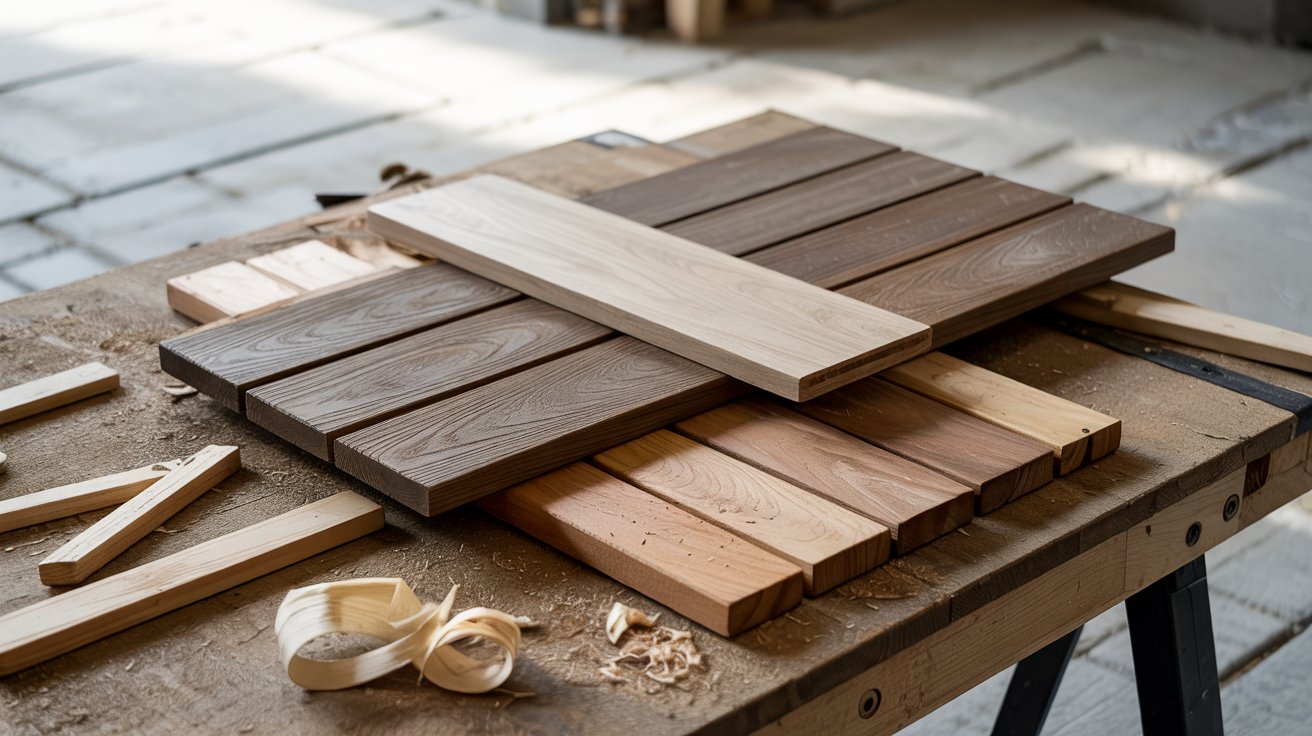
According to deck lifespan data, composite decks commonly deliver around 25 years of service, while wood decks typically last 10-15 years with proper care.
This breakdown gives you a direct verdict first, then backs it up with numbers on durability, maintenance, cost, and aesthetics.
Composite decking costs more upfront but wins on lifespan, maintenance, and long-term value. Wood decks carry a lower initial price tag but demand annual upkeep — staining, sealing, and eventual board replacement.
For most homeowners planning to stay in their home 10+ years, composite is the better financial and practical choice.
Bottom-Line Verdict
Composite decking wins for most homeowners in most climates. The higher upfront cost is offset by dramatically lower annual maintenance and a lifespan that can be double that of untreated wood.
Remember it later
Planning to try this recipe soon? Save it for a quick find later!
If you're comparing which outdoor surface fits your yard long-term, composite almost always pencils out better over a 15-20 year horizon.
Wood still makes sense in specific scenarios. If your budget is tight right now, you plan to sell the home within five years, or you genuinely want a fully natural aesthetic that you're prepared to maintain every 1-2 years, pressure-treated pine or cedar can work.
But the composite vs wood comparison consistently shows wood requiring significantly more ongoing labor and material costs.
Three criteria should guide your final call:
- Budget horizon: Owners staying 10+ years benefit most from composite's low maintenance and longer life.
- Climate: Wet, humid, or freeze-thaw climates accelerate wood decay; composite handles moisture far better.
- Aesthetic priority: If a fully natural wood grain is non-negotiable, high-end wood species or a capped composite product can both satisfy that need at different price points.
The pros and cons breakdown across decking resources consistently confirms: composite reduces total cost of ownership despite higher initial spend. For anyone budgeting a full outdoor build, knowing how deck costs stack up across material choices is the essential first step.
Durability and Longevity
Lifespan differences between composite and wood aren't marginal - they're substantial. Composite deck longevity typically reaches 25 years, while even well-maintained pressure-treated pine rarely exceeds 15 years before boards need replacing.
Redwood and cedar can stretch toward 20 years in dry climates, but they're far pricier than basic pressure-treated lumber.
Wood fails in predictable ways: rot, splitting, and surface checks begin within a few years of installation without consistent sealing. Composite fails differently - fading, surface scratching, and occasional mold on low-grade uncapped boards are the main concerns.
Capped composite products (where a protective polymer shell wraps the board core) resist all three issues far better than uncapped versions.
Warranties tell you exactly how much confidence each manufacturer has in their product. Premium composite brands like Trex back their boards with 25-year limited warranties covering fade, stain, and structural defects.
Most wood suppliers offer no material warranty at all - performance depends entirely on your maintenance routine.
| Material | Expected Lifespan | Key Failure Mode | Warranty |
|---|---|---|---|
| Pressure-Treated Pine | 10–15 years | Rot, splitting | None typical |
| Cedar / Redwood | 15–20 years | Checks, graying | None typical |
| Ipe (Hardwood) | 25–40 years | Surface cracking if unsealed | Long but costly |
| Uncapped Composite | 15–20 years | Mold, fading | 10–15 years |
| Capped Composite (e.g., Trex) | 25+ years | Scratching, minor fading | 25 years |
One overlooked durability factor is substructure compatibility. Composite boards require treated lumber or steel joists beneath them - the decking boards themselves don't provide structural support.
Wood framing for both systems needs the same rot-resistant treatment, so that cost is roughly equal across material choices. Planning your full outdoor layout, including hardscape decisions like budgeting retaining wall work, helps you see the total site cost more clearly.
Maintenance and Cleaning
Maintenance is where composite decking earns back its price premium fastest. A wood deck needs staining or sealing every 1-2 years to resist moisture, UV damage, and mildew - skipping even one cycle accelerates deterioration noticeably.
Composite requires only periodic cleaning, and no staining or sealing at all.
The deck maintenance checklist from decks.com outlines a practical seasonal routine for both materials. For wood, that means spring inspection, sanding rough spots, applying fresh stain or sealant, and replacing any checked or rotted boards.
For composite, it's largely soap, water, and a scrub brush.
Over a 25-year period, wood deck owners typically spend $3,000-$8,000 in maintenance labor and materials beyond their initial build cost. Composite owners spend a fraction of that - mostly on cleaning supplies.
That gap closes the upfront cost difference considerably.
Aesthetics, Feel, and Installation
Wood has one undeniable advantage: it looks and feels like wood, because it is. The warm grain of cedar or the rich brown tones of ipe are hard to replicate exactly, and many buyers notice the difference on close inspection.
Composite has closed the gap significantly - capped composite products now feature embossed wood grain textures and multi-tonal color streams that read convincingly as natural wood from a few feet away.
Color selection is one area where composite wins outright. Premium composite lines offer 20-30 color options, from cool gray to warm teak, and the color is locked into the cap layer so it resists UV fading for years.
Wood must be restained to maintain its tone, and even then the color can vary board to board as wood weathers unevenly.
Installation differences matter for planning. Composite boards expand and contract more than wood with temperature swings - manufacturers specify gap spacing of 3-6mm between boards to prevent buckling.
Wood can be installed tighter but shrinks as it dries, sometimes leaving wider gaps than intended. Both materials need 16-inch on-center joist spacing as a minimum, though some composite manufacturers require 12-inch spacing for diagonal or picture-frame installations.
- Wide color palette that holds tone for years without restaining
- Splinter-free surface, safer for bare feet and children
- No warping or checking as boards dry out
- Hidden fastener systems create a cleaner finished look
- Genuinely natural grain and texture that composite can't fully match
- Lighter board weight makes solo installation more manageable
- Can be cut, sanded, and shaped with standard woodworking tools
- Lower material cost allows more decorative trim and railing budget
One underrated factor is surface heat retention. Dark composite boards in full sun can reach 150°F on hot summer days - noticeably hotter than natural wood.
Lighter composite colors and capped products with heat-diffusing technology reduce this, but it's worth checking spec sheets for any product you're considering. If you're also deciding between other outdoor surfaces, the natural vs artificial grass comparison covers similar heat-retention tradeoffs.

Cost, Value, and Warranties
The price gap between composite and wood is real, but it narrows considerably once you account for lifetime maintenance. Composite decking installs for $30-$60 per square foot all-in, while pressure-treated wood runs $15-$30 per square foot installed, according to composite pricing breakdowns.
On a 400-square-foot deck, that's roughly a $6,000-$12,000 premium for composite upfront.
Factor in 25 years of wood maintenance - staining every two years at $500-$1,500 per application including labor - and that gap shrinks to nearly zero. Many homeowners end up spending more total on a wood deck over its service life.
Warranty coverage is the clearest signal of long-term value. Trex's 25-year limited warranty covers both fade and stain, which is a meaningful commitment most wood products can't match.
When comparing full outdoor project budgets, also look at how deck spend fits alongside other features - costs like adding a pergola overhead or building a connecting walkway change the total budget picture.
Resale value matters too. Composite decks are increasingly viewed as a premium feature by buyers, often returning 60-70% of build cost at resale, comparable to wood.
A well-maintained cedar deck can return similar value, but a deteriorating wood deck actively hurts resale.
Brand and Buying Guide
Not all composite is created equal, and not all wood species perform the same. Before signing a contract, you need to ask the right questions about material composition, warranty transferability, and installation credentials.
A good resource for evaluating your full outdoor space planning helps you see how deck material choice fits into a larger site investment.
Use this tabbed framework when talking to contractors or comparing quotes:
Brand signals to look for: Choose capped composite over uncapped. Trex, TimberTech, and Fiberon are the three most widely available premium brands. Verify the warranty covers both fade AND stain - some budget brands only cover structural defects. Ask whether the warranty is transferable to a new homeowner, which affects resale value. Confirm the product is approved for your intended joist spacing; diagonal layouts often require tighter framing. Check that the brand has local dealer support for future board replacements - color discontinuation is a real issue with smaller brands.
Species and treatment matter: Pressure-treated pine is the budget baseline. Cedar and redwood offer better natural rot resistance but cost more. Ipe and other tropical hardwoods last longest but are expensive and require specialized installation. For any wood deck, confirm the lumber carries a ground-contact treatment rating (UC4B) for posts and any boards within 6 inches of grade. Ask your supplier for kiln-dried stock where possible - green lumber warps and splits as it dries on the deck frame. Factor in annual staining costs when comparing bids, as this recurring expense rarely appears in initial quotes. Use the side-by-side decking guide to benchmark what questions to bring to your contractor.
Questions every homeowner should ask: Is the bid itemized (materials, labor, permits, framing separately)? What substructure material are you using - treated lumber or steel? Does your installation meet the manufacturer's spacing requirements for this specific product? Are you a certified installer for this composite brand? Can you provide references for decks built with this exact material 5+ years ago? What's your process for ledger flashing and waterproofing the house connection? Also ask about fence costs nearby - comparing wood fence pricing and whether the same contractor handles both can simplify project management. For similar material-choice decisions, the vinyl vs wood fence question follows much the same logic as composite vs wood decking.
For related material tradeoffs in the garden, the metal vs wood raised bed comparison applies similar durability and maintenance logic at a smaller scale.
Frequently Asked Questions
Quality capped composite decking typically lasts 25+ years. Premium brands like Trex back this with a 25-year limited warranty covering fade and stain.
For homeowners staying 10+ years, yes. Eliminating annual staining costs of $500–$1,500 per cycle makes composite cheaper over its full service life.
Only if the existing substructure is structurally sound and joist spacing meets the composite manufacturer's requirements — typically 16 inches on center, or 12 inches for diagonal layouts.
Wood decks need cleaning, sanding, and staining or sealing every 1–2 years. Skipping even one cycle noticeably accelerates rot, checking, and surface deterioration.
Trex capped composite lasts roughly 25 years with minimal care. Cedar tops out around 20 years in dry climates, and significantly less in humid or wet regions without annual sealing.
Pin it for your next composite vs wood deck: full comparison project.