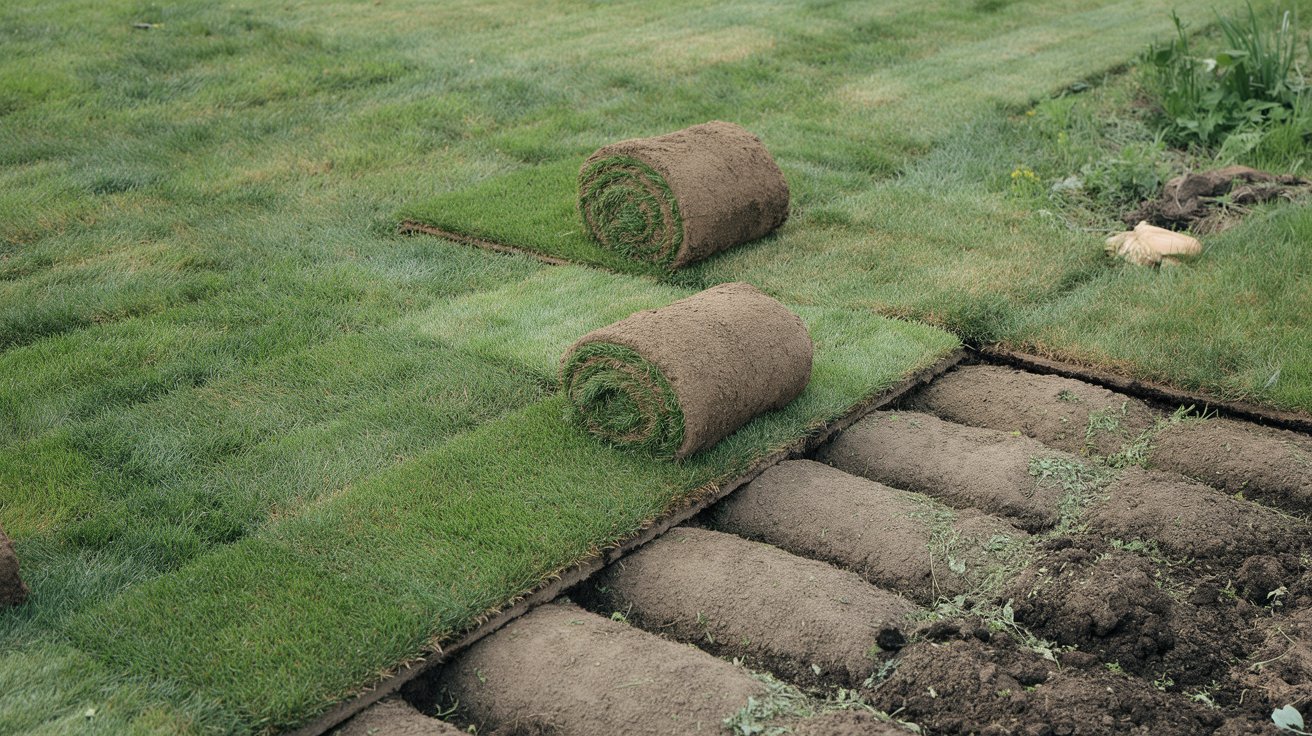
A new lawn comes down to one question: do you want grass now, or are you willing to wait for it? Sod rolls out a finished-looking lawn almost overnight, while seed builds that same coverage over weeks and months at a fraction of the cost.
Neither choice is wrong - they just suit different situations, schedules, and bank accounts.
The decision gets more complicated when you factor in your climate, soil condition, how much foot traffic the yard will take, and whether you have kids or pets who need the space usable soon.
Most homeowners are surprised by how wide the cost gap really is. seed cost is relatively minor compared to the full investment of a new lawn installation, yet sod can cost twenty times more per square foot before you count labor.
If you need a usable yard in a few weeks and the budget allows, sod is the straightforward answer.
If you can be patient and want to keep costs low, seed nearly always delivers better long-term value - especially when you match the grass type for your climate from the start.
Both sod and seed can produce a dense, healthy lawn — the difference is time and money. Sod delivers immediate cover but costs significantly more upfront.
Seed takes weeks to months to establish but is far cheaper and often produces a lawn better adapted to your specific soil.
Side-by-Side: Quick Comparison
Before going deep on numbers, it helps to see both options stacked against each other on the factors that matter most. Speed, cost, and upkeep tell most of the story for most homeowners.
Remember it later
Planning to try this recipe soon? Save it for a quick find later!
Sod provides immediate ground cover and can handle foot traffic within weeks, making it practical for yards that can't sit idle. Purdue's sod guide notes that sod's rapid establishment is one of its biggest advantages for high-use areas.
Seed costs less upfront but demands more consistent attention during the germination window. Skipping watering even once on a hot day can set back an entire seeding effort by weeks.
Sod often costs more due to material and installation, but that higher price also buys you a reduced interim maintenance burden - no bare patches to nurse, no erosion risk on slopes while you wait for roots.
You can also install sod yourself to cut labor costs significantly.
- Instant visual result — full coverage from day one, no patchy waiting period.
- Erosion control — the root mat holds soil immediately, critical on slopes.
- Fewer weeds early on — dense sod leaves little room for weed seeds to germinate.
- Traffic-ready fast — high-use areas can handle kids and pets within a couple of weeks.
- Much lower cost — seed installation can cost 10–20x less per square foot than sod.
- Grass variety choice — you select the exact species and mix for your soil, shade, and climate.
- Deeper root establishment — seed-grown lawns often develop more robust root systems over time.
- Better for large areas — seeding an acre is far more practical than sodding one.
Cost and Establishment Timeline
Numbers matter most when you're planning a budget. Seed and sod don't just differ in price - they differ in where the money goes and when you feel it.
Seed material is inexpensive. $0.02 to $0.10 per square foot covers most quality seed mixes, according to WVU Extension's lawn seed selection guide.
Labor and soil prep usually cost more than the seed itself.
| Factor | Seed | Sod |
|---|---|---|
| Material cost (per sq ft) | $0.02–$0.10 | $0.35–$0.85 |
| Installed cost (per sq ft) | $0.10–$0.30 | $0.80–$2.00 |
| Germination / Initial root | 7–21 days | 7–14 days |
| Usable lawn | 8–16 weeks | 2–4 weeks |
| Full density | Several months | 6–8 weeks |
| 1,000 sq ft total estimate | $100–$300 | $800–$2,000 |
Sod's installed cost range of $0.80 to $2.00 per square foot reflects both material and labor, with regional variation and grass type driving the spread.
Warm-season grasses like Bermuda or Zoysia - worth comparing in the Bermuda vs Zoysia breakdown - tend to cost more as sod than cool-season varieties.
Seed germination kicks off in 7 to 21 days when soil temperatures and moisture are right, per University of Minnesota Extension's seeding and sodding guide. Full density, though, can take several months depending on the grass species and growing conditions.
Sod can show usable cover within days to two weeks, but roots don't fully knit into the soil for another month or more. Foot traffic or mowing too early pulls up sod before it anchors.
If you want to see full regional pricing detail for sod, the sod installation cost guide breaks it down by grass type and square footage.
Grass type affects cost more than most people expect. Cool-season fescue sod typically runs cheaper than warm-season St. Augustine or Zoysia. Seed mixes for shade or high-traffic use also carry a price premium over basic turf-type seed.
Maintenance, Longevity, and Watering
Both options demand the most attention in the first few weeks. Get that window right and the rest of the lawn's life is relatively easy.
Get it wrong and you're reseeding or re-laying patches.
Seeded lawns need light, frequent watering during germination - often two to three times per day in warm weather to keep the seedbed consistently moist without washing seed away.
The University of Minnesota Extension germination moisture guide recommends keeping the top inch of soil damp at all times until seedlings reach mowing height.
Sod needs deep, heavy watering immediately after installation - at least 1 inch of water per day for the first two weeks - to drive roots into the soil below the sod layer.
Purdue Extension's sod establishment guide notes that shallow watering is the leading cause of sod failure.
Once both options are established - typically after 6 to 8 weeks for sod and 3 to 4 months for seed - maintenance evens out considerably. Both will need mowing every 5 to 7 days during peak growing season, fertilizing 2 to 4 times per year, and roughly 1 inch of water per week in dry periods.
A solid year-round maintenance plan keeps either lawn thriving long-term.
Don't mow a seeded lawn until grass reaches at least 3.5 inches tall — cutting too early uproots seedlings before they anchor. For sod, wait until you can't easily pull up a corner of the turf, usually 14 to 21 days after installation.
Best Use-Cases and Quick Decision Guide
Matching the method to the situation is what separates a successful lawn project from an expensive frustration. Here are the four scenarios that come up most often.
For budget-conscious homeowners with no urgency, seed is nearly always the better value. WVU Extension confirms that seed costs are minor relative to the rest of the project, and choosing the right mix for your soil pays off for years.
Wondering whether to overseed your existing lawn instead? The overseeding approach often costs even less than starting from scratch.
If your yard has deep shade, seed gives you far more species options than sod — most sod farms grow sun-tolerant varieties. Choose a fine fescue or shade-specific mix to avoid thin, struggling turf under tree canopies.
Choose seed. Seed costs 10-20x less per square foot than installed sod. Prep the soil well, pick the right species for your region, and you'll have a dense lawn in one growing season for a fraction of the price. Large lots (5,000+ sq ft) especially favor seed - sodding them becomes a major expense fast.
Choose sod. If you're selling a home, hosting an event, or simply can't look at bare dirt for months, sod delivers. You'll have a green, usable yard within two to four weeks. The Purdue Extension sod practicality notes confirm rapid establishment is sod's standout advantage over seed.
Choose seed. Sod farms grow primarily sun-tolerant species, giving you little flexibility in shaded areas. Seeding lets you choose a shade-specific mix - fine fescues are the standard recommendation for low-light conditions. Check out the grass selection resources on our lawn care hub for species-by-shade breakdowns.
Choose sod for fast use; seed for long-term toughness. Sod handles foot traffic within weeks, making it better for yards with kids or pets who can't stay off the grass. If you're willing to wait three months, seeded turf-type tall fescue or Bermuda can develop a root system that withstands heavy use just as well - sometimes better.
If neither sod nor seed fits your situation, it's worth reviewing natural vs artificial grass or pricing out synthetic turf installation as a zero-maintenance alternative, especially for low-rainfall regions.
For ongoing upkeep costs after installation, professional lawn service pricing helps you plan the full annual budget.
Frequently Asked Questions
Grass seed germinates in 7–21 days, but full density typically takes 8–16 weeks. Cool-season grasses like fescue establish faster in fall; warm-season grasses like Bermuda peak in late spring.
No — seed wins in shade. Most sod farms grow sun-tolerant species only. Seeding lets you choose fine fescue blends specifically bred for low-light performance under trees.
Hydroseeding sprays a slurry of seed, mulch, and fertilizer onto prepared soil. It costs roughly $500–$1,000 per 1,000 sq ft — faster than dry seeding, far cheaper than sod.
Water lightly 2–3 times per day during germination to keep the top inch of soil consistently moist. Reduce to once daily after seedlings reach 1 inch tall.
Turf-type tall fescue handles heavy foot traffic well in cool climates. In warm climates, Bermuda grass recovers the fastest from wear and is the standard choice for sports fields.
Pin it for your next sod vs seed: which is better for your lawn? project.