A fence isn't a one-time purchase - it's a 20-to-30-year financial commitment that shows up every time you mow, paint, or call a repair crew.
Most homeowners compare sticker prices and stop there, which is exactly how they end up paying more in the long run.
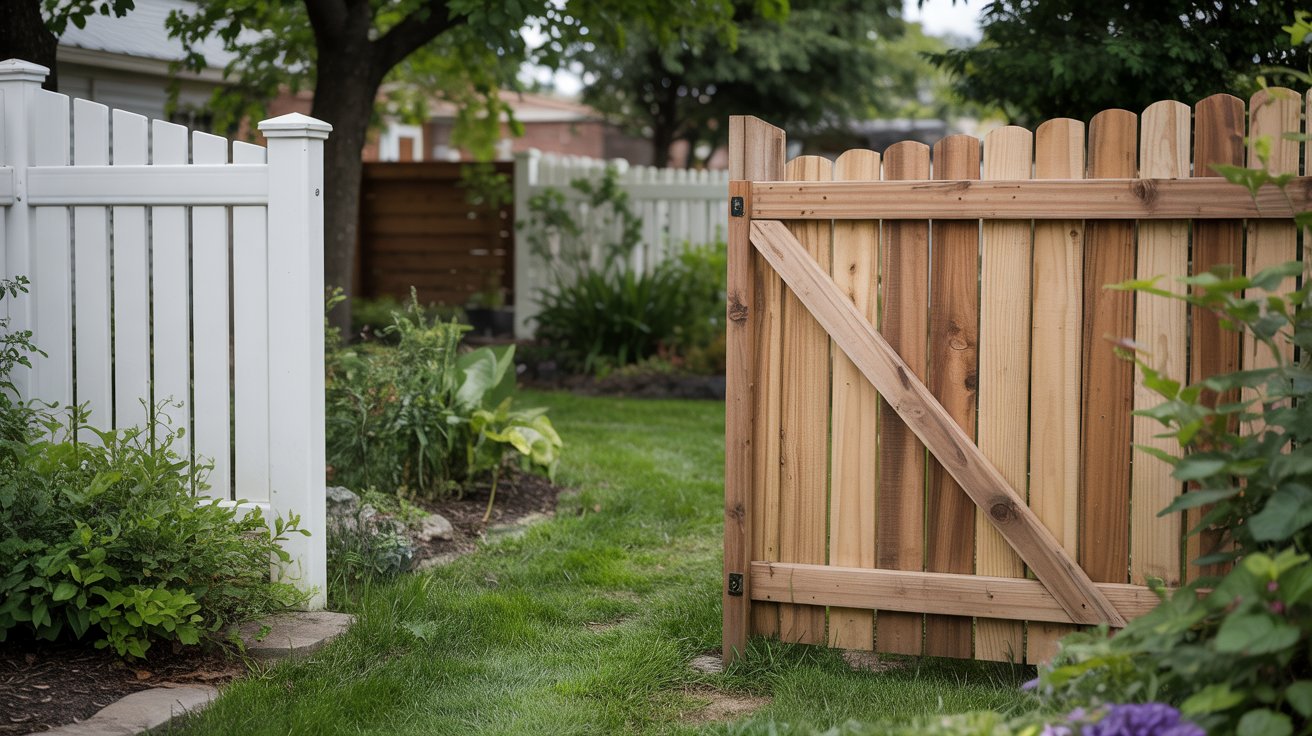
Vinyl and wood fences sit at opposite ends of the maintenance spectrum. Wood costs less upfront but demands consistent upkeep.
Vinyl costs more to install but largely takes care of itself.
The right answer depends on your budget, your climate, and how much weekend time you're willing to spend on a fence.
This guide gives you the full fence cost breakdown - upfront, annual, and across the full ownership horizon - so you can make a decision you won't regret a decade from now.
We've also included a side-by-side durability comparison, a climate-aware installation guide, and a buying checklist to use when you're ready to get quotes.
Over a 20-year period, vinyl fencing typically costs less in total than wood once maintenance is factored in. Wood fencing wins on upfront price and natural aesthetics.
Vinyl suits low-maintenance homeowners; wood suits those prioritizing curb appeal or working with a tight initial budget.
Bottom Line Verdict
Wood fencing is the cheaper option on day one, but that advantage narrows fast. A basic pressure-treated wood privacy fence runs $10-$30 per linear foot installed, while vinyl typically costs $20-$40 per linear foot installed.
Remember it later
Planning to try this recipe soon? Save it for a quick find later!
On a standard 150-foot yard, that's a gap of roughly $1,500-$3,000 upfront.
That gap closes within the first decade. Wood requires staining or sealing every 2-3 years, and boards can rot or warp - especially in humid or coastal climates - adding repair costs that vinyl largely avoids.
Vinyl wins the long-game comparison for most homeowners. According to the USU Extension fencing guide, vinyl materials run around $5 per foot with roughly $3.50 per foot in labor - and ongoing maintenance costs stay very low after that initial install.
Wood wins on upfront affordability and on aesthetics for homeowners who prefer a natural, customizable look. It also wins for those who plan to stay fewer than 10 years, since the lower purchase price isn't offset by long-term maintenance savings in a short ownership window.
If you're budgeting for other backyard projects - like composite decking installation - factor the fence's long-term costs into your total landscape budget from the start.
Cost Showdown: Upfront vs Lifetime
Installation price is only part of the story. Over 20 years, a wood fence on a 150-foot lot will typically require 6-8 stain or seal applications, periodic board replacements, and at least one full post repair.
Those costs add up to $2,000-$5,000 in maintenance on a mid-size yard.
Vinyl's maintenance footprint is minimal by comparison. An annual rinse with a garden hose and the occasional panel replacement if something cracks is about all you'll spend.
Total 20-year maintenance for vinyl typically runs under $500 for the same yard size.
| Cost Category | Vinyl | Wood |
|---|---|---|
| Initial Install | $3,000–$6,000 | $1,500–$4,500 |
| Annual Upkeep (avg/yr) | $25 | $175–$300 |
| Board/Panel Repairs (20 yr) | $100–$300 | $400–$1,200 |
| Post Repairs (20 yr) | $0–$200 | $300–$800 |
| 20-Year Total | $3,500–$7,000 | $4,500–$11,000 |
The table above shows that wood's lower install cost can be completely erased - and then some - by year 12 to 15. Homeowners in wet climates or coastal zones will hit that crossover point even faster due to accelerated rot and paint wear.
You can find more detail on how fencing fits into broader patio vs deck planning budgets if you're mapping out a full backyard renovation.
For fast material sourcing, checking out fencing tools and equipment before getting quotes can help you identify what contractors should supply versus what you source yourself.
One often-overlooked cost for wood is post failure. Even pressure-treated posts set in concrete can begin to rot at ground level after 10-12 years, especially in clay soils that retain moisture.
Replacing two or three posts runs $200-$600 including labor - a cost vinyl owners rarely face.
For context on how these numbers compare to other outdoor projects, our guide to installing a paver walkway breaks down similar labor-to-material ratios.

Durability and Maintenance
Vinyl's biggest selling point is its resistance to the things that destroy wood fences. It doesn't rot, doesn't attract termites, and won't absorb moisture.
However, as the Iowa DNR fencing publication notes, vinyl is not as structurally strong as wood - meaning post design and installation depth matter significantly for long-term performance.
Wood is vulnerable on multiple fronts. Moisture causes rot, ground contact accelerates it, and insects can hollow out posts within a few years in warm humid climates.
Regular sealing slows these processes but doesn't stop them.
Vinyl does have one notable weakness: UV-related brittleness over time. In extreme heat climates - think Arizona or southern Texas - low-grade vinyl panels can become fragile after 15+ years and crack on impact.
Spending more on thicker-walled, UV-stabilized vinyl panels dramatically reduces this risk.
| Timeline | Vinyl | Wood |
|---|---|---|
| Year 1–3 | Annual rinse only | Seal or stain once; check posts |
| Year 4–7 | Inspect panel locks; rinse | Re-stain; replace warped boards |
| Year 8–12 | Check post depth; rinse | Likely 1–2 post repairs; re-seal |
| Year 13–20 | Replace cracked panels if needed | Major overhaul or full replacement |
Wood fence longevity in coastal climates drops sharply. Salt air accelerates moisture absorption and paint breakdown, pushing typical wood lifespan down to 10-12 years versus 15-20 in dry inland zones.
Vinyl holds up significantly better at the coast, though you should still rinse salt deposits off panels twice a year.
Cheap vinyl panels under 0.150 inches thick can crack in cold climates when temperatures drop below -10°F. Always ask contractors for panel wall thickness specs before signing a contract.
Wood's one durability advantage is structural strength. It handles physical impact - wind loading, kids, falling branches - better than standard vinyl.
If you live in a high-wind zone, wood or a hybrid post system (wood posts with vinyl panels) is worth considering. The same comparison logic applies to composite vs wood decking, where material strength under load is a recurring trade-off.
Installation and Aesthetics: What to Expect in Different Climates
Wood is the easier DIY material. It cuts with standard tools, installs in familiar ways, and errors are easy to fix with an extra board.
Vinyl panel systems require precise post spacing - usually 6 or 8 feet on center - and misaligned posts can make panels impossible to seat properly.
Both materials need posts set at least one-third of total post length into the ground, typically 2-2.5 feet deep for a 6-foot fence.
In frost-prone zones, posts must go below the frost line - usually 36-48 inches in USDA Zone 5 and colder - or heaving will displace them within a few winters.
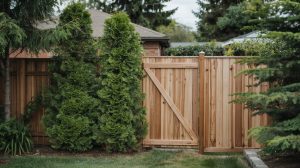
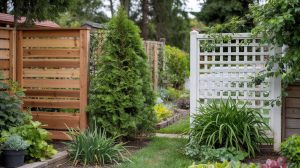
Aesthetically, wood remains the more flexible option. You can paint it any color, stain it to match your home's trim, or let it weather to a natural gray.
Vinyl comes in a limited palette - mostly white, tan, and gray - though woodgrain-embossed vinyl panels have improved significantly and privacy fence vs hedge comparisons often favor vinyl for low-visual-maintenance appeal.
In humid southeastern climates, choose vinyl with aluminum reinforcement inside the posts. Standard hollow vinyl posts flex under wind load and loosen at ground level within 5–7 years in wet soil conditions.
The USU Extension guide confirms that vinyl's visual appeal and low upkeep make it a strong alternative to wood in farm and residential settings alike, provided cost-per-foot comparisons are calculated over the full ownership period.
In dry western climates, vinyl's UV resistance and near-zero maintenance make it the dominant choice for privacy fencing.

Buying Guide: What to Ask and How to Quote
Getting accurate quotes means knowing what to ask before a contractor shows up. Most homeowners focus only on price per foot - but the quality of posts, the panel wall thickness, gate hardware, and warranty terms all affect what you're actually buying.
Use this checklist when evaluating contractors or shopping materials. For larger backyard budgets that include hardscaping, our guide to concrete vs pavers covers similar vetting questions for surface materials.
If lighting is part of your plan, outdoor lighting pricing is worth reviewing alongside your fence budget.
If you're choosing strictly on budget, wood wins below $15/ft installed. Above that, the lifetime cost gap narrows quickly and vinyl becomes the better value.
For a full budget comparison on outdoor surface projects, our stamped concrete vs pavers guide uses the same lifecycle cost method.
Frequently Asked Questions
Vinyl outlasts wood significantly in coastal climates. Salt air degrades wood paint and accelerates rot, cutting typical wood lifespan to 10–12 years versus vinyl's 20–25 years in the same conditions.
Most vinyl fencing is made from PVC, which is technically recyclable but not accepted in standard curbside programs. Specialty PVC recyclers and some fence manufacturers offer take-back programs for old panels.
Yes — vinyl typically costs $20–$40 per linear foot installed versus $10–$30 for wood. However, vinyl's near-zero maintenance cost offsets that gap within 10–15 years for most homeowners.
In humid climates, rinse vinyl panels twice a year and inspect post bases for soil shifting. Mold or mildew on panels wipes off with a diluted bleach solution — no repainting or sealing needed.
Most quality vinyl fence brands offer lifetime limited warranties covering cracking, peeling, and color fading. Warranties typically exclude damage from impact, improper installation, or acts of nature.
Pin it for your next vinyl vs wood fence: cost and durability project.