Choosing between drip irrigation and a sprinkler system isn't just about water - it's about matching delivery method to landscape type, climate, and budget. Get that match right and you'll cut water bills, reduce plant stress, and spend less time troubleshooting a poorly suited system.
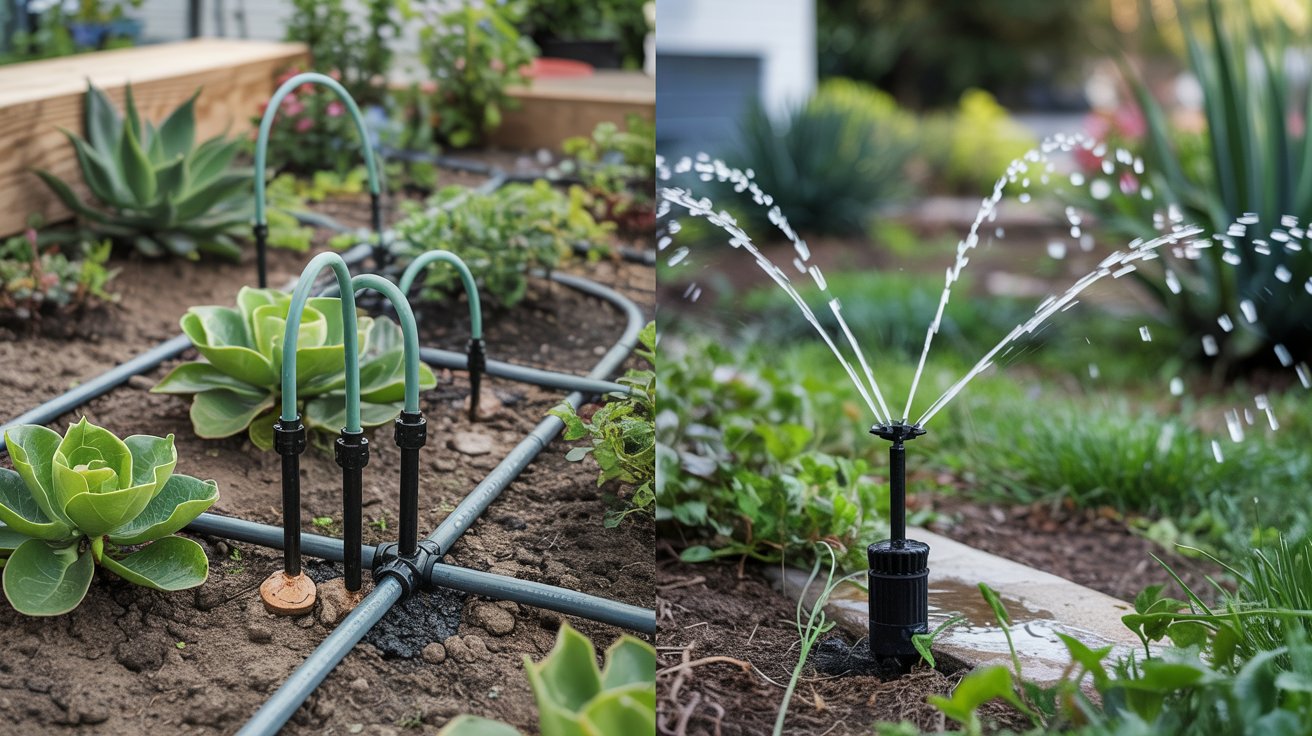
Drip irrigation sends water slowly and directly to the root zone, almost eliminating runoff and evaporation. Sprinklers broadcast water overhead across a wide area, making them fast and effective for uniform turf but less precise for mixed plantings.
The efficiency gap between the two is real. drip application rates commonly run 80%-95% efficient, while sprinkler systems land between 60% and 80% depending on head type and spacing.
That difference compounds quickly in drought-prone regions or where water restrictions apply.
If your yard is mostly open lawn, sprinklers often make more practical sense - they cover ground fast and zone easily. For garden beds, trees, or any mixed landscape, microirrigation research consistently shows drip delivering water more precisely where plants need it most.
This comparison covers how each system works, what each costs to install and maintain, and which fits specific landscape types - including a hybrid approach for yards that need both.
You'll also find a look at emitter spacing and flow rate tradeoffs worth considering before you buy.
Drip irrigation wins for garden beds, trees, and drought-prone landscapes with 80%–95% efficiency. Sprinkler systems suit large lawns and uniform turf, covering ground quickly with 60%–80% efficiency.
Upfront costs vary widely: drip installs run lower per zone, while full sprinkler systems average around $2,500.
Drip vs Sprinkler: The Details
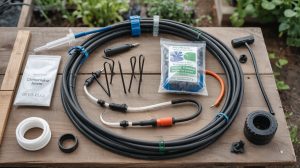
Drip irrigation uses a network of tubing, emitters, and sometimes inline tape to deliver water at low pressure directly to the soil surface or root zone.
Remember it later
Planning to try this recipe soon? Save it for a quick find later!
Flow rates are measured in gallons per hour rather than per minute, and that slow delivery lets soil absorb moisture before it can run off or evaporate.
Sprinkler systems pressurize water through risers and spray heads or rotors, distributing it in arcs across the surface. A well-designed rotary head system can cover several thousand square feet per zone, making it the practical standard for residential lawns.
Wind is a serious problem for sprinklers. Even a light breeze shifts spray patterns, creating dry patches and wasting water on driveways or sidewalks.
Drip tubing sits at or below the soil surface, so wind has almost no effect on distribution.
Soil type shapes how each system performs. Sandy soils drain quickly and benefit from the slow, steady output of drip emitters.
Heavy clay soils can pool under fast-moving sprinkler heads, causing runoff before water reaches the root zone. Drip's low application rate gives clay time to absorb.
Maintenance demands differ sharply. Run-time planning for drip requires more precision than sprinkler scheduling - under-watering is harder to spot because the soil surface may look dry while emitters deliver adequate moisture below.
Sprinkler systems are easier to audit visually: you can watch heads operate and catch coverage gaps immediately.
Fertilizer delivery - called fertigation - is a clear drip advantage. Because water goes directly to the root zone, soluble nutrients travel with it efficiently.
According to University of Florida EDIS research, drip irrigation improves both water and fertilizer use efficiency, though management quality determines how much of that potential is realized.
For garden beds and individual trees, drip wins on nearly every metric except initial setup complexity. For a half-acre lawn that needs uniform coverage fast, a well-zoned sprinkler system remains the more practical tool.
Costs, Installation, and Maintenance
Upfront costs vary more than most buyers expect, driven by yard size, soil conditions, local labor rates, and system complexity.
A basic drip setup for a small garden bed can cost under $100 as a DIY project; a professionally installed multi-zone sprinkler system for a mid-size yard routinely runs $1,700-$3,500.
According to sprinkler system cost data, the national average for a fully installed in-ground sprinkler system lands around $2,539, with per-square-foot costs ranging from $0.20 to $1.00 depending on zone count and head type. Drip systems for a quarter-acre often quote out at $450-$650 installed.
You can see a fuller breakdown of what drives sprinkler pricing in our total sprinkler installation cost guide.
Per-zone costs for sprinklers typically run $200-$400 per zone professionally installed, while drip zones are generally less expensive to add once the mainline is in place. A three-zone drip system covering garden beds and trees can come in well under $1,000 installed.
ROI depends on how much water each system wastes. In areas charging $0.005-$0.01 per gallon, a drip system covering 2,000 square feet that reduces outdoor water use by 30% can recoup installation costs within two to four growing seasons.
Regional water pricing makes a significant difference - arid Southwest markets accelerate payback considerably.
Annual maintenance costs are another variable. Drip systems require periodic filter cleaning, emitter replacement, and pressure checks - budget roughly $50-$150 per year for parts on a mid-size residential system.
Sprinkler systems need annual blow-outs in freezing climates, typically costing $75-$150 per service visit. If you're pairing either system with a rain barrel for supplemental collection, our guide to rain barrel options covers compatible setups.
Labor represents the largest cost variable for both systems. Trenching for in-ground sprinkler pipe in rocky or compacted soil adds substantially to quotes.
Drip systems avoid most trenching, with main supply lines running above ground or just below the mulch layer - which also simplifies future repairs.
Best Use Scenarios: Climate and Landscape
No single system fits every property. The right choice depends on what you're watering, how your climate behaves, and whether water restrictions are a regular reality in your area.
A simple framework helps: match the system to the plant type and coverage need, not just the yard size.
The EPA WaterSense program reinforces that efficiency gains are only as good as the system design - poorly spaced sprinkler heads or incorrectly sized drip emitters undercut any efficiency advantage before water even hits the soil.
Best choice: Drip. Small urban lots typically feature raised beds, container gardens, and foundation plantings rather than open turf. Drip handles these well at low cost and conserves water where municipal rates are highest. A basic drip kit covering 200-500 sq ft installs in a few hours and often costs under $150 DIY. If you want to compare targeted delivery options, see our breakdown of soaker hose vs drip emitter differences.
Best choice: Hybrid. A mid-size yard with lawn, beds, and trees is where a combined approach earns its cost. Run a dedicated drip zone for beds and trees, and use low-precipitation rotary heads for turf. This keeps each plant type on an appropriate schedule and avoids the common mistake of overwatering trees with sprinkler heads designed for turf. UC ANR efficiency data confirms that system design decisions at the zone level matter as much as system type.
Best choice: Sprinklers. A large open lawn - anything above roughly 5,000 sq ft of continuous turf - is where sprinklers win on coverage speed and zone economics. Multi-stream rotary heads reduce application rate compared to fixed spray heads, improving uniformity. For a look at coverage performance across head types, our guide to lawn sprinkler coverage compares real-world options.
Best choice: Drip, with smart controller. In arid or semi-arid climates where water restrictions apply seasonally, drip's efficiency advantage is amplified. Pair a drip system with a weather-based smart controller and you can cut outdoor water use dramatically. This setup also positions your garden well for summer heat management - pairing with good mulching practices (see our guide to mulching garden beds) extends soil moisture between irrigation cycles.
For anyone starting fresh, a useful first step is to audit your landscape by plant type and group: turf in one zone, shrubs and beds in another, trees in a third. That zoning logic applies whether you ultimately choose drip, sprinklers, or both.
Our broader overview of irrigation and watering tools covers zone controllers and timers that work across both system types.
Maintenance, Common Issues, and Troubleshooting
Both systems reward consistent attention and punish neglect quickly. A clogged emitter in a drip line can silently under-water a mature tree for weeks before the damage shows.
A broken sprinkler head wastes hundreds of gallons in a single cycle while leaving a dry arc in your lawn.
According to Penn State Extension's work on trickle irrigation efficiency, system integrity and routine maintenance are the primary factors separating high-performing drip installations from wasteful ones. Similarly, USGS microirrigation guidance notes that proper design and ongoing care are essential to minimize evaporation losses.
These aren't just best-practice suggestions - they're the difference between the advertised efficiency numbers and what your system actually delivers.
- Inspect drip filters monthly during the growing season - flush or replace mesh filters every 4-6 weeks in areas with hard water or sediment.
- Test sprinkler coverage quarterly by running each zone and walking it to catch dry arcs, overspray onto pavement, or stuck rotors.
- Winterize in-ground sprinklers before the first hard freeze - compressed air blow-outs (20-50 PSI per zone) prevent cracked pipes and heads.
- Check emitter output annually by placing a small container under a drip emitter and timing flow - a 1 GPH emitter should deliver about 1 oz every 3.6 minutes.
- Flush drip mainlines at the start of each season by briefly opening end caps to clear sediment before re-capping.
- Don't ignore pressure changes - a sudden drop often signals a line break; a spike can blow emitters off fittings and saturate a single spot.
- Don't skip root zone checks in drip systems - tree roots can intrude into emitter lines within 2-3 seasons if inline root barriers aren't used.
- Don't set and forget the timer - seasonal ET rates change; a summer schedule left running into fall overwatered lawns and invites fungal disease.
- Don't mix head types on one zone - pairing fixed spray heads (1.5 in/hr) with rotary heads (0.4 in/hr) on the same zone guarantees uneven distribution.
For anyone setting up a new drip system, learning the layout upfront saves hours later. Our walkthrough on how to set up drip irrigation covers emitter placement and pressure regulator sizing in practical terms.
If you're selecting components for the first time, our roundup of drip irrigation kits worth buying narrows the field considerably. And when working in the garden generally, a good pair of durable garden gloves makes handling tubing and emitter fittings easier.
For seasonal context on keeping both systems running through heat stress, the summer garden maintenance checklist includes irrigation adjustments worth reviewing.

Frequently Asked Questions
Drip irrigation is the most efficient method, delivering 80%–95% of water directly to the root zone with minimal evaporation or runoff compared to sprinklers at 60%–80%.
Yes. Drip delivers water at low pressure directly to the root zone, reducing foliar disease risk and fertilizer waste — both common problems when sprinkler heads water trees and beds.
Switching from sprinklers to drip can reduce outdoor water use by 30%–50% annually. For an average household using 100,000 gallons per year outdoors, that's 30,000–50,000 gallons saved.
Drip systems require monthly filter flushing, annual emitter output testing, and root intrusion checks every 2–3 seasons — tasks sprinkler systems don't need at the same frequency.
Yes — a hybrid approach is practical and common. Keep drip and sprinkler on separate zones with separate schedules; they should never share a zone due to incompatible pressure and flow requirements.
Pin it for your next drip irrigation vs sprinkler system project.