Choosing between a metal raised bed and a wood raised bed comes down to more than aesthetics.
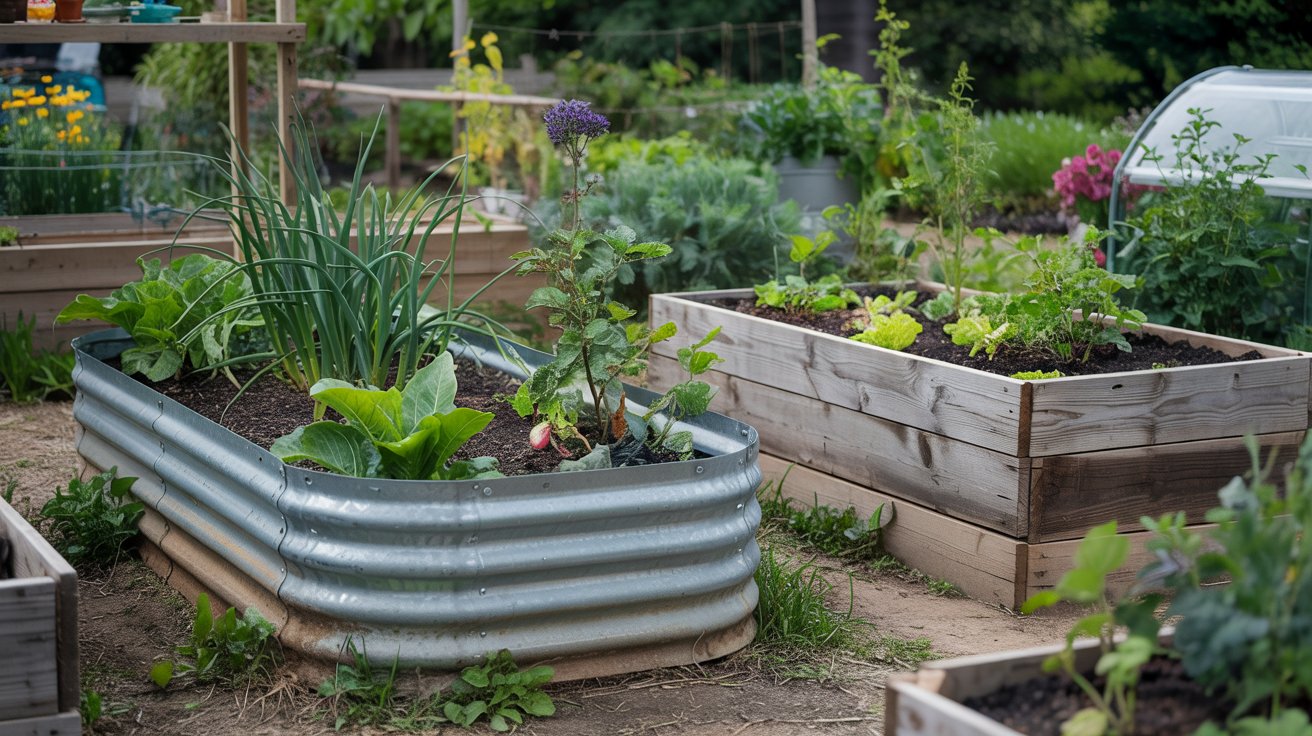
Your climate, budget, how long you plan to garden in one spot, and whether you need an accessible height all play a role in which material actually works for you.
This comparison covers the four most common options: galvanized steel, corrugated metal, cedar or redwood, and pressure-treated lumber. Each has a distinct cost profile, lifespan, and set of trade-offs worth understanding before you buy.
According to raised bed material guidance from the University of Minnesota Extension, galvanized steel is one of the most durable choices available, and a bed built at roughly 27 inches tall works well for wheelchair users and gardeners with limited mobility.
Wood remains popular because it's familiar, easy to cut on-site, and widely available. Metal beds have grown fast in the market because they hold their shape, resist rot completely, and often look cleaner in a modern yard.
Both metal and wood raised beds grow great vegetables, but they differ sharply in upfront cost, lifespan, and heat management. Metal wins on longevity; wood wins on initial affordability and cooler soil temperatures in hot climates.
Head-to-Head: Metal vs Wood
Side by side, metal and wood beds differ most on three fronts: how much you spend at the start, how long the bed lasts, and how the material behaves in extreme heat or wet climates.
Remember it later
Planning to try this recipe soon? Save it for a quick find later!
Neither material is universally better - but for most U.S. home gardeners, one will fit the situation more cleanly than the other.
According to a metal vs wood bed breakdown from DripWorks, metal generally requires a higher upfront investment, while wood is cheaper to source and easier for DIYers to build from scratch. That cost gap matters most for first-time gardeners testing the hobby before committing.
Metal beds have thinner walls than wood, which actually recovers a few extra inches of growing space in small plots. A corrugated steel panel is typically 1-2 mm thick versus a 2×6 or 2×8 board that eats 1.5-3.5 inches per side.
Wood wins on soil temperature in summer. In a hot-climate garden - think Texas or Arizona - bare metal sidewalls can push soil temperatures near the edges several degrees higher than ambient air.
That extra heat can stress shallow roots in July and August. Pairing a metal bed with good raised bed soil mix adds organic buffer and helps moderate temperature swings.
If accessibility is a priority, metal beds are available in modular heights and stack easily to reach that 24-30 inch range, while wood beds require more carpentry to achieve the same custom height.
For a full comparison of metal alloy options, the aluminum vs steel trade-offs guide covers gauge, weight, and rust risk in detail.
Costs and Lifespan by Material
Breaking out cost by specific material shows how wide the range really is. A basic pressure-treated lumber bed and a premium galvanized steel kit are both "raised beds," but they sit at opposite ends of both the price spectrum and the longevity spectrum.
Cedar and cypress are the wood species most often cited for rot resistance in raised bed applications. The University of Illinois Extension raised bed gardening guide confirms cedar and cypress as practical choices for longevity without chemical preservatives.
Expect 10-20 years from a well-built cedar bed before boards need replacing.
Galvanized steel is the clear longevity winner. University of Minnesota Extension notes that rust resistance in galvanized steel can last upwards of 50 years under typical garden conditions, making it the lowest cost-per-year option over a full gardening lifetime.
Pressure-treated lumber sits at the low end of upfront cost, but HGTV's cedar vs treated wood comparison notes that treated wood generally outlasts untreated wood - though leaching considerations apply and need to be weighed for food gardens.
Typical lifespan for pressure-treated beds is 15-25 years depending on moisture exposure.
Redwood performs similarly to cedar but costs more in most U.S. regions due to limited regional supply. If you're still weighing cedar against treated lumber specifically, the cedar vs pressure-treated decision guide breaks down safety, longevity, and regional pricing side by side.
- Galvanized steel: Highest upfront cost, lowest long-term cost. Best for permanent beds you won't move for decades.
- Corrugated metal: Slightly cheaper than steel kits; lighter to handle. Watch for thinner-gauge panels that dent more easily.
- Cedar / redwood: Natural rot resistance without chemical concerns. Costs more than pine but lasts 2-3× longer without treatment.
- Pressure-treated lumber: Lowest entry price. Modern ACQ-treated wood uses copper as a preservative - not arsenic - but some leaching into soil is still possible.
For a detailed breakdown of what a raised bed actually costs including soil, hardware, and installation, that guide covers full project budgets by bed size.

Durability, Safety, and Environmental Considerations
Material safety questions come up most often around two scenarios: zinc from galvanized steel in acidic soil, and copper or other preservatives leaching from treated lumber. Both risks are real but manageable with straightforward precautions.
Oregon State University Extension's guidance on treated wood in raised beds flags copper-based preservatives as a soil interaction concern, particularly for long-term food production.
Lining the interior of a treated wood bed with heavy-mil plastic sheeting is the most common mitigation - it blocks direct contact between soil and treated lumber while still allowing drainage at the bottom.
Zinc leaching from galvanized steel is mainly a concern in highly acidic soils (pH below 5). Most garden soils run between pH 6 and 7, where zinc release is minimal. Test your soil pH before worrying about liners in a metal bed.
University of Minnesota Extension confirms that zinc leaching from galvanized metal becomes relevant primarily below pH 5 - a level uncommon in most amended garden beds. If your native soil is acidic, a food-safe liner or a few inches of buffer mix solves the issue.
Good compost and soil management also keeps pH in the safe range naturally.
The Illinois Extension raised bed checklist recommends a minimum depth of 12-18 inches for most vegetables to allow adequate root growth - a spec that applies regardless of whether you use metal or wood walls.
Deep-rooted crops like carrot root development benefit most from the full 18-inch depth.
On climate durability, metal handles wet Pacific Northwest conditions better than wood. Wood handles intense desert sun better than bare metal, where side panels can reach temperatures that stress roots close to the wall.
In high-humidity zones, untreated pine can start rotting within 3-5 years, making the jump to cedar or metal a worthwhile investment.
When deciding between metal options in more detail, comparing top-rated raised bed models by material and build quality helps narrow the field before purchase.
If you're also weighing whether a raised bed is right for your setup at all, the raised bed vs in-ground comparison covers soil prep, yield, and cost differences clearly.
For container gardeners wondering whether a raised bed or a large planter is the better fit for a patio or balcony, the raised bed vs container depth guide addresses drainage, volume, and portability trade-offs directly.
And if you've settled on a raised bed and want to know what to grow in it first, the list of high-yield raised bed vegetables gives a practical starting point by season.
Frequently Asked Questions
Yes, in most cases. Zinc leaching only becomes a concern below soil pH 5. Standard amended garden soil runs pH 6–7, where galvanized steel poses negligible risk to edible crops.
Metal lasts significantly longer. Galvanized steel resists rust for 20–50+ years. Cedar typically lasts 10–20 years before boards need replacement, even with proper drainage.
Yes, noticeably so in hot climates. Metal sidewalls conduct heat directly into edge soil. Wood insulates better, keeping root-zone temperatures more stable during summer heat spikes.
Modern ACQ-treated lumber uses copper preservatives, not arsenic. Oregon State University Extension recommends lining the interior with heavy-mil plastic to limit soil contact for food production.
University of Minnesota Extension cites roughly 27 inches as a comfortable height for wheelchair users. A 12–18 inch minimum depth inside the bed also ensures adequate root room for most vegetables.
Pin it for your next metal vs wood raised garden bed project.