Most gardeners pick up whichever bag of mulch looks good at the garden center and move on. That works until you're hauling a fresh load back to the same bed two summers in a row, wondering why the weeds never quit.
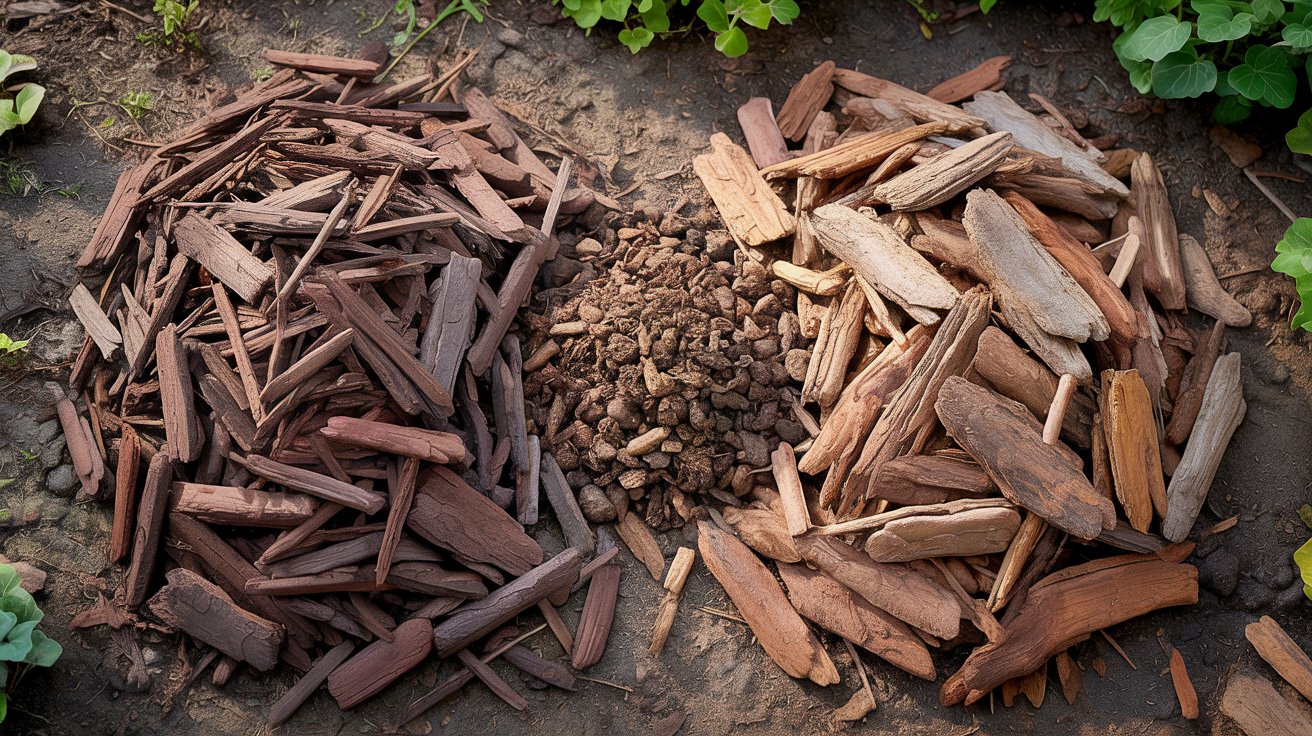
Hardwood and softwood mulch behave very differently once they hit the ground. One lasts up to four years; the other may need refreshing every twelve months.
The difference comes down to wood structure. Lignin content drives how fast a mulch breaks down, how well it holds moisture, and how much maintenance your beds actually need over a three-to-five-year window.
Understanding which mulch fits your situation saves real money and labor. This comparison anchors every claim in university extension research so you can shop and plan with confidence.
For most established beds, hardwood mulch wins on durability and weed suppression, lasting 2–4 years before a refresh. Softwood mulch costs less upfront and suits decorative or short-cycle beds where annual refreshing is acceptable.
Soil pH is rarely a real concern with either type.
Verdict at a Glance: Hardwood vs Softwood Mulch
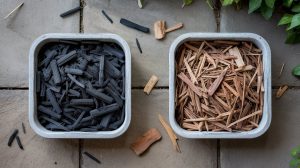
Hardwood mulch - made from oak, maple, hickory, and similar dense-grained species - lasts longer because it carries more lignin, the structural compound that resists microbial breakdown.
Remember it later
Planning to try this recipe soon? Save it for a quick find later!
Oregon State Extension confirms that bark mulch typically lasts 2-4 years, while wood-chip mulch breaks down in 1-2 years.
Softwood mulch - pine bark, cedar, fir, and similar species - decomposes faster partly because particle size tends to be smaller and lignin content is lower. It's cheaper at the register but costs more in labor over a five-year stretch of annual reapplication.
The nitrogen tie-up concern applies to both types. OSU mulching guidance notes that woody mulches can tie up nitrogen in the top soil layer during decomposition - a manageable issue with modest fertilization, not a reason to avoid either type.
One myth we can retire: pine mulch does not meaningfully acidify your soil. UNH Extension research shows that typical garden soils buffer pH effectively, so pine mulch won't drop your pH in any measurable way for most beds.
Cost and Value: Hardwood vs Softwood Mulch
Price varies by region, volume, and whether you're buying bagged or bulk. For most homeowners, bulk delivery cuts cost by 30-50% compared to bagged product from a big-box store.
Hardwood mulch runs around $40 per cubic yard at many suppliers, according to Bob Vila's cost guide. Installed pricing - including delivery and labor - typically lands in the mid-$40s to mid-$70s range depending on your market and order size.
Softwood options like pine bark or cedar chips generally run $10-$20 per yard cheaper at the source. Over five years, though, that savings can evaporate if you're refreshing softwood beds twice as often as hardwood ones.
To compare your total spend before buying, check annual mulch cost estimates for both types.
| Mulch Type | Bagged (per cu ft) | Bulk (per cu yd) |
|---|---|---|
| Hardwood bark | $5–$8 | $40–$75 |
| Pine bark (softwood) | $4–$7 | $25–$55 |
| Cedar (softwood) | $5–$9 | $30–$60 |
| Shredded hardwood | $4–$6 | $35–$65 |
For beds with perennial vs. annual plantings, the math shifts. Perennial beds with hardwood mulch pay back the higher upfront cost within two refresh cycles.
Durability and Decomposition: How Fast Do Mulches Break Down?
Decomposition speed is the core practical difference between these two mulch families. Lignin content - the tough structural polymer in woody plants - is the primary driver.
Hardwood species pack more of it, so soil microbes work slower through the material.
OSU Extension mulch research confirms that bark mulch needs reapplication every 2-4 years while wood-chip mulch requires refreshing every 1-2 years. Coarser particle size also resists compaction, which keeps air and water moving through the mulch layer longer.
| Factor | Hardwood Mulch | Softwood Mulch |
|---|---|---|
| Lignin content | High | Moderate |
| Particle size (typical) | Medium–coarse | Fine–medium |
| Reapplication cadence | Every 2–4 years | Every 1–2 years |
| Moisture retention | Strong | Moderate–strong |
| Compaction resistance | Good | Moderate |
| Weed suppression duration | Long | Short–medium |
Moisture retention benefits both types, but coarser hardwood mulch holds that advantage longer. Colorado State Extension notes that coarser mulches outperform fine ones for sustained moisture retention and do not create the long-term nitrogen deficits that some gardeners fear.
The nitrogen tie-up issue is real but limited. When microbes break down woody mulch, they temporarily draw nitrogen from the top inch or two of soil.
Established plants with deeper root systems rarely suffer. New transplants and seedbeds are more vulnerable - a light nitrogen fertilizer applied before mulching removes the risk.
If you're mulching a new bed with softwood chips, scratch in a balanced granular fertilizer before laying the mulch. This offsets the temporary nitrogen draw-down during early decomposition and keeps new transplants from yellowing.
Softwood mulch does have one durability edge in wet climates: pine bark resists matting better than shredded hardwood in high-rainfall zones. Shredded hardwood can form a crust if applied too thick, which slows water penetration.
Staying at 3 inches or less prevents this with either type.
For a side-by-side look at how organic mulch stacks up against a permanent option, see mulch vs. rock landscaping - durability math changes significantly when rock is in the mix.
Quick Use-Case Guide for Choosing Mulch
OSU's mulching guide confirms that bark-based hardwood mulches suit long-term beds best - they resist decomposition longer and maintain weed suppression through more growing seasons without intervention.
Softwood mulch earns its place in decorative beds where you want to refresh color and texture annually anyway, or where budget is the binding constraint. Learn how to apply mulch correctly regardless of type to maximize whatever you buy.
| Scenario | Best Choice | Reason |
|---|---|---|
| Long-term perennial beds | Hardwood bark | 2–4 yr lifespan, strong weed control |
| Decorative annual beds | Softwood/pine bark | Lower cost, annual refresh is acceptable |
| Edible garden paths | Wood chips (either) | Biodegrades into soil safely over time |
| Tight budget, large area | Softwood bulk | Lowest upfront cost per yard |
| High weed pressure | Hardwood bark | Denser layer, slower breakdown |
In arid climates (USDA zones 7–10), OSU extension recommends considering inorganic mulches for the longest-lasting weed suppression where water conservation is critical. Organic mulches still outperform bare soil, but they do require more frequent moisture checks in dry summers.
Bottom-Line Picks and Quick-Tips
The decision is simpler than most mulch labels suggest. Hardwood bark at 2-3 inches is the right call for established ornamental and perennial beds where you want low annual maintenance.
Wood chips - softwood or hard - belong at 3-4 inches on pathways and new beds where you want faster soil improvement.
CSU Extension recommends keeping beds at about 3 inches depth for best moisture retention without creating compaction or blocking rainfall infiltration. Never pile mulch against trunks or crowns - the classic "mulch volcano" rots bark and invites pests.
Pine and softwood mulch will not measurably change your soil pH, per UNH Extension. If you're growing pH-sensitive plants like blueberries, plan targeted soil amendments rather than relying on mulch type to shift pH.
For beds with significant weed history, pairing either mulch type with a landscape fabric layer is worth comparing - see weed barrier vs. mulch for that trade-off.
Also, if you're deciding between wood mulch and a synthetic alternative, comparing rubber mulch to wood covers durability and safety in detail.
Refresh hardwood bark when the layer thins below 1.5 inches or weed breakthrough increases noticeably - usually at the 2-year mark in wet climates, 3-4 years in drier ones. Check topsoil vs. garden soil options if decomposed mulch is improving your bed enough to consider a full soil amendment cycle.
For broader soil health context, the soil types reference connects mulch choice to your underlying soil structure.
Frequently Asked Questions
Hardwood bark lasts 2–4 years before reapplication; softwood wood chips break down in 1–2 years due to lower lignin content.
No meaningful change occurs in typical garden soils. UNH Extension confirms most soils buffer pH effectively against pine or hardwood mulch.
Pine straw works well for light weed suppression and moisture retention; it decomposes faster than bark but is safe around edibles and ornamentals.
Apply 2–3 inches of bark mulch or 3–4 inches of wood chips; layers thicker than 4 inches restrict water infiltration and can suffocate roots.
Yes, mixing is safe. The blend will decompose at an intermediate rate, typically 1.5–3 years, and poses no soil chemistry conflicts between the two types.
Pin it for your next hardwood vs softwood mulch project.