A residential sprinkler system is one of those purchases where the quote you get can vary by thousands of dollars depending on who you ask and what they're measuring.
Most homeowners walk into the conversation without a clear framework, which makes it easy to either overbid a simple yard or undershoot a complex one.
The biggest variable isn't the brand of heads or the brand of controller - it's zone count.
Each zone is an independently controlled watering area, and the number of zones your yard needs drives almost everything else: pipe footage, valve count, labor hours, and permit fees.
If you've already been comparing drip versus spray systems, you know that the right method also shifts the cost picture. Drip zones run cheaper per zone but often require more of them in a complex landscape.
This guide breaks costs down by zone, yard size, and install path so you can build a working budget before you call a single contractor.
A typical residential sprinkler system installation runs $1,637–$3,581, according to Angi's cost data. Per-zone pricing lands between $600 and $2,000.
Yard size, zone count, trenching depth, and backflow requirements are the main factors that push totals up or down.
Cost Drivers by Zone, Yard Size, and System Type
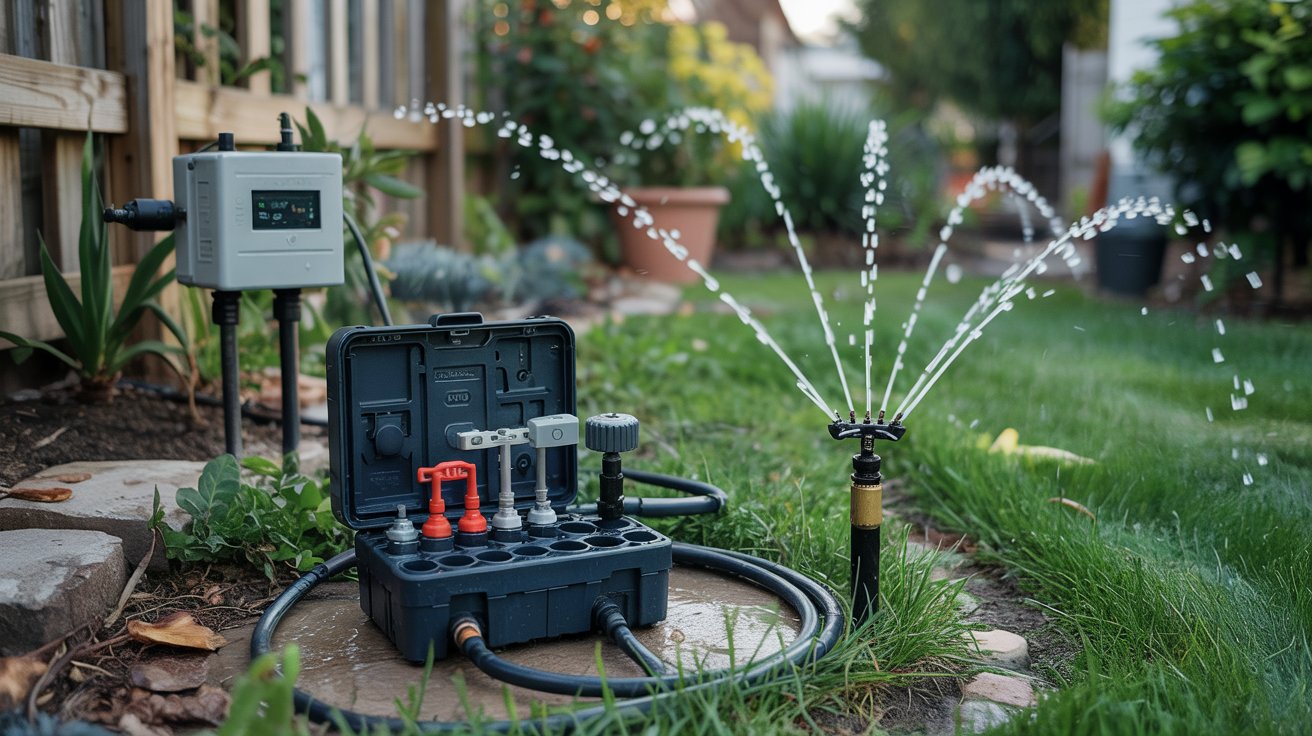
Sprinkler pricing follows a consistent logic: more zones mean more valves, more pipe, and more labor. Each zone valve controls water flow to one independent area, and a standard residential system typically needs one valve per 1,500-2,000 square feet of lawn.
Remember it later
Planning to try this recipe soon? Save it for a quick find later!
Installation cost per square foot runs $0.38-$3.66, averaging around $1.61 per sq ft, based on residential systems cost data from federal fire and safety research. Dense, established landscaping pushes you toward the high end; open new construction lands near the low end.
| Component | Typical Range | Notes |
|---|---|---|
| Controller (timer) | $50–$350 | Smart controllers add $150–$250 but cut water waste |
| Backflow preventer | $75–$500 | Required by code in most municipalities |
| Zone valve (each) | $35–$125 | Labor to install adds $50–$150 per valve |
| Spray/rotor heads | $3–$15 each | 8–12 heads per zone is typical |
| Trenching (per 100 ft) | $400–$800 | Rocky or tree-root-heavy soil raises this significantly |
| Labor (full install) | $50–$100/hr | Most jobs run 8–16 hours total |
| Permits | $50–$200 | Required in most cities; skip at your own risk |
Trenching is frequently cited as the biggest surprise cost. $800 per 100 feet is a realistic upper bound for difficult ground, according to Forbes home improvement data on sprinkler installation challenges.
Clay soil, slopes, and mature tree roots all drive trenching costs up.
The backflow preventer is non-negotiable in most jurisdictions. It stops irrigation water from flowing back into your drinking supply, and skipping it can void your homeowner's insurance or fail a home inspection.
System type also shifts the math. Rotor heads cover more area per head than fixed spray heads, reducing head count but not necessarily zone count.
If you're weighing your options, see how drip irrigation kits compare in price and coverage before committing to a full spray system.
Get quotes that itemize zone count, linear feet of pipe, and head count separately. A lump-sum quote makes it impossible to compare bids or spot inflated labor charges.
Controller choice matters more than most budgets account for. A basic timer runs $50-$100, but a smart Wi-Fi controller ($150-$350) adjusts run times based on local weather data and can cut water bills by 15-30% annually - often paying back the premium within two seasons.
If you're also pricing out other lawn investments, the cost of laying sod pairs naturally with sprinkler planning, since new sod needs precise watering schedules for the first 3-4 weeks.
Budget Scenarios: Small, Medium, and Large Yards
Zone-driven budgeting gives you a realistic number before any contractor visits. A quality lawn sprinkler setup for a small yard typically needs 4-6 zones, covering roughly 2,000-5,000 square feet of turf and planted beds.
Mid-sized yards - roughly 5,000-10,000 sq ft - usually land at 6-8 zones. Large properties over 10,000 sq ft often need 8-12 zones or more, and the jump from 8 to 12 zones can add $2,400-$4,800 to the total just in valve and pipe costs.
NerdWallet's zone-driven budgeting guide reinforces this approach: anchoring your estimate to zone count produces more accurate projections than estimating by square footage alone, because zone count captures the actual valve, pipe, and labor complexity.
A 6-zone system at $800 average per zone gives you a $4,800 working budget before any adjustments for soil, slope, or water pressure issues. That's a more honest starting figure than a per-sq-ft estimate applied to your lawn's total area.
- Small yard (4 zones): Expect $2,400-$3,200 installed, assuming straightforward trenching and a basic smart controller.
- Medium yard (7 zones): Budget $3,500-$5,600 total, with backflow preventer and permit included.
- Large yard (10 zones): $6,000-$8,000 is a realistic range, more if the site has mature trees or slope drainage issues.
- Drip-only zones: Adding dedicated drip zones for garden beds runs $150-$400 per zone, below the spray-head average, since no trenching is needed for surface-laid drip line.
Wondering whether full irrigation even makes sense for your property? Homeowners who dislike mowing sometimes weigh artificial turf costs as an alternative that eliminates irrigation entirely.
Per-zone cost drops as zone count rises, because mobilization, permits, and controller costs are fixed.
A 4-zone job might cost $700 per zone; a 10-zone job on the same property size often runs closer to $600 per zone because the fixed overhead spreads across more units.
Quotes that price only the "lawn zones" and exclude drip zones for beds will come in low, then expand when the installer sees the full property. Ask specifically how bed and garden areas will be handled before signing anything.
If you're planning a full lawn renovation alongside the irrigation project, pairing it with a mower upgrade is common - finding the right mower for your yard size rounds out the budget picture for smaller properties.
DIY vs Pro Install and Seasonal Costs
A full DIY install is feasible for a simple, flat yard with clear soil and accessible water supply. Material costs alone typically run $500-$1,500 for a 4-6 zone system, saving $1,000-$2,500 in labor.
The trade-off is time: most first-time DIYers spend a full weekend or more on a 5-zone layout.
UC ANR's irrigation planning guidance notes that professional review of your irrigation design is worth the cost for complex sites - slopes, multiple water pressure zones, or mixed turf and drip layouts all benefit from an experienced eye before any pipe goes in the ground.
Permitting rules and backflow preventer requirements vary significantly by region. Some municipalities require a licensed irrigator to pull the permit, which effectively removes full DIY as an option regardless of your skill level. Check your local building department before purchasing materials.
Seasonal maintenance adds to the annual cost of ownership. Spring startup (pressure test, head adjustment, controller reset) runs $50-$100.
Fall winterization - blowing compressed air through the lines to prevent freeze damage - costs $75-$150 in cold climates and is non-optional in Zone 6 and colder.
Backflow preventer testing, required annually in many cities, adds another $30-$75 per year. Factor $150-$300 annually into your ownership cost for a professionally maintained system in a four-season climate.
If you want to reduce water use alongside your irrigation setup, pairing your system with a rainwater collection setup can offset irrigation draw during dry stretches.
For garden beds specifically, learning how to set up drip irrigation yourself can cut bed-watering costs to near zero after the initial material investment.
For homeowners who want professional installation guidance without full contractor costs, reviewing irrigation planning tools and resources before your first quote appointment gives you enough vocabulary to evaluate bids accurately.
Frequently Asked Questions
Zone count is the single biggest driver. Each zone adds a valve, pipe runs, and labor time. Trenching in rocky or root-heavy soil can add $400–$800 per 100 feet on top of base costs.
Plan one zone per 1,500–2,000 sq ft of turf. A 6,000 sq ft yard typically needs 4–5 lawn zones plus 1–2 dedicated drip zones for beds.
Drip zones run $150–$400 each versus $600–$2,000 for spray zones, since surface-laid drip line needs no trenching. For garden beds, drip is significantly cheaper per zone.
Yes, on flat yards with accessible soil. DIY material costs run $500–$1,500 for a 4–6 zone system, but some cities require a licensed irrigator to pull permits, blocking full DIY.
Smart-controller systems typically cut water bills by 15–30% annually. On a $600/year irrigation water bill, that's $90–$180 saved per year, putting payback on the controller upgrade at 1–3 years.
Pin it for your next how much does a sprinkler system cost? project.