Concrete prices in 2026 sit in a tighter range than most homeowners expect - until delivery fees, finish upgrades, and short-load charges land on the invoice.
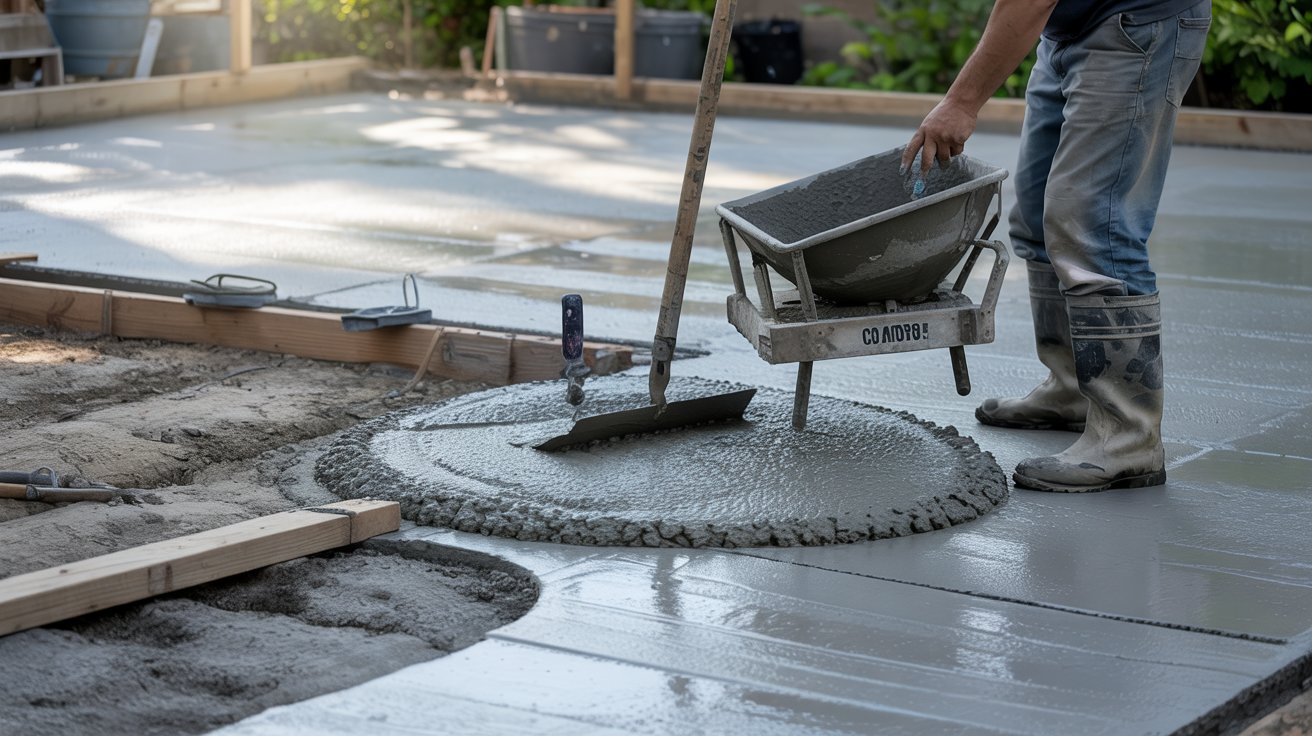
National cost data puts ready-mix concrete between $160 and $195 per cubic yard, with a reported 2024 average near $179.89 per yard.
That yard price is just the starting point.
For backyard projects - a new driveway, a poured patio, or a concrete pad extension - the installed cost per square foot runs anywhere from $4 to $15 depending on thickness, PSI mix, and finish. Stamped or stained surfaces push totals higher.
Plain broomed concrete sits at the lower end.
Regional variation moves the needle more than most people budget for. A yard of concrete in the Southeast can cost noticeably less than the same mix delivered in the Pacific Northwest or New England, where labor and trucking rates differ.
To see how concrete fits into a broader outdoor hardscape budget, context helps before you call for bids.
Prices in this guide reflect market data current to March 14, 2026. Every section walks through one piece of the total cost so you can build a line-item estimate before a contractor sets foot on your property.
Ready-mix concrete costs $160–$195 per cubic yard nationally, translating to $4–$15 per square foot installed for driveways and patios. Delivery fees, short-load charges, and finish choices add meaningfully to base material costs.
Regional variation is wide — always compare at least three local bids.
Cost Snapshot: What Concrete Actually Costs in 2026
The cubic yard is the unit ready-mix suppliers use to quote concrete. One cubic yard fills a space roughly 3 feet wide, 3 feet long, and 3 feet deep - about enough for a 10×10-foot patio at 4-inch thickness.
Remember it later
Planning to try this recipe soon? Save it for a quick find later!
At the national average near $179.89 per yard, a 10-yard driveway order puts material cost alone around $1,800 before a truck rolls. At the top of the range - $195 per yard in higher-cost markets - that same order hits $1,950 in materials.
PSI - pounds per square inch - determines mix strength and affects price. A standard 3,000 PSI mix suits most residential driveways and patios.
Bumping to 4,000 PSI for a heavier-use surface adds $5-$10 per yard on average.
Thickness also drives cost. A 4-inch slab uses less concrete than a 6-inch slab over the same area.
Many contractors pour driveways at 5-6 inches for durability, which increases your cubic yard count - and your invoice.
One cubic yard covers roughly 80 square feet at 4 inches thick, 65 square feet at 5 inches thick, and 54 square feet at 6 inches thick. Use these figures to estimate yard count before calling for quotes.
Per-Yard Cost: Materials and Delivery Fees
Material price and delivery price are two separate line items - but they almost always arrive on the same invoice. Understanding both helps you catch inflated quotes.
The ready-mix industry benchmark places the base yard price around $160 as a floor, with most residential orders landing between that and $195. Delivery fees stack on top based on distance from the plant, load size, and day of the week.
| Cost Item | Low End | High End |
|---|---|---|
| Material (per yard) | $160 | $195 |
| Standard delivery | $100 | $200 |
| Short-load surcharge | $100 | $350 |
| Fuel / distance fee | $25 | $100+ |
| Saturday/after-hours | $50 | $150 |
Short-load charges are the most common billing surprise. Most ready-mix plants set a minimum order between 5 and 8 yards.
If your project needs only 3 yards, you still pay for the minimum - or absorb a short-load fee that can reach $350.
Distance from the concrete plant matters, too. Trucks are on a clock - concrete must be poured within about 90 minutes of batching.
If the plant is far from your site, expect a fuel surcharge and possibly a premium for extended drum rotation.
To cross-check any local bid, compare against the national yard price range of $160-$195. A quote significantly above $195 per yard for a standard mix warrants a question to your supplier.
Scheduling your pour mid-week and confirming the plant is within 20 miles can trim $100-$200 off delivery costs on a typical residential order.
Driveway and Patio Cost by Area
Translating yard prices into square-foot costs requires knowing your slab's thickness and your chosen finish. A plain broomed slab runs the least; stamped or stained concrete adds labor, materials, and time to the job.
For a standard 2-car driveway - roughly 400-600 square feet at 5-inch thickness - expect an installed cost between $2,000 and $4,800 at plain finish. If you want to understand full driveway cost factors, thickness and finish are the two biggest levers.
| Project | Typical Size | Plain (per sq ft) | Stamped (per sq ft) |
|---|---|---|---|
| Small patio | 100–200 sq ft | $5–$8 | $10–$15 |
| Mid-size patio | 300–500 sq ft | $4–$7 | $10–$18 |
| 2-car driveway | 400–600 sq ft | $5–$8 | $12–$20 |
| Concrete pad | 100–150 sq ft | $5–$9 | $12–$16 |
Stamped concrete mimics stone or brick and costs $10-$20 per square foot installed - roughly double the plain-slab rate. The price premium reflects added labor for pattern work, release agent, and sealant.
If you're weighing options, comparing stamped concrete versus pavers often reveals which surface gives better long-term value for your budget.
Stained concrete falls in the middle - typically $7-$12 per square foot installed - because it skips the texture tools but still requires surface prep and sealer. A detailed patio cost breakdown can help you decide which finish aligns with your project goals.
For a mid-sized patio around 400 square feet:
- Plain broomed: 400 sq ft × $5.50 average = roughly $2,200 total installed.
- Stained: 400 sq ft × $9.50 average = roughly $3,800 total installed.
- Stamped: 400 sq ft × $14 average = roughly $5,600 total installed.
These figures assume normal site access and no major grading. Tight access - a narrow side yard, for example - adds labor time and can push costs up by 10-15%.
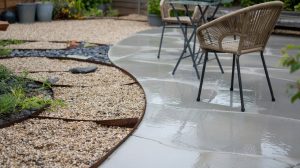
If you're comparing concrete to a gravel surface, run the gravel patio cost comparison before committing. Gravel typically runs $1–$3 per square foot installed — a fraction of even basic poured concrete.
Delivery, Prep, and Hidden Costs
The cubic yard price and delivery fee are the two numbers most homeowners focus on - but site prep often matches or exceeds delivery costs on smaller residential pours.
Grading and base preparation for a driveway or patio typically adds $1-$2 per square foot to the project total. That includes excavation, compacted gravel base, and form-setting labor - none of which appears in a material-only quote.
A quote that covers only the concrete pour — not forms, rebar, base prep, or finishing — can look 30–50% lower than an all-in bid. Always ask for itemized quotes so you're comparing the same scope of work across contractors.
Rebar or wire mesh reinforcement adds $0.50-$1.50 per square foot depending on grid spacing and steel gauge. Many residential slabs use 6×6 wire mesh as a cost-effective reinforcement; high-load driveways benefit from #3 or #4 rebar on 18-inch centers.
Real-world bidding, as tracked in contractor forums, shows wide regional spread even within the same metro area. Getting three bids helps isolate inflated delivery and prep markups from accurate ones.
- Forms: Wood forming for a simple rectangular slab runs $1-$2 per linear foot; curved forms cost more in both materials and labor.
- Gravel base: A 4-inch compacted gravel base adds $0.75-$1.25 per square foot - and is recommended under any driveway or patio slab. For crushed stone base pricing, local quarry rates apply.
- Sealing: A quality concrete sealer adds $0.50-$1.50 per square foot and extends slab life significantly.
- Permits: Some municipalities require a permit for driveways or large pads. Permit fees range from $50 to $300 depending on locality.
Ask each contractor to separate labor, materials, delivery, and prep on the invoice. This makes line-by-line bid comparison straightforward and reveals where one contractor is padding margins.

Budgeting Playbook for Backyard Concrete
A repeatable four-step workflow keeps you from getting surprised when the final invoice arrives. Apply it to any backyard concrete project - driveway, patio, pad, or extension.
Start by calculating your cubic yard count. Multiply length × width × thickness (in feet), then divide by 27 to convert to cubic yards.
Add 10% for waste and spillage. That number times the local yard price gives you base material cost.
Concrete prices vary by region more than most cost guides reflect. The regional price band of $160–$195 per yard is a national benchmark — your local market could sit 10–20% above or below that range depending on aggregate availability, labor rates, and plant proximity.
- Calculate your yard count before calling for quotes, so you can validate each supplier's estimate.
- Request itemized bids that list material, delivery, prep, reinforcement, and finish separately.
- Ask about the plant's distance from your site and whether a short-load surcharge applies.
- Compare at least three bids for any pour over 5 yards or $3,000 in estimated cost.
- Don't accept a lump-sum bid without a line-item breakdown - you can't compare scopes otherwise.
- Don't assume the lowest per-yard quote includes delivery and site prep; confirm what's included.
- Don't skip the gravel base to save money - a slab without proper base prep cracks faster.
- Don't book a Saturday pour without confirming whether the supplier charges a weekend premium.
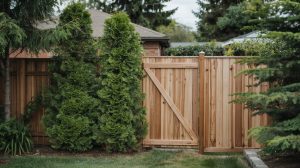
If you're pairing a new concrete surface with fencing or other backyard upgrades, budgeting each element separately keeps the overall project manageable. Knowing what fencing costs alongside your concrete pour helps prioritize phases.
For a broader view of how hardscape surfaces compare, the patio versus deck cost comparison shows where concrete fits in the range of outdoor surface options.
Before finalizing your surface material, it's also worth considering concrete versus pavers side by side, and if budget is a priority, a DIY gravel patio can deliver a functional outdoor surface for a fraction of poured concrete costs.
Frequently Asked Questions
A plain concrete driveway typically costs $5–$8 per square foot installed, including forms and basic prep. A 500-square-foot two-car driveway runs $2,500–$4,000 at that rate.
Expect $260–$395 per yard once standard delivery is added to the $160–$195 material cost. Short-load fees can push a small order $100–$350 higher.
Yes — stamped concrete runs $10–$20 per square foot installed versus $4–$8 for plain broomed. The difference reflects pattern labor, release agent, and mandatory sealing.
Request a line-item breakdown covering material cost per yard, delivery fee, site prep, reinforcement type, finish, and sealing. This lets you compare identical scopes across contractors.
A 20×20-foot patio at 4-inch thickness requires about 5 cubic yards. Add 10% for waste, bringing the order to roughly 5.5 yards — just above most minimum-load thresholds.
Pin it for your next how much does concrete cost? project.