Outdoor lighting can run anywhere from $200 for a basic DIY kit to well over $10,000 for a professional multi-zone system with smart controls. That gap isn't arbitrary - fixture count, wire runs, transformer capacity, and labor all stack up fast.
Before you call a contractor or load a cart online, it pays to understand exactly which variables move the needle.
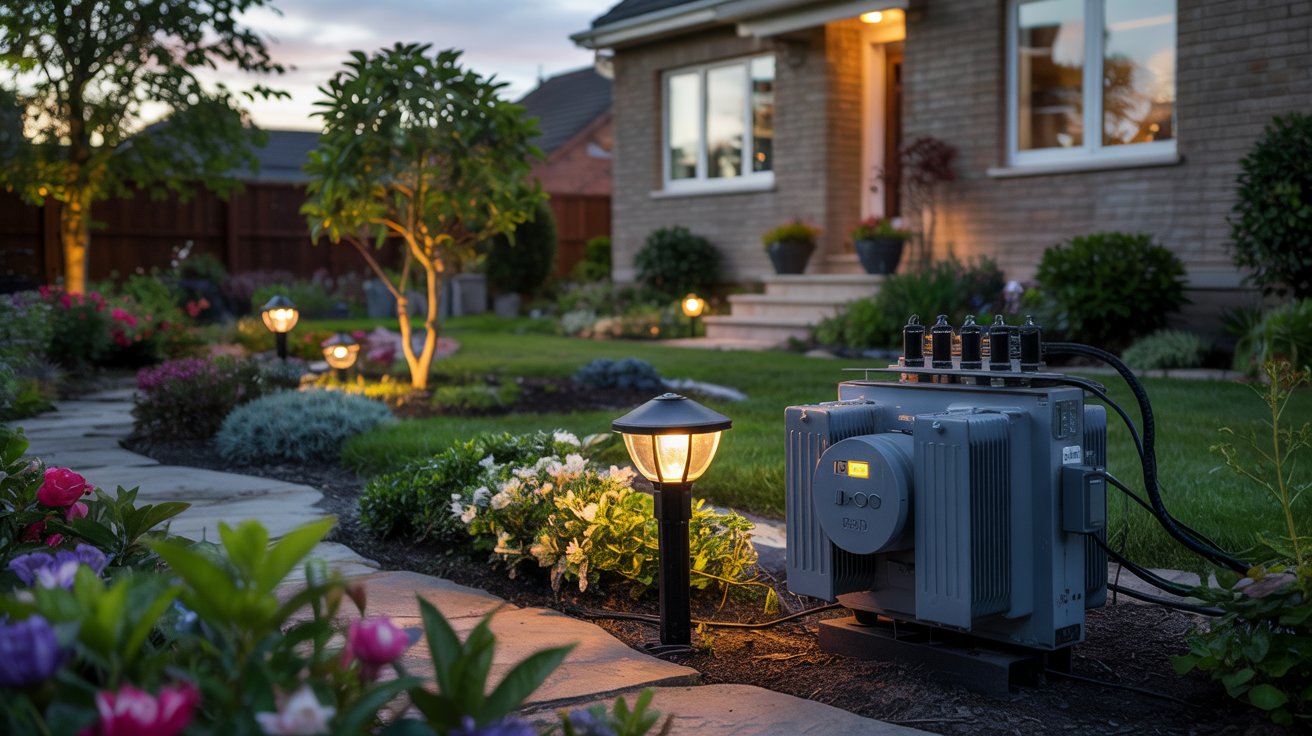
Low-voltage systems dominate residential installs for good reason. They draw from a standard 120-volt outlet, step the current down to a safe 12 volts through a power pack, and reduce installation risk compared to line-voltage wiring buried at full household current.
This guide covers real dollar ranges organized by project tier, the most common budget mistakes, regional pricing factors, and financing paths. If you're also planning paths or patios alongside your lighting, the backyard project cost tool lets you roll multiple scopes into one estimate.
We've anchored every range to university-extension data and industry standards so the numbers hold up over time, not just for one season's contractor quotes.
Landscape lighting costs $200–$10,000+ depending on fixture count, system voltage, and labor. Low-voltage systems using a 12-volt power pack are the most common residential choice.
DIY kits suit small yards; mid-range and premium installs require professional wiring and UL-rated components.
Landscape Lighting Cost at a Glance
The single biggest cost driver is whether you hire a pro or go DIY. Labor alone accounts for 40-60% of a typical installed price, so the decision to self-install is the fastest way to cut total spend in half.
Remember it later
Planning to try this recipe soon? Save it for a quick find later!
Beyond labor, fixture count is what separates a $400 project from a $4,000 one. Power packs for typical layouts range from 121 to 500 watts; a six-fixture layout using 20-watt bulbs draws a total of 240 watts, which fits comfortably inside a mid-range transformer.
Add more fixtures and you'll need a larger - and more expensive - power pack.
Safety compliance adds cost too. ANSI/UL 1838 is the governing standard for low-voltage landscape lighting systems, and fixtures carrying that certification cost more upfront - but they're what licensed electricians will insist on and what homeowners' insurance policies typically require.
Wire type and run length matter more than most budgeters expect. Longer runs require heavier-gauge wire to avoid voltage drop, and every extra 50 feet of 12-gauge cable adds roughly $15-$30 in materials before any labor.
| Fixture Type | Unit Cost (DIY) | Unit Cost (Pro Installed) |
|---|---|---|
| Path light | $15–$60 | $80–$150 |
| Spotlight / uplighter | $20–$80 | $100–$200 |
| Well light (in-ground) | $30–$100 | $150–$350 |
| Deck / step light | $25–$75 | $120–$250 |
| Flood / area light | $40–$120 | $175–$400 |
| Smart / color-capable | $60–$200 | $200–$500 |
Transformer cost is a line item most first-timers miss. A quality 300-watt transformer runs $80-$250, and smart-timer models with Wi-Fi control can push past $400 before a single fixture is wired in.
Budget Tiers and Typical Project Ranges
Breaking projects into three tiers helps set realistic expectations before you get your first quote. Each tier represents a different combination of fixture count, control sophistication, and labor involvement.
For a full picture of how lighting fits into your larger outdoor budget, see how these costs land alongside other landscaping project expenses.
The starter tier ($200-$600) covers a typical 6-8 fixture kit with a 150-watt transformer, plug-in timer, and basic path or spotlight fixtures. No trenching required.
Most homeowners can complete the install in a weekend.
Mid-range projects jump in cost because of added wire runs, more fixtures, and professional labor. Planning and fixture count directly drive both material and labor totals - each zone you add means more cable, a larger transformer, and more time on-site for the installer.
- Fixtures (8-15 units): Expect $800-$2,000 in materials alone for a quality mid-range fixture set.
- Transformer upgrade: Moving from a 150W to a 300W unit adds $100-$200 to the hardware line.
- Labor (4-8 hours): Professional installers typically charge $50-$100/hour, putting labor at $200-$800 for a standard backyard.
- Smart controls: Wi-Fi timers, dimmers, and app integration add $150-$400 depending on brand.
Premium and estate-level installs introduce line-voltage accent lighting, professional-grade fixture placement, and sometimes separate transformer circuits for front and back yards. Trenching for buried conduit alone can run $4-$12 per linear foot.
Low-voltage layouts reduce trenching needs significantly. Efficiency and flexibility in low-voltage design allow wire to be run just below the mulch line in many cases, cutting excavation labor out of the budget entirely for simpler layouts.
If you're comparing solar alternatives for path areas, solar vs. wired path lights is a useful comparison before you commit to a transformer-based system.

Do's and Don'ts When Budgeting for Outdoor Lighting
Most budget overruns in landscape lighting come from two sources: undersized transformers and skipping UL-rated components to save a few dollars per fixture. Both are easy to avoid with a bit of upfront math.
Start by calculating your total nominal wattage (TNW) before you buy a transformer. Add up the wattage of every fixture you plan to run, then select a power pack rated for at least 25% more than that total.
Sizing the power pack correctly prevents overloaded circuits and tripped breakers - a repair call that typically costs $100-$200 to diagnose and fix.
- Calculate total fixture wattage before buying a transformer, and add 25% headroom for future fixtures.
- Use UL 1838-rated components for every fixture and cable connection in the layout.
- Run a voltage-drop test at the farthest fixture point before finalizing wire gauge.
- Obtain any required permits - many municipalities require inspection for wired outdoor lighting, even low-voltage.
- Phase your install so you can add fixtures later without rewiring the transformer.
- Compare backyard lighting design options before locking in fixture types.
- Don't buy the cheapest transformer available - undersized packs degrade faster and can damage fixtures.
- Avoid skipping wire connectors rated for outdoor/wet locations; indoor splices corrode quickly underground.
- Don't place all fixtures on a single long wire run; voltage drops significantly beyond 100 feet on 16-gauge cable.
- Never mix 12V and line-voltage (120V) fixtures on the same transformer circuit.
- Avoid finalizing fixture positions before testing at night - what looks right in daylight rarely looks right after dark.
- Don't ignore the cost of a walkway or paving project running alongside lighting, as both involve the same excavation timeline.
One detail that trips up DIYers: connector quality. Waterproof wire connectors rated for direct-burial cost about $0.50-$1.50 each, versus $0.10-$0.25 for standard household wire nuts.
That $30-$50 difference in total connector spend prevents hundreds of dollars in corrosion repairs within two to three years.
If you're also budgeting for a new fence installation at the same time, coordinate both projects with the same contractor - shared mobilization fees can save $200-$500 off the combined total.
Installing line-voltage (120V) outdoor lighting without a licensed electrician is a code violation in most states. Even low-voltage systems may require a permit if the transformer is hardwired rather than plug-in. Check with your local building department before breaking ground.
Regional Differences, Timing, and Financing
Where you live shifts the baseline price by 20-40% in either direction from national averages. Labor markets in the Northeast and West Coast run highest; Mid-South and rural Midwest markets often come in well below average for the same scope of work.
Seasonality also moves the needle. Spring and early fall are peak scheduling seasons for landscape contractors - expect 2-4 week lead times and less room to negotiate pricing.
Winter bookings in mild climates often come with 10-15% discounts just to keep crews busy.
Some utility customers can add landscape lighting charges to their electric bill and spread payments over up to 36 months with approved credit, making a $3,000 install as low as $85/month. Ask your utility provider whether a similar program is available in your area before assuming you need to pay cash upfront.
Multi-zone layouts extend both the timeline and the invoice. Installation timelines for complex systems are typically measured in weeks from order to completion, especially when specialty fixtures need to be sourced from a distributor.
For homeowners financing broader outdoor projects, it helps to understand how lighting costs stack up against other line items. A patio versus deck decision often shifts how much surface area needs illumination, which directly changes fixture count and total cost.
Phasing the project is the most practical financing tool available. Start with a 150-watt transformer and 6-8 key fixtures, then add zones in subsequent seasons without re-running wire to the power source.
This approach keeps each invoice under $1,000 while building toward a full system over 2-3 years.
If an outdoor pool is part of the longer plan, note that pool installation costs almost always include underwater lighting as a line item - coordinating both projects with one contractor avoids duplicated electrical work.
For anyone still mapping out the full scope of their outdoor space, the backyard design planning guide covers how to sequence projects so lighting, hardscaping, and plantings don't conflict during installation.

Frequently Asked Questions
Professionally installed low-voltage fixtures typically cost $80–$400 each, depending on fixture type and wire run length. Path lights run lowest; in-ground well lights and smart color fixtures cost most.
Most homeowners spend $1,500–$3,500 for a professionally installed system with 8–15 fixtures, a 300-watt transformer, and timer controls included in the total.
Yes. Low-voltage (12V) systems avoid deep trenching, reduce permit requirements in many areas, and use less energy. Line-voltage installs typically cost 30–50% more in labor alone.
Simple installs finish in one day; multi-zone systems typically take 2–4 weeks from contract signing to completion, including fixture lead times and scheduling.
LED landscape fixtures need minimal maintenance — clean lenses once a year and check wire connections after freeze-thaw cycles. Expect to replace a transformer every 10–15 years.
Pin it for your next how much does outdoor lighting cost? project.