Choosing the best compost bin for your home comes down to three honest questions: how much space do you have, how much time do you want to spend on maintenance, and how fast do you need finished compost?
Get those answers right and the bin selection almost makes itself.
Most households generate between 200 and 400 pounds of compostable waste per year - food scraps, yard clippings, cardboard - and a well-matched bin turns that into rich soil amendment instead of landfill material.
The EPA home composting program outlines exactly why that diversion matters for households of every size.
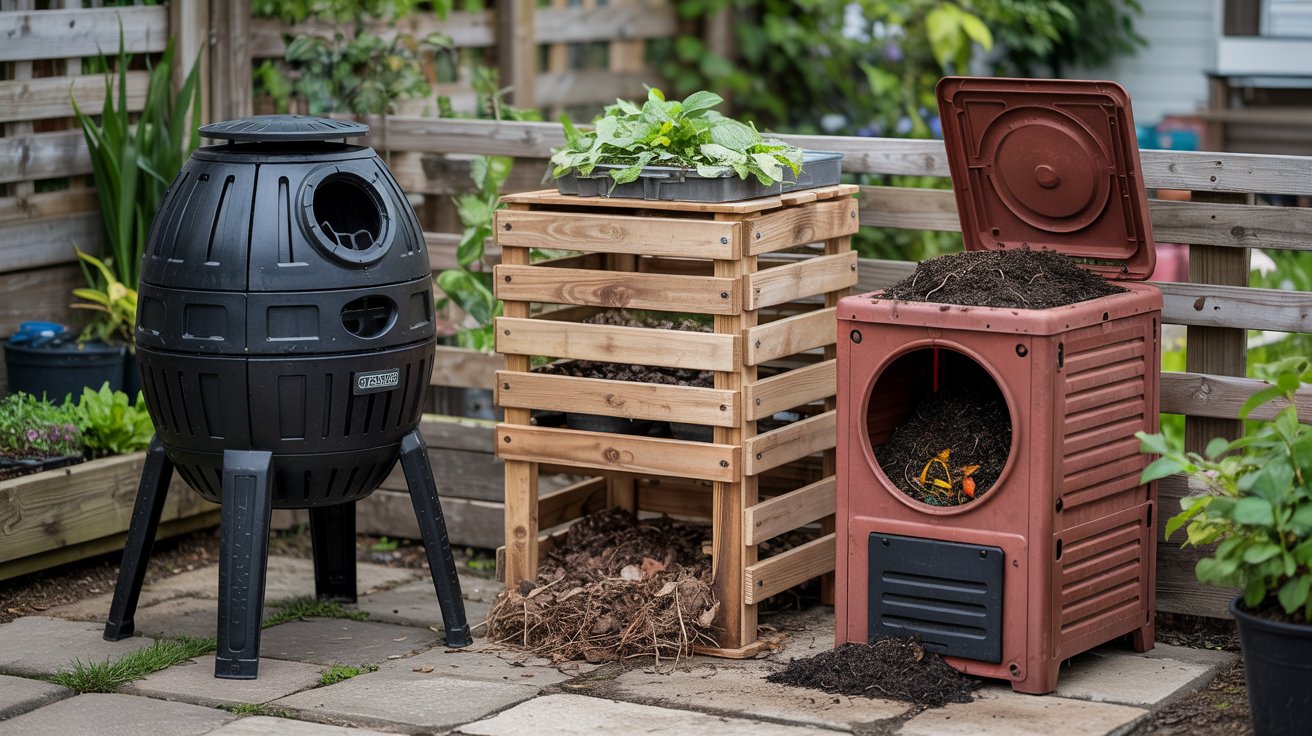
This guide covers three main bin types - compost tumblers, stationary bins, and worm bins - along with what separates a genuinely useful unit from an overpriced plastic box.
We also flag where starting your compost pile correctly from day one makes every bin type perform better.
Some links in this article are affiliate links, which means we may earn a small commission if you purchase through them - at no extra cost to you. Our recommendations reflect actual criteria, not commission rates.
The best compost bin depends on your space, budget, and patience. Tumblers are fast and tidy; stationary bins are cheap and high-capacity; worm bins suit indoor, small-space composting.
Expect to spend $30–$200 for a reliable unit.
Key Buying Essentials
Before you compare models, lock in five decision filters: available footprint, budget ceiling, how often you want to tend the bin, odor tolerance (especially if neighbors are close), and how quickly you need finished compost for your garden.
Remember it later
Planning to try this recipe soon? Save it for a quick find later!
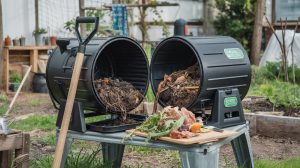
Tumblers rotate sealed, so they control odor well and speed decomposition - but they cap out around 37-50 gallons of capacity and cost more upfront. Stationary bins sit on the ground and accept unlimited input over time, but they need occasional turning and can attract pests if managed poorly.
Worm bins - or vermicomposting setups - handle kitchen scraps indoors and produce castings in 60-90 days, but they require moisture management and live red wigglers. The USDA composting overview describes these modalities and their waste-diversion value clearly.
| Type | Space Needed | Cost Range | Time to Compost |
|---|---|---|---|
| Tumbler | 3–4 sq ft | $80–$200 | 4–8 weeks |
| Stationary Bin | 4–9 sq ft | $30–$80 | 3–6 months |
| Worm Bin | 2–4 sq ft | $40–$150 | 60–90 days |
Price bands shift depending on brand and features. A dual-chamber tumbler with UV-resistant plastic costs more than a basic single-chamber model - and that's often worth it for households composting year-round.
Watch for sale cycles around Earth Day (April) and late summer, when many retailers discount outdoor composting gear. Affiliate deal pages often reset prices weekly, so checking back after 7 days can reveal meaningful savings on the same model.
Affiliate commissions on compost bins are typically 4–8%. That means a site recommending a $200 tumbler earns roughly $8–$16 — not enough to skew a credible recommendation toward overpriced products. Still, always cross-check prices on a second retailer before buying.
Flexible Bin Options for Small Spaces
Renters, balcony gardeners, and anyone working with under 50 square feet of outdoor space face a different set of trade-offs than a suburban homeowner with a full backyard. Footprint, odor containment, and local regulations all factor in before budget does.
A standard stationary bin needs roughly a 2×2 to 3×3-foot ground patch - fine for a small patio, but too large for most apartment balconies. Worm bins solve that problem by fitting under a sink or in a closet, handling kitchen scraps without any outdoor access.
Cornell's home composting guide details space-saving setups that work in urban households.
For balconies under 40 sq ft, a stacking worm bin with a drip tray is the most practical option — it produces liquid fertilizer as a bonus and stays odor-free when the moisture level stays between 60–80%.
Bin height matters more than people expect in small spaces. A tall, narrow tumbler (around 18 inches wide, 30 inches tall) can fit in a corner with less visual footprint than a squat wide bin.
For context on how finished compost improves soil structure, see our guide comparing garden soil types - the output from any of these bins conditions all of them.
| Situation | Best Bin Type | Key Reason |
|---|---|---|
| Apartment / indoor | Worm bin | No outdoor space needed |
| Small balcony / patio | Compact tumbler | Sealed, odor-controlled |
| Small yard (under 200 sq ft) | Stationary bin | Low cost, high capacity |
| Shared outdoor space | Tumbler or worm bin | Minimal pest and odor risk |
The USDA ARS composting factsheet also emphasizes safe material inputs - a detail worth reviewing before adding meat scraps or dairy to any small-space bin where odor control is critical.
Types Deep-Dive: Tumblers, Bins, and Worm Bins
Each bin type has a fundamentally different mechanism - and that mechanism determines speed, effort, and output quality more than any brand feature does.
Tumblers aerate compost mechanically every time you spin them, which accelerates microbial activity and can produce finished compost in as few as 4 weeks under ideal conditions. Stationary bins rely on passive decomposition, taking 3-6 months but accepting large volumes of yard waste without filling up quickly.
Worm bins use Eisenia fetida (red wiggler worms) to break down kitchen scraps into castings, a nutrient-dense amendment that outperforms basic compost on nitrogen content. For a focused look at choosing the right tumbler model, our top-rated compost tumblers guide covers capacity and durability ratings in detail.
Worm bins sit in a separate category because they're optimized for kitchen scraps, not yard waste. They can't handle large volumes of browns (dried leaves, cardboard) as effectively, but they process food waste year-round indoors without seasonal slowdowns.
The EPA's composting at home page confirms that vermicomposting suits apartments and homes with minimal outdoor space.
- Produces compost in 4–8 weeks with regular turning
- Sealed design blocks pests and suppresses odors effectively
- Works well on a patio or small yard with no ground contact
- Accepts large volumes of yard waste without size limits
- Lower upfront cost — basic units start around $30
- Easier to load bulky materials like branches and leaves
The USDA's composting modalities overview notes that households combining a tumbler for kitchen scraps and a stationary bin for yard waste divert the highest percentage of organic material - a useful benchmark if you're considering two-bin systems.
You can also build a free stationary setup using our guide to making a pallet compost bin before spending anything on a commercial unit.
Costs, Disclosures, and Getting the Right Deal
Compost bin pricing breaks into three honest tiers, and knowing what each tier buys helps you avoid overpaying for features you won't use.
Entry-level stationary bins in the $30-$50 range are typically thin-walled, snap-together units with limited pest resistance. They work, but UV exposure degrades them faster - expect 3-5 years before cracking.
Mid-range tumblers and bins at $80-$130 use thicker recycled plastic, better aeration design, and sturdier hardware. Premium units above $130 add dual-chamber systems (so one chamber cooks while the other fills), better bearing systems for easy spinning, and 10-year warranties.
The EPA's resource on starting at home sets realistic expectations for setup and ongoing costs.
When evaluating affiliate deals specifically, check three things: whether the listed price matches the current retailer price, whether the review date is within 12 months, and whether the reviewer discloses the commission relationship clearly.
| Feature | Why It Matters | Worth Extra Cost? |
|---|---|---|
| Dual chamber | Continuous composting without waiting | Yes — for active households |
| UV-resistant plastic | Prevents cracking after 2–3 seasons | Yes — always |
| Locking lids | Keeps out raccoons and rodents | Yes — in urban areas |
| Aeration holes (tumbler) | Speeds decomposition by 30–40% | Yes — for speed |
| Brand name alone | Minimal functional difference | No |
Finished compost improves every soil type, but knowing your baseline soil quality tells you how much compost output you actually need. A reliable soil test kit run before you start composting gives you a useful benchmark for how much amendment your beds require each season.
The USDA's waste diversion guidance frames compost bins as a long-term investment - most households recoup the bin cost within two seasons by replacing purchased soil amendment with homemade compost.
Cold-climate gardeners in zones 4 and below should prioritize insulated tumblers or move worm bins indoors by November. Composting slows dramatically below 50°F and nearly stops below 32°F in uninsulated stationary bins.

Maintenance Snapshot and Quick Start
The first four weeks determine whether your bin becomes a thriving composting system or a neglected bin of rotting scraps. A simple routine prevents both outcomes.
Cornell's composting at home guide recommends aiming for a 25-30:1 carbon-to-nitrogen ratio from the start - roughly three parts dry browns (leaves, cardboard) to one part greens (food scraps, grass). The USDA ARS composting factsheet adds that moisture should feel like a wrung-out sponge - damp but not dripping.
That single moisture check catches most early problems before they become odor issues.
| Week | Task | Frequency |
|---|---|---|
| Week 1 | Add bedding layer, first food scraps, moisten | Once at setup |
| Week 2 | Check moisture, turn or spin, add browns if wet | Every 2–3 days |
| Week 3 | Monitor temperature (target 130–160°F for tumblers) | Every 2–3 days |
| Week 4 | Assess smell and texture; adjust moisture or aeration | Every 3–4 days |
After the first month, most bins settle into a predictable rhythm. For stationary bins, turning every 2 weeks in warm weather and every 4 weeks in cool weather keeps decomposition active.
Tumblers benefit from spinning 3-4 times per week during active loading, then just once weekly during the cooking phase.
Worm bin maintenance differs: check moisture weekly, harvest castings every 60-90 days, and keep the bin between 55-77°F for peak worm activity.
Compost output from any of these systems pairs well with choosing the right growing medium - our breakdown of mixing raised bed soil explains exactly how to incorporate finished compost into bed mixes.
Keep a small bucket with a tight lid on your kitchen counter for daily scrap collection. Emptying it every 2–3 days keeps odors manageable and makes the bin-loading habit much easier to maintain long-term.
If a bin smells like ammonia, add more dry browns and turn it - excess nitrogen from greens is almost always the cause. If nothing seems to be breaking down after 3 weeks, add water and check that the pile has reached at least 130°F internally.
Most troubleshooting traces back to one of three variables: moisture, carbon-to-nitrogen ratio, or aeration. For deeper context on how organic material interacts with soil biology, see our overview of organic vs synthetic inputs and how each affects soil structure over time.
Rounding out your composting knowledge with an understanding of organic mulch layers also helps, since mulch and compost work together at the soil surface. You can also explore the full range of soil composition questions to see where finished compost fits in your specific garden beds.
For an overview of the full soil improvement system, the composting and soil health resource library connects all these topics in one place.
Frequently Asked Questions
Start with a 3:1 ratio of dry browns to food scraps, keep the pile as moist as a wrung-out sponge, and turn it every 2–3 weeks. Most beginners see usable compost within 3 months.
A stacking worm bin fits under a kitchen counter, handles food scraps year-round, and produces castings in 60–90 days without requiring outdoor space or large footprint.
Check moisture weekly, keep temperature between 55–77°F, and harvest castings every 60–90 days. Avoid adding citrus, onions, or meat, which stress red wiggler worms.
A well-managed tumbler with the correct carbon-to-nitrogen ratio and regular spinning can produce finished compost in as few as 4 weeks during warm summer months.
Yes — a worm bin or Bokashi fermentation system both work indoors without outdoor space. Worm bins handle most food scraps except meat and dairy in standard setups.
Pin it for your next best compost bin for home use project.