A pressure washer can cut your deck-scrubbing time from three hours to thirty minutes, but the wrong model can splinter soft wood or leave streaky concrete before you realize the mistake.
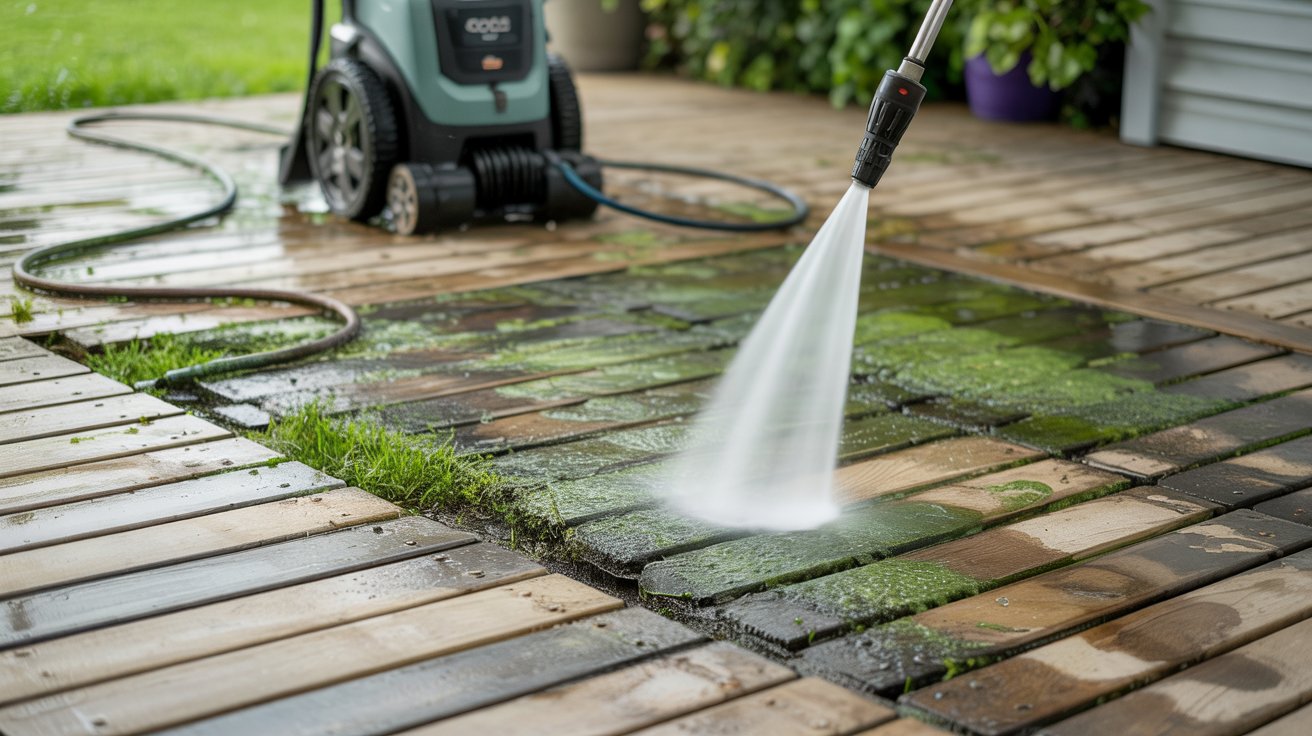
Most buyers focus on one number - PSI - and ignore GPM, nozzle angle, and surface type, which is where buying decisions actually go wrong.
This guide is built around deck and patio use first, with comparisons that map pressure output to real surfaces in your backyard.
Whether you're refreshing a gravel patio surface or blasting years of mildew off composite decking, the right PSI-and-GPM combination matters more than brand loyalty.
By the end, you'll have a clear decision framework, realistic price expectations, and a short list of models worth buying in 2026.
This guide walks you through electric vs gas pressure washers, PSI and GPM matching, surface compatibility, and budget tiers from $80 to $600+. Safety basics from the CDC pressure washer safety guide and EPA lead-paint rules are woven throughout.
What to Expect from This Guide?
Picking a pressure washer without a framework leads to two common mistakes: buying too much power for soft wood, or buying too little for grimy concrete. This guide fixes that by working through each decision point in order.
Remember it later
Planning to try this recipe soon? Save it for a quick find later!
You'll learn how electric models compare to gas across five practical categories, and which attachments - especially surface cleaner discs - make patio work faster and streak-free.
A quality garden hose upgrade pairs with any washer you choose and affects water delivery more than most buyers expect.
We cover four price tiers with honest trade-offs at each level, then move into specific model comparisons organized by use case.
Pressure washer features and prices shift frequently. The This Old House buyer's guide is updated regularly and offers a useful cross-check against the picks in this article. Model availability varies by region and season.
The guide closes with a step-by-step operation and maintenance workflow, including nozzle selection and safe storage for winter.
Safety runs through every section - not as a disclaimer, but as a practical consideration that affects which model and technique you choose.
Key Decision Factors Before You Buy
Two numbers define what a pressure washer can and can't do: PSI (pounds per square inch) measures water force, and GPM (gallons per minute) measures water volume. Both matter - a high-PSI, low-GPM machine strips paint but struggles to rinse it away.
For decks, you want 1500-2000 PSI with at least 1.4 GPM so you clean efficiently without raising wood grain. Concrete patios handle 2500-3000 PSI comfortably, and pavers sit in the middle at around 2000-2500 PSI.
If you're unsure about a surface, test an inconspicuous corner with a 40-degree nozzle before committing to a narrower angle.
The electric vs gas choice shapes everything else. Electric models run quieter, need less maintenance, and weigh under 30 lbs.
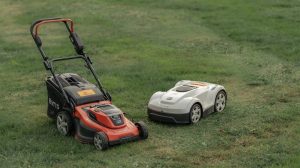
Gas models deliver more sustained power - typically 2600-4000 PSI - but require oil checks, fuel storage, and annual carb maintenance. Deciding between the two is similar to comparing gas and electric lawn mowers: gas wins on raw output, electric wins on convenience.
According to United Rentals, matching machine type to project scope is the single most important factor buyers overlook - a weekend homeowner rarely needs a commercial-grade gas unit.
| Surface | Recommended PSI | Min GPM | Best Nozzle |
|---|---|---|---|
| Softwood deck | 1500–2000 | 1.4 | 40° |
| Composite deck | 1200–1500 | 1.2 | 40–65° |
| Concrete patio | 2500–3000 | 2.0 | 25° |
| Paver patio | 2000–2500 | 1.6 | 25–40° |
| Vinyl siding | 1300–1600 | 1.4 | 40–65° |
Nozzle color codes follow a universal standard: red (0°) for concrete cracks, yellow (15°) for stripping, green (25°) for general cleaning, white (40°) for wood and siding, and black (65°) for applying detergent.
Surface cleaner disc attachments spin two nozzles in a circular pattern, eliminating the zebra stripes you get sweeping a single nozzle by hand. For any patio bigger than 100 square feet, a surface cleaner is worth the $30-$80 add-on cost.
Price and Value: Budget Tiers
Home pressure washers fall into four clear tiers in 2026, and each tier serves a different kind of buyer. Knowing where your needs land saves you from paying for PSI you'll never use - or regretting a weak machine mid-project.
According to current listings reviewed by This Old House, entry-level electric models start around $80 and top-tier residential gas units climb past $600 with accessories.
| Tier | Typical PSI/GPM | Best For | Trade-off |
|---|---|---|---|
| Entry Electric | 1400–1700 / 1.2 | Cars, light deck rinse | Low volume, short hose |
| Mid Electric | 1800–2300 / 1.6 | Deck, siding, small patio | Best value for most homes |
| Entry Gas | 2600–3000 / 2.4 | Concrete patios, driveways | Heavier, needs fuel/oil |
| Mid-High Gas | 3100–4000 / 2.8 | Large jobs, semi-pro use | Overkill for most decks |
Mid-tier electric models in the $150-$300 range cover the broadest range of deck and patio jobs without requiring fuel storage or extended maintenance. Most include a detergent tank, a 25-foot hose, and a 5-nozzle set.
Look for a CSA or UL listing on any electric model - it confirms the motor and GFCI protection meet safety standards for outdoor, wet-environment use.
Portability also shifts by tier. Entry electric models weigh as little as 13 lbs; mid-gas units often exceed 70 lbs and need a wheeled frame.
If your patio has stairs or tight corners, weight matters as much as PSI. Managing your outdoor water setup well - including how you collect and store rainwater - can also offset the water consumption from longer pressure-washing sessions.
Model Picks by Use Case
Rather than naming one "winner," it's more useful to match model class to the job at hand. Two categories cover most homeowners: a capable mid-tier electric for deck-forward use, and a reliable entry gas for patio and driveway work.
The United Rentals equipment guide reinforces this - the same machine that excels on a composite deck can underperform on a 400-square-foot concrete patio without enough GPM to flush debris efficiently.
The mid-tier electric category consistently wins for deck maintenance because you can dial back pressure and switch to a 40-degree nozzle without worrying about engine load.
- Deck-safe: Lower max PSI reduces grain-raising risk on pine, cedar, and composite.
- Quiet operation: Runs around 78 dB, safe for early-morning or neighborhood use.
- Plug-and-go: No fuel mixing, no oil checks, and storage is straightforward in winter.
- Lighter weight: Most models under 30 lbs move easily between deck, patio, and siding.
- Raw cleaning power: 2600+ PSI clears deep-set algae from concrete in a single pass.
- Higher GPM: More water volume means faster rinsing on large patio surfaces.
- No cord limits: Work far from outlets without extension-cord voltage drop concerns.
- Sustained output: Engine power doesn't dip under heavy-duty or extended use.
If your outdoor space combines both a deck and a large concrete patio, consider buying a mid-electric and renting a gas unit once a year for the concrete - that hybrid approach costs less than owning both machines.
Comparing similar power-tool trade-offs, like the cordless vs corded hedge trimmer choice, follows the same logic.

Seasonal Picks and Current Deals
Spring and early fall are peak buying seasons for pressure washers, and that's when retailers bundle surface cleaner attachments, extra nozzle sets, and longer hoses at no added cost. April through May typically sees the widest selection and most competitive pricing.
The This Old House picks list tracks seasonal bundle changes and is a reliable place to verify which add-ons are currently included before you buy.
| Season | Best Deals | What Gets Bundled |
|---|---|---|
| Spring (Apr–May) | Mid-electric, entry gas | Surface cleaner, nozzle kit |
| Summer (Jun–Aug) | Entry electric | Extended hose only |
| Fall (Sep–Oct) | Gas clearance | Oil kit, storage cover |
| Winter (Nov–Feb) | Limited stock | Minimal bundling |
Fall clearance on gas models can run 15-25% below MSRP, but inventory is thin. If you need a gas unit and can wait, October is the window.
Buy your pressure washer and a reliable string trimmer in the same spring transaction. Many retailers offer multi-tool discounts, and pairing outdoor power tools in one order often triggers free shipping thresholds.
If you're cleaning a new patio surface for the first time, spring is also when deck-cleaning detergents go on promotion. Buying detergent concentrate in a larger bottle alongside your washer cuts per-use cost by about 40% versus single-use bottles.
How to Use and Maintain Your Pressure Washer Safely?
Even a mid-tier electric can cause serious injury if pointed at skin or used near electrical outlets without GFCI protection. The CDC safety guidance highlights water and electrical hazards as the two leading injury causes - both preventable with the right setup.
Before cleaning any older surface, check for peeling paint. The EPA's RRP rules require containment and proper disposal when pressure washing near lead-based paint, common in homes built before 1978.
Never aim the nozzle at another person, pet, or electrical panel — even at the lowest pressure setting. At 1500 PSI, water penetrates skin deeply enough to cause injection injuries that look minor but require emergency treatment.
Keeping your tools sharp extends their life considerably - the same principle that applies when you sharpen hand garden tools each season applies here: clean seals, flush valves, and stored nozzles add years to pump life.
Frequently Asked Questions
Concrete, brick, pavers, and vinyl siding handle 2000–3000 PSI well. Softwood decks and composite boards require 1200–2000 PSI with a 40-degree nozzle to avoid surface damage.
Electric wins for most home users — lighter, quieter at ~78 dB, and lower maintenance. Gas suits large concrete areas needing sustained 2600+ PSI, per This Old House testing.
Not required, but strongly recommended for patios over 100 square feet. Surface cleaners eliminate zebra-stripe marks and cut cleaning time roughly in half compared to a single wand nozzle.
Entry electric models start at $80; mid-tier electric runs $150–$300; entry gas sits at $300–$450; mid-high gas units reach $450–$650 with accessories included.
Rent if you need a gas unit once a year for heavy concrete. Rental costs run $60–$100 per day — cheaper than buying a $400 gas unit you'll rarely use.
Pin it for your next best pressure washer for home use project.