Overgrown hedges can make an otherwise tidy yard look neglected in a matter of weeks. A decent hedge trimmer turns a sweaty, two-hour hand-shearing session into a 20-minute job - and the difference in cut quality is obvious from the street.
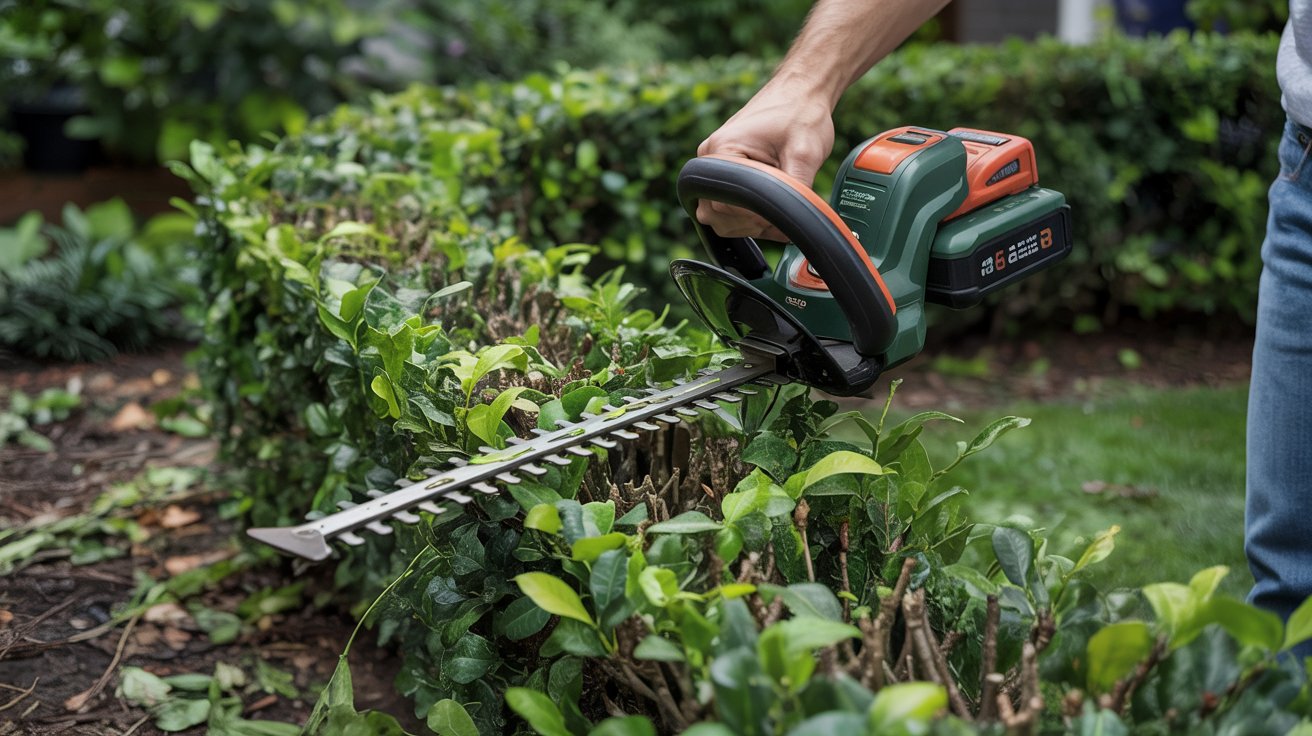
The market in 2026 has shifted hard toward cordless. Battery technology has finally caught up to corded performance for most residential jobs, and you no longer have to drag an extension cord across a wet lawn or stay within 50 feet of an outlet.
Choosing the right trimmer depends on three things: blade length, battery voltage, and how much hedge you're actually cutting. A homeowner with 40 feet of boxwood needs something very different from someone managing a half-acre of mixed privacy hedging.
We tested and researched over a dozen models across price ranges to find the best hedge trimmer options for 2026. From lightweight picks for small gardens to high-torque workhorses for thick stems, there's a clear winner for each situation.
If you're also managing lawn edges, our guide to choosing a string trimmer covers that territory in full.
This guide covers what to buy, what to skip, and exactly why each pick earned its spot.
The best hedge trimmers for 2026 are cordless, run on 20V–80V batteries, and cut stems up to ¾ inch thick. Blade length, battery platform, and handle type are the three decisions that matter most when buying.
Our Top Hedge Trimmer Picks for 2026
We evaluated each model on blade gap (determines max stem diameter), cuts-per-minute, battery runtime, and real-world weight with battery installed. Here are the standout performers across five categories.
Remember it later
Planning to try this recipe soon? Save it for a quick find later!
| Model | Voltage | Blade Length | Max Stem | Weight (w/ battery) |
|---|---|---|---|---|
| EGO Power+ HT2411 | 56V | 24 in | ¾ in | 6.9 lb |
| BLACK+DECKER LHT321 | 20V | 22 in | ⅝ in | 5.5 lb |
| DEWALT DCHT860X1 | 60V MAX | 26 in | 1 in | 8.1 lb |
| Greenworks 40V HT-04 | 40V | 24 in | ¾ in | 6.2 lb |
| STIHL HSA 86 | 36V | 24 in | ¾ in | 6.6 lb |
Best Overall: EGO Power+ HT2411
The EGO HT2411 runs on a 56V ARC lithium battery and delivers cuts-per-minute comparable to a corded unit. The dual-action blades reduce vibration significantly over single-action designs, which matters when you're trimming for 30+ minutes straight.
Blade length is 24 inches - long enough for wide hedges but not so unwieldy that overhead cuts become dangerous. The rotating rear handle locks at three angles, which is a genuine advantage when working on sloped or irregular hedgerows.
EGO's 56V platform is cross-compatible with their mowers, blowers, and chainsaws. If you already own one EGO tool, adding the HT2411 as a bare tool (no battery) saves $60–$80 at purchase.
Best Budget: BLACK+DECKER LHT321
At around $60-$70 with battery included, the LHT321 is the most accessible cordless trimmer worth buying. It handles stems up to ⅝ inch and runs about 40 minutes per charge on a 20V MAX battery.
The 22-inch blade is shorter than premium models, but that actually makes it easier to control for beginners. Don't expect it to chew through mature privet - it's built for maintained, lighter-growth hedges trimmed at least twice a season.
Best for Thick Stems: DEWALT DCHT860X1
The DEWALT DCHT860X1 uses a 60V MAX FlexVolt battery and cuts stems up to 1 inch in diameter - the widest gap in its class. That spec matters if you're dealing with established forsythia, lilac hedges, or old boxwood that was skipped for a season.
The 26-inch blade is heavier at 8.1 pounds loaded, so fatigue can set in on long jobs. If you're trimming large volumes, the power advantage justifies the extra weight.
You can find tips on keeping all cutting edges sharp in our guide to blade maintenance techniques.
Best Lightweight: Greenworks 40V HT-04
Greenworks' 40V trimmer weighs just 6.2 pounds with battery, making it the easiest option for overhead work or for gardeners who find heavier tools tiring. The 24-inch dual-action blade cuts up to ¾ inch stems cleanly.
Battery runtime averages around 45 minutes per charge, which covers most medium-sized yards in one session. Greenworks' 40V platform also powers string trimmers, mowers, and a cordless leaf blower if you want to build out a single-battery yard system.
Best Professional-Grade: STIHL HSA 86
STIHL's HSA 86 runs on their AP 300 S battery system and is built for repeated commercial-scale use. Cut quality from the hardened steel blades is noticeably cleaner than any battery trimmer in this list - stems are sliced, not torn.
The price sits above $350 without battery, so this is a tool for serious users or those already in the STIHL battery ecosystem. It's sold exclusively through STIHL dealers, not big-box stores, which is worth factoring into purchase planning.
Cordless vs. Gas vs. Corded: Which Type Fits Your Yard?
Most homeowners no longer have a compelling reason to choose gas or corded over a quality cordless trimmer. But the cases where one type wins are specific enough to call out directly.
Corded electric trimmers are cheaper to buy but the extension cord is a real limitation - and a safety hazard near blades. Unless you're trimming a single small hedge right next to an outlet, corded is the weakest choice in 2026.
Gas makes sense for large properties with hedges exceeding 300 linear feet or stems thicker than 1 inch regularly. If you're weighing similar power-source decisions for your lawn setup, the breakdown on gas vs. electric mowers follows the same logic.
Cordless runtimes drop sharply in cold weather. Below 40°F, expect 20–30% less runtime from lithium batteries. Don't schedule a big hedge job on a cold morning and assume your battery will last.

How to Choose the Right Blade Length?
Blade length is the spec most buyers overlook. It affects reach, maneuverability, and how quickly you cover ground - more than voltage alone.
- 16-18 inch blades: Best for small ornamental shrubs, topiary work, and tight spaces between plants. Easier to control but slower on long stretches of hedge.
- 20-22 inch blades: A solid all-around size for maintained hedges up to 3 feet wide. This is the range most budget cordless trimmers use.
- 24-26 inch blades: Covers more surface per stroke on long hedgerows. Adds weight, so upper-body fatigue is a factor on overhead cuts.
- 30+ inch blades: Found on professional long-reach or pole hedge trimmers. Overkill for standard residential hedges.
A common mistake is buying the longest blade available, assuming it's always faster. On narrow-topped hedges or curved plantings, a longer blade is actually harder to control and leaves more uneven cuts.
Match blade length to your hedge width, not to the highest spec on the box.
Battery Voltage and Runtime Explained
Battery voltage is a rough proxy for power, but it's not the whole picture. A 40V trimmer with a high-capacity 4Ah battery can outlast a 60V unit running a 2Ah pack.
For most yards under a quarter-acre with maintained hedges, 40V at 2-4Ah is entirely sufficient. Step up to 56V or 60V if you're cutting stems thicker than ¾ inch or running the tool for more than 45 minutes without a break.
One underrated factor: battery platform compatibility. Buying a trimmer that shares a battery system with your autonomous mowing setup or other yard tools eliminates the cost of buying redundant chargers and packs.

Single-Action vs. Dual-Action Blades
This distinction matters more than most buyers realize. Single-action blades have one moving blade cutting against a fixed one - cheaper to manufacture, but they transmit more vibration into your hands and arms over time.
Dual-action blades move in opposite directions simultaneously. They're quieter, cut more cleanly, and reduce vibration by roughly 40% compared to single-action designs, according to Penn State Extension equipment research.
Every pick on our list above uses dual-action blades.
If you plan to trim for more than 20 minutes at a time, dual-action blades aren't optional — they're a health decision. Prolonged vibration from single-action tools can contribute to hand-arm vibration syndrome with repeated use over years.
Handle Types and Ergonomics
Most standard hedge trimmers have a fixed rear handle and a front assist handle. That design works fine for vertical face cuts on a flat hedge at waist height.
It fails the moment you go overhead or work at an angle.
Rotating rear handles - found on mid-range and premium models - lock at multiple positions, typically 0°, 45°, and 90°. This is the single most useful ergonomic feature for anyone trimming the tops of hedges taller than chest height.
The EGO HT2411 and DEWALT DCHT860X1 both include this feature.
- Fixed handle: Lighter and simpler. Fine for flat, waist-height hedges. Budget models almost always use this.
- Rotating rear handle: Reduces wrist strain dramatically on overhead and angled cuts. Worth paying extra for if your hedges exceed 4 feet tall.
- Articulating head: Found on pole hedge trimmers. The cutting head pivots independently, useful for reaching over wide hedges without a ladder.
Weight distribution also matters. A trimmer that's blade-heavy will fatigue your front arm faster.
Hold the tool at a retailer if you can - five minutes of simulating cuts will tell you more than any spec sheet. For a broader look at garden gear decisions, browse our lawn and garden tool guides.
When to Use a Pole Hedge Trimmer Instead?
Pole hedge trimmers add an extendable shaft between the handle and blade, letting you cut hedges up to 10 feet high without a ladder. They're not replacements for a standard trimmer - they're an addition for specific jobs.
If your hedges exceed 6 feet tall or you have a privacy screen along a fence line that's difficult to reach from the ground, a pole trimmer saves real time and removes ladder risk.
The tradeoff is control - articulating-head pole trimmers are harder to use for precise shaping than a short fixed-blade unit.
A standard trimmer handles the bulk of the work for most yards. Add a pole model only if ladder work is a regular part of your routine, not a once-a-year situation.
If you're building out a full outdoor tool kit, a pressure washer is often the next logical addition for hardscape and fence cleaning after hedge season.
Hedge Trimmer Safety: What Actually Matters
Hedge trimmers cause more hand and finger injuries than nearly any other garden power tool. The U.S.
Consumer Product Safety Commission records thousands of hedge trimmer injuries annually, the majority involving contact with the blade during repositioning or debris clearing.
The practical rules are short and non-negotiable.
- Wear cut-resistant gloves rated for power tools, not standard garden gloves.
- Keep both hands on the trimmer handles whenever the blade is running.
- Use the blade guard during transport, even for 10-foot carries.
- Turn the tool off completely before clearing debris from the blade.
- Check for hidden wire, irrigation lines, and stakes before cutting.
- Don't reach across a running blade to reposition a branch.
- Don't cut above shoulder height without a tool designed for overhead work.
- Don't remove the blade guard to access tight spaces.
- Don't use a hedge trimmer in wet conditions - slips are far more dangerous with a running blade nearby.
- Don't assume a cordless trimmer is "off" - remove the battery before any maintenance.
Proper stance is underrated. Stand with your weight balanced, never overreach - move your feet instead.
A losing-balance moment with a running hedge trimmer is how serious injuries happen. The OSHA outdoor power tool guidelines are worth reading if you're using trimmers professionally or supervising others.
Maintaining Your Hedge Trimmer Between Seasons
A well-maintained trimmer lasts a decade. A neglected one starts skipping cuts and dragging within two or three seasons.
Maintenance is straightforward and takes under 20 minutes.
If you're also maintaining a full set of hand tools, our guide to keeping edges sharp covers files, honing angles, and when to replace instead of sharpen.
Pairing good trimmer care with a tidy equipment setup - including a garden cart to haul gear - makes end-of-season cleanup much faster.
Best Hedge Trimmer by Hedge Type
The "best" trimmer shifts depending on what you're actually cutting. Soft new-growth privet behaves nothing like mature boxwood or established yew, and buying for your specific plant material saves frustration.
Trimming timing also affects plant health. Most formal hedges should be cut twice per season - once in late spring after the first flush of growth, and once in late summer before hardening off.
Cutting too late in fall on cold-sensitive species like pittosporum can damage new growth before it toughens up, according to Clemson Cooperative Extension.
If your yard includes a range of tools beyond trimmers - string trimmers, blowers, and edgers - knowing the difference between trimmer and edger uses keeps you from buying redundant equipment.
And once hedges are trimmed and fall cleanup starts, a good drip irrigation setup helps stressed plants recover with consistent watering through the season.
Frequently Asked Questions
For stems over ¾ inch, choose a 60V trimmer like the DEWALT DCHT860X1, which handles stems up to 1 inch in diameter cleanly.
Most 40V–56V batteries last 30–60 minutes of active cutting. Runtime drops 20–30% in temperatures below 40°F.
Yes. Dual-action blades reduce vibration by roughly 40% compared to single-action and deliver cleaner cuts on woody stems. Worth it for any session over 20 minutes.
Sharpen once per season for light use, or after every 50 hours of cutting. Dull blades tear plant stems instead of slicing, which slows healing and invites disease.
You can with a stepladder, but a pole hedge trimmer is safer and faster for hedges above 6 feet, eliminating most overhead reach and ladder repositioning.
Pin it for your next best hedge trimmer project.