A well-lit patio changes how you use your backyard from May through October - and honestly, through the holidays too. String lights do more work than almost any other outdoor upgrade: they define the space, extend evenings, and cost far less than a full built-out outdoor kitchen.
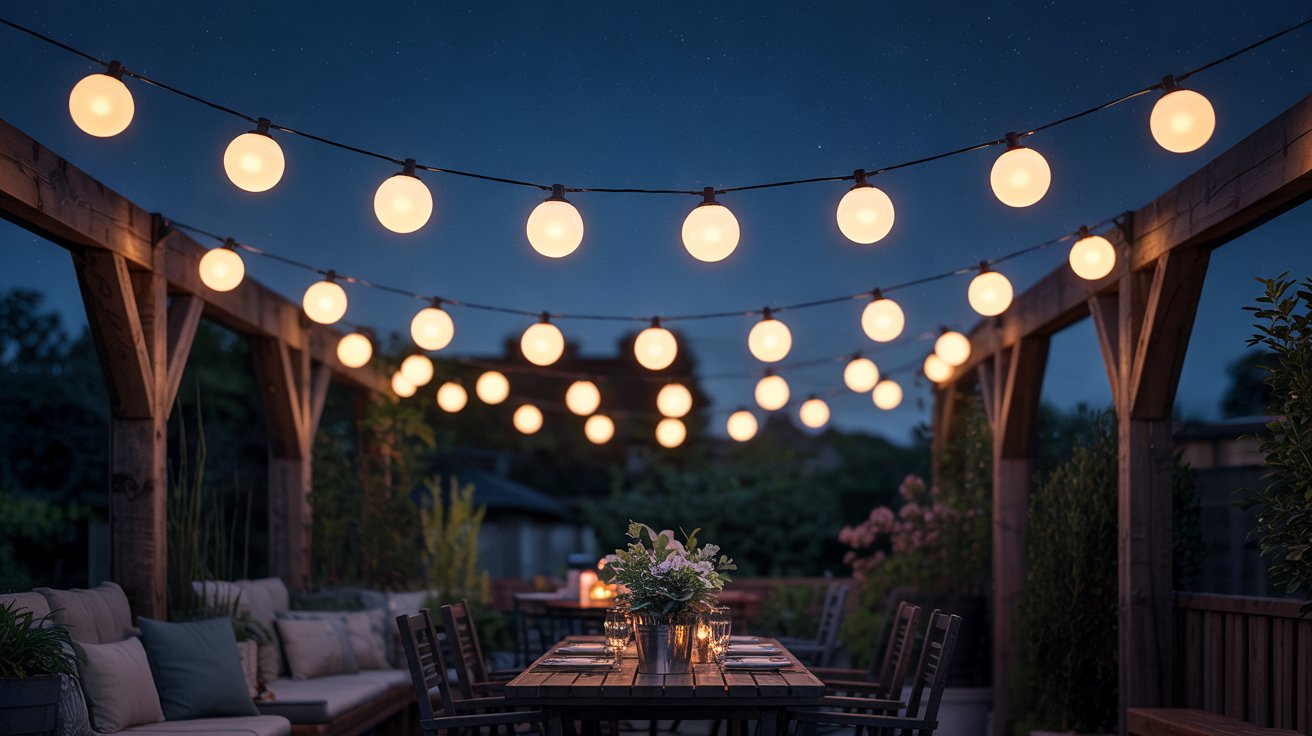
The problem is that the market is flooded with options that look identical online but perform very differently once they're hanging in the rain.
Two core technologies dominate right now: plug-in LED strings and solar-powered strings.
Both have real strengths, and the right choice depends on your outlet access, how many hours of sun your yard actually gets, and how much you want to spend over the next three to five years - not just today.
According to the ENERGY STAR light strings program, LED decorative string lights use roughly 92% less energy than incandescent strings. That gap matters when lights run four to six hours a night all summer.
This guide covers three budget tiers, the LED vs. solar decision, IP ratings, end-to-end connector limits, and a few setup scenarios that work for real patios.
We cut through specs that sound impressive but don't affect your experience, and focus on what actually determines whether your lights last one season or five.
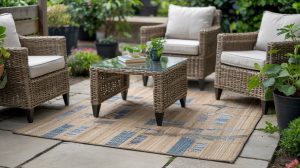
If you're building out the full space, pairing good lighting with weather-resistant seating and tables makes the biggest visual difference per dollar spent.
Outdoor string lights split into two camps: plug-in LED strings for reliable all-night brightness, and solar strings for cord-free convenience. Key specs to check are IP rating, strand length, and end-to-end connector limits.
LED strings save up to 92% energy versus incandescent, while quality solar sets last 6–8 hours per charge in full sun.
Budget Tiers and What Each Gets You
Knowing your price ceiling before you compare products saves a lot of time. String lights sold at every tier differ most in bulb quality, wire gauge, weatherproofing, and warranty length - not just price per foot.
Remember it later
Planning to try this recipe soon? Save it for a quick find later!
Budget sets under $30 typically cover 25-33 feet with G40 plastic globe bulbs and a basic IP44 rating. They work for covered porches but struggle through wet winters.
Mid-range sets ($30-$60) jump to heavier 18-gauge wire, shatterproof G40 or Edison-style bulbs, and IP65 protection. Premium sets ($60-$120+) add dimmable drivers, commercial-grade sockets, longer warranties (often 2 years), and modular end-to-end designs that let you chain multiple strands cleanly.
The ENERGY STAR program confirms that LED strings deliver substantial energy savings versus incandescent - a real consideration at the budget tier, where incandescent sets still appear and look cheaper until you factor in bulb replacements and electricity.
For layered patio lighting results, string lights work best as the ambient layer - combine them with pathway or accent lighting rather than relying on them as the sole source.
| Tier | Price Range | Typical Length | Power Source | IP Rating | Best For |
|---|---|---|---|---|---|
| Budget | Under $30 | 25–33 ft | Plug-in LED | IP44 | Covered porches, occasional use |
| Mid-Range | $30–$60 | 48–50 ft | Plug-in LED or Solar | IP65 | Most patios, regular use |
| Premium | $60–$120+ | 50–100 ft | Plug-in LED (dimmable) | IP65–IP67 | Year-round, commercial-grade durability |
| Solar Only | $20–$55 | 33–72 ft | Solar | IP44–IP65 | Areas without outlet access |
LED vs. Solar: Which to Choose
This decision comes down to two practical questions: do you have a weatherproof outdoor outlet within reach, and does your patio get at least 6 hours of direct sun daily? If both answers are yes, either type works.
If either answer is no, one option pulls clearly ahead.
Plug-in LED strings perform consistently regardless of cloud cover, seasons, or how long the party runs. Solar strings depend entirely on panel placement and daily sun exposure - they typically store 6-8 hours of runtime on a full charge, which is enough for summer evenings but can fall short on cloudy days or in shaded yards.
According to UL safety standards, look for UL 588 listing on seasonal strings and newer DGZW classification on year-round outdoor sets - both signal the product has passed independent safety testing for outdoor use.
LED efficiency is well-documented: the ENERGY STAR decorative strings data shows LEDs are far more efficient than incandescent for long evening patio use.
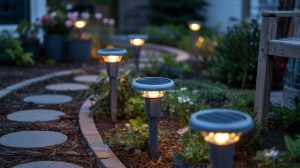
For solar pathway lighting in the same yard, our guide to choosing solar path lights covers panel sizing and placement in more detail.
- Consistent brightness every night, regardless of weather or season
- Dimmable options available at mid and premium tiers
- Wider range of bulb styles, sizes, and color temperatures
- Higher IP ratings more commonly available (IP65–IP67)
- Zero electricity cost after purchase — no running cord needed
- Ideal for fences, pergolas, or areas far from outlets
- Easy to reposition without rewiring or extension cords

Key Buying Criteria and Setup Tips
Once you've picked LED or solar, five specs determine whether a set actually suits your patio. Skipping these leads to the most common complaints: lights that fail after one rainstorm, gaps in coverage, or strands you can't dim for dinner versus a full party.
IP rating is the most overlooked spec. IP44 handles light splashing but not sustained rain.
IP65-rated lights resist heavy rain and direct water jets - that's the solid baseline for any uncovered patio. IP67 adds submersion tolerance, which matters in flood-prone areas or near pools.
- Length and coverage: Measure your patio perimeter or hang distance first. A 25-ft strand covers roughly a 12×12 space in a single diagonal run; most patios need 50-100 ft total across multiple strands.
- End-to-end connectors: Most manufacturers cap safe end-to-end connections at 3-5 strands on a single circuit. Exceeding this risks tripped breakers or overheated wire. Check the package limit before buying multiples.
- Bulb style: G40 globes (1.5-inch diameter) cast warm ambient light. Edison-style ST64 bulbs give a dimmer, more directional glow. Both come in LED; avoid incandescent versions at the same price point.
- Dimming compatibility: Only some LED strings work with standard wall dimmers - look for "dimmable" on the label, or buy sets with an inline dimmer switch already built in.
- Warranty length: Budget sets rarely include more than a 90-day warranty. Mid and premium sets typically offer 1-2 years, which reflects actual bulb lifespan expectations.
The DOE exterior lighting guide notes that pairing exterior lights with networked or timer controls extends efficiency further - a $15 outdoor smart plug gives any string light set automatic on/off scheduling and energy monitoring.
Run your string lights along a rope or cable guide wire rather than the power cord itself — this distributes the weight evenly and prevents sag over 20-foot spans. Use cup hooks rated for at least 5 lbs at anchor points.
| Spec | Minimum | Recommended |
|---|---|---|
| IP Rating | IP44 | IP65 or higher |
| Wire Gauge | 22 AWG | 18 AWG |
| Max End-to-End | Check label | 3 strands max per circuit |
| Bulb Type | LED only | Shatterproof LED globe |
| Safety Listing | UL listed | UL 588 or DGZW rated |
| Warranty | 90 days | 1 year minimum |
Seasonal Setup Scenarios
The patios that get the most use year-round aren't the largest - they're the ones set up for flexibility. String lights that work in July need to handle October rain, winter holiday installs, and the occasional humid August night without corroding at the socket joints.
For a summer dining setup, run two 48-ft LED strands in a crisscross pattern overhead, anchored to four corner posts. This covers a 12×16 dining area with enough height (8-9 ft) to avoid head clearance issues.
Add a shade umbrella to block midday sun and drop the lights on a timer for 7 PM auto-on. For holiday installs, the same strands layer with shorter icicle or wrap-style sets - just verify the combined wattage stays under your circuit's safe load.
A 15-amp outdoor circuit handles roughly 1,800 watts, and a 50-ft LED string typically draws only 24-40 watts total.
For rain-heavy climates or fully exposed patios, modular layouts with individual IP65 strands are easier to repair - one failed 25-ft section can be swapped without pulling the whole run. Pair your lighting plan with a weather-rated outdoor rug and a patio mosquito control setup to make the space genuinely usable across more months.
For more complete backyard planning, the patio and outdoor space design section covers layout principles that apply to any size yard.
In regions with fewer than 4 peak sun hours daily — the Pacific Northwest, New England fall/winter — solar strings lose reliability from October through March. The DOE lighting design guidance recommends smart or upgradable configurations that let you swap solar panels for plug-in power during low-sun months without replacing the full strand.
If your patio plans extend to a hot tub or outdoor kitchen, check our guides on hot tub type selection and building a DIY outdoor kitchen - both spaces benefit from dedicated circuit planning that can share load with your string light runs.

Frequently Asked Questions
Measure your hang distance first. Most 12×16 patios need 50–100 total feet across two or three strands to achieve full coverage without gaps.
Yes, if the panel gets 6+ hours of direct sun daily. Expect 6–8 hours of runtime per full charge; cloudy days reduce output noticeably.
Most manufacturers limit safe connections to 3–5 strands per circuit. Exceeding that risks overheating the wire or tripping a 15-amp breaker.
IP65 is the practical minimum for uncovered patios — it resists heavy rain and direct water jets. IP44 only handles light splashing and suits covered porches.
Yes. Quality LED string lights typically last 3–5 years with regular use, versus 1–2 seasons for incandescent bulbs, while using 92% less energy.
Pin it for your next best outdoor string lights project.