Picking the wrong shed is an expensive mistake. You end up with a rusting steel box that sweats in summer heat, a warped wood frame that soaks up Pacific Northwest rain, or a resin shell too flimsy to hold a riding mower.
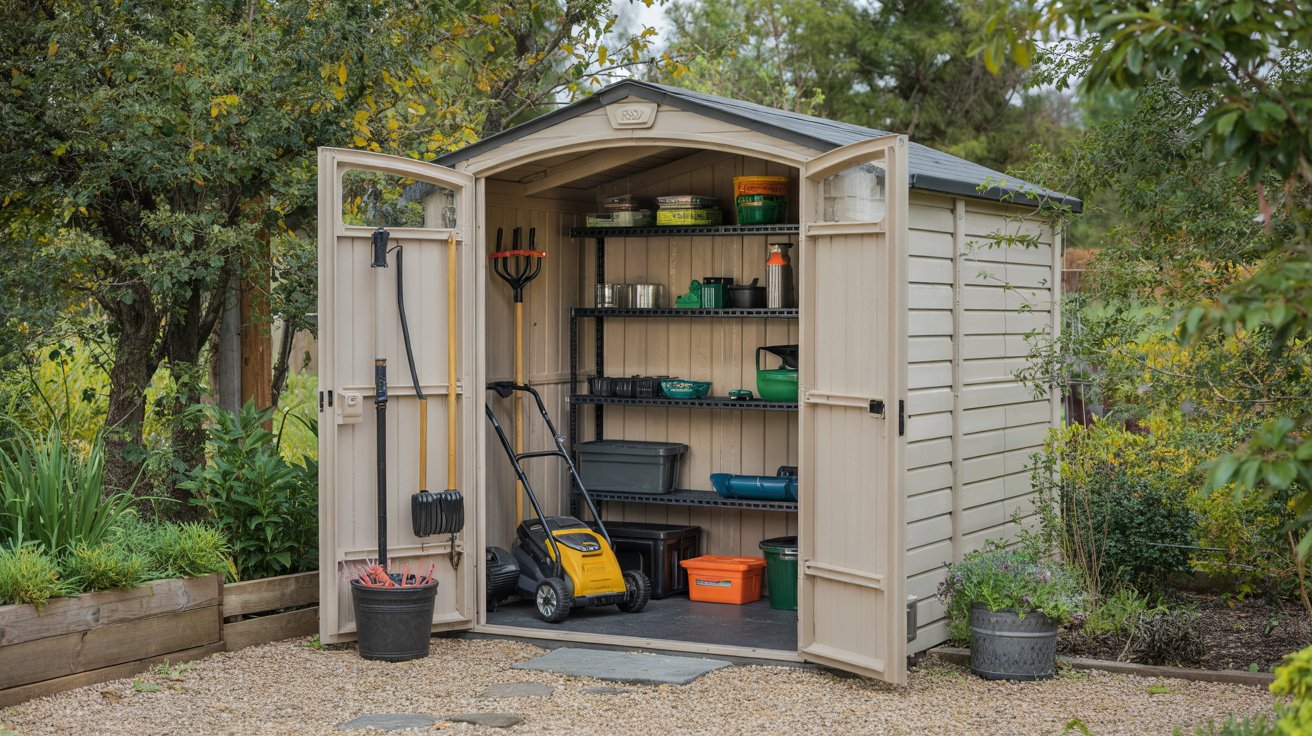
Getting it right means matching material to climate, size to budget, and features to how you actually plan to use the space.
The best outdoor storage shed for your yard depends on three factors: what you're storing, where you live, and how much upkeep you're willing to do.
Resin sheds typically run $300-$1,500, steel sheds $400-$3,000, and wood sheds $900-$10,000-plus for large kits or custom builds. Those ranges overlap, but the maintenance costs, climate performance, and customization potential are very different at each price point.
This guide walks you through a material comparison, a step-by-step decision process, and a shopping plan built around real budget tiers. Where we recommend specific products, those links may be affiliate links - we'll note that clearly in the relevant section.
The shed buying guide from Lowe's is a useful starting point for understanding local permit requirements and feature priorities before you buy.
This guide compares resin, steel, and wood sheds across price, durability, and climate fit. You'll leave with a material-specific decision framework, a step-by-step buying process, and a budget plan covering sheds from entry-level to premium.
Many municipalities require a permit for sheds over 100–200 sq ft. Check local zoning rules before ordering. The Tractor Supply buying guide covers how material choice and shed size affect both cost and permitting thresholds.
Material Deep Dive: Resin, Steel, and Wood
Each shed material has a distinct performance profile. Choosing by price alone often leads to a mismatch between what you buy and what your yard or climate actually demands.
Remember it later
Planning to try this recipe soon? Save it for a quick find later!
Resin sheds - made from high-density polyethylene or vinyl - are the simplest to maintain. They don't rot, rust, or need painting, and assembly usually takes one afternoon.
Their weakness is rigidity: large resin sheds can flex or crack under heavy snow loads, and most max out around 10×12 feet before structural concerns arise.
Steel sheds offer the most square footage per dollar, and many manufacturers now coat panels with galvanized or powder-coated finishes that hold up for 15-20 years with basic care.
They're prone to condensation on the interior, which can damage stored tools and equipment if ventilation is poor.
Wood sheds are the most customizable and the most visually versatile - you can match siding, add windows, or build loft shelving. The tradeoff is real upkeep: staining or painting every 3-5 years is mandatory in most climates, and untreated wood in wet zones can begin rotting within a decade.
The wood vs metal shed comparison from ShelterLogic breaks down how durability and maintenance differ across these two materials.
If you're deciding between similar vinyl and wood material costs elsewhere in your yard, the same climate logic applies to sheds.
| Factor | Resin | Steel | Wood |
|---|---|---|---|
| Typical price (8×10) | $300–$900 | $400–$1,200 | $900–$3,000 |
| Typical price (12×16) | $900–$1,500 | $1,200–$3,000 | $2,500–$10,000+ |
| Maintenance level | Very low | Low–moderate | High |
| Best climate | Mild to moderate | Dry to semi-arid | Any (with upkeep) |
| Snow load tolerance | Low–moderate | Moderate–high | Highest |
| Customization | Limited | Limited | Very high |
| Typical lifespan | 10–20 years | 15–25 years | 20–50 years |
According to the Lowe's shed guide, size is the single biggest price driver regardless of material - a larger footprint adds cost at every tier.
How to Choose: A Step-by-Step Process?
Working through this process in order saves you from buying a shed that looks right but fails on the details. Each step narrows your options until you're comparing just two or three specific models.
The Tractor Supply shed guide outlines how shade placement, available space, and material choice all interact with final price - worth reading before you finalize dimensions.
Planning an expanded outdoor space beyond just storage? Budgeting for a full outdoor kitchen build follows the same installed-cost logic - base unit price rarely tells the whole story.
Before finalizing size, inventory everything you plan to store — lawn equipment, bikes, seasonal décor, tools. Most buyers underestimate volume and wish they'd gone one size up. A 10×12 shed fills faster than you expect once you add a mower and workbench.
Direct Comparison: Resin vs Steel vs Wood
Side-by-side, these three materials look similar on a spec sheet but diverge sharply in real-world performance. This section gives you a direct verdict for four common buyer scenarios.
For wet climates - Pacific Northwest, Gulf Coast, or anywhere averaging over 55 inches of rain - resin or treated wood are the safer bets. Steel panels can handle rain, but seams and floor joints rust from the inside out if water finds a way in.
The ShelterLogic comparison guide details how metal sheds can corrode at fastener points even in moderate rainfall zones.
Wood wins on customization and longevity when properly maintained - but it demands the most ongoing effort. Resin wins for renters, low-maintenance households, and mild climates.
According to the Tractor Supply material guide, resin sheds are a strong fit for storing lawn and garden gear where appearance and low upkeep take priority over size or structural strength.
- Lifespan of 20–50 years with proper staining and sealing
- Fully customizable — add windows, lofts, or custom siding
- Best insulation and temperature buffering of the three materials
- Holds fasteners better for heavy shelving and wall-mounted racks
- Wood requires staining or painting every 3–5 years
- Highest upfront cost — entry-level wood kits start at $900+
- Susceptible to rot and pest damage without treatment
- Heavier and more complex to assemble or relocate
For backyard storage and organization in general, matching the structure to your specific outdoor lifestyle matters more than defaulting to one material.
Budgeting and Shopping Plan
Knowing your material is only half the plan. You also need to account for the accessories and site prep that determine whether your shed works well or just sits there.
Base shed prices vary by material and size, but foundation and anchoring costs are consistent regardless of what you buy. Skipping these adds-ons increases the risk of structural problems within the first few years, especially in areas with high winds.
The Lowe's budget guide emphasizes that foundation type directly affects both durability and total installed price.
A full shopping plan should include more than just the shed itself. These are the accessories worth budgeting for at purchase time:
- Anchor kit: Most sheds need ground anchors or tie-downs - budget $30-$80 and check that your kit includes the hardware for your foundation type.
- Floor kit or flooring panels: Some resin and steel sheds omit floors; adding one costs $80-$250 and keeps stored items off damp ground.
- Shelving system: Freestanding metal shelves ($50-$200) maximize vertical storage - essential if you're storing small tools, pots, or seasonal gear.
- Ventilation panels or vents: Critical for steel sheds to prevent condensation; often factory-included on resin models but may cost $20-$60 to add to steel kits.
- Lockable door hardware: Basic pad-lock hasps come on most units; upgrading to a deadbolt-style lock adds about $15-$40 for better security.
If you're also planning raised beds nearby, a well-built raised bed setup is another area where foundation prep and material choice drive long-term value.
Affiliate Strategy and Seasonal Timing
Shed prices are not static. Retailers run clearance events in late summer (August-September) when new inventory arrives, and again in late winter (February-March) as the spring buying season approaches.
Buying during these windows can save 15-25% on the same model.
Kit sheds from brands like Best Barns or Arrow often go on promotion at home improvement retailers during spring outdoor events. The Best Barns buying guide explains how kit vs. prebuilt timing affects both price and delivery lead times.
Some links in this guide are affiliate links — we may earn a small commission if you purchase through them, at no extra cost to you. We recommend checking the same model across two or three retailers before buying; prices on sheds can vary by $100–$300 for identical SKUs depending on the retailer's current promotion cycle.
The Lowe's seasonal guide notes that availability for popular sizes tightens in spring - ordering in February or March gives you more size and color options before stock runs low.
If you're comparing big outdoor investments in the same season, weighing an above ground vs inground pool or a pellet vs charcoal grill follows the same seasonal pricing logic - spring is peak demand, and buying slightly before or after saves real money.
For other large outdoor purchases like a hot tub decision, budgeting pool costs, or sourcing durable outdoor furniture, the same affiliate-aware shopping approach applies - compare installed cost, not just sticker price. Timing a DIY outdoor kitchen build with end-of-season appliance deals follows identical logic.
Frequently Asked Questions
Resin is the most moisture-resistant option since it won't rot or rust. Pressure-treated wood sheds sealed every 3–5 years are a strong second choice in high-rainfall regions.
Yes — resin sheds typically start around $300 versus $900+ for entry-level wood kits. Resin also has near-zero ongoing maintenance costs, widening the long-term savings gap.
All sheds benefit from a foundation — bare soil causes moisture damage within a few years. A gravel pad ($100–$300) is the minimum for resin and steel; concrete slabs are recommended for large wood sheds.
Galvanized steel sheds typically last 15–25 years. Well-maintained wood sheds can last 20–50 years, but require repainting or staining every 3–5 years to achieve that lifespan.
Wood sheds are by far the easiest to customize — you can add windows, loft storage, or matching siding. Resin and steel kits have fixed panel designs with very limited modification options.
Pin it for your next best outdoor storage shed project.