A chainsaw is one of those tools that either earns its place fast or collects dust because the buyer got it wrong on the first purchase.
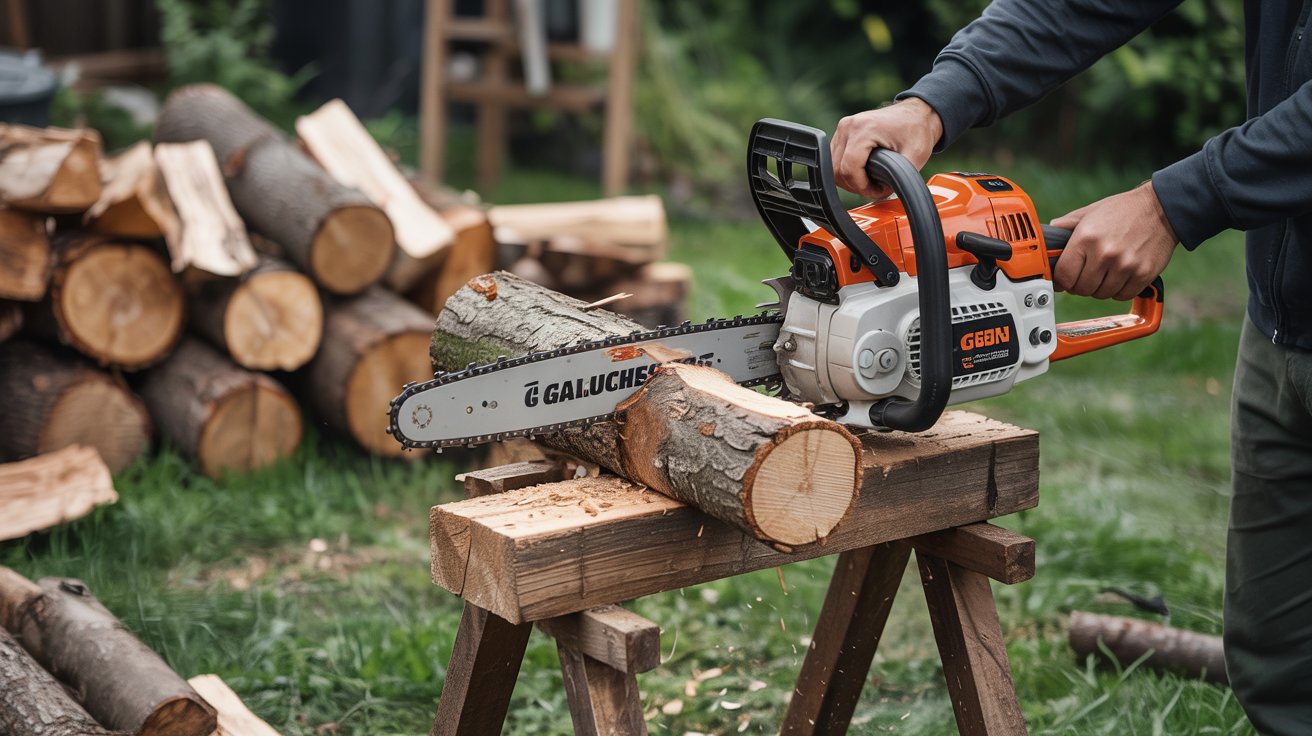
Storm debris stacked across the driveway, a dead oak limb hanging over the fence, a cord of firewood to split before October - these are the moments that reveal whether a saw is the right fit or a frustrating mismatch.
Most homeowners only need a chainsaw a handful of times per year. That changes what matters in a purchase.
Unlike professional loggers or arborists, you're optimizing for ease of startup, low maintenance, and manageable weight - not raw power or all-day runtime. A 20-volt battery saw handles most suburban yards without a trip to the gas station or a carburetor cleaning session.
This guide maps chainsaw selection and maintenance to the tasks you actually face, not the tasks a professional might. We cover power sources, bar lengths, top models across four budget tiers, and the maintenance steps that keep any saw running safely.
Whether you're trimming small yard trees or handling post-storm cleanup, the sections below give you a decision path that ends with confidence, not buyer's remorse.
This guide helps homeowners choose between battery, gas, and corded chainsaws based on real yard tasks, bar length, weight, and budget.
We cover four price tiers from under $150 to above $500, plus a maintenance routine and safety checklist to keep any saw running safely all season.
How to Choose: A Homeowner's Framework?
Before looking at any model, answer three questions: What will you cut, how far from an outlet, and how often? Those answers rule out entire categories faster than any spec sheet.
Remember it later
Planning to try this recipe soon? Save it for a quick find later!
Following a clear sequence prevents the most common mistake - buying on brand recognition instead of fit.
Buy the battery platform first, not the saw. If you already own 40V or 60V batteries from a string trimmer or battery-powered yard cleanup tools, stay in that ecosystem and you'll save $60–$100 on a bare-tool chainsaw purchase.
Power Options: Battery vs Gas vs Corded
Each power source has a narrow sweet spot for homeowners. Matching the source to your use frequency and property size matters more than brand reputation.
Battery chainsaws have improved dramatically over the past five years. A 60V or 80V battery model now matches gas performance on cuts up to 16 inches, with zero emissions and push-button starting.
| Power Source | Best Use | Runtime / Tank | Maintenance | Emissions |
|---|---|---|---|---|
| Battery (40V–80V) | Pruning, light storm cleanup | 30–60 min per charge | Low — no fuel mixing | Zero (outdoor use) |
| Gas (2-cycle) | Firewood, heavy storm debris | 45–90 min per tank | High — carb, filter, plug | High |
| Corded Electric | Close-to-house pruning | Unlimited (plugged in) | Very low | Zero |
Gas still wins for remote or high-volume work. A full tank runs 45 to 90 minutes continuously, making it the right call for clearing acreage after a major storm or cutting a season's supply of firewood.
The USDA National Saw Program trains professional sawyers on gas saws specifically because of startup and kickback complexity. That same complexity is why most first-time homeowner buyers are better served starting with battery.

Bar Length and Weight: What Works for Home Yards
Bar length directly controls what diameter log you can cut in one pass. A bar needs to be at least 2 inches longer than the log's diameter to cut cleanly without repositioning.
Weight determines how long you can work safely. Arm fatigue on a heavy saw increases the chance of losing control, especially overhead.
| Task | Recommended Bar | Max Log Diameter | Typical Saw Weight |
|---|---|---|---|
| Pruning / limbing | 10–14 in | Up to 12 in | 7–9 lbs |
| Storm debris cleanup | 14–16 in | Up to 14 in | 8–11 lbs |
| Firewood cutting | 16–18 in | Up to 16 in | 10–13 lbs |
| Large tree felling | 18–20 in | Up to 18 in | 12–14 lbs |
Kickback risk increases with bar length. A longer bar has a larger nose zone - the tip area most likely to contact wood and snap back toward the operator.
Missouri Extension chainsaw safety recommends homeowners avoid bars over 16 inches unless they have formal training.
For most suburban lots, a 14-inch bar weighing under 10 lbs is the practical ceiling. It handles downed limbs and pruning without the added kickback exposure of a longer bar.
Weight matters as much as bar length for homeowner safety. Oklahoma State safe-use guidelines flag operator fatigue as a primary contributor to chainsaw injuries among infrequent users.
A saw you can hold steady for 20 minutes of continuous work is safer than a more powerful model that tires you out in 10. If a saw feels heavy in the store, it will feel twice as heavy an hour into storm cleanup.
Also consider balance point. Front-heavy saws cause shoulder fatigue faster.
Pick up the saw in the store and hold it at chest height for 30 seconds - that's a reliable fatigue test before you commit.
Top Models by Budget
The right saw exists at every price tier. What changes is battery voltage, bar length, brand support, and build quality - not necessarily safety or ease of use.
These picks prioritize homeowner-relevant features: easy startup, low vibration, accessible replacement parts, and chain brake standard on every model.
| Budget Tier | Model | Bar / Power | Best For | Key Feature |
|---|---|---|---|---|
| Under $150 | Worx WG303.1 | 16 in / corded | Close-yard pruning | Instant start, 14.5A |
| $150–$300 | Greenworks 40V 14-in | 14 in / 40V battery | Pruning, light debris | Brushless motor, 2Ah |
| $300–$500 | DeWalt DCCS670X1 | 16 in / 60V battery | Storm cleanup, firewood | Flexvolt compatible |
| Above $500 | Husqvarna 135 Mark II | 16 in / gas 38cc | Firewood, heavy work | X-Torq low-emission engine |
At the under-$150 tier, corded models dominate. The Worx WG303.1 runs on a 14.5-amp motor, starts instantly, and weighs under 9 lbs.
It's a solid entry point for homeowners with a single pruning task and an outlet nearby.
The $150-$300 range is where battery saws become genuinely capable. The Greenworks 40V 14-inch uses a brushless motor that extends both battery life and motor longevity.
Pair it with a 4Ah battery for roughly 45 minutes of cutting per charge.
- Zero startup hassle — push-button start, no choke, no fuel mixing required.
- Lower maintenance — no carburetor, air filter, or spark plug to service annually.
- Quieter operation — typically 90–95 dB vs 105–110 dB for gas models.
- No emissions — safe to use in enclosed spaces like a garage for prep work.
- Runtime advantage — a full tank outlasts even the largest battery pack for extended sessions.
- Power at the tip — gas engines maintain chain speed better under load in dense hardwood.
- Field-refuelable — no charger or outlet needed mid-job on remote property.
- Proven cold-weather performance — battery capacity drops sharply below 32°F.
The DeWalt DCCS670X1 at the $300-$500 tier uses the 60V Flexvolt platform, meaning the same battery powers a circular saw, reciprocating saw, and more. For homeowners already in the DeWalt ecosystem, this is the strongest value per dollar.
Above $500, the Husqvarna 135 Mark II represents the entry point for a professional-grade gas saw. Its 38cc X-Torq engine reduces fuel consumption by up to 20% versus standard 2-cycle engines.
This tier makes sense only for homeowners with large acreage or regular firewood needs. OSHA chainsaw PPE guidance applies equally to all tiers - chaps, face shield, and gloves are non-negotiable regardless of price point.
Review the Oklahoma State safe-use guidelines before operating any new saw.
Compare the total cost of ownership, not just sticker price. A $250 battery saw that shares batteries with your string trimmer effectively costs far less than its label suggests. Factor in bar oil, chain replacements, and fuel costs over three years before deciding gas saves money.

Maintenance and Safety for Homeowners
A neglected chainsaw is a dangerous chainsaw. Chain tension loosens during normal use, bar oil depletes faster than most owners expect, and a dull chain forces the operator to push harder - which increases kickback risk.
This six-step routine takes under 20 minutes and should run before every session for a stored saw and monthly during active cutting season.
OSHA's startup protocol requires inspecting the chain brake before every use. Squeeze the front hand guard toward the bar — it should engage instantly. If it doesn't catch, the saw is unsafe to operate. Also check your pressure washer for equipment cleaning — rinse down the bar and external housing after dusty cutting sessions.
Common Mistakes and Quick Fixes
Most homeowner chainsaw problems trace back to three decisions made before the first cut: buying the wrong size, skipping safety gear, or ignoring maintenance until something breaks.
Buying too small is just as problematic as buying too large. An underpowered saw bogs down in dense wood, forcing the operator to apply pressure and increasing both chain slip and operator fatigue.
Match the saw to your largest realistic cut, not your smallest.
Skipping chain brake checks is the most common safety shortcut among homeowners. The brake is your last line of defense in a kickback event. If a model you're considering doesn't list an inertia-activated chain brake as a standard feature, move on.
The fix for most maintenance failures is simple: build a 5-minute pre-cut checklist and run it every time. Chain tension, bar oil level, and chain brake check - those three steps catch 80% of issues before they become dangerous.
The USDA National Saw Program offers structured sawyer training that transfers directly to homeowner safety habits. Many state forestry departments run shortened versions for residential users — worth a half-day if you plan heavy cutting. Pairing a proper saw with a stable hauling option makes debris removal far safer after felling.
Frequently Asked Questions
The Greenworks 40V 14-inch is the strongest value under $300, offering a brushless motor and roughly 45 minutes of cutting per 4Ah charge — enough for most suburban tasks.
Battery wins for occasional homeowners cutting less than an hour per session. Gas makes sense only if you cut firewood regularly or work far from any electrical source.
Most lithium-ion chainsaw batteries hold capacity for 300–500 charge cycles. Stored at 50–80% charge in temperatures above freezing, they typically last 5–7 years for homeowner use.
Yes — cordless saws are generally safer for beginners because they start predictably and lack the kickback-prone compression of a gas engine, but PPE and chain brake checks are still mandatory.
Sharpen after every 2–3 hours of cutting, or immediately if the saw stops pulling itself through wood. A chain that contacts soil or rocks needs sharpening right away regardless of hours used.
Pin it for your next best chainsaw for homeowners project.