February sits at that awkward in-between: winter hasn't fully loosened its grip, but the soil and seed catalogs are both starting to stir.
Knowing exactly what to plant - and when - saves you from jumping the gun or losing a full growing season to a late frost.
This guide gives you a zone-aware February planting calendar covering vegetables, herbs, and flowers. It covers indoor seed starting timelines, direct-sow windows for cool-season crops, and the soil temperature thresholds that actually determine success.
According to OSU Extension horticulture tips, February's cool-season planting window commonly centers on crops like cabbage, lettuce, spinach, and peas around February 15 to March 10, depending on your region. That window narrows or widens based on your last frost date and current soil temperature.
Soil temperature is the real trigger. At least 40°F at planting depth is the standard minimum for most cool-season seeds to germinate reliably outdoors.
Air temperature can fool you; a thermometer in the soil won't.
If you want to know what January's slower pace looked like by comparison, you'll see just how fast the February window opens up across warm and transitional zones.
February is prime time for cool-season indoor starts and early direct sowing in warmer zones. Soil temperature must hit 40°F before outdoor seeding.
Warm-season crops like tomatoes and peppers go indoors now, 6–8 weeks before last frost.
February Garden Guidelines
February gardening rewards preparation over impulse. The two questions that matter most are: what is the soil temperature at seed depth, and how many weeks until your last frost date?
Remember it later
Planning to try this recipe soon? Save it for a quick find later!
For cool-season crops, 40°F soil temperature is the minimum threshold for germination outdoors, as confirmed by Oklahoma State Extension. Check soil temp with an inexpensive probe thermometer before you scatter a single seed.
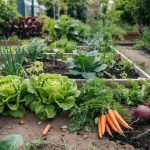
- Cool-season direct sow: Crops like spinach, lettuce, peas, and carrots can go directly into the ground once soil hits 40°F and your last frost is 4-6 weeks out.
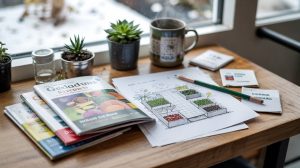
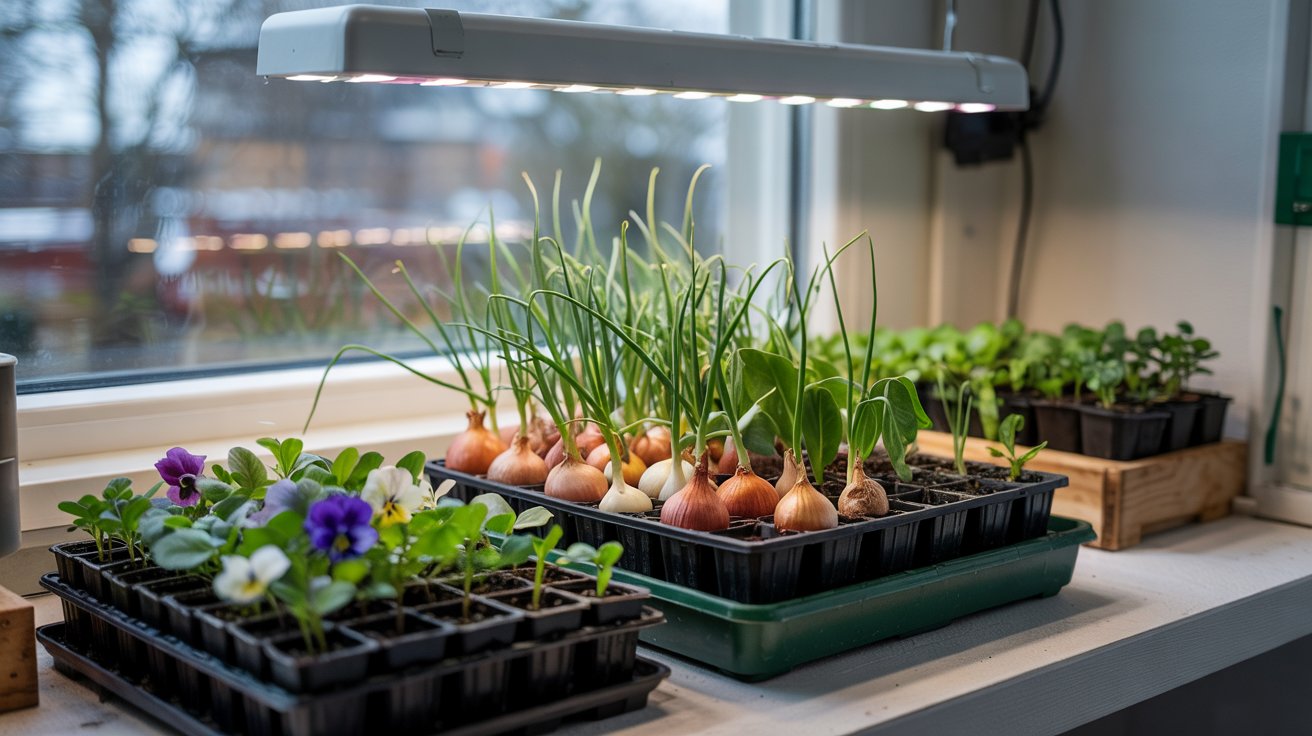
- Warm-season indoor starts: Tomatoes, peppers, and eggplants should be started indoors 6-8 weeks before last frost, which for many Zone 6-7 gardeners means mid-to-late February is exactly the right moment.
- Herbs indoors: Basil, parsley, and cilantro all benefit from a February indoor start. Basil, in particular, needs warm soil (above 60°F) and should never go outdoors until frost risk has passed.
- Flowers for transplant: Slow-starting flowers like pansies, snapdragons, and petunias can be seeded indoors in February for transplanting in spring.
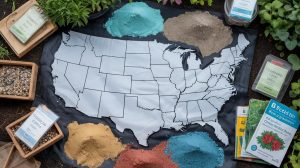
Frost dates vary significantly by zone - a gardener in Zone 9 may have their last frost in early January, while Zone 5 gardeners won't see frost-free soil until mid-May.
You can confirm your precise last frost date using your local zone lookup before committing transplants outdoors.
Use a soil thermometer at a depth of 2–3 inches — not surface level — to get an accurate reading. Surface soil warms faster and gives a falsely optimistic result.
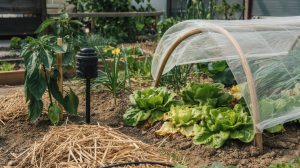
Frost protection matters even when you're sowing cool-season crops. Row covers, cold frames, and low tunnels can keep soil and air temperatures a few degrees warmer, which is sometimes all you need to push an early sow forward.
For warm-season transplants started indoors, lighting is often the limiting factor in February. Seedlings need 14-16 hours of light per day to develop properly.
A basic grow light on a timer is cheaper than restarting stunted seedlings in April.
Zone 8–10 gardeners can direct sow many cool-season vegetables outdoors in February without frost protection. Zone 5–6 gardeners should focus on indoor starts and wait until late February or early March to test soil temperature for outdoor sowing.
The full vegetable planting calendar breaks down specific crop windows month by month if you want to plan beyond February now.
February Zone Windows (Veg, Flowers, Herbs)
Zone matters more in February than in almost any other month. A Zone 9 gardener in central California is transplanting tomato starts while a Zone 4 gardener in Minnesota is still under snow, running grow lights indoors.
The table below maps common February actions by zone group.
According to university extension data, crops like cabbage, lettuce, spinach, peas, and carrots share a February 15 to March 10 direct-sow window across many mid-latitude regions, with beet timing shifting later depending on regional frost dates.
| Zone | Outdoor Direct Sow | Indoor Starts | Notes |
|---|---|---|---|
| Zone 3–4 | None yet | Onions, leeks, pansies | Last frost: May–June; focus entirely on indoor starts |
| Zone 5–6 | Test soil temp late Feb; peas if 40°F+ | Tomatoes, peppers, eggplant, snapdragons | Start warm-season crops indoors 6–8 weeks before last frost |
| Zone 7 | Spinach, lettuce, carrots (mid-Feb) | Tomatoes, peppers, basil | Feb 15–Mar 10 window opens for cool-season direct sow |
| Zone 8 | Cabbage, peas, beets, lettuce, herbs | Peppers, eggplant (early Feb) | Frost risk mostly past; row covers for overnight dips |
| Zone 9–10 | Tomatoes, cucumbers, squash (transplants) | Summer crops for succession planting | Full spring garden underway; watch for heat stress by April |
Flowers follow a similar zone logic. In Zones 3-5, February is the right moment to start slow-growing annuals - petunias, lobelia, and snapdragons - indoors under lights.
In Zones 7-8, cool-season flowers like pansies and stock can be direct sown or transplanted outdoors now. You can plan ahead for later blooms by checking fall-blooming flower options to fill gaps after summer heat.
Herbs split along similar lines. Parsley, chives, and cilantro tolerate cool soil and can go outdoors in Zone 7+ once temps stabilize above 40°F.
Basil and lemon verbena need warmth - start them indoors regardless of zone, and don't transplant until nighttime lows stay above 50°F.
Peas are one of the earliest outdoor sowings possible — they germinate in soil as cold as 40°F and actually prefer cool growing conditions. In Zone 7+, sowing peas on February 15 is a reasonable target if winter has been mild.
One practical benchmark: if your March planting list looks packed, February indoor starts are what make that list achievable. Getting tomatoes, peppers, and slow annuals under lights now means you won't be scrambling to buy overpriced starts at the garden center in April.
February Tasks by Week
Breaking February into four weekly windows keeps the workload manageable and ensures you don't miss critical soil temperature or frost-date milestones. Each week has a distinct job.
Per extension guidelines, warm-season transplants should be started indoors 6-8 weeks before last frost, and cool-season outdoor sowing aligns to the February 15-March 10 window when soil reaches 40°F.
Zones 8-10 gardeners can compress this timeline - by Week 3, many warm-season transplants are already going into the ground rather than starting indoors. Zones 3-4 gardeners may spend all four weeks on indoor starts, with no outdoor sowing until late April or May.
If you missed the January indoor sowing window for onions and leeks, Week 1 of February is your catch-up moment. Those crops need 10-12 weeks indoors before transplanting and won't recover if started too late.
For a full month-by-month view of what comes next, the May planting guide shows when the warm-season push peaks.
Zone-Adaptive Tips
Not every yard matches its zone exactly. A south-facing slope, a brick wall that holds heat, or a low-lying frost pocket can shift your effective planting window by two or more weeks in either direction.
These microclimates are worth mapping before you commit to a sowing date.
Season extenders close the gap between what your zone allows and what you want to grow. According to Colorado State Extension, season extenders can add two to six weeks to the growing season - a meaningful gain when February outdoor sowing feels risky.
In Zones 3–5, cold frames and low tunnels are almost essential for any February outdoor activity. In Zones 8–10, season extenders shift from frost protection to shade cloth and mulch, which moderate soil heat rather than add warmth.
Cold frames, in particular, let cooler-zone gardeners push cool-season crops outdoors earlier.
Research from the University of Minnesota Extension confirms that cold frames and simple season extenders can meaningfully advance outdoor crop timing in cooler zones - a practical reason to set one up now rather than waiting for spring.
A simple cold frame built from old windows and scrap lumber costs under $30 and can raise nighttime soil temperature by 5–10°F. That buffer is often enough to push a Zone 6 gardener into Zone 7 territory for cool-season sowing.
Warm-zone gardeners face the opposite challenge: planning succession plantings so cool-season crops finish before summer heat sets in. If you're in Zone 9, your February lettuce and spinach will bolt by May - plan a warm-season follow-up with June's heat-tolerant options in mind now.
Frequently Asked Questions
Zones 3–5 focus on indoor starts like tomatoes and onions. Zones 6–7 can direct sow peas and spinach after soil hits 40°F. Zones 8–10 plant cabbage, beets, and even early tomato transplants outdoors. Always check your local frost date first.
Yes, in Zone 6 and warmer, once soil reaches 40°F at planting depth. Peas germinate in cold soil and prefer temperatures below 70°F for best pod set.
Start tomatoes, peppers, and eggplant 6–8 weeks before your last frost. For Zone 6, that typically means beginning indoors around February 10–20 for a mid-April transplant window.
Indoors: petunias, snapdragons, pansies, parsley, and basil. In Zone 7+, pansies and chives can go directly outdoors. Basil needs soil above 60°F and should never be rushed outside.
Your local Cooperative Extension office is the most reliable source. As noted by University of Illinois Extension, frost-free dates vary significantly by locality, so always use county-level data rather than broad zone averages.
February's job is starting warm-season crops indoors and direct sowing cool-season vegetables in workable soil. Use soil temperature — not air temperature — as your green light.
Season extenders let cooler zones participate earlier than the calendar suggests.
Pin it for your next what to plant in february (vegetables flowers herbs) project.