A companion planting chart is a quick-reference tool that pairs crops based on observed and research-supported relationships-covering which plants help each other grow, which actively interfere, and which share space neutrally.
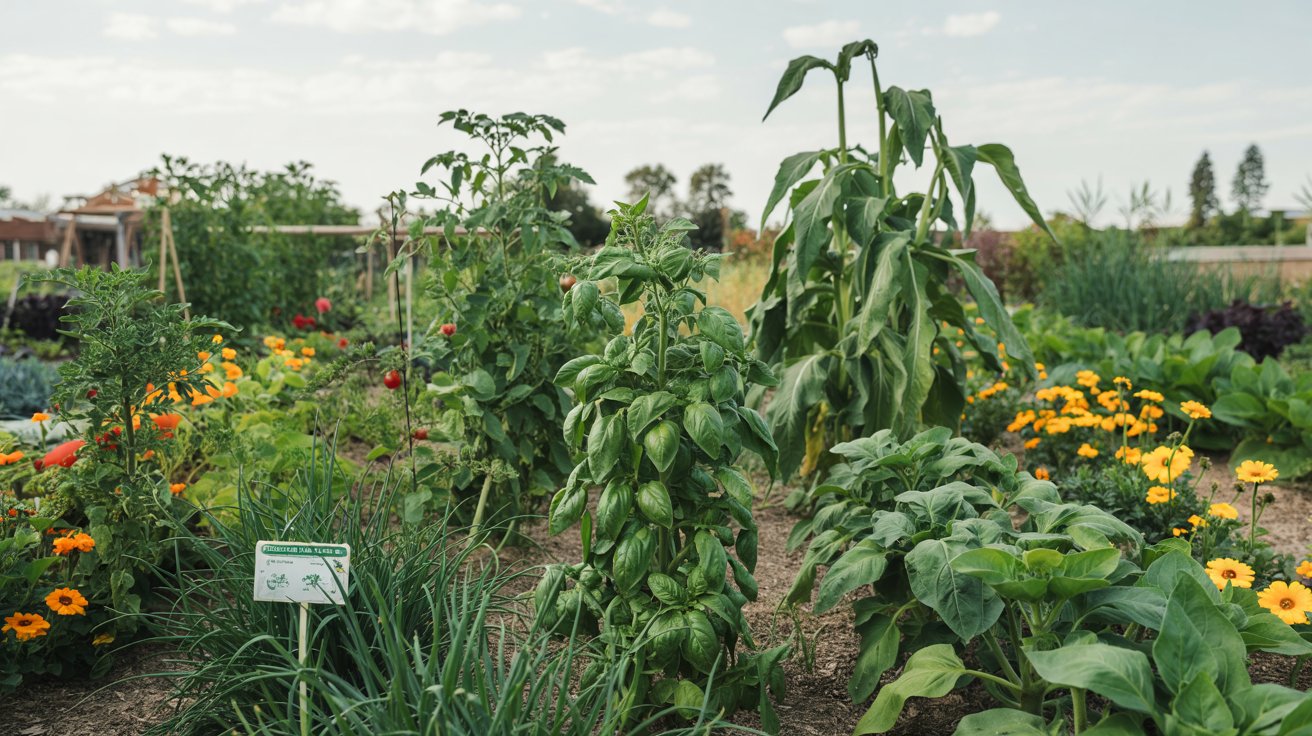
Used well, it cuts guesswork at planting time and gives you a concrete starting point for a more productive bed.
The science behind these pairings is real but often more nuanced than internet lists suggest. Some relationships are strongly supported by field research; others are folk-garden traditions passed down without controlled study.
Knowing the difference matters before you reorganize your whole plot.
This hub draws on university extension research to give you an honest, working framework. You can plan your planting season more confidently when you understand not just which crops to pair, but why the pairing works-and when it might not.
Whether you garden in a 4x8 raised bed or a half-acre in-ground plot, the same reading method applies. The sections below walk you through chart anatomy, core pairings, layout templates, and the myths worth ignoring.
A companion planting chart organizes vegetable pairings by compatibility, helping gardeners reduce pests, improve soil health, and use space efficiently. Pairings are guidelines, not guarantees—always verify with extension resources and adjust for your local conditions.
Overview and How to Use This Chart
A companion planting chart is not a strict rulebook. It is a structured reference that aggregates observed and tested pairings to help you make faster, better-informed planting decisions.
Remember it later
Planning to try this recipe soon? Save it for a quick find later!
PSU Extension research confirms that beneficial pairings are real, but outcomes depend heavily on local soil, climate, and pest pressure.
Most charts organize information into three signals: good companions, plants to avoid, and context notes that explain the mechanism.
A "good with" listing might mean one plant repels a shared pest, fixes nitrogen that feeds a neighbor, or simply fills a canopy layer the other plant leaves open.
To get practical value from any chart, follow this sequence. First, identify your anchor crops-the two or three vegetables you definitely want to grow this season.
Second, pull the companion column for each one and highlight any plants that appear as positive matches for multiple crops. Third, scan the avoid column and flag any conflicts with your existing plan.
Fourth, note spacing and rooting depth requirements so companions don't compete underground. Finally, draft a rough bed sketch before committing to a layout.
- Good-with lists: These suggest plants that offer a documented benefit-pest deterrence, pollinator attraction, nitrogen contribution, or shade regulation.
- Avoid lists: These flag pairs that compete for the same nutrients, share disease vectors, or produce allelopathic compounds that suppress nearby growth.
- Context notes: Short rationale entries explain the mechanism, which helps you judge whether the pairing applies to your conditions.
Tailor every pairing to your actual garden. A dense raised bed behaves differently than a wide in-ground row, and spacing adjustments of even 6 inches can change whether a companion helps or crowds.
Use charts as a starting draft, not a final answer.
University extension programs regularly update companion planting guidance based on new trials. Cross-check any chart you find online against a .edu or .gov source before making major layout decisions. Folk-garden tradition and evidence-based guidance overlap—but they don't always agree.
How to Read a Companion Planting Chart?
Most charts share a consistent anatomy: crops listed down the left column, potential companions across the top, and a cell that marks the relationship-often a checkmark, color, or letter code.
Some use a simple two-color system (green for beneficial, red for avoid); others add a yellow or neutral band for "no significant effect." OSU Extension guidance stresses that a green cell is a starting hypothesis, not a guaranteed outcome.
Reading a chart correctly takes about five minutes per crop once you know the steps. The method below is repeatable for any vegetable, from tomatoes to turnips.
One detail many readers miss: chart signals describe relative benefit, not absolute effect. A crop listed as a good companion still requires proper soil prep, adequate water, and correct spacing to deliver any benefit.
The chart identifies potential-your management determines the outcome.
If you want to track cold-season companions, check what works for crops planted in early winter and build your pairings from there.
Core Pairings: Vegetables That Work Well Together
The table below covers six widely grown vegetables with their most reliably documented companions and a short rationale for each pairing. UMN Extension notes that these pairings are guideline-based and that outcomes can vary with soil type, spacing, and regional pest populations.
Use this as a planning draft. Conditions in your bed-pH, drainage, existing pest pressure-may shift which pairings deliver the most benefit.
| Main Crop | Good Companions | Why It Works |
|---|---|---|
| Tomato | Basil, marigold, carrot | Basil may deter aphids and thrips; marigolds reduce nematode pressure in soil; carrots loosen soil around roots |
| Corn | Beans, squash | The Three Sisters method: beans fix nitrogen for corn; squash leaves shade soil, reduce weeds, and retain moisture |
| Lettuce | Radish, tall flowers, carrot | Radishes deter leaf miners; tall companions provide afternoon shade, slowing bolting in warm weather |
| Carrot | Onion, leek, rosemary | Onion family members may deter carrot fly; rosemary is anecdotally repellent but evidence is limited |
| Beans | Corn, squash, beet | Beans fix atmospheric nitrogen, benefiting heavy-feeding neighbors; beets take up little canopy space |
| Cucumber | Dill, nasturtium, radish | Nasturtiums attract aphids away from cucumbers; dill draws beneficial wasps; radish deters cucumber beetles |
The Three Sisters planting-corn, beans, and squash grown together-is the most documented Indigenous North American example of companion planting. Beans fix 50-200 lbs of nitrogen per acre annually, directly feeding corn in the same bed.
It remains one of the few companion combinations with consistent field-trial support.
For lettuce specifically, pairing with taller crops is more about microclimate management than pest deterrence. Afternoon shade from sunflowers or trellised beans can extend the lettuce harvest by two to three weeks in summer.
See our guide on growing lettuce successfully for spacing details that make this pairing work.
Marigolds (Tagetes spp.) deserve a specific note. Research supports their effectiveness against Meloidogyne root-knot nematodes when grown as a dense cover crop the season before planting tomatoes-not just scattered between rows.
A few marigold plants tucked alongside tomatoes may attract pollinators, but the nematode benefit requires higher density and longer exposure.
If you're planning a raised bed, review which vegetables perform best in raised beds before finalizing your companion pairings-container dynamics shift spacing math considerably.
Design Templates: Space-Smart Layouts for Different Setups
Translating a companion planting chart into an actual garden layout requires matching pairings to your physical space. A 4x8 raised bed, a 12-inch container, and an open in-ground row each have different spacing limits, drainage profiles, and microclimate conditions.
USU Extension guidance recommends adapting companion concepts to your specific format rather than applying generic charts without adjustment.
The three templates below give you a repeatable method for each setup. Pick your format, confirm your pairings from the core table, and sketch before you plant.
Best for: Three Sisters blocks, sprawling crops (squash, melons), and crops that need 12+ inches of root depth.
Lay out in 4-foot-wide rows so you can reach the center without stepping on soil. Place tall crops (corn, sunflowers) on the north side to avoid shading low-growing companions. Beans and squash fill the middle and edge zones. Minimum row spacing: 18 inches between corn and squash to avoid moisture competition. In-ground beds benefit most from legume companions because nitrogen fixes directly into open soil where roots can access it. For gardeners in dry climates, check our list of drought-resistant companion options that hold their benefit under water stress.
Best for: Tomato-basil-marigold clusters, lettuce with radish, and compact pairings under 24 inches tall.
A standard 4x8 raised bed fits three tomato plants with basil in the gaps and a marigold border-this is a proven layout for both pest management and pollinator draw. Keep marigolds at bed edges so they don't shade lower crops. Lettuce works well on the north-facing end where taller tomatoes cast afternoon shade. Raised beds warm faster in spring, which shifts planting dates by one to two weeks earlier than in-ground. If you're building your first raised bed layout, see which shade-tolerant vegetables fit the shadowed edge positions.
Best for: Herb-vegetable pairings, single-crop focus with one companion, balcony and patio gardens.
A 12-inch container supports one tomato with two basil plants at the rim-this is the most practical container companion pairing. Avoid planting fennel in containers with any other crop; its allelopathic compounds concentrate in restricted soil volumes and can stunt neighbors faster than in open ground. For container Three Sisters, use a half-barrel minimum (15+ gallons) to give corn and bean roots enough depth. Climate matters more in containers: soil temperature swings faster, so pair crops with similar heat and water needs. Gardeners planning early-season containers can see what works for February planting in mild zones.
Regardless of setup, sketch your layout to scale before buying transplants. A simple grid on graph paper-one square per square foot-takes ten minutes and prevents the most common mistake: overcrowding compatible plants until they compete anyway.
For gardeners adding long-term structure to their plots, consider how perennial vegetables fit into companion frameworks-they anchor a bed year after year and can anchor pollinator corridors without replanting.

Myths, Pitfalls, and Practical Tips
The biggest myth in companion planting is that any herb planted nearby will repel pests. Basil, mint, and lavender are frequently cited as universal repellents, but controlled trials consistently show that effect size depends on planting density and pest species.
A single basil plant between two tomatoes is unlikely to produce a measurable pest reduction; a dense basil border might.
A second widespread misconception is that more companion plants always improve results. Overcrowding a bed with "helpful" plants creates its own problems: competition for water and nutrients, reduced airflow that invites fungal disease, and root interference that cancels out any benefit.
UMN Extension cautions that many folk-remedy pairings lack peer-reviewed support and that gardeners should treat unverified claims skeptically.
Fennel (Foeniculum vulgare) releases allelopathic compounds that suppress germination and root development in most vegetables. Keep fennel in a separate container or bed entirely—it is one of the few companion planting "avoid" listings with strong, consistent research support.
- Start with 2-3 well-documented pairings and observe results before scaling up.
- Verify each pairing against a university extension source before committing bed space.
- Plant companion herbs at sufficient density-a single plant rarely delivers the cited benefit.
- Sketch your layout to scale so spacing requirements are visible before you plant.
- Don't treat online companion planting lists as peer-reviewed fact-many repeat unverified claims.
- Don't overcrowd a bed with companions; resource competition can negate any pairing benefit.
- Don't plant fennel near any vegetable crop in the same bed or container.
- Don't skip spacing math-compatible plants still compete if planted too close.
One genuinely practical tip: keep a season log. Note which pairings you tried, your spacing, and your pest and yield observations.
After two seasons, your own data from your specific soil and climate will outperform any generic chart. Peony growers who track bloom cycles use similar season-log methods-and while the scale differs from peony care calendars, the record-keeping habit is identical and just as useful.
Finally, focus companion planting on your most pest-prone crops first. Applying the strategy where it can make the biggest difference-rather than across an entire garden at once-gives you clearer feedback and avoids the complexity overload that makes many gardeners abandon the practice after one season.
Explore more vegetable garden planning strategies that complement a companion planting approach.
Frequently Asked Questions
Basil, marigolds, and carrots are well-documented tomato companions. Marigolds reduce soil nematodes at high density; basil may deter aphids and thrips when planted in a border, not just scattered singly.
Some pairings have solid research support—marigolds against nematodes and the Three Sisters nitrogen-fixing system are well-documented. Many popular pairings, however, rely on tradition rather than controlled field trials.
Three Sisters pairs corn, climbing beans, and squash in one block. Beans fix nitrogen for corn; squash leaves shade the soil to suppress weeds and retain moisture. It is one of the best-documented companion systems.
Marigolds suppress root-knot nematodes effectively when grown as a dense cover crop for a full season before planting tomatoes. A few border plants attract pollinators but provide limited nematode control.
Spacing follows each crop's normal requirements—companions don't override standard plant spacing. In a 4x8 raised bed, place basil at least 12 inches from tomato stems to avoid moisture and root competition.
Pin it for your next companion planting chart: what to grow together project.