A lawn without a plan is just mowing on autopilot. You cut the grass when it gets tall, maybe scatter some fertilizer in spring, and wonder why your neighbor's yard looks better by August.
The difference is usually timing - the right tasks done in the right months for the right grass type.
This guide gives you a complete lawn care schedule built around grass type, not generic advice. Cool-season and warm-season grasses run on opposite annual clocks, and treating them the same way causes more damage than neglect ever would.
We've built this as a year-round reference you can return to each month. Whether you need to confirm a fertilizer timing result or check aeration windows, every answer is here.
The Minnesota lawn calendar from UMN Extension served as a backbone for monthly task sequencing across grass types.
You'll also find climate zone adjustments, irrigation notes, and a step-by-step setup path so you can adapt any section to your region.
A lawn care schedule built by grass type prevents wasted products and missed windows. Cool-season grasses peak in fall and spring; warm-season grasses need summer attention.
Match your monthly tasks to grass type and climate zone for consistent results year-round.
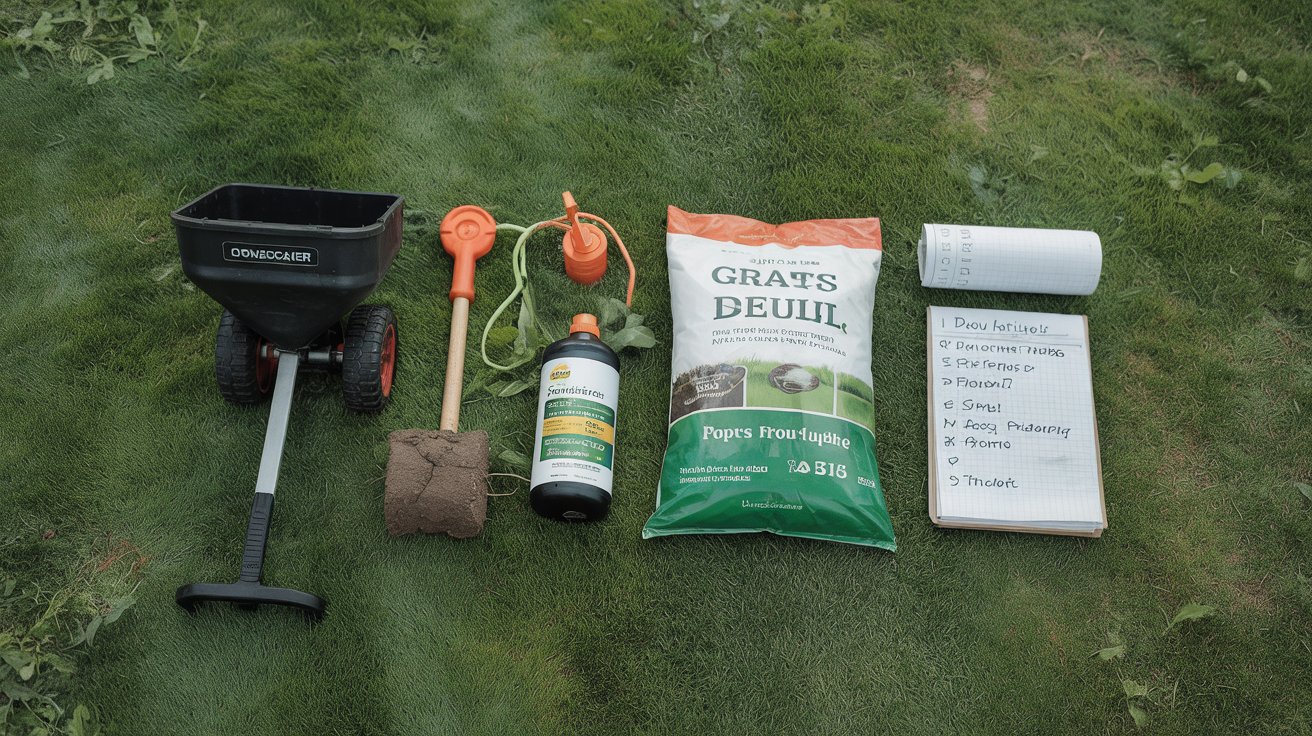
Print this schedule and keep it in a binder near your garage. Note the actual dates you complete each task so next year's timing is based on your real conditions, not a generic calendar.
Cool-Season Grasses: Monthly Tasks and Calendar
Cool-season grasses - Poa pratensis (Kentucky bluegrass), tall fescue, and perennial ryegrass - do their heaviest growing when soil temps sit between 50°F and 65°F. That window falls in fall and early spring across most northern zones, which shapes every decision in the schedule below.
Remember it later
Planning to try this recipe soon? Save it for a quick find later!
Fertilization is the task most homeowners get wrong. Fall feeding (September-October) matters more than spring feeding for cool-season lawns because roots store nutrients through winter and push strong spring growth.
According to CSU lawn care basics, established cool-season lawns benefit most from a late-fall nitrogen application after the last mowing.
Mowing height also shifts by season. In spring and fall, cut at 2.5 to 3.5 inches.
Raise the deck to 3.5-4 inches in summer to reduce heat stress on shallow roots. Never remove more than one-third of the blade in a single cut.
Aeration once a year in early fall (late August through September) breaks up compaction right before the primary growth period. Overseeding thin areas works best when done immediately after aeration, giving seed direct soil contact.
Pre-emergent weed control for crabgrass applies in early spring, typically when soil temps reach 50°F for three consecutive days - usually March to April depending on your zone.
Do not overseed and apply pre-emergent at the same time; pre-emergents block germination of all seeds, including grass.
For bluegrass vs. fescue comparisons and species-specific mowing tolerances, check our detailed breakdown before locking in your mowing height targets.
| Month | Key Tasks | Notes |
|---|---|---|
| January | No active tasks | Avoid foot traffic on frozen turf |
| February | Equipment service, soil test | Order seed and fertilizer early |
| March | Pre-emergent application | Apply at soil temp 50°F |
| April | First mow, light fertilizer | Mow at 3 in.; avoid heavy N |
| May | Weed control, mowing | Post-emergent for broadleaf weeds |
| June | Raise mow height, irrigate | 3.5–4 in. to reduce heat stress |
| July | Irrigation only; minimal traffic | 1 in. per week including rain |
| August | Core aeration, overseeding prep | Best aeration window begins |
| September | Overseed, fertilize (primary feed) | Highest-impact month for cool-season |
| October | Late-fall fertilizer application | After last mow; slow-release N |
| November | Final mow, leaf removal | Cut to 2.5 in. before dormancy |
| December | Equipment winterization | No products needed |
Northern zones (USDA Zones 3-5) should push the pre-emergent window to mid-April and compress the overseeding window to early September before nights drop below 50°F. Zones 6-7 have more flexibility, with overseeding possible through mid-October.
If you're still deciding between cool-season options, our guide on choosing between ryegrass and fescue compares establishment speed and drought tolerance side by side.
Warm-Season Grasses: Monthly Tasks and Calendar
Warm-season grasses - Bermuda (Cynodon dactylon), Zoysia (Zoysia spp.), centipede (Eremochloa ophiuroides), and St. Augustine (Stenotaphrum secundatum) - actively grow when soil temps exceed 65°F.
Their schedule is essentially a mirror image of cool-season lawns: summer is their prime time, and winter is dormancy.
Pre-emergent timing shifts accordingly. Apply in late February to early March across the Southeast (Zones 8-9) before crabgrass germination, and in March to early April across transition zones (Zones 7-7b).
The Clemson HGIC Bermuda calendar maps these seasonal actions week-by-week for the Carolinas, which is a useful cross-reference for Zone 7b-8 timing.
Fertilization windows for warm-season grasses open after full green-up - typically late April to May - and run through August. Do not fertilize warm-season grasses in fall; late nitrogen pushes tender growth right before cold arrives and increases winter kill risk.
Mowing frequency peaks from May through August. Bermuda tolerates very low cuts (0.5-1.5 inches with a reel mower), while St.
Augustine needs 3-4 inches. Scalping Bermuda in late March removes dead material and speeds green-up - but only do this once, just before active growth resumes.
Aeration for warm-season grasses is most effective in late spring (May-June) when the grass is actively growing and can recover quickly. Avoid aeration in late summer or fall, which leaves stress wounds heading into dormancy.
If you're weighing Bermuda against Zoysia for your yard, our Bermuda vs. Zoysia comparison covers heat tolerance, traffic recovery, and maintenance intensity.
| Month | Key Tasks | Notes |
|---|---|---|
| January | Dormant; no active tasks | Avoid compaction on dormant turf |
| February | Soil test, pre-emergent prep | Apply pre-emergent at soil temp 50–55°F |
| March | Pre-emergent, scalp Bermuda | Scalp once to remove dormant debris |
| April | Monitor green-up, first light mow | Hold fertilizer until fully green |
| May | Begin fertilizing, aerate | Primary fertilizer window opens |
| June | Fertilize, mow frequently, irrigate | Bermuda: mow every 5–7 days |
| July | Irrigate 1–1.5 in./week, weed control | Post-emergent for summer weeds |
| August | Last fertilizer application | Stop N by Aug 31 in Zone 7–8 |
| September | Reduce mowing, check irrigation | Growth slowing; reduce frequency |
| October | Overseed with ryegrass (optional) | For winter color in warm climates |
| November | Final mow before dormancy | Cut to normal height; remove clippings |
| December | Equipment storage, no products | Turf fully dormant |
Centipede grass is the most fertilizer-sensitive of the warm-season group. Excess nitrogen causes centipede decline - a real condition where over-fed lawns thin out and die in patches.
One light application in May (0.5 lb N per 1,000 sq ft) is usually enough for the entire season.
For yards in the transition zone or in low-rainfall regions, also check our guide to drought-tolerant grass options before committing to a high-water species like St. Augustine.

Setting Up Your Year-Long Lawn Plan
The monthly tables above tell you what to do. This section tells you how to set up a system that makes those tasks automatic rather than reactive.
A process anchored to real dates - not just season names - is what separates consistent results from hit-or-miss maintenance.
The Purdue Indiana lawn calendar uses a month-by-month milestone structure that works well as a template for setting up your own record-keeping system, especially for temperate Zone 5-6 climates.
Our year-round seasonal task guides pair well with this framework if you want to coordinate lawn work with broader yard and garden maintenance across the same calendar.
Climate Zones, Soil Health, and Irrigation Adjustments
The monthly calendars in sections two and three assume typical regional conditions. Real lawns deal with clay soil, drought years, unusually warm falls, and partial shade - and each variable shifts the schedule.
Soil pH is the most under-addressed factor in lawn care. Most grasses perform best at pH 6.0-7.0.
If your soil test shows pH below 6.0, apply lime in fall for cool-season lawns or spring for warm-season. Sulfur lowers pH if you're above 7.0.
Neither amendment works fast - budget 6-12 months for a full unit shift.
In Zone 7 transition areas, warm-season grasses go dormant earlier and break dormancy later than the same species in Zone 9. The OSU Bermuda management calendar shows how timing shifts by 3–4 weeks between Oklahoma's northern and southern counties — a useful model for any transition-zone homeowner.
Irrigation needs vary most by soil type. Sandy soils need smaller, more frequent watering (0.5 in. every 2-3 days) while clay soils absorb water slowly and hold it longer (1 in. twice weekly with a 24-hour gap).
Watering deeply and infrequently - rather than daily light watering - builds deeper root systems in both grass types.
Shaded lawns need two specific adjustments: raise the mow height by half an inch to increase leaf surface area, and reduce fertilizer by roughly 25% since shade-stressed grass uses nutrients less efficiently.
Our article on grass vs. artificial turf covers situations where heavy shade makes natural grass impractical altogether.
Drought years in summer push irrigation decisions hard. If you're in a region prone to summer water restrictions, planning around summer water management before the season starts prevents the scramble when restrictions hit.
Bermuda and Zoysia can go dormant through short droughts and recover; St. Augustine and tall fescue need consistent moisture or they thin out permanently.
Run a soil test every 2-3 years even if you think your lawn is healthy. Nutrient imbalances build silently over years of repeated applications, and a $20 test prevents $200 in corrective products later.
For selecting the right product once your soil results are in, our guide to targeted weed control options helps match herbicide type to your specific weed pressure without disrupting your grass.

Frequently Asked Questions
Cool-season grasses suit Zones 3–6; warm-season grasses fit Zones 7–10. Zone 6–7 transition areas can support both, though warm-season types may need winter overseeding for year-round color.
Cool-season lawns need only a light spring application; their primary feed is fall. Warm-season lawns should not be fertilized until fully green, typically late April to May depending on zone.
Most lawns need core aeration once per year. Cool-season lawns aerate best in late August to September; warm-season lawns in May to June when actively growing and able to recover quickly.
No. Pre-emergent herbicides block all seed germination, including grass seed. Wait at least 8–12 weeks after overseeding before applying pre-emergent, or skip pre-emergent entirely in overseeded areas that season.
Raise mow height by 0.5 inches in shaded areas and reduce fertilizer by 25%. In drought conditions, switch to deep infrequent watering — 1 inch twice weekly — rather than daily light watering, which keeps roots shallow.
Pin it for your next complete lawn care schedule by grass type project.