Mint is one of those plants that earns its place in the garden fast - and then keeps right on earning it, straight through your neighbor's yard. Mentha spicata (spearmint) and its relatives spread through underground rhizomes and above-ground stolons that can run several feet in a single season.
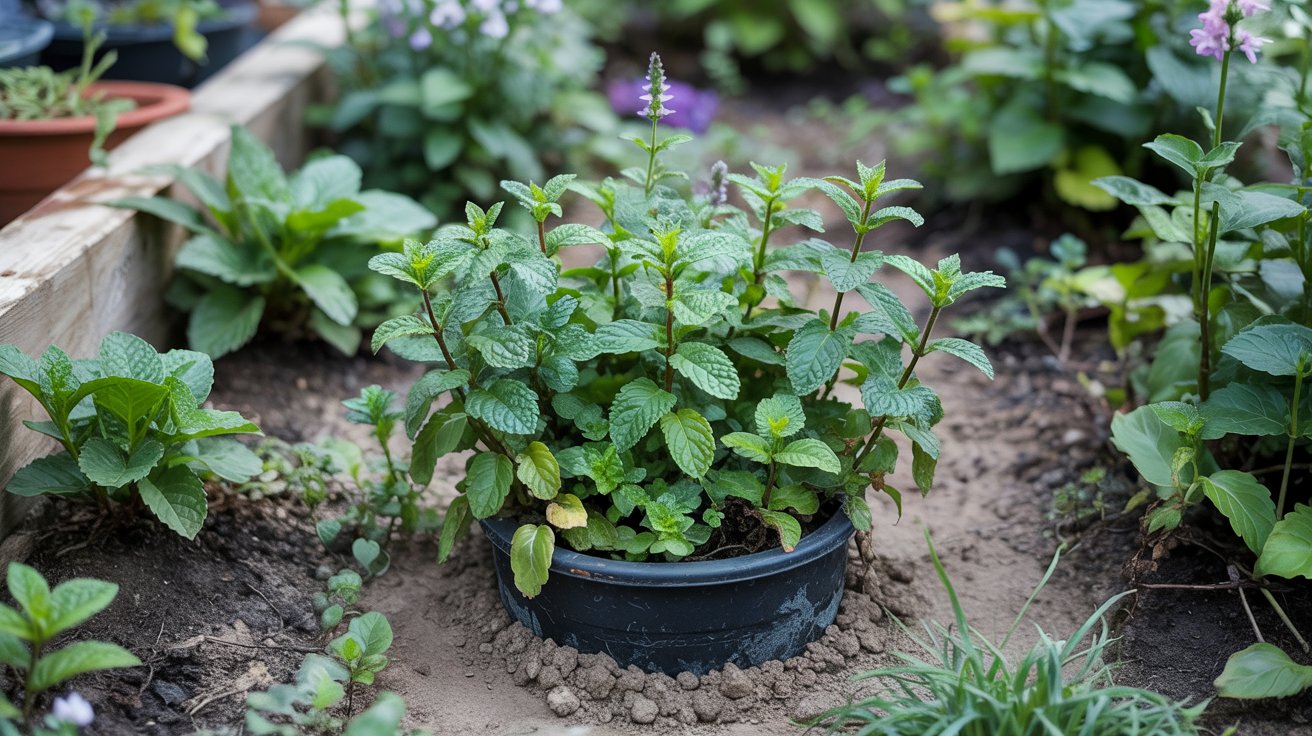
According to Utah State Extension, mint is a rapid-growing perennial that can reach up to 3 feet tall and is quite invasive if left unchecked.
The good part: containment is genuinely simple once you understand how mint moves.
This guide walks you through a concrete plan - choosing the right container or barrier, picking a variety that suits your space, and building a care routine you can actually stick to.
You can have productive, fragrant mint on your patio, balcony, or in a small bed without surrendering the rest of your garden to runners.
Most readers see results in their first growing season. The setup takes one to two weekends, and the ongoing maintenance is light.
If you want to grow herbs from seed successfully, many of the same container principles apply here.
Mint is a fast-spreading perennial that needs physical containment to stay manageable. Grow it in a 12–16 inch container or install a buried root barrier at least 10 inches deep.
Regular pruning and seasonal care keep plants bushy and productive without overrunning your beds.
Contain Mint: Pots, Barriers, and Careful Trimming
Mint spreads through rhizomes - horizontal underground stems that push outward relentlessly. The only reliable way to stop them is a physical barrier, either the walls of a container or a buried edging strip that intercepts runners before they escape.
Remember it later
Planning to try this recipe soon? Save it for a quick find later!
Both methods work well; the one you choose depends on your setup.
Container growing is the simplest starting point, especially for balconies and patios. University of Maryland Extension recommends a container about 12 to 16 inches in diameter to prevent runners from escaping over the rim or through drainage holes.
For very small spaces, window boxes and integrated rail planters work well. A standard 24-inch window box holds two mint plants comfortably and keeps the root system fully enclosed.
According to UC IPM, containers are the recommended approach for managing mint's spread in any setting.
Balcony gardeners can pair mint with other herbs in a large 18-inch planter, provided each plant has its own insert or inner pot.
Mixing mint directly with other herbs in a single shared pot is asking for trouble - the mint will crowd out neighbors within one growing season.
Never plant mint directly in raised beds without a buried barrier. Rhizomes will push through the walls of soft-sided beds and spread into adjacent soil within a single season. Use a rigid buried container instead.
If mint does escape, don't just pull the visible stems. Dig down at least 8 inches and remove every rhizome fragment you can find.
Even a 2-inch root piece left in the soil will regenerate into a full plant. Knowing which plants suit container life long-term helps you plan a more manageable setup from the start.
For beds where a buried container isn't practical, a metal or thick plastic root barrier strip (sold at garden centers as edging) installed in a 12-inch-deep trench around the planting area works as a fallback.
Overlap the ends by at least 6 inches and fold the top edge outward to catch surface runners.
Mint Varieties: Choosing the Right Mint
The genus Mentha includes somewhere between 13 and 24 species depending on how you count hybrids, and dozens of named cultivars exist beyond the two most common types.
USU Extension notes that peppermint and spearmint are the most widely grown, but flavor and growth habit vary considerably across varieties.
Choosing a variety is partly a flavor decision and partly a practical one. Some mints are more vigorous than others, meaning they'll test your containment setup harder.
Compact or slow-spreading cultivars are worth seeking out if you're working with a small container on a balcony.
| Variety | Flavor | Growth Habit | Notes |
|---|---|---|---|
| Mentha × piperita (Peppermint) | Strong, cool menthol | Vigorous, 2–3 ft tall | Prefers rich, moist soil; spreads fast via rhizomes |
| Mentha spicata (Spearmint) | Sweet, mild mint | Vigorous, 1–3 ft tall | Most common culinary type; runners spread widely |
| Mentha suaveolens (Apple Mint) | Fruity, mild | Upright, 2–3 ft | Fuzzy leaves; slightly less aggressive than spearmint |
| Mentha × piperita 'Chocolate' | Chocolate-mint undertone | Moderate, 1–2 ft | Slower spreading; good container choice |
| Mentha requienii (Corsican Mint) | Intense pennyroyal-like | Creeping, under 1 in. | Very low-growing; less invasive, suits shallow troughs |
| Mentha × gracilis (Ginger Mint) | Spicy, ginger-tinged | Moderate, 1–2 ft | Striped leaves; manageable growth rate in pots |
UMD Extension confirms that many varieties exist beyond peppermint and spearmint, each with different soil and moisture preferences. For container gardeners, 'Chocolate' mint and Corsican mint are two of the least aggressive options.
If you plan to grow mint alongside long-lived perennial plants, choose a compact variety and keep it in a fully enclosed inner pot rather than a shared container. Vigorous types like spearmint will outcompete almost anything in close quarters.
Peppermint is actually a sterile hybrid (Mentha × piperita) that doesn't reliably set seed — it spreads exclusively through rhizomes and cuttings. This means it won't self-seed into your beds, but underground runners are still a real risk.
When buying mint at a nursery, check the label for the Latin name rather than just the common name. "Spearmint" can refer to several different Mentha species, and growth habits vary.
A plant labeled Mentha spicata is a known quantity; one labeled just "mint" is not.

Growing Conditions and Care: Moisture, Sun, Soil
Mint handles a surprisingly wide range of light conditions. It grows well in full sun to partial shade - roughly 4 to 6 hours of direct sun per day is enough for strong, fragrant growth.
In very hot climates, afternoon shade prevents leaf scorch and reduces watering frequency. If you're planning a mixed container that gets full afternoon sun, check our guide to plants that handle intense heat before pairing anything with mint.
Water container mint every 2-3 days in summer, checking that the top inch of soil is dry before watering again. Pots dry out faster than ground soil, so under-watering is actually the more common problem in containers.
UMD Extension notes that rich, moist soil produces the best growth - regular harvesting also encourages bushier, more compact plants.
Harvest mint stems in the morning, after dew dries but before midday heat. Cut stems just above a leaf node rather than stripping leaves randomly — this triggers branching and gives you more harvestable growth within two weeks.
Add a 1-inch layer of compost to pots each spring and a thin layer of mulch on top to retain moisture. Avoid heavy nitrogen fertilizers - they push lush, soft growth that's more prone to pests and less flavorful at harvest.
Seasonal Calendar and Space-Saving Ideas
One of mint's real advantages is its long productive window. With the right seasonal routine, you can harvest from spring through late fall and keep plants alive indoors through winter.
The key is acting at the right time each season rather than reacting when things get out of hand.
For those tight on outdoor space, a windowsill pot near a south-facing window keeps mint productive well into December. Pairing mint with another compact herb - like basil in a separate inner pot - makes good use of a single 18-inch trough.
If you're building out an indoor herb setup, learning how to grow citrus in containers follows similar drainage and pot-size logic.
For urban gardeners with no outdoor space at all, a 6-inch pot under a grow light on a 14-hour cycle keeps mint producing through winter at a slower pace. Reduce watering to every 4-5 days in low-light winter conditions.
If you enjoy growing plants that stay compact year-round, exploring how to manage hostas in small spaces offers a useful parallel for shade-tolerant containment.
Mint grown indoors in winter rarely matches the vigor of outdoor summer plants, but it's enough for fresh garnishes and tea. Expect lighter flavor intensity - indoor light simply can't replicate the essential oil production triggered by full outdoor sun.
For more ideas on what to grow when outdoor space is limited, the container herb and plant guides on this site cover a range of compact options suited to small gardens.
If you're looking for plants that complement a partially shaded patio container setup, our roundup of plants that handle low light well is worth checking before you finalize your layout. And if mint will share a season with flowering plants nearby, our guide to cold-season blooms helps you plan a continuous display alongside your herb containers.
For gardeners expanding their raised beds, learning how to space large crops effectively reinforces the same containment-first mindset that keeps mint manageable.

Frequently Asked Questions
'Chocolate' mint and Corsican mint (Mentha requienii) are the most manageable container choices. Both grow more slowly than spearmint and stay under 2 feet tall.
Trim mint by one-third every 3–4 weeks during the growing season. Cutting just before flower buds open prevents seed set and encourages compact, bushy regrowth.
Yes, but growth slows significantly in winter. Place mint near a south-facing window or under a grow light set to 14 hours daily, and reduce watering to every 4–5 days.
Dig a trench at least 10–12 inches deep around the planting area and install a rigid metal or thick plastic barrier strip. Overlap the ends by 6 inches and leave 1–2 inches above soil to intercept surface runners.
Keep mint in its own inner pot rather than mixing directly. Basil, parsley, and chives tolerate similar moisture levels but will be crowded out if mint roots share the same soil mass.
Pin it for your next how to grow mint without it taking over project.