
Raised beds give carrots something most garden soil can't - a deep, loose, rock-free root run that lets them grow straight and full without fighting compaction. In-ground plots often have stones, clay, or hardpan lurking just a few inches down, and carrots hit those obstacles and fork.
A raised bed sidesteps that problem entirely.
The other advantage is weed control. Fewer weed seeds in a purpose-built mix means less competition during the slow germination window carrots need.
Getting the soil right is 90% of the job. Research from UC IPM carrot tips confirms that deep, loose soil and raised beds directly improve carrot root development - something even experienced gardeners underestimate.
The process covers six core tasks: build the bed, prep the soil, sow correctly, thin on schedule, water consistently, and harvest at the right time. Get those steps in order and you'll pull a clean crop every season.
Growing carrots in raised beds succeeds when you combine loose, stone-free soil at least 12 inches deep with consistent moisture and careful thinning to 2–3 inches apart. Sow seeds shallow, keep the seedbed damp, and harvest when shoulders show color.
Step-by-Step: How to Grow Carrots in Raised Beds
Follow these steps from soil prep to harvest and the process repeats cleanly season after season. Skipping or rushing early steps - especially thinning - is where most home crops go wrong.
Remember it later
Planning to try this recipe soon? Save it for a quick find later!
Sow a second batch 3 weeks after the first to stagger your harvest rather than pulling everything at once. In a 4×8 raised bed, two offset sowings give you fresh carrots for 6–8 weeks running.
Carrot Varieties and Spacing: Choosing and Planning
Not every carrot variety suits a raised bed equally. Short, stubby types like Daucus carota 'Chantenay' or 'Paris Market' are forgiving in shallower beds, while Nantes and Imperator types need full depth to develop properly.
Spacing isn't one-size-fits-all either - SARE's carrot production manual notes that carrots need consistent moisture and fine seedbed conditions alongside correct spacing to reach their potential, with final spacing of 2-4 inches depending on type.
Planning your bed layout before you sow saves you from overcrowding and under-using space.
| Variety Type | Root Length | Min. Bed Depth | Final Spacing | Best For |
|---|---|---|---|---|
| Paris Market (round) | 2–3 in | 8 in | 2 in | Shallow beds, containers |
| Chantenay | 5–6 in | 10 in | 2–3 in | Heavy or clay-mix soil |
| Nantes | 6–7 in | 12 in | 2–3 in | Most raised beds |
| Danvers | 7–8 in | 12 in | 3 in | Deep, well-amended beds |
| Imperator | 8–10 in | 18 in | 3–4 in | Deep beds only |
For most home gardeners with a standard 12-inch raised bed, Nantes or Danvers varieties hit the sweet spot between yield and ease.
In a 4×4 bed, you can fit 4 rows spaced 6 inches apart, thinned to 2-3 inches within each row - that's roughly 60-80 carrots per 4×4 plot.
If you're also growing other vegetables, our overview of what to plant in raised beds helps you plan companion rows alongside carrots without crowding.
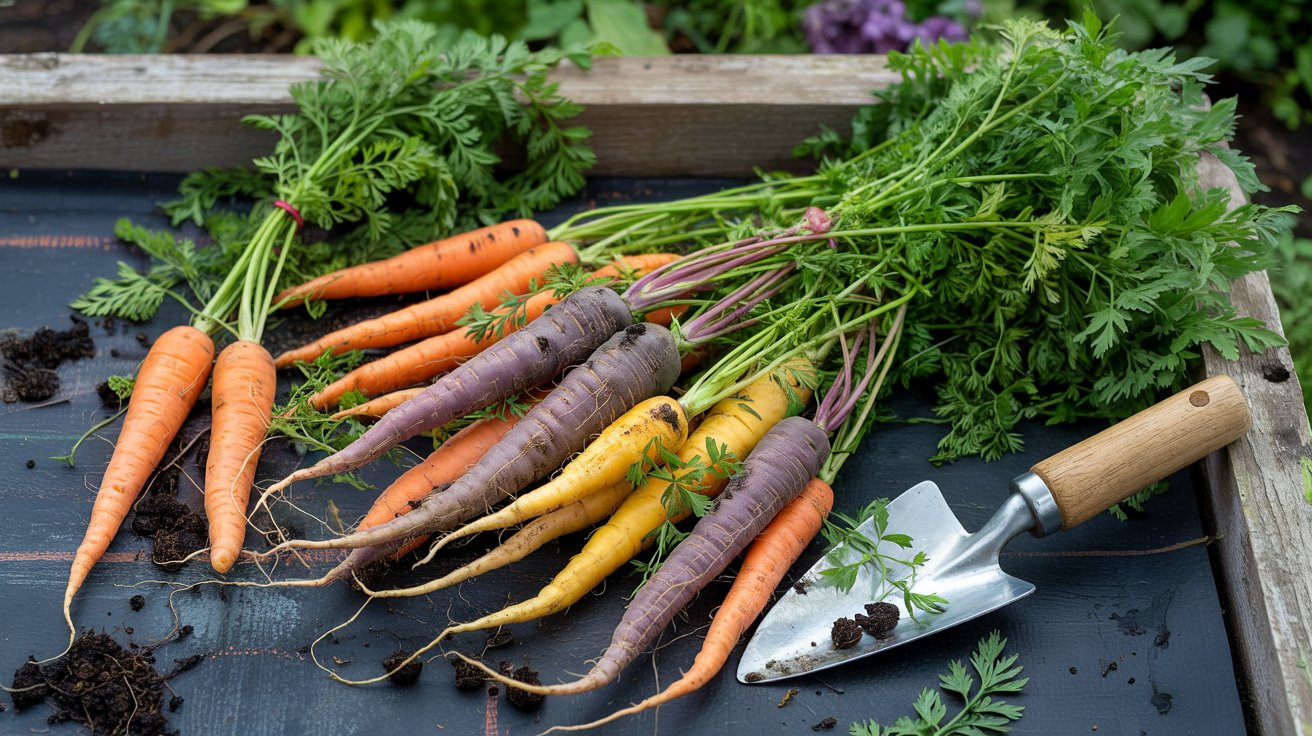
Carrot color doesn't affect flavor or spacing requirements. Purple, yellow, and white heirloom types like 'Cosmic Purple' or 'Solar Yellow' follow the same depth and spacing rules as standard orange varieties.

Troubleshooting: Common Problems and Fixes
Most carrot failures trace back to one of five causes: crusted soil, skipped thinning, inconsistent water, soil contamination, or pest damage. All five are preventable.
Good drainage - the core benefit highlighted by UMass root crop guidelines - is one reason raised beds outperform in-ground growing for root crops. When water moves freely, you avoid rot, splitting, and the compaction that causes forking.
- Cover seeds with vermiculite instead of soil to prevent surface crusting and improve germination rates.
- Thin on schedule - snip extras at soil level once seedlings hit 2 inches tall to avoid disturbing neighbors.
- Water at the base using drip or soaker lines to keep foliage dry and reduce fungal risk.
- Use fine mesh row cover from sowing day to block carrot fly before it lays eggs near the base.
- Remove rocks and clumps to at least 12 inches deep before sowing - any obstruction forces roots to fork.
- Don't add fresh manure - it's high in nitrogen and causes hairy, forked, or bitter-tasting roots.
- Don't skip thinning - crowded seedlings produce twisted, stunted roots that are hard to use in the kitchen.
- Don't let soil dry out between waterings - irregular moisture causes roots to crack lengthwise as they grow.
- Don't pull weeds by hand near young seedlings - use scissors or a hoe to cut at soil level instead.
- Don't harvest too early - undersized roots lack sweetness; wait until shoulders are at least ½ inch wide.
Forked roots almost always mean a physical obstruction or fresh organic matter was in the soil path. If your last crop forked badly, add extra perlite and sift the top 12 inches before resowing.
Fast-Start Guide for Spring Plantings
Spring is the easiest entry point for raised-bed carrots. Soil warms faster in raised beds than in-ground, and you can sow 3-5 weeks before your last frost date since carrots tolerate light frost once established.
A standard 4×8 raised bed loaded with a quality mix and sown with Nantes seeds can go from bare soil to first harvest in under 75 days.
According to guidance on carrot seedbed management, keeping the seedbed consistently moist - not waterlogged - through the first 3 weeks is the critical window.
In Zones 5–7, aim to sow carrots from late March through April. In Zones 8–10, a fall sowing (September–October) often outperforms spring. Check your raised bed setup is frost-ready before your target sow date.
Your 6-week spring starter checklist: Week 1 - build or check bed depth, amend soil. Week 2 - rake fine, sow at ¼ inch, cover with vermiculite.
Weeks 3-4 - water twice daily, watch for germination. Week 5 - thin to 2-3 inches apart.
Week 6 - switch to deep watering every 3-4 days and apply light fertilizer. For low-effort companion plants alongside your bed, reduce ongoing care by filling gaps with drought-tolerant edging plants.
If you're building soil health between carrot crops, our compost and soil amendment guide explains what to add and when.
Frequently Asked Questions
Most carrot varieties need at least 12 inches of loose soil. Longer Imperator types require 18 inches to develop fully without forking at the base.
Forking is caused by rocks, clumps, or fresh manure blocking root growth. Sift soil to 12 inches deep and avoid adding uncomposted organic matter before sowing.
Water twice daily until germination, then switch to deep watering every 3–4 days. Inconsistent moisture after germination causes roots to crack or taste bitter.
Yes, but only with round varieties like 'Paris Market,' which max out at 3 inches long. Standard Nantes or Danvers types will stunt in anything under 10 inches.
Harvest at 60–80 days from sowing when shoulders reach ½ inch across. Leaving them past maturity in warm soil causes woody texture and reduced sweetness.
Pin it for your next how to grow carrots in raised beds project.