Dahlias are one of the most rewarding flowers you can grow, delivering dinner-plate blooms from midsummer right through the first frost. Plant a tuber in late spring, and you can be cutting flowers just 8-10 weeks later.
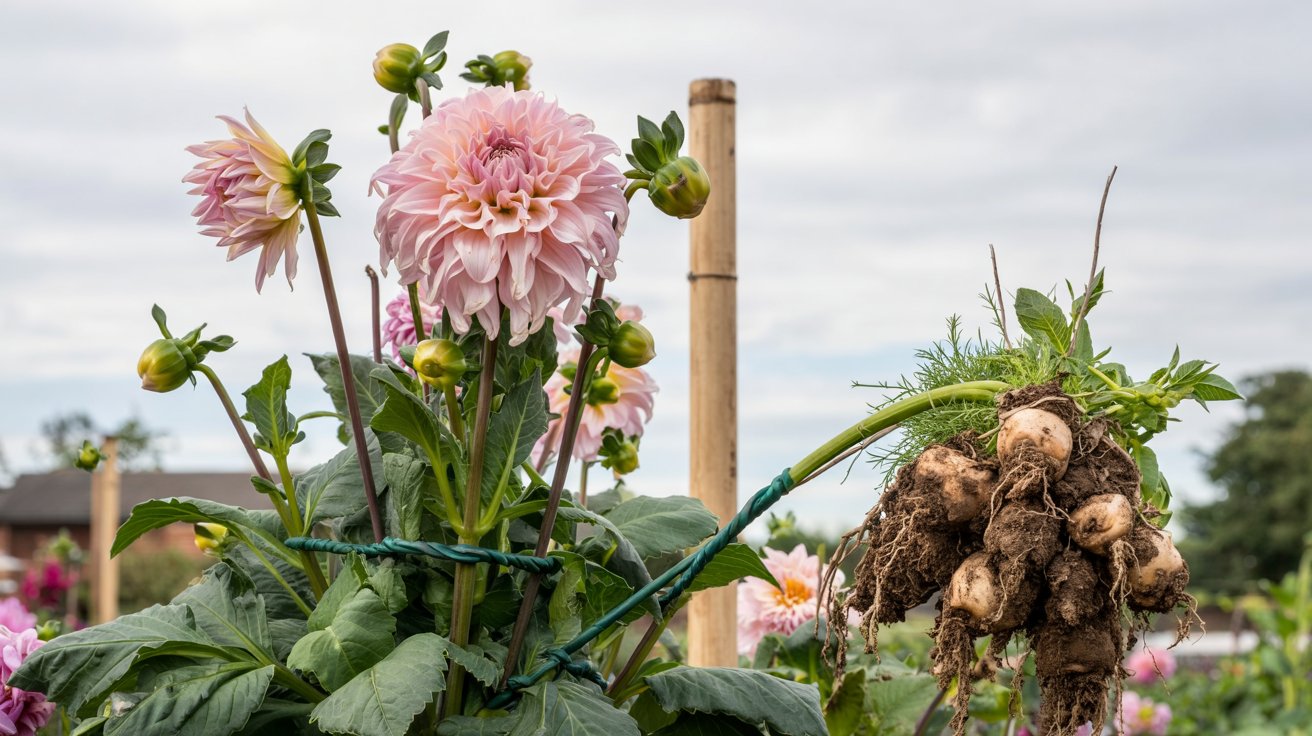
Miss the overwintering window, though, and a season's worth of clumps can rot in the ground or freeze to mush before you get the chance to divide and replant them.
The basic routine is straightforward: buy healthy tubers, plant after your last frost date, feed and deadhead through summer, then decide whether to dig or protect before winter hits.
Regional timing matters more than most guides admit. A gardener in Zone 8 can often leave tubers in the ground with a thick mulch layer.
Someone in Zone 5 almost always needs to dig, dry, and store them indoors. Knowing which camp you're in before you plant saves a lot of frustration.
Dahlia varieties range from compact 1-foot border types to 5-foot giants that need serious staking. The Penn State dahlia overview breaks down plant types and their different site requirements, which is worth reading before you order tubers.
Matching variety to space is the first real decision you'll make.
If you already grow other long-season flowers like zinnias as annuals, dahlias follow a similar summer arc but ask for a bit more structure and a deliberate end-of-season plan.
Dahlias grow from tuberous roots planted after last frost, bloom for 8–12 weeks in late summer, and need either dry indoor storage or heavy mulch to survive winter.
Choose a full-sun site with well-drained soil and commit to a simple feeding and deadheading routine for repeat flushes of color.
In Zones 3–6, plan to dig tubers each fall; in Zones 7–8, heavy mulching is often enough; in Zones 9–11, dahlias can stay in the ground year-round with almost no intervention.
Planting Dahlia Tubers: Step-by-Step
Getting tubers into the ground correctly is the single biggest factor in how fast and strong your plants establish. A tuber planted upside-down or too shallow may sprout weeks late - or not at all.
Remember it later
Planning to try this recipe soon? Save it for a quick find later!
Each tuber needs at least one visible eye (a small growth bud at the neck, near where it connects to the main stem).
The UMN tuber anatomy guide explains how to identify eyes on dahlia tuberous roots - look for a pale nub right at the crown, not on the fat body of the tuber itself.
Timing your planting to soil temperature matters as much as calendar date. Wait until soil is consistently above 60°F at 4 inches depth before putting tubers in the ground.
- Check each tuber for a visible eye before planting - no eye means no shoot.
- Plant after your last frost date and after soil hits 60°F to prevent cold-rot.
- Set your stake at planting time to avoid damaging roots later in the season.
- Water once at planting, then wait for sprouts before resuming regular irrigation.
- Don't plant in waterlogged soil - dahlias rot fast in standing water.
- Don't bury tubers deeper than 6 inches; extra depth delays sprouting significantly.
- Don't skip labeling - unlabeled tubers get mixed up at division time.
- Don't overwater before shoots appear - the tuber has enough stored moisture to germinate on its own.
Site, Soil, Timing, and Spacing
Even a healthy tuber will underperform in the wrong conditions. Getting site and soil right before planting removes the most common reasons dahlias fail to bloom well.
Dahlias prefer a soil pH of 6.5-7.0 - slightly acidic to neutral. You can track seasonal soil conditions to time your amendments correctly and avoid planting into cold, compacted ground.
| Variety Type | Plant Height | Spacing | Stake Needed? |
|---|---|---|---|
| Border / Dwarf | 12–24 in | 12 in apart | No |
| Medium Decorative | 2–4 ft | 18 in apart | Yes — 4 ft stake |
| Dinner-Plate / Giant | 4–5+ ft | 24–36 in apart | Yes — 6 ft stake |
| Container Varieties | 12–18 in | One per 12-in pot | Optional |
Wider spacing does more than prevent crowding - it improves airflow and dramatically reduces powdery mildew, which loves humid, still air around dahlia foliage.
The OSU planting guide notes that dahlias grown for cut flowers or exhibition need even more room - up to 3 feet between plants - to maximize bloom size.
For a home garden focused on color, 18 inches is a reasonable middle ground for most medium varieties.
- Organic matter: Work in 2-3 inches of compost before planting to improve both moisture retention and drainage simultaneously.
- Sand amendment: In heavy clay, add coarse builder's sand at a 1:1 ratio to the top 12 inches of soil to prevent tuber rot.
- Fertilizer at planting: Use a low-nitrogen starter fertilizer (like 5-10-10) worked into the backfill; high nitrogen early pushes foliage at the expense of blooms.
- Mulch after sprouting: Apply a 2-inch mulch layer once shoots reach 4 inches tall to retain moisture and suppress weeds.
Timing follows your USDA zone's last frost date. Most of the US can plant dahlias from late April through early June.
The UMN bulb guide points out that dahlias classified as tuberous roots are more cold-sensitive than true bulbs like tulips, so erring toward late planting is safer than rushing.
Pre-sprout tubers indoors in barely damp coir 2–3 weeks before your plant-out date. Once eyes are showing 1-inch green shoots, you can place them in the ground and shave 2–3 weeks off your wait for first blooms.
If you enjoy managing other plants with specific drainage needs, the same soil prep principles apply when you care for peonies - both plants hate wet feet more than almost anything else.
Care Through Bloom and Overwintering
Once dahlias are up and growing, the weekly routine is simple: water deeply every 3-4 days in summer heat, feed every 2-3 weeks with a low-nitrogen fertilizer (10-30-20 or similar bloom formula), and deadhead spent flowers to keep new buds forming.
Tall varieties need ties added to their stakes every 12 inches as they grow.
Pinching the main stem when plants reach 12 inches tall - cut just above a set of leaves - forces branching and doubles your eventual bloom count. It delays first flowers by about 2 weeks but is worth it for most gardeners.
Dahlias bloom for roughly 8–12 weeks, typically from midsummer until hard frost. The WVU extension's seasonal dahlia guide outlines both in-ground and container overwintering options for different climates.
Overwintering strategy depends on your zone. In Zones 3-6, dig tubers after the first light frost blackens the foliage, cut stems to 4 inches, and let them cure in a dry spot for a week before packing in barely damp peat or vermiculite at 40-50°F.
In Zones 7-8, cut stems to the ground and pile on 4-6 inches of straw or shredded leaves as insulation. In Zones 9-11, dahlias need no protection and can stay in the ground year-round.
Container growers in any zone can simply move pots to an unheated garage once night temps drop below 40°F. Reduce watering to near zero and let the tubers go dormant in their containers until spring.
This works especially well for compact varieties like low-maintenance border plants that don't need much root room to thrive.
If you're comparing cut-flower options, zinnias need no overwintering at all - a useful tradeoff to consider when planning how much fall effort you want to commit to.
Frequently Asked Questions
Dahlias typically bloom for 8–12 weeks, from midsummer until the first hard frost kills the foliage, usually September through October in most US zones.
In Zones 7 and warmer, dahlias can overwinter in the ground with 4–6 inches of mulch. In Zones 6 and colder, tubers must be dug and stored indoors to survive.
Store dahlia tubers at 40–50°F in barely damp peat or vermiculite. Temperatures below 35°F cause freeze damage; above 55°F promotes premature sprouting or rot.
A single wooden or bamboo stake inserted at planting time works best. Use soft ties every 12 inches as plants grow; figure-eight ties prevent stems from rubbing against the stake.
Yes — compact varieties do well in 12-inch or larger pots with fast-draining mix. Move containers indoors once temps drop below 40°F and let tubers go dormant with minimal water until spring.
Pin it for your next how to grow dahlias project.