
If your lawn suddenly feels spongy underfoot and sections peel back like a loose rug, white grubs are the most likely cause. These C-shaped beetle larvae feed on grass roots just below the soil surface, severing the connection between turf and ground.
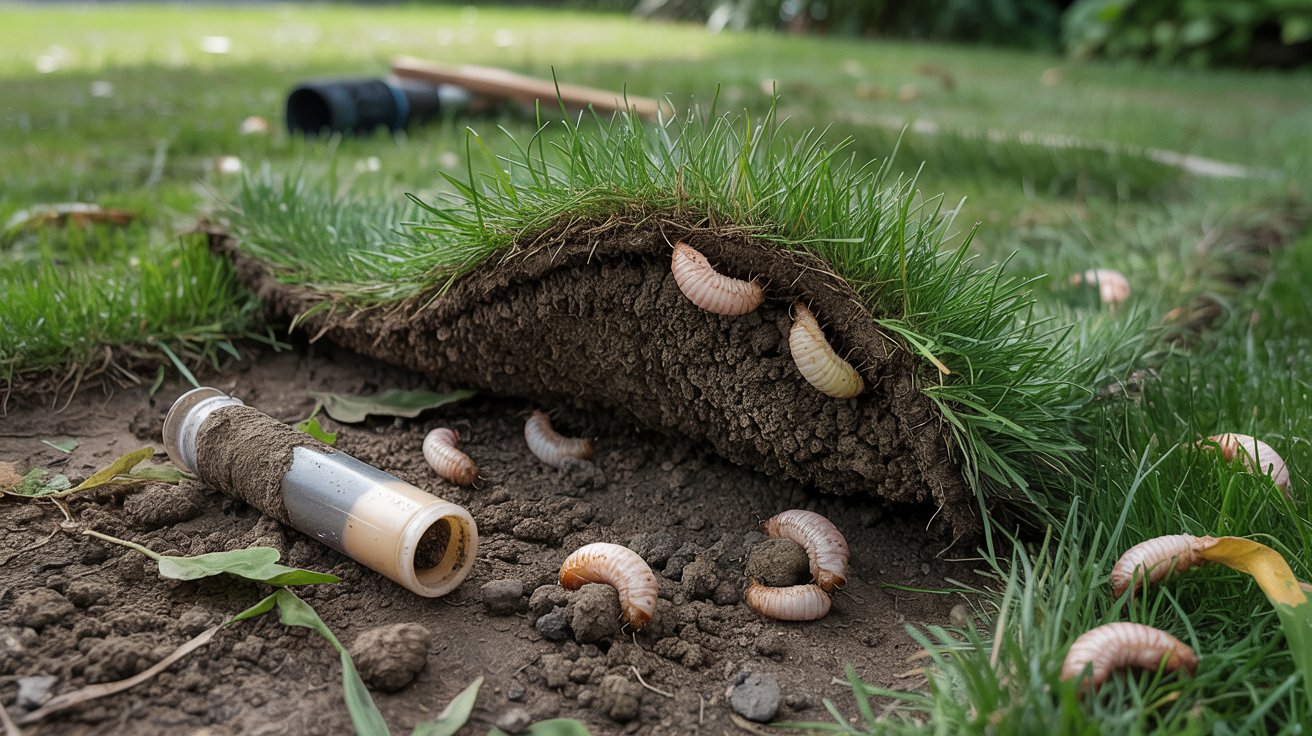
Damage often appears in late summer, when the grubs are actively feeding and close enough to the surface to do real harm. By the time you see brown patches, the root system underneath may already be gone.
The good news is that most infestations are manageable when you confirm presence early and match your treatment to the right window. Acting in late July or early August-before grubs grow large and burrow deep-makes chemical and biological controls far more effective.
Understanding root zone health and turf resilience is the foundation of any grub management plan. Treatment alone won't hold if the underlying lawn is thin, stressed, or poorly watered.
This guide walks you through identification, thresholds, timed treatment options, costs, and long-term prevention-so you can stop the damage and keep it from coming back.
White grubs are beetle larvae that destroy grass roots, causing turf that lifts and browns in late summer. Confirm with a dig test, then choose between biological controls (milky spore, nematodes) or chemical insecticides based on timing, grub species, and infestation level.
Identify Grubs and Turf Damage
White grubs are the larval stage of several beetle species, including Japanese beetles, June bugs, and masked chafers. According to the University of Maryland Extension, these C-shaped larvae feed directly on grass roots, leaving turf with nothing to hold it in place.
Remember it later
Planning to try this recipe soon? Save it for a quick find later!
You'll often notice damage as irregular brown patches that appear in August or September. Pull gently on the turf-if it lifts cleanly like a loose carpet, roots are gone and grubs are almost certainly the cause.
- Spongy turf: Feeding near the surface creates air pockets; the lawn feels soft and unstable underfoot.
- Bird and wildlife activity: Crows, starlings, skunks, and raccoons tear up turf to reach grubs-secondary damage is often worse than the grubs themselves.
- Brown patches in late summer: University of Minnesota Extension notes that turf thinning becomes visible in late summer to fall when grubs are near the soil surface.
- Patch edges are irregular: Unlike drought stress, which follows sun exposure patterns, grub damage spreads in uneven shapes.
A quick sampling method: cut three sides of a 1-square-foot section of turf, peel it back, and count the grubs in the top 3-4 inches of soil. Do this in several spots across the lawn to get a representative count.
Even two or three samples can reveal whether you have a mild or severe infestation before you spend money on treatment.
Grub species look similar but respond differently to treatments. Note the size, the raster pattern (hair arrangement on the underside), and the time of year you find them—this helps narrow down the species before choosing a control method.
Confirm Presence and Thresholds
A single grub in a soil sample doesn't mean your lawn is under attack. Treatment thresholds exist because some grub presence is normal, and treating below threshold wastes money while adding unnecessary chemical load to your soil.
According to Penn State Extension, thresholds vary by species and turf type-what triggers damage in a thin, stressed lawn may be tolerable in a dense, well-rooted one.
Most university extension programs agree that counts of 5-10 grubs per square foot generally indicate rising risk for home lawns, though some sources set the threshold as low as 3 per square foot for weaker turf.
| Grubs per sq ft | Turf Condition | Recommended Action |
|---|---|---|
| 1–3 | Healthy, dense turf | Monitor only; no treatment needed |
| 3–5 | Moderate stress or thin lawn | Consider treatment if damage appears |
| 5–10 | Any condition | Treat promptly with biological or chemical control |
| 10+ | Any condition | Treat immediately; inspect for secondary wildlife damage |
Timing your dig test matters. Purdue Extension explains that damage typically begins mid to late summer, when young grubs feed aggressively before moving deeper for winter.
Sampling in August gives you the most accurate picture of current-year risk.
Identify the species if possible before purchasing treatments. Japanese beetle grubs (Popillia japonica) respond well to milky spore and certain nematodes.
Masked chafer and June bug larvae may not. Your local cooperative extension office can help identify grubs from a sample, often for free.
Also check whether your turf is actively growing when you sample. A dormant or drought-stressed lawn may show damage at lower counts than a healthy one.
Factor in summer lawn care practices you've already done-deep-rooted, well-fertilized turf tolerates moderate grub pressure better than neglected grass.
Step-by-Step Grub Control Plan
A successful control effort depends on matching the right method to the right moment in the grub life cycle. Applying a curative insecticide in spring, for example, targets large grubs that are already done feeding-nearly useless timing.
Follow these steps in sequence.
Soil moisture is critical throughout this process. Dry, compacted soil reduces nematode movement and limits how deeply insecticides penetrate.
Water deeply before and after any grub treatment, regardless of method.
If you're dealing with other turf pests at the same time, check our guide on managing crabgrass alongside lawn repairs-the timing windows often overlap and you can combine cultural fixes.
Treatment Options and How They Work
Choosing the right product means understanding what each option targets, how fast it works, and where it fits in an integrated approach. Colorado State University Extension outlines key differences between biological and chemical grub controls, noting that no single product is appropriate for all situations.
| Method | Best Timing | Speed | Notes |
|---|---|---|---|
| Milky Spore | Spring or fall | Slow (2–4 years) | Japanese beetle grubs only; long-term suppression |
| Beneficial Nematodes | Late July–Aug | Moderate (2–4 weeks) | Needs moist soil; safe for pets and kids |
| Chlorantraniliprole | June–July (preventive) | Slow preventive | Low toxicity; must be applied before hatch |
| Trichlorfon | July–August (curative) | Fast (days) | Higher toxicity; follow label strictly |
| Imidacloprid | May–July (preventive) | Preventive | Water in immediately; neonicotinoid—bee caution near bloom |
According to Rutgers NJAES, Heterorhabditis bacteriophora nematodes are the most effective species for targeting Japanese beetle grubs. They are living organisms-store them in the refrigerator, not the freezer, and apply the same day you open the package.
For lawns with mixed pest pressure, using neem oil versus soap-based insecticides is worth comparing-though neem is not effective against soil-dwelling grubs, it helps control adult beetles before they lay eggs.

Prevention and Lawn Care for Grub Resistance
Healthy turf is the most reliable long-term barrier against grub damage. Purdue Extension confirms that proper mowing and watering directly support turf resilience against pest pressure, including grubs.
- Mow at 3-4 inches: Taller grass shades the soil, reducing surface temperature and discouraging beetles from laying eggs in dry, hot turf.
- Water deeply, not daily: University of Minnesota Extension notes that soil moisture influences grub survival; drought-stressed turf recovers poorly after feeding damage.
- Dethatch when thatch exceeds half an inch: Thick thatch blocks water and insecticide penetration, reducing treatment effectiveness.
- Overseed bare spots promptly: Dense turf crowds out weeds and tolerates more pest pressure. Managing clover and broadleaf weed coverage also keeps turf competitive.
Avoid irrigating your lawn in late June and early July if grub pressure has been a recurring issue. Female beetles prefer to lay eggs in moist soil—letting the lawn dry out during peak egg-laying reduces the next generation's starting population.
Regional Timing and Seasonal Windows
Grub control timing shifts by several weeks depending on your climate. In northern states (zones 4-6), Japanese beetle eggs hatch in late July and young grubs feed through September before burrowing for winter.
In southern states, some species complete two generations per year, and egg hatch can begin in June.
University of Minnesota Extension advises that optimal control timing varies by region-northern gardeners should prioritize mid-July to mid-August applications, while southern growers may need earlier action.
University of Illinois Extension notes that regional timing differences affect both when to apply controls and when damage becomes visible.
In the Pacific Northwest and cooler mountain climates, European chafer and masked chafer grubs are more common than Japanese beetles—milky spore won't work on these species. Check with your local cooperative extension office to confirm which grubs are active in your area before buying any biological control.
If you're already seeing damage this season, act within the next two weeks if grubs are still small (less than half an inch). Large grubs in September are harder to kill and will overwinter before returning next spring.
For multi-pest lawn situations, also review slug and snail control timing-both problems often peak during the same wet-weather windows.
Gardeners managing broader pest pressure can also check resources on aphid management in adjacent beds and deer exclusion strategies, since wildlife attracted by grubs often creates compounding damage.
For fungal issues that sometimes co-occur with stressed turf, our piece on powdery mildew on ornamentals covers overlapping cultural fixes.

Frequently Asked Questions
Spongy turf that peels back, irregular brown patches in late summer, and sudden wildlife digging are the clearest signs. Confirm by counting grubs in a 1-square-foot soil sample.
Apply milky spore in spring or fall when soil temperatures are between 60–70°F. It requires multiple seasons to build up—expect gradual population decline over two to four years, not immediate results.
Yes. Beneficial nematodes like Heterorhabditis bacteriophora are microscopic roundworms that only target soil-dwelling insects; they pose zero risk to mammals, birds, or earthworms.
Most homeowners can handle grub treatment independently using off-the-shelf products. Professional applications make sense for lawns over 10,000 square feet or when infestations exceed 15 grubs per square foot.
Yes—adult beetles fly in from neighboring properties each year and re-lay eggs. Annual monitoring and preventive treatment in high-pressure areas, combined with healthy lawn practices, keeps recurring damage manageable.
Pin it for your next how to get rid of grubs in your lawn project.